Mila Pilates
Mila Pilates Facebook ad: “Support lymphatic system everyday”
Ran for 2 days, from September 14 to September 16, 2026, the last day Crush saw it.
Run by Mila Pilates on Facebook. Crush is not the advertiser and does not verify its claims. See this ad in Meta's Ad Library(opens in a new tab)
Want an ad like this for your product?
Crush makes new ad images for your product from this ad: your logo, your product photo, your offer.
Trials from $19.95 USD, then $79.95 USD a month. Cancel anytime.
About this ad
- Meta Ad Library ID
- 1805737010860436
- Platforms
- Facebook, Instagram, Audience Network, Messenger, WhatsApp and Threads
- Relaunches
- 2
Ad text
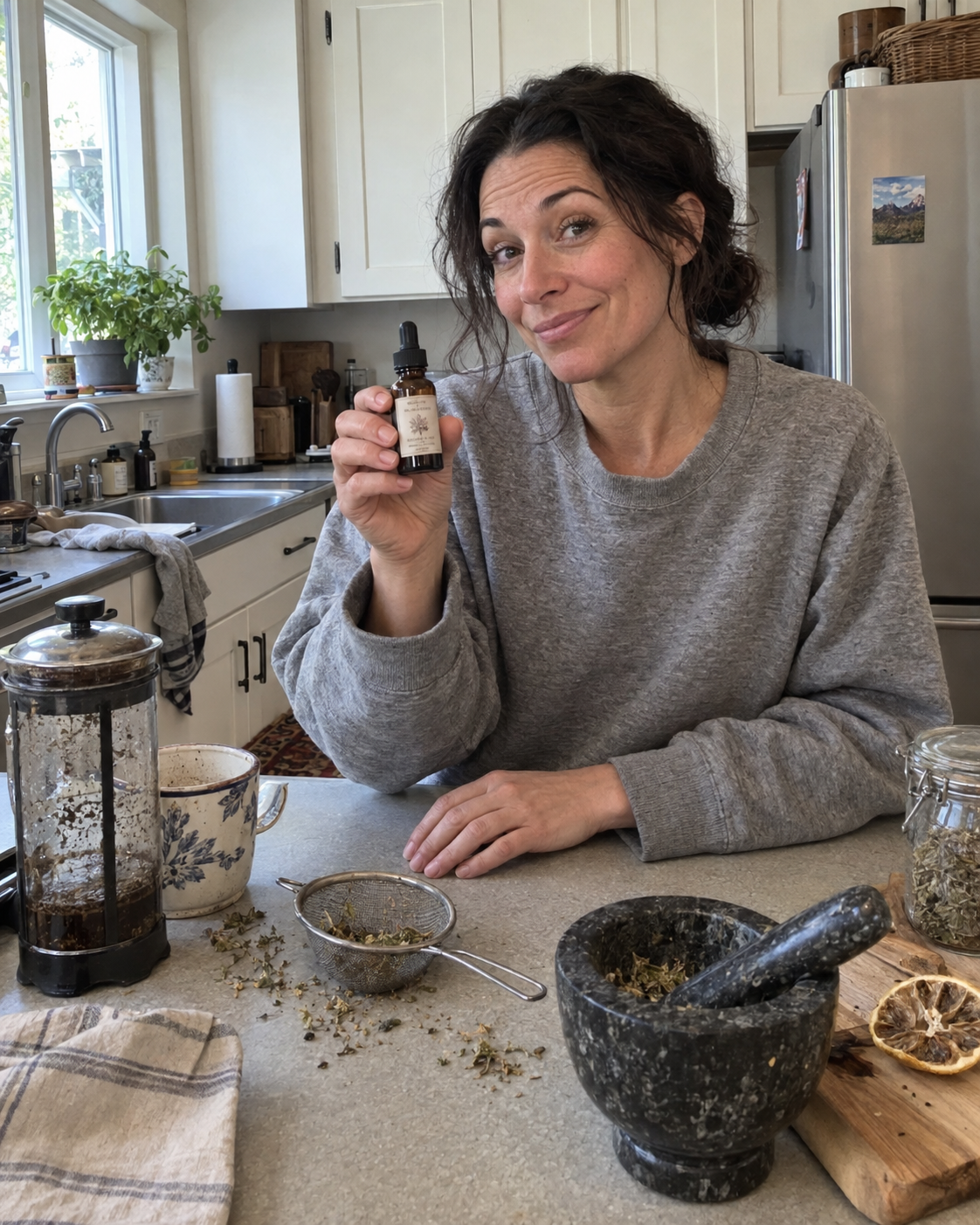
The Botanical Has Been Offered to You in Three Ways. Here's What Each Actually Asked of Your Week. Somewhere in your kitchen, right now, there is probably evidence of at least one attempt. A heavy stone mortar and pestle that requires two hands to lift. A French press exclusively for loose-leaf infusions — in the cabinet over the fridge, the one that requires a chair. A bag of dried, confusing herbs, clipped shut, sitting behind the coffee tub. Or just the memory of a 10-step morning wellness routine, attempted on a Monday, abandoned by Thursday, put away with that specific small guilt that has no name. This is an essay about that evidence. Not about you — there's nothing wrong with you, and by the end you'll agree. About the forms. Because botanical wellness has been offered to the modern kitchen in about three different costumes over the years, and every single one of them came with an invoice nobody read out loud. We make a new form. We'll get to ours. But we're going to walk you through the old ones first, honestly, because the comparison is the whole point — and because we think you've been blaming the wrong party for that abandoned shelf. Start with the botanicals themselves, because the plants earned it. People have been using herbs like cleavers and red clover for generations. They were in the apothecaries and teacups of half the world long before anyone could say why — kept and cultivated on nothing more than the accumulated verdict of history. They are patient, natural, and work with your body's systems without complaint. Today, the why is better understood: specific botanicals like stillingia root and prickly ash are traditionally used to help support the body's natural drainage and fluid balance. Nature did the formulating a long time ago. The botanicals were never the problem. Hold that. The whole essay hangs on it. The problem is that a plant is not a routine. A plant is a possibility. To become part of a week, it has to take a form — and every form makes demands. Nobody prints the demands on the front. So let's read the invoices out loud, one form at a time. Form one: the loose-leaf infusion, brewed at home. The original. The grandmother's version. Still, in fairness, the most aesthetic version on this list — nothing else here is going to look quite as beautiful on a kitchen counter. Now the invoice. It starts before the kitchen: sourcing the herbs, storing them in airtight glass jars, remembering they exist. Then the morning itself. The boiling of the kettle. The steeping for twenty minutes while everything else about your morning also needs you. The straining through a fine mesh sieve. Then the cleanup after. Call it a real forty-five-minute slice of a morning, door to door. Nothing on that invoice is a defect. It's just a price. And here's the part worth being honest about: your grandmother's week was built to pay it. Her kitchen was the day's headquarters. That world paid the botanical's price without noticing there was one. Now ask yourself, honestly, where that slice of a weekday morning would come from in your house — with the commute, the emails, and the alarm clock that belongs to no kitchen. Form two: the adaptogen powder. The clever version. Somebody correctly noticed form one was losing to the clock, and engineered the herbs into a scoop. Real progress, genuinely. The invoice looks small — and this is the interesting one, so slow down here. A scoop, a glass, a stir. What could be easier? Except the powder still asks for a ceremony — a thing mixed, a chalky taste acquired, a glass rinsed — and a ceremony, however small, needs a slot in the day. It needs you to stop, perform the little ritual, and clean up after it. Every day. On its own merits. Forever. Miss the slot once — a rushed morning, a late alarm — and nothing bad happens. Miss it twice and the bag migrates behind the coffee tub, still nearly full, clipped shut with good intentions, where it becomes archaeology. The powder didn't fail on effort. It failed on anchoring. It asked you to remember it, unprompted, every day. Now stop and audit the pattern, because it's cleaner than anyone admits. Different forms. Different invoices. And one pattern keeps showing up: Each form asked the week for something. Minutes. Equipment. Ceremony. Memory. A slow morning. Different currencies, same transaction — and when the week couldn't pay, look carefully at what happened next, because it happened in your kitchen too. The routine got the blame. Or worse, you did. The evidence went on the shelf. And everyone involved quietly concluded they lacked discipline — filed it under their own name, the way people do, and waited for January to try a new routine. Read those invoices again and find the discipline problem. There isn't one. There never was one. Routines don't run on discipline. Routines run on cost. That's the whole revelation, and it's arithmetic, not psychology. The forms that survive in a life are the ones that ask it for almost nothing. The forms that die are the ones that bill a currency the week is short on. The shelf isn't a museum of your failures. It's a stack of declined invoices. Which brings us — through that door, and no other — to our form. Mila Lymphatic Drainage Drops are the botanicals in a deliberately simple daily form: a liquid dropper, once a day. Read this invoice the way you read the others, because it's the honest comparison that matters: No forty-minute steeping. No cabinet that requires a chair. No mesh strainers, no cleanup, no parts. No chalky taste to acquire, no ceremony to slot, nothing to mix or rinse if you don't want to. And the anchoring problem — the one that quietly beat the powder — is solved by size. A form this small doesn't need its own slot in the day. It doesn't ask to be remembered on its own merits. It attaches to a slot you already keep. Next to the coffee maker. Beside your morning water glass. Wherever your morning already goes on its own, without being asked. What's in it reads in one breath. A liquid botanical food supplement featuring cleavers (Galium aparine), red clover (Trifolium pratense), stillingia root (Stillingia sylvatica), and prickly ash (Zanthoxylum americanum). One to two milliliters a day, with the dose printed plainly on the label, nothing to decode. Formula developed in the US, with ingredients sourced in Asia. Twenty-five to thirty days in a bottle. And now the part you don't usually read in an essay written by the company that makes this form, so read it twice: Nobody here is going to promise you a transformation. We're not going to tell you what you'll feel or when. Bodies are different, and yours doesn't owe an advertisement anything. We'd also rather be precise about what this form gives up, since we read you everyone else's invoice: it isn't a ritual. It won't be the centerpiece of an aesthetic morning vlog, and the slow-brewed tea remains, in fairness, the more romantic experience. This is the routine form of the botanicals — built to be kept, not photographed. What can be promised is what's on the label — and a much smaller invoice than the forms that came before it. One thing before anything goes in a cart: talk to your doctor or pharmacist before adding any supplement, especially if you take any medication, have liver or kidney concerns, or a hormone-sensitive history. This goes alongside the rest of a routine — the meals, the walks, the sleep — not in place of any of it. The ending of this essay is arithmetic, which is the point. Take the week you actually have — the real one. Not the week the mortar and pestle was purchased for. The one with the commute and the calls and the morning that belongs to no slow kitchen. Now subtract, from the botanical's side of the ledger, everything the old forms billed it: The long steeping. The strainers. The cleanup. The ceremony waiting for a slot. What's left is a brief daily moment standing next to a thing you already do. That's the whole trade. Almost nothing was added to your routine. The asking got smaller. The routine got simpler — and simpler, it turns out, is the kind most likely to stay. P.S. About the abandoned shelf: go easy on yourself. Every object on it was a good-faith attempt to keep a good thing, made by a person whose week was already full — and the failure, every time, was on the invoice, not the discipline. You didn't quit wellness. You declined its prices. There's a difference, and it took the whole essay to say it. P.P.S. What it is, plainly: Mila Lymphatic Drainage Drops. A liquid botanical food supplement featuring cleavers, red clover, stillingia root, and prickly ash. 1-2 mL a day. 25-30 days a bottle. That's the whole story. P.P.P.S. The guarantee is satisfaction-based: not satisfied, for any reason, return it for a full refund. Enough time to find out whether the simplest form is the one your week finally keeps — which is the only test that matters for deciding that. Individual experiences vary. These statements have not been evaluated by the Food and Drug Administration. This product is not intended to diagnose, treat, cure, or prevent any disease.
Where the ad sends people
milapilates.com
Support lymphatic system everyday
Mila Pilates
Learn more: milapilates.com(opens in a new tab)