
Inactive· since May 6, 2026
- 23
- days it ran
- 11
- relaunches
- 5,348
- EU reach
Ad copy
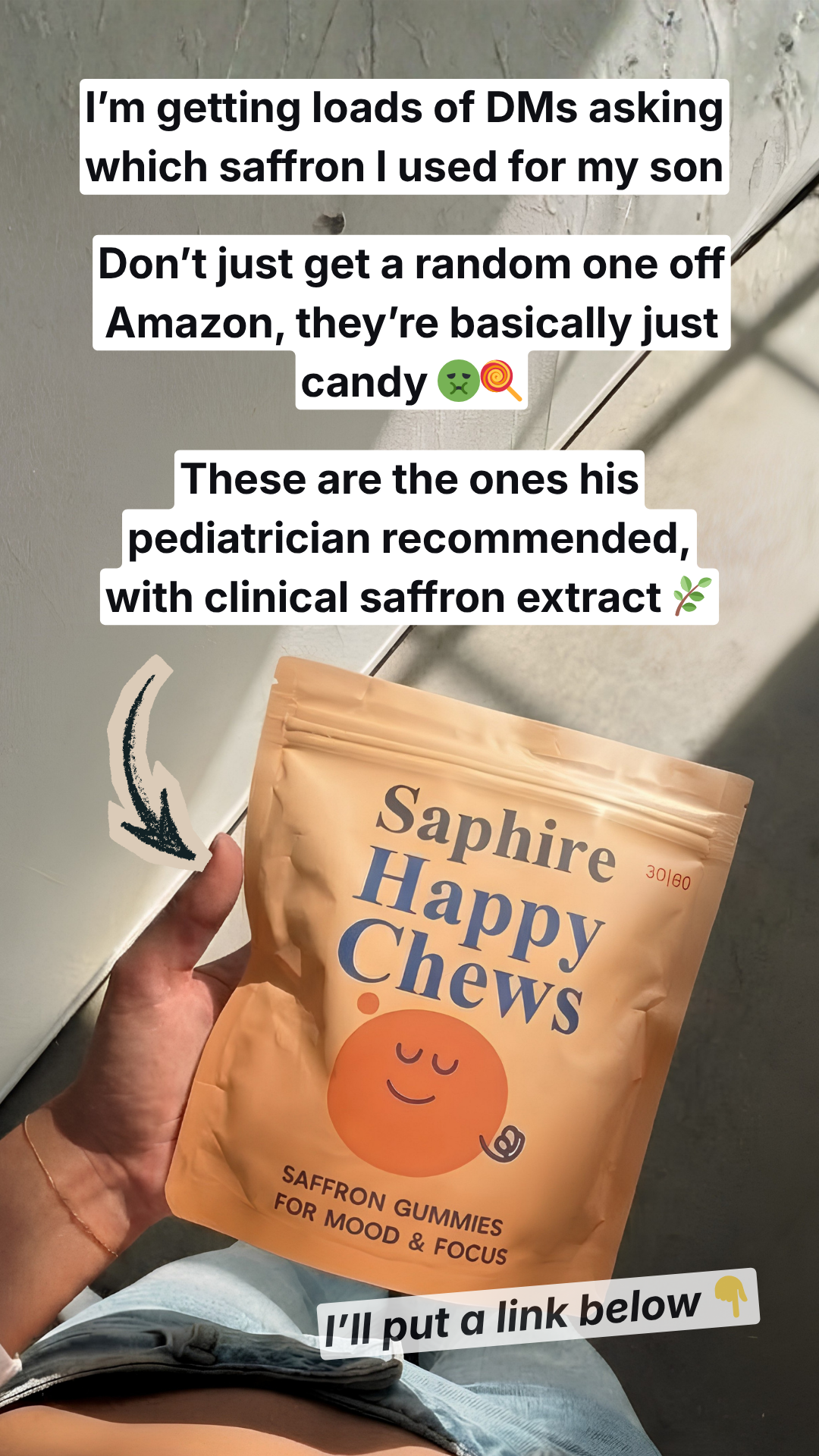
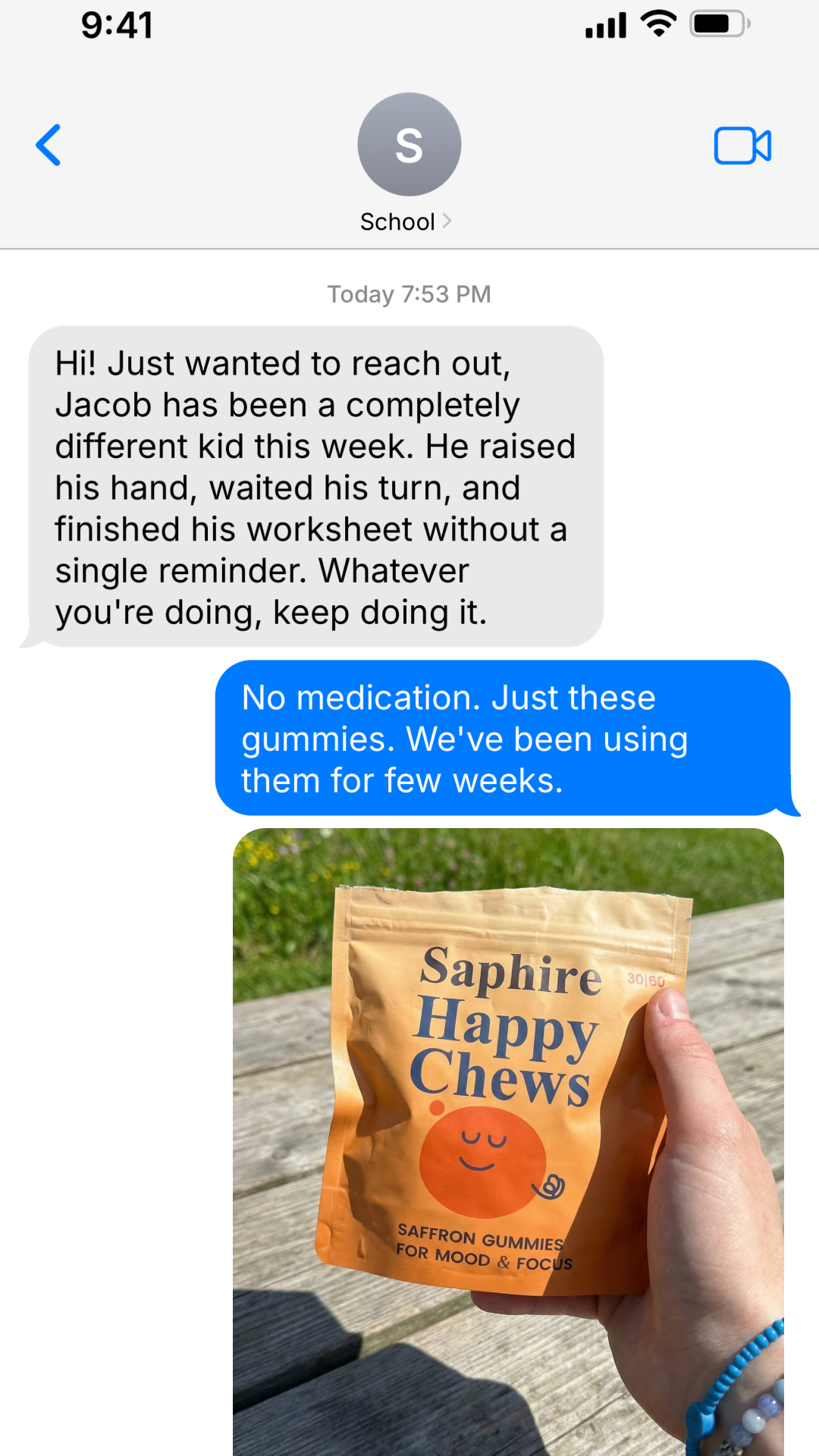
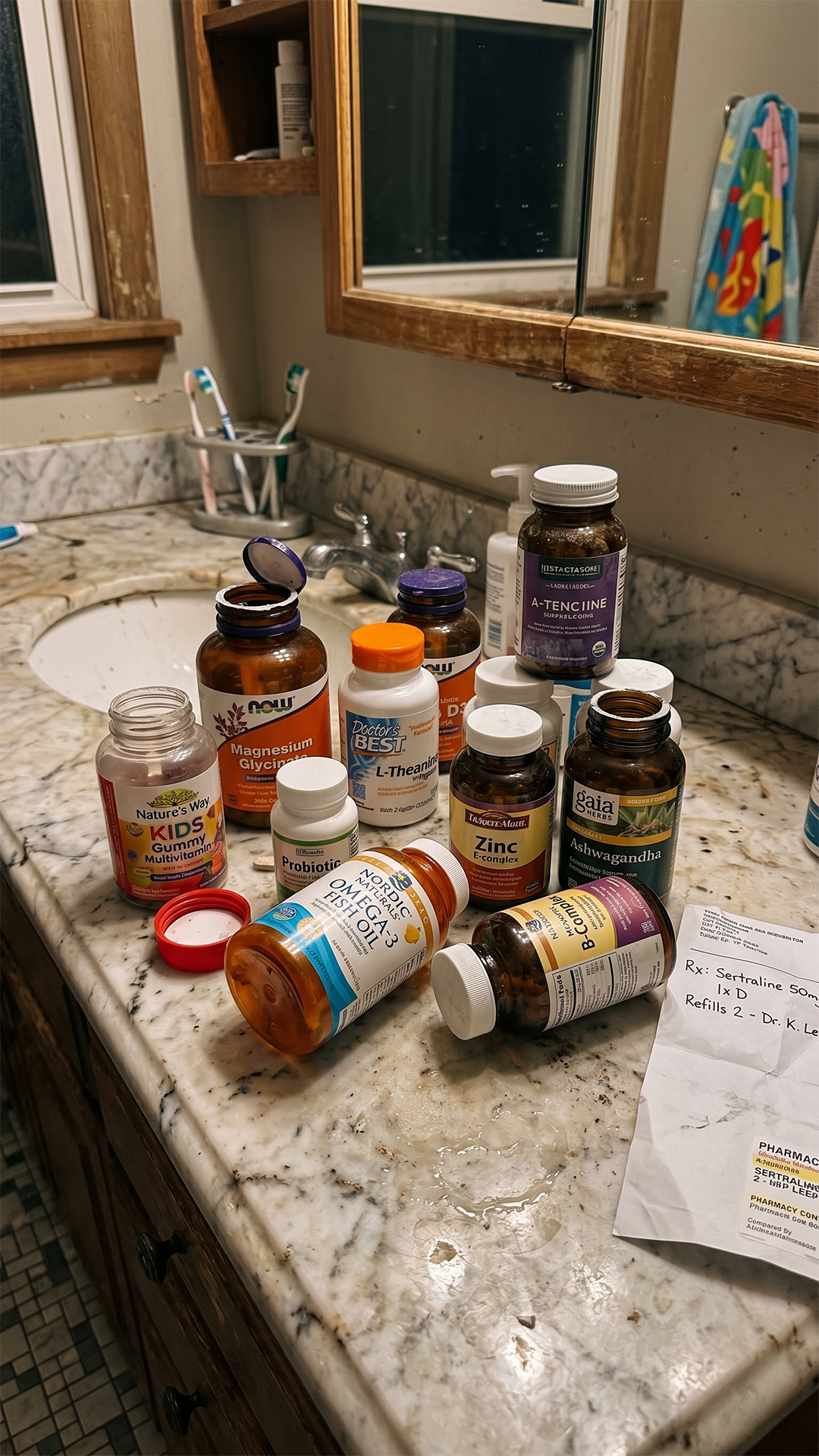
There are 7 million kids in America with an ADHD diagnosis right now. 3.3 million of their parents are holding a prescription they refuse to fill. I'm one of them. And until six weeks ago, I thought I was failing my son. His name is Theo. He's 9. He was diagnosed at 6. I want to tell you what happened to him — and what happened to me — because I've now talked to enough other moms to know I wasn't the only one stuck in this exact loop. And the way out of it was not the thing I expected. Theo is a sweet kid. Wild and funny, obsessed with dinosaurs, capable of explaining the entire plot of every Pixar movie in chronological order. He's also been melting down at the dinner table since he was 4. Not toddler tantrums. Real, plate-throwing, screaming-into-a-pillow, can't-be-reasoned-with meltdowns. Over the broccoli touching the pasta. Over losing a video game. Over a sock that "feels weird." His pediatrician diagnosed him with ADHD when he was 6. She handed me a prescription for a 5mg dose of a stimulant. I sat in my car in the parking lot and cried for forty minutes before driving home with that prescription folded in my purse. I never filled it. Not because I think medication is wrong. Plenty of moms in my circle have made it work for their kids. I'd watched my best friend's son turn into a different person on it — flat, quiet, not eating, not sleeping. She told me one night, "I traded the meltdowns for a shadow." And I couldn't do it. So I decided I'd do it the natural way. I started buying supplements. This is where I want every other ADHD mom reading this to pay attention. Because I think what happened to me is happening to a lot of you. I bought magnesium. The internet said magnesium. Theo took it for 8 weeks. Nothing. I bought fish oil — the high-DHA kind, the Nordic Naturals one for kids, the one all the parenting forums recommended. Three months. Nothing. Then L-theanine. Then ashwagandha (he hated the taste, I hid it in smoothies). A B-complex. Zinc. A probiotic that was supposed to be specifically for "gut-brain axis support" and cost $52 a month. Every bottle was a midnight Google search and a thirty-dollar gamble. I gave each one six weeks because the labels all said "give it time." Eleven bottles. Eleven let-downs. By the time Theo was 8, I had spent — I worked it out — about $1,400 in two years on supplements that did absolutely nothing. And the meltdowns were getting worse. Because puberty starts earlier than people think. Because school was getting harder. Because his sister was old enough now to be embarrassed of him at the playground. I was sitting on my bathroom floor one Tuesday night last September, after a meltdown so bad my husband had to physically carry Theo to his room, and I opened the cabinet and counted the bottles. Eleven half-empty failures. I picked one up. Magnesium glycinate. I read the label. "Supports nervous system relaxation." Then the fish oil. "Supports cognitive function." Then the L-theanine. "Promotes calm focus." I stood there for I don't know how long, holding three bottles in different hands, and I felt — for the first time — that I had been doing something fundamentally wrong and I couldn't even name what. The next day I called a friend who's a pediatric occupational therapist. I read her the list of every supplement I'd tried. And she said, very gently, "Honey. Do you actually know what ADHD is?" I said yes. Of course. Dopamine. Low dopamine. Everyone knows that. She said: "That's the version we taught parents in 2005. The current science is that ADHD is at least four neurotransmitter systems misfiring at once. Dopamine, yes. But also serotonin. GABA. Norepinephrine. Every supplement on your list targets one pathway. You've been trying to fix a four-engine plane by replacing one battery at a time." I had to sit down. She sent me a study from FASEB Journal — a 2025 paper about ADHD as a multi-system disorder. Then a 2024 Neuropharmacology paper specifically about GABAergic dysfunction in ADHD. Then a Nature article from January saying — and I'm quoting — "ADHD cannot be defined simply as a lack of a single neurotransmitter." The science had moved. The supplement aisle hadn't. Every magnesium product on the market, every fish oil, every L-theanine, every "ADHD-focused" gummy in the kids' supplement section at Whole Foods — they were all built on the old model. One pathway, one ingredient. And my son wasn't responding to any of them because he didn't have a one-pathway problem. I didn't fail at picking supplements. I was never told supplements built for an outdated model couldn't fix what was actually broken. I want to be careful here, because the last thing I want is for you to think I'm telling you about another miracle gummy. I'm not. I'm telling you about the only thing I've found that was built on the new model. It's called Saphire. Saffron gummies — but not just saffron. Four ingredients targeting four pathways at once. Affron-grade saffron extract for dopamine and serotonin. Passion flower for GABA. St. John's Wort for norepinephrine and broader serotonin support. Direct GABA for nervous system calming. Four systems. Four ingredients. The first thing I'd ever bought my son that wasn't built on the dopamine-only theory. I want to tell you what happened, because it wasn't a miracle and it wasn't overnight. Week one — nothing. Or maybe a slightly easier bedtime. I told myself I was imagining it. Week two — Theo had a meltdown about a sock. It was bad but it lasted maybe 90 seconds and he came down on his own. Before, those went 40 minutes minimum. Week three — his teacher emailed. Not to complain. To say Theo had volunteered to read aloud in class for the first time all year. Week four — he ate a meal where the broccoli was actively touching the pasta and didn't say a single thing about it. I pointed it out to my husband afterwards and we both just stood in the kitchen like, "Did that just happen?" Week six — and this is the one that broke me — Theo came up to me at bedtime and said, "Mom, my brain feels quieter." I didn't know what to say. I just hugged him. I want to be honest about something. My husband was the skeptic. He's an engineer. He'd watched me throw money at the supplement graveyard for two years and been patiently kind about every failure. When I came home with Saphire and told him about the four-pathway model, I could see him filing it under "another one." He didn't say anything. He just nodded. A month in, he was the one who pointed out the meltdowns had basically stopped. He said it at dinner one night, totally casually. "I don't know what's happening, but he's a different kid." Then he went back to his salad. A week later he ordered three more bottles without telling me. I found the Amazon confirmation in our shared email. He'd never bought a supplement of any kind in his life. So here's what I want every ADHD mom to take from this. If you've got the bathroom cabinet I had — the magnesium, the fish oil, the L-theanine, the eleven bottles of "this might help" — you didn't fail. You were sold an outdated model of your child's brain. The science moved on. The supplement aisle didn't. You don't need to fill the prescription if you don't want to. 3.3 million of us are in the same place. But you also don't need to keep buying single-ingredient bottles built on a theory that's been quietly retired in the literature. You need something built on the four-system model. There are not many of these. I know because I researched it for three weeks before I bought. The one I tried is here: https://trysaphire.com/products/saphire-saffron-gummies It has a 60-day money-back guarantee. Theo's first real shift showed up in week 3, and the major one hit at week 6. That's enough time to know. If you've been where I was — the cabinet, the guilt, the parking-lot prescription you didn't fill — try one bottle. If nothing changes, send it back. If something changes, you'll know what I'm talking about. I bought a bottle for my sister last month. Her oldest is 7 and just got diagnosed. She's where I was three years ago. I sent it without telling her what it was, just a note: "Try this before you do anything else." She called me yesterday. She didn't say hello. She said, "What is in this gummy." That's how it goes. P.S. — I'm not a doctor. I'm not a researcher. I'm a mom who spent two years and $1,400 on the wrong supplements and finally found one built on the science that actually describes my son's brain. If this is your cabinet too, you're not failing. You were misinformed. There's a difference, and now you know.
I wasted $1,400 before I learned this.
3.3 million moms are making the same mistake I made.
LEARN MORELike this ad? Make it yours.
Crush rebuilds this exact creative around your product — your brand, your colors, your offer — in about a minute.