Rachel Balmain
Rachel Balmain Facebook ad: “Take Your Free Muscle Loss Quiz”
Ran for 7 days, from July 21 to July 28, 2026, the last day Crush saw it.
Run by Rachel Balmain on Facebook. Crush is not the advertiser and does not verify its claims. See this ad in Meta's Ad Library(opens in a new tab)
Want an ad like this for your product?
Crush makes new ad images for your product from this ad: your logo, your product photo, your offer.
Trials from $19.95 USD, then $79.95 USD a month. Cancel anytime.
About this ad
- Meta Ad Library ID
- 1829569301371648
- Platforms
- Facebook, Instagram, Audience Network, Messenger and Threads
- Relaunches
- 0
Ad text
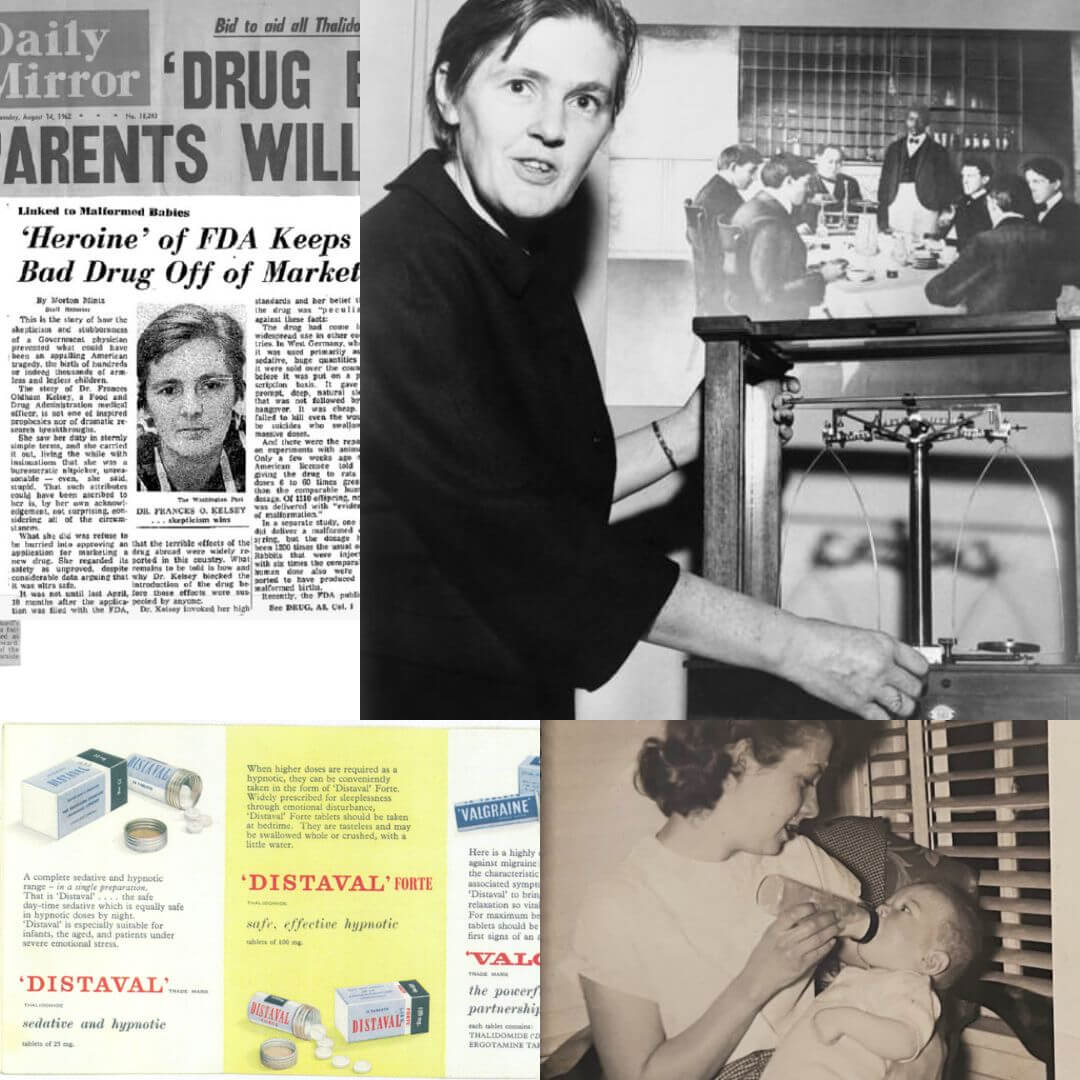
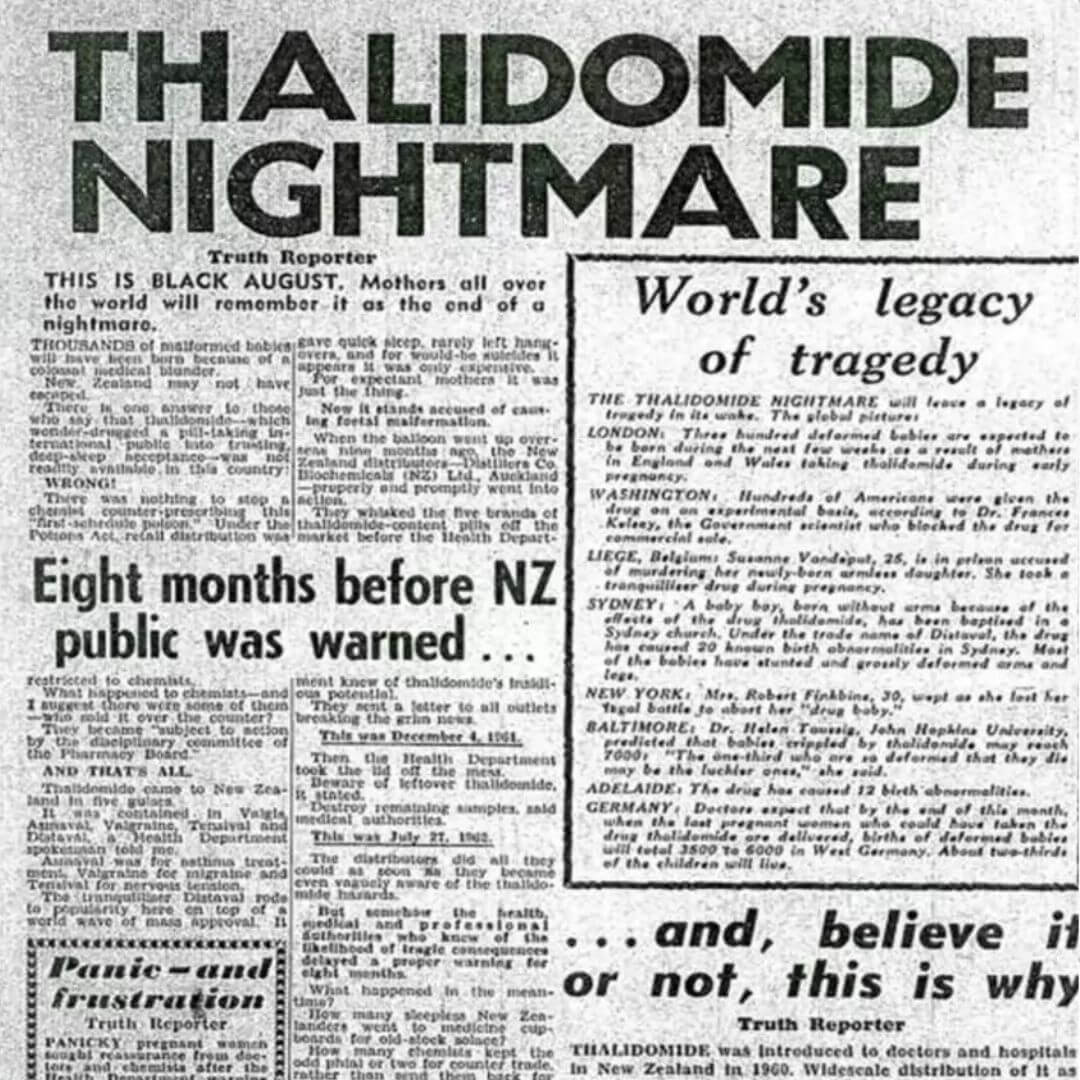
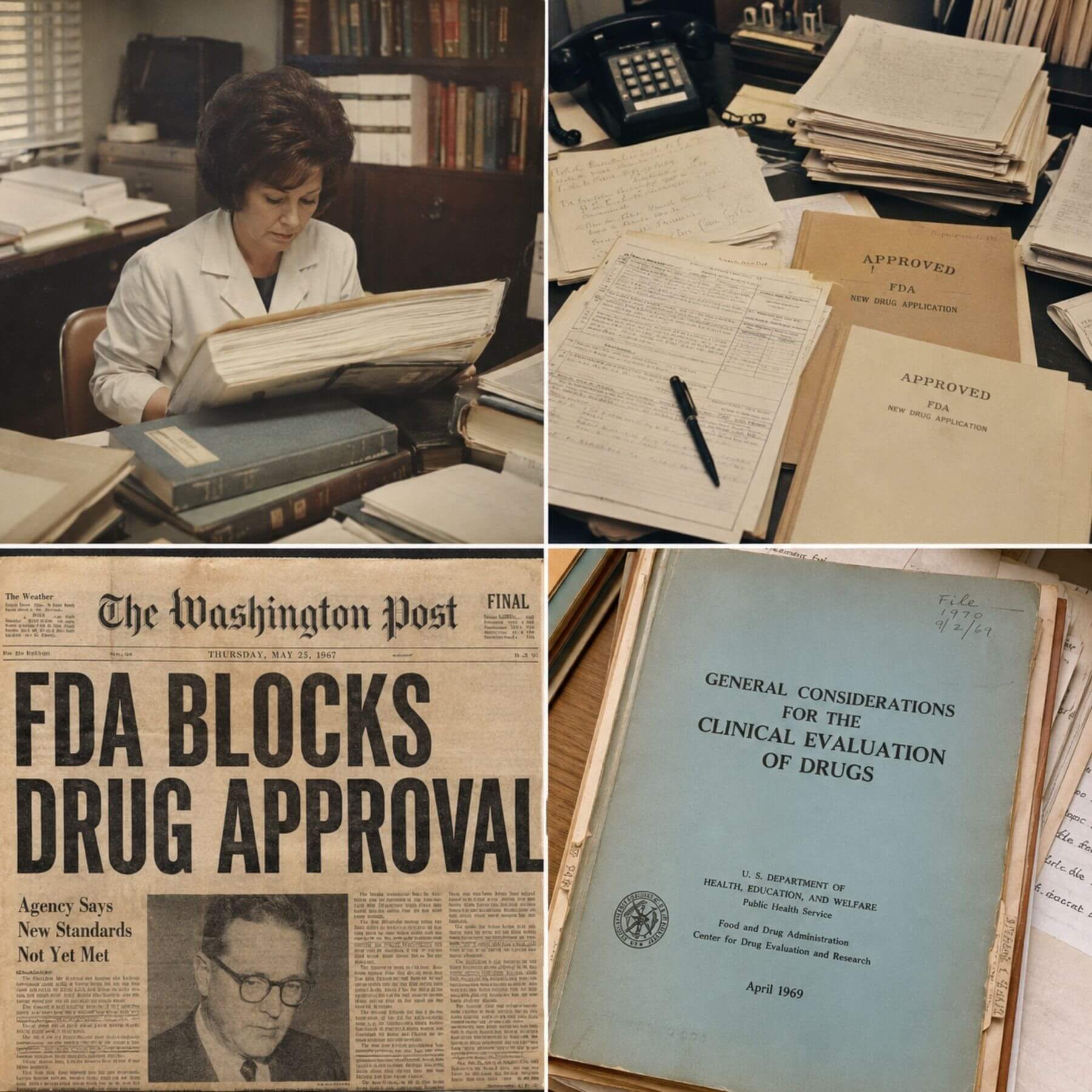
In 1961, a woman named Frances Oldham Kelsey refused to approve a drug. She was a reviewer at the Food and Drug Administration - one of the few women in the building - and the pharmaceutical company that manufactured the drug had submitted its application six times. Six times she sent it back. Her supervisors pressured her. The company's representatives called her stubborn and unreasonable. The drug was called thalidomide. It had been prescribed to pregnant women across Europe for morning sickness. And by the time Kelsey finished blocking it, more than ten thousand babies in forty-six countries had been born with severe limb deformities. Nearly half of them died. President Kennedy personally awarded Kelsey the highest honor a civilian federal employee can receive, on August 7, 1962. She had saved an untold number of American children. And then the system overcorrected - in a way that would quietly shape how medicine treated women's bodies for the next fifty years. In September 1977, the FDA published a guideline called General Considerations for the Clinical Evaluation of Drugs. It was a dry, bureaucratic document. Nobody outside the pharmaceutical industry read it. But buried in its pages was a single recommendation that effectively removed women from medical science. It said that women of "childbearing potential" should be excluded from drug trials. And the definition of "childbearing potential" was sweeping: any premenopausal woman. Including single women. Women using contraception. Even women whose husbands had had vasectomies. The intention was protection. No one wanted another thalidomide. The result was erasure. For the next sixteen years, drug companies interpreted that guideline as a blanket reason to keep women out of clinical research. Not just the trials the policy named. All of it. The easier path was to recruit men and skip the complexity of female biology altogether. And they did. Here is what happened during those sixteen years. The foundational research on how muscles respond to protein - done on men. The studies that established how much protein a human body needs per day - done on men. The clinical trials that shaped exercise physiology, resistance training protocols, and recovery science - done overwhelmingly on men. Young men. Healthy men. Men in their twenties and thirties with testosterone levels that made their muscles respond to protein with almost mechanical efficiency. The protein goes in, the signal fires, the muscle grows. Simple. Predictable. Universal - or so everyone assumed, because the only bodies in the room were male. The recommended daily amount of protein was set the same for a twenty-five-year-old man and a seventy-year-old woman. The exercise guidelines that doctors hand to menopausal women today - "eat more protein, do some resistance training, stay active" - descend from studies where a post-menopausal woman's muscle was never measured. Not because anyone decided women's muscles didn't matter. Because women weren't in the studies. And for sixteen years, federal policy was the reason why. The science was built. The protein guidelines were set. The exercise protocols were written. The supplement industry - now worth billions - designed every product on the shelf around how a young man's muscle responds to protein. And then nothing changed. Walk into any pharmacy today and pick up a protein supplement marketed to women over fifty. Read the label. It is the same whey protein - the same compound, at the same doses, designed for the same male muscle response - that was formulated during the years women were excluded from the research. The only difference is the packaging. A softer font. A pink label. Maybe the word "women's" in front of the word "protein." The protein inside was tested on men. The dose was calibrated for men. The mechanism it relies on - eat protein, signal fires, muscle rebuilds - was proven in men. And nobody stopped to ask whether that mechanism still works in a woman whose body has been through menopause. Someone finally asked. When researchers finally studied what happens inside a woman's muscle after menopause, they found something the male-built science had completely missed. Post-menopausal women's muscles do not respond to protein and exercise the same way men's do. The signal that tells muscle to absorb protein and rebuild - the same signal that fires reliably in a young man's body - becomes blunted after estrogen drops. Researchers named it. Anabolic resistance. When you are younger, or when estrogen is present, the cycle is simple: protein goes in, the body sends the signal to build, the muscle responds. That is the reaction the entire supplement industry was built on. When estrogen drops - and it drops in every woman who goes through menopause - the signal weakens. The protein goes in. The body sends the order to build. And the muscle doesn't fully respond. The growth signal is muted before it ever reaches the muscle fibers. So the muscle keeps breaking down from normal daily use. But it stops adequately rebuilding. And no amount of protein or walking or resistance bands fixes the underlying problem - because the problem isn't effort. It's a signal that switched off. A study published in the Journal of Applied Physiology measured it directly: the muscle-building response to resistance exercise was significantly weaker in post-menopausal women than in younger women. The machinery that converts effort into muscle had downshifted. The women were doing the work. The muscle wasn't answering. Here is what that looks like in a real woman's morning. She eats the protein. The extra chicken. The Greek yogurt. The shake her daughter bought her. She does the walking. The resistance bands. The classes. Maybe she added creatine because a podcast told her to. And her body keeps going soft anyway. Her arms lose their shape. Her waist disappears. Her belly rounds out even though the scale hasn't moved much. She looks in the mirror and doesn't recognize the woman looking back - not because she aged, but because the effort that used to hold her together stopped producing results, and nobody explained why. She goes to her doctor. Lists the symptoms. The fatigue, the softness, the strength she's losing, the shape that changed almost overnight even though she didn't change a single thing about her routine. And the doctor says: "That's just menopause. It's normal. Try to stay active and eat more protein." The same advice. The same advice that was designed for men. The same advice that was codified during the sixteen years her body wasn't being studied. Recycled and handed to her as though her muscles work the way a twenty-eight-year-old man's muscles work. They don't. They haven't since her estrogen dropped. And the reason nobody told her that is because for sixteen years, nobody was allowed to find out. It does not have to be this way. Anabolic resistance is a signaling problem, not an aging sentence. The signal can be supported. The muscle can be helped to respond again. The research that was delayed has finally caught up. In the decades since, scientists have identified specific compounds that work with a post-menopausal woman's biology - compounds that bypass the hormonal roadblock and help the muscle hear the signal again. Two keep appearing in the literature. PeptiStrong - a plant-based bioactive peptide - and Ursolic Acid, a compound naturally found in apple peel. Unlike standard whey protein, which relies on a signaling pathway that has downshifted after menopause, these compounds work through a different door. PeptiStrong supports the muscle-building signal that estrogen used to amplify. Ursolic Acid targets the fat accumulation that worsens anabolic resistance - without breaking down the muscle a woman is trying to protect. They are not whey protein in a different tub. They are compounds researched specifically for the biology the old playbook ignored. A board-certified OB/GYN named Dr. Jaime Seeman - bestselling author, TED Talk presenter, a physician who went through her own health crisis and rebuilt from it - formulated them into a single product at the clinical doses the research supports. Not a "women's protein" with a pink sticker. A formula built from the ground up around the mechanism the sixteen-year blackout hid. The product is called StrongHer. One scoop in water every morning. 90-day money-back guarantee. And what women are reporting - the women who were doing everything right and watching their bodies ignore them - is that the effort starts to pay off again. The arms that had gone soft begin to firm. Not from losing weight - from the muscle filling back in underneath. The shape starts to return. The belly pulls in. The energy comes back. Clothes fit the way they used to. And the thing they describe most often isn't a measurement - it's a feeling. The feeling of being themselves again. Of effort counting. Of the contract being restored. One woman wore a tank top to her granddaughter's soccer game - first time in three years. Another said she stopped reaching for the cardigan in ninety-degree heat. Another said her husband stared at her in the doorway after she spent an entire afternoon in the garden, on her hands and knees, for the first time in a year. Small moments. Private victories. The kind of proof that doesn't fit on a label. Frances Kelsey died in 2015. She was a hundred and one years old. She is remembered, rightly, for saving American children from a catastrophic drug. She is not remembered for what happened next - the policy overcorrection that removed women from medical science for sixteen years, and the decades of wrong advice that followed. That part of the story is still being corrected. One woman at a time. By doctors who refused to shrug. Dr. Seeman's part of the correction goes beyond the formula. Alongside StrongHer, she built a short assessment - about a minute - that asks a few quick questions to estimate your level of anabolic resistance, how quickly you can expect to see results, and what to watch for in the first few weeks. Because "muscle loss" can look like a dozen different things, and the fix depends on the cause. Skipping this step is doing what medicine did to women for fifty years: treating you as a generic case. If the assessment confirms StrongHer is right for you, it also unlocks a special discount that's ONLY available through the assessment. That's Dr. Seeman's way of making sure the formula reaches the women who genuinely need it, at a price they can afford. 👉 https://trywonderbody.com/muscle-profile/ But please - do not go buy just any "women's protein" off a shelf. At this point you understand why: most of them are regular whey protein in a different tub - the same whey your post-menopausal muscles literally cannot respond to anymore. Some sprinkle in trace amounts of specialized compounds, just enough to put on the label, nowhere near enough to do anything. That is the sixteen-year blackout still playing out in the supplement aisle. Male science, repackaged. StrongHer is different because it was built differently - from the ground up, around the specific mechanism the old playbook missed, at the doses the research actually supports. PeptiStrong, the plant-based peptide that acts as a backup signal for the estrogen your muscles lost. Ursolic Acid, the compound that clears the fat interference that makes anabolic resistance worse. Clinical doses. Not window dressing. That is why thousands of women who had given up on every other supplement are now refusing to buy from anyone else. It comes with a 90-day money-back guarantee. If you do not feel the difference - in your arms, your legs, your energy, your shape, the way your effort finally starts paying off again - you get every penny back. No questions asked. That is how confident they are in what is inside the formula. Right now there's a better price waiting for the women who qualify. And it is worth checking before it disappears - they are a small, focused operation and when stock runs out, it is gone. 👉 https://trywonderbody.com/muscle-profile/ In 1977, a policy meant to protect women ended up erasing them from the science that could have saved their strength. The correction took decades. The formula took years. The morning it takes to start - that part is up to you. → Take the 60-second assessment - most women are surprised by what it reveals. 👉 https://trywonderbody.com/muscle-profile/
Where the ad sends people
trywonderbody.com
Take Your Free Muscle Loss Quiz
See details: trywonderbody.com(opens in a new tab)