Ava Becker
 Facebook ad: “Read This If Your Exhausted Child Won't Sleep”
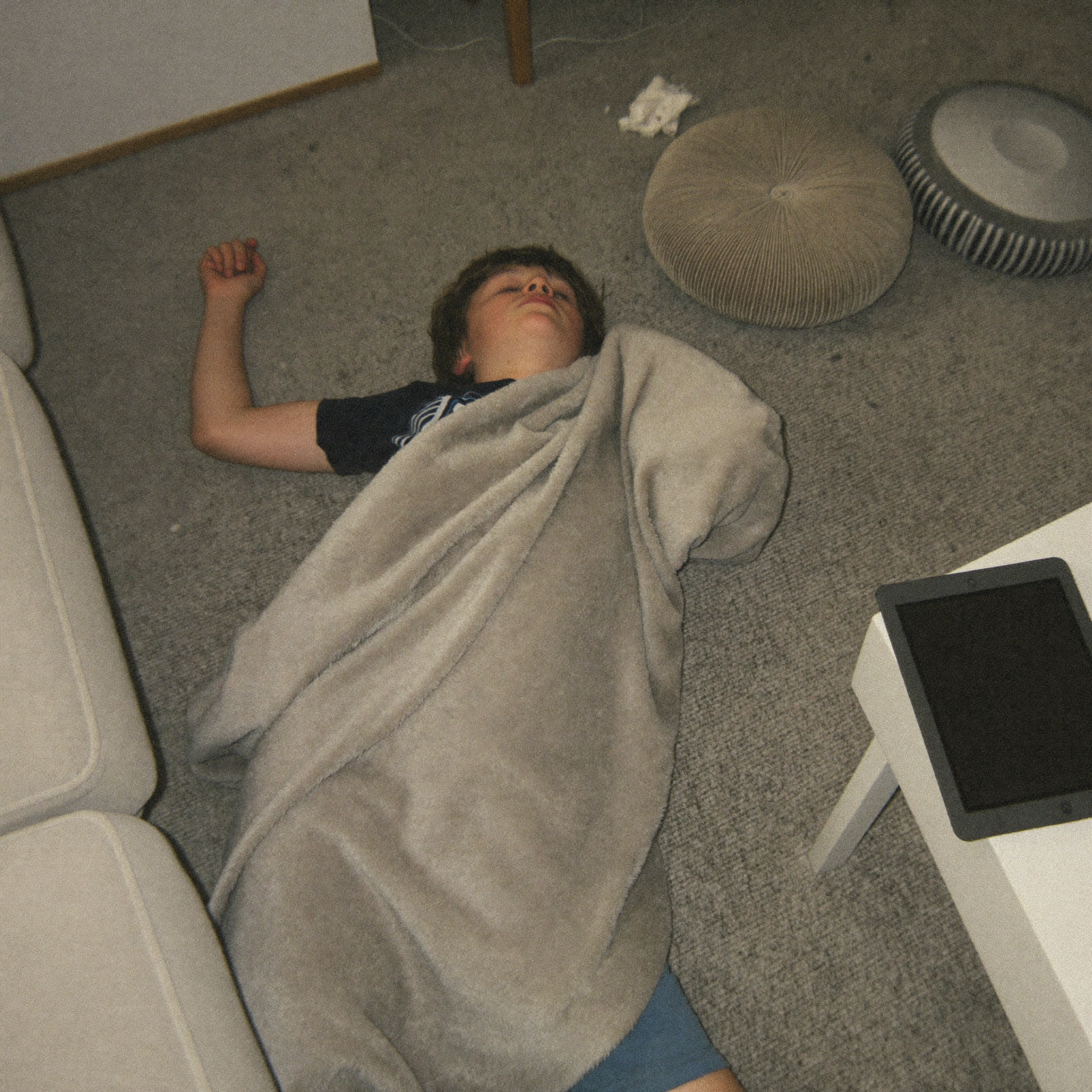
Ran for 9 days, from October 18 to October 26, 2026, the last day Crush saw it.
Run by Ava Becker on Facebook. Crush is not the advertiser and does not verify its claims. See this ad in Meta's Ad Library(opens in a new tab)
Make your own version of this ad
Crush makes it, launches it in your own Meta ad account, scales the winners and pauses the losers.
About this ad
- Meta Ad Library ID
- 1831154531368434
- Platforms
- Facebook, Instagram, Audience Network, WhatsApp and Threads
- Relaunches
- 0
- Niche
- Parenting & Kids
Ad text
Every night, I knew exactly when I'd start losing my patience. 11 PM. That was usually when I'd look at the clock and realize my son was STILL awake. I'd been trying to get him to sleep for hours. Warm shower. Pajamas. Teeth brushed. Lights dimmed. Bedtime story. One last glass of water. “Okay, buddy. It's time to sleep.” Five minutes later… “Mom, I can't sleep.” I'd walk him back to bed. “Try closing your eyes.” Ten minutes later… “Mom?” “What?” “I still can't sleep.” And somehow, we'd be right back where we started. The frustrating part was that he LOOKED exhausted. His eyes were heavy. He'd been yawning all evening. His body was clearly tired. But his brain? It was like someone had forgotten to turn it off. He'd roll around, kick his blanket off, ask another question, remember something that happened at school, then suddenly want to tell me about something he'd been thinking about all day. “We'll talk about it tomorrow.” “But Mom…” And another twenty minutes would disappear. At first, I thought I just wasn't being strict enough. So I moved bedtime earlier. Then earlier again. I cut screens before bed. Made his bedroom darker. Kept the same routine every night. I bought magnesium gummies, a weighted blanket and calming tea. Nothing seemed to stick. Week after week, I'd watch the clock move from 9:30… to 10… to 10:30… to 11. Sometimes, midnight. Meanwhile, I'd be sitting outside his room trying not to lose my mind. By that point, I wasn't calmly thinking, “Okay, sweetheart, let's try again.” I was thinking: Please. Just go to sleep. Then I'd feel horrible for thinking it. Because he wasn't doing this to upset me. Some nights, he'd look at me with those exhausted little eyes and say: “I'm trying, Mom.” That sentence broke me. He WAS trying. And I was getting angry at a child who was already struggling. Eventually, he'd fall asleep around midnight. I'd walk downstairs completely drained. My husband would still be awake, and neither of us would have much to say. We'd just look at each other like: Another night. Then morning would come. He'd wake up tired. I'd wake up tired. And we'd start the whole thing again. Breakfast. Getting dressed. Finding shoes. Finding the backpack. And somewhere in the back of my mind, I'd already be thinking about 8 PM. That's when I realized this wasn't just a bedtime problem anymore. It was taking over our evenings, our mornings and whatever little time my husband and I had left for each other. But what bothered me most was that I couldn't understand why our routine wasn't working. I was doing the things everyone recommended. I was being consistent. I was making the room calmer. I was trying to help him wind down. And still, his body could be completely exhausted while bedtime turned into another two or three hours of negotiation. What if I was trying to solve the wrong problem? That question finally came up during a visit with his pediatrician. After another awful night, I explained what was happening. I expected the familiar advice: move bedtime earlier, reduce stimulation, keep the routine consistent. Instead, she asked me something I'd never really considered. “Does he seem physically tired, but still mentally active?” I nodded immediately. “All the time.” She explained that falling asleep isn't always as simple as being tired enough. Some children struggle with the transition from the stimulation and demands of the day into a calmer state. And for children with ADHD, sleep difficulties can be part of a bigger picture that deserves attention. That didn't automatically explain everything about my son. But it gave me a new way to think about those endless nights. Maybe he wasn't lying there thinking, “I refuse to sleep.” Maybe he was lying there thinking, “Why can't I get my brain to settle down?” For the first time, bedtime didn't look quite so much like a battle between a stubborn child and an exhausted mother. It looked like a problem I needed to understand better. That conversation sent me down a research rabbit hole. I'd already spent months buying things because the front of the bottle promised “calm,” “relaxation” or “sleep support.” But I'd rarely stopped to ask a more useful question: What evidence was there behind the ingredient itself? That's when saffron caught my attention. I'd always thought of saffron as a spice. Something you'd find in food, not something I'd associate with research into children's attention, mood or sleep. But I came across clinical research examining specific saffron extracts in children with ADHD, including studies that investigated sleep-related outcomes. I wanted to understand what those studies actually looked at, rather than assume that every product containing saffron would produce the same result. Because there was a difference between buying something because it sounded calming and understanding why a particular ingredient was being researched in the first place. I also learned that a study on a specific extract or formulation doesn't automatically prove that every saffron gummy will work the same way. The extract matters. The amount matters. And the evidence for the actual product matters. That changed how I compared supplements. I wasn't looking for something that would simply knock my son out. I didn't want him lying in bed groggy, or to expect an ingredient to solve every difficulty he had. I wanted to understand the problem more clearly and explore whether nutritional support had a reasonable place alongside the sleep habits and care he already needed. When I looked at Lumexa Mood Balance Gummies, what caught my attention was that the formula combined saffron with other ingredients, including magnesium glycinate, lion's mane and B vitamins. I still wanted to be careful about what I expected. A list of ingredients isn't proof that a product will solve a child's sleep difficulties. And research on saffron doesn't establish that this particular gummy will produce the same outcomes. But I was finally approaching the decision differently. Instead of grabbing another bottle because the label sounded promising, I was asking what was in it, what evidence supported it and whether it made sense for my child's needs. We kept working on the things we already knew mattered. The bedtime routine stayed. We continued limiting screens before bed and keeping his evenings calmer. And we introduced Mood Balance as part of that broader routine. The first few nights? Nothing dramatic happened. He was still himself. Still energetic. Still asking questions when he was supposed to be sleeping. Still finding reasons to get out of bed. I didn't want to declare victory after one good night. I wanted to pay attention to the pattern over time. Gradually, I began noticing that some evenings felt less drawn out. The repeated “Mom, I can't sleep” seemed less frequent. Some nights, he stayed in bed instead of coming out again and again. I couldn't say with certainty what was responsible for every change, but those quieter evenings mattered to our family. Then one night, I looked at the clock. 8:47 PM. I walked past his room. He was asleep. I actually stopped for a second. I couldn't remember the last time I'd looked into his room that early and found him already sleeping. It wasn't a dramatic movie moment. He hadn't suddenly become a different child. He was still my son. Still going to ask me seventeen questions before breakfast. And we still had difficult nights. But that evening, bedtime hadn't consumed the entire night. My husband and I could sit together, talk or do absolutely nothing. There was finally a little space between the end of the day and the moment we needed to sleep ourselves. I hadn't realized how much of our family life those nightly battles were taking up until we had some of that time back. I wasn't looking for a perfect sleeper. I wasn't looking for a different child. I wanted to understand why a child who was completely exhausted could still struggle to settle down. And I wish I'd started by asking that question instead of buying one more thing with “sleep support” printed on the label. If your child is exhausted but somehow still wide awake night after night, there's a bigger conversation worth having about ADHD and sleep. The explanation I found helped me understand the connection, what research has explored and how to think more carefully about nutritional support. Read the full explanation here → https://uselumexa.com/pages/adhd-sleep
Where the ad sends people
uselumexa.com
Read This If Your Exhausted Child Won't Sleep
Lumexa
Learn more: uselumexa.com(opens in a new tab)