Denise Walker
Denise Walker Facebook ad: “Fix Yourself at the Cellular Level”
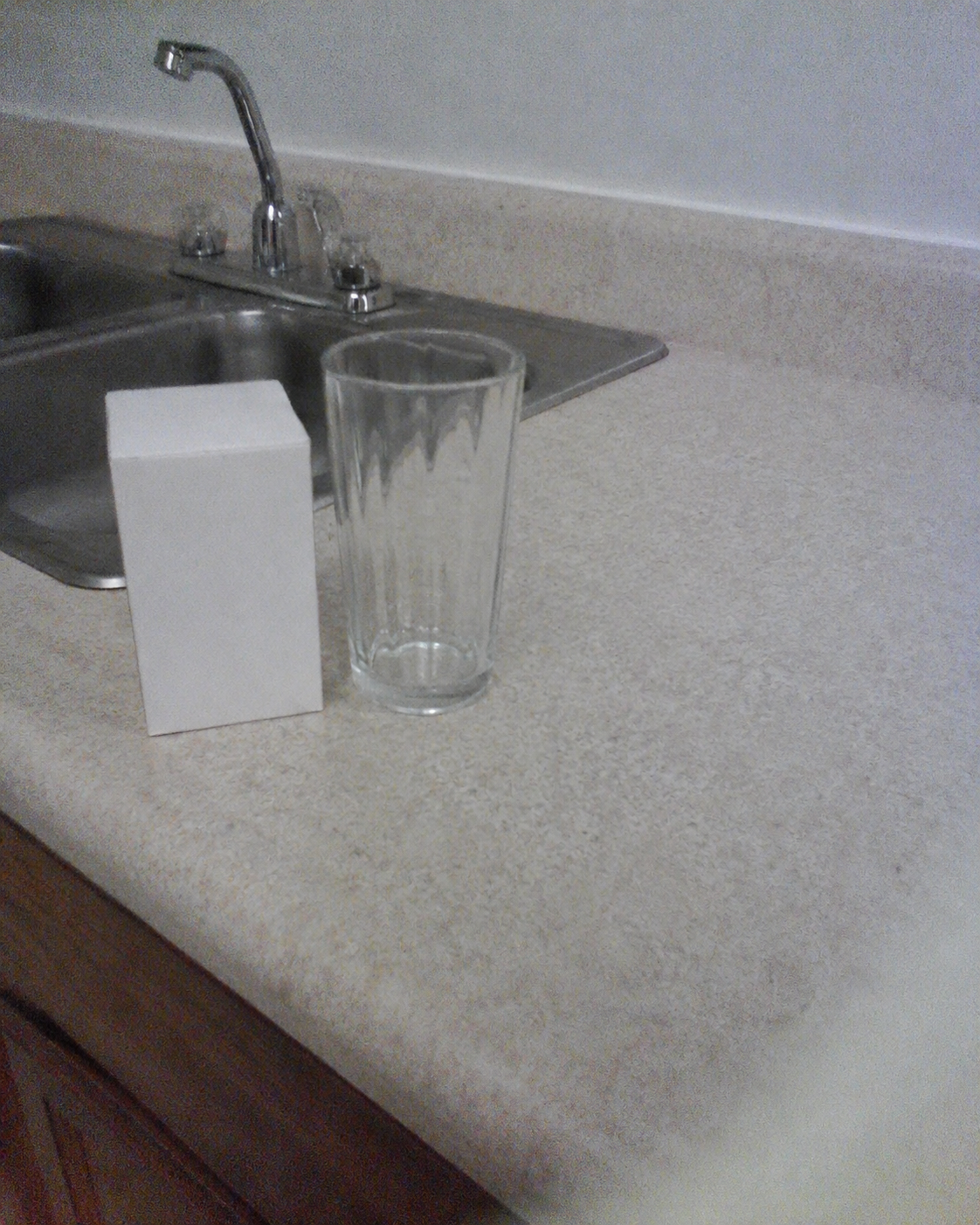
Ran for 10 days, from September 15 to September 25, 2026, the last day Crush saw it.
Run by Denise Walker on Facebook. Crush is not the advertiser and does not verify its claims. See this ad in Meta's Ad Library(opens in a new tab)
Make your own version of this ad
Crush makes it, launches it in your own Meta ad account, scales the winners and pauses the losers.
About this ad
- Meta Ad Library ID
- 1832452981273586
- Platforms
- Facebook, Instagram, Audience Network, WhatsApp and Threads
- Relaunches
- 0
- EU reach
- 474
- Niche
- Home & Garden
Ad text
THE MAN WHO KNOWS THE BUILDING There is a man like this in every building that has ever stayed standing. He is invented — him, the building, the binders, all of it. Call him Denny. Denny knows the door on the north side that sticks when the weather turns. He also knows the exact place to put a shoulder so it does not. He knows the window latch on the second floor that has to be lifted before it is turned. He knows the freight elevator will do anything it is asked, provided it is not asked twice. He knows the order the machines have to be started in, which is not the order anybody would guess, and not the order printed anywhere. None of it is written down. There was a manual once. The manual described a building that was never quite built. What keeps the place running is Denny, plus a few hundred small facts that live nowhere except in Denny. He did not learn them in a class. He learned them the way anybody learns a building — by being there when it did something unexpected, and paying attention. There is a ring of keys on his belt with more keys than there are doors. That sounds like a filing problem. It is actually a working map. His shop is under the stairs. A workbench, a light on an arm, a tin of screws sorted by a logic he has never once had to explain, because nobody else has ever needed to find a screw in there. The bench has a smooth patch where his left hand goes. That is an entire paragraph about how the man works, sitting in plain sight, available to anyone who looks. Nobody looks. The quirks all have names, and Denny did not give them any of them. They arrived the way nicknames arrive. The north door. The slow lift. The corner where the trolleys go to die. Nobody remembers naming them. Everybody uses the names. A building that has been paid attention to develops a vocabulary, and the vocabulary is a record of everything anybody ever had to work around. Here is the thing about a person like that, and every workplace has one. Nobody watches the job being done. The lights are on. The heating behaves. Nobody is talking about the north door. That is what competence looks like from the outside. It looks like an ordinary Tuesday. It is a strange kind of career, being good at ordinary. There is no highlight reel. Nobody stops him in the corridor to say the heating was excellent this week, because the heating being excellent registers on nobody as an event. The building's whole opinion of Denny is expressed as silence, and he seems to have made his peace with that arrangement a long time ago. An awards ceremony for this would be unwatchable. The speech would just be a long list of ordinary Tuesdays. Which is a hard thing to be good at, and a harder thing to describe. Denny could not describe half of what he knows. Most of it only surfaces when the building asks. They hired a young man once to learn the place. Good hire, and serious about it. He followed Denny around with a notebook and filled most of it. What went into the notebook was the easy half — where things are, what they are called, which contractor did the roof. The other half would not go in. It is not a list. It is the accumulated result of being present on a long stretch of unremarkable days, and there is no way to hand that over except slowly. The young man worked that out on his own, which is why he was a good hire. There came a point where he stopped writing things down and started just standing there, watching what Denny did with his hands. That is not laziness. That is the correct method, and it is slower than anybody would like. He is still there, incidentally. He knows the north door now. Nobody taught it to him. The weather did. People who leave the company still call him sometimes. Not for advice about their new buildings. They call to ask what the code on the back gate is, or whether the loading bay is still doing the thing it used to do in the rain. He can usually answer without going downstairs. He does not find these calls annoying. He finds them slightly funny. A person leaves a job, takes a better title somewhere across town, and still carries around one unresolved question about a loading bay. That is what a building does to the people who pass through it. It hands out small unfinished pieces of itself, and only one person on the premises holds the whole set. Now and then, people arrive with a plan. They come with binders. They come with flowcharts, which are handsome. They are careful people doing real work, and the plan is a competent plan. Denny is unfailingly polite about this. He reads it. Somewhere around the third page he finds the section describing, at length, the arrangement already in place. The binder goes in the drawer under the workbench. Denny is not bitter about the drawer. The drawer is simply where binders go. He will say the plans are usually right, too, which is the part people find surprising. They are right about the building. They are just describing, in a great many pages, something that has already been happening quietly and without supervision. There is no argument in that shop. There is a man, a bench, and a drawer of binders, all of them competent. And here is the part that matters. Nothing about that building is waiting to be fixed. Nothing about Denny is either. On the rare day he asks for anything at all, the ask is small. Someone to hold the light steady. That is the whole request. Not a strategy. Not a binder. A light, held where the hands already are. And that is where the analogy stops. So — before any description of the product, the part we refuse. We are not going to tell you how PrimeCell H2 feels to take. We are not going to name a day, a week, or a season for anything. What we can describe is a box, a label, and a routine. That is the whole of it. Two standing notes while we are here. This goes alongside the rest of a routine — the meals, the walks, the sleep — not in place of any of it. And talk to your doctor or pharmacist before adding any supplement, especially if you take any medication. Now the description. PrimeCell H2 is an effervescent tablet. One tablet, one glass of water, once a day. Dissolve one tablet in 12–16 oz cool water — not hot. Full dissolution in 60–90 seconds. Drink within 10 minutes. The box holds 30 tablets, a 30-day supply. On the label: no artificial additives. Which makes it, in practice, a counter object. It wants a spot the week already goes past. Near the sink. Beside the glasses. Wherever the hand already reaches without being sent. Not a shelf anybody has to decide to open. The deciding is what kills these things. The whole event is a glass of water, a short wait, and a drink. Then the glass goes in the sink with the other glasses. The science, in one place. Molecular hydrogen is one of the smallest molecules in nature. Oxidative stress is a natural part of how the body responds to daily life; the body maintains its own antioxidant defenses to keep things in balance. Its small size allows it to be quickly absorbed. The body did the formulating. Think about what actually survives in a household, over years, and it is never the ambitious thing. The keys land in the bowl. The bag goes by the door. Nobody ever held a meeting about either one. They survived because they were never in anybody's way — small enough that keeping them cost nothing, and skipping them would have cost more attention than doing them. A routine lives or dies on that arithmetic. Not enthusiasm. Size. PrimeCell H2 supports the body's natural antioxidant defenses.* So: a glass, a tablet, once a day, in a corner of the kitchen the week already goes past. Keep it that size. Nothing here is asking for more room than that. Denny is invented — that was the first thing said here. The job is ordinary, and anybody can check it against a building they already know. — Amala Health P.S. The guarantee, plainly: If you're not satisfied with PrimeCell H2, return your order within 90 days of delivery for a full refund. P.P.S. For the label-readers: each box is 30 tablets, a 30-day supply. Zero caffeine, zero stimulants. No added sugar. Non-GMO and vegan-friendly — free of soy, dairy, gluten, GMO, caffeine and artificial additives. Third-party tested for purity, and tested for heavy metals and contaminants. Manufactured in the USA from globally sourced ingredients. https://track.getamalahealth.com/5548c06d-d9c3-4785-b466-fec64a6fdb28 Individual experiences vary. These statements have not been evaluated by the Food and Drug Administration. This product is not intended to diagnose, treat, cure, or prevent any disease.
Where the ad sends people
shop.getamalahealth.com
Fix Yourself at the Cellular Level
PrimeCell H2 is a next-generation molecular hydrogen tablet formulated to support your body's natural antioxidant defenses — helping you feel sharper, more energized, and more like yourself.
Learn more: track.getamalahealth.com(opens in a new tab)