
Still Running· since Sep 9, 2026
- 19
- days running
- 0
- relaunches
Ad copy
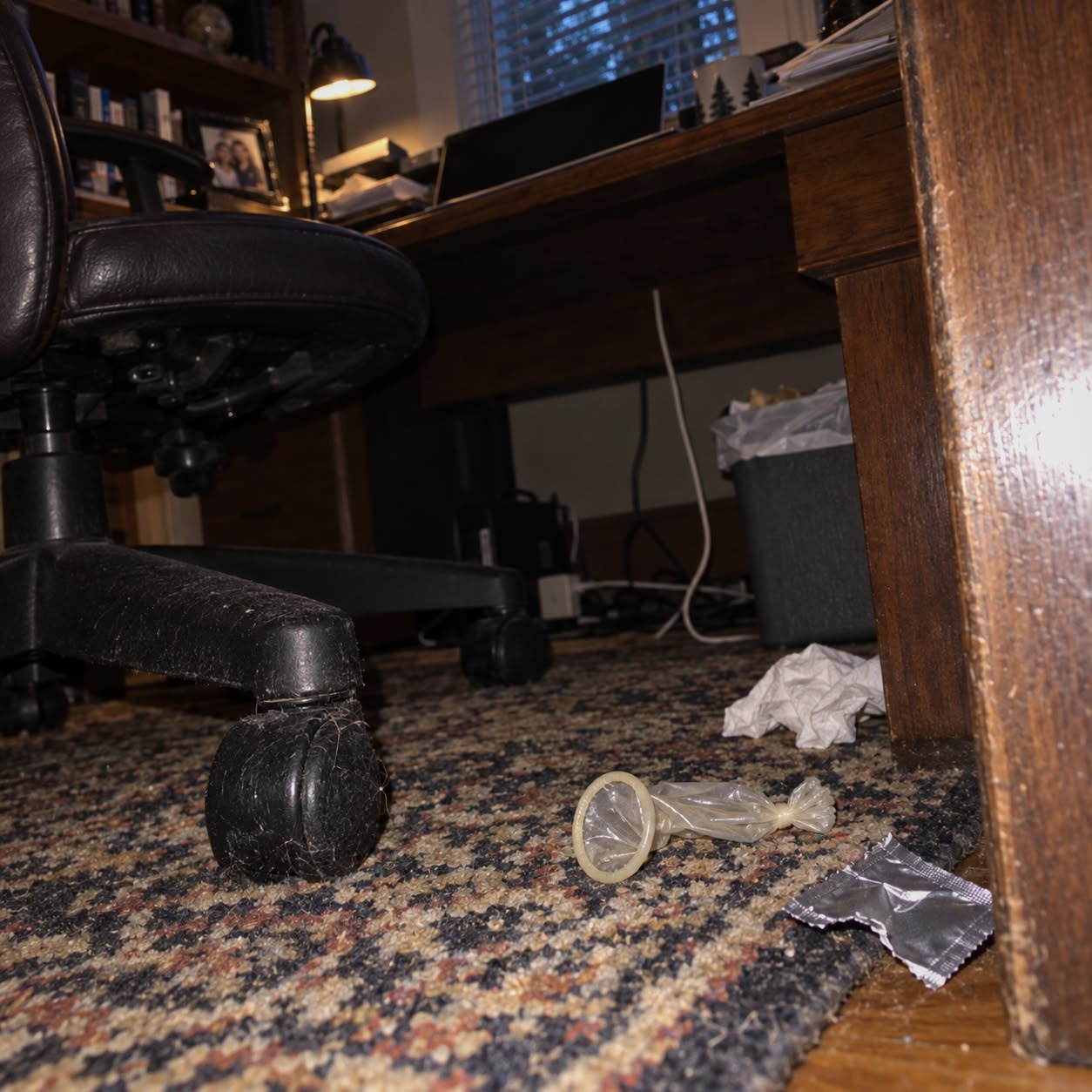
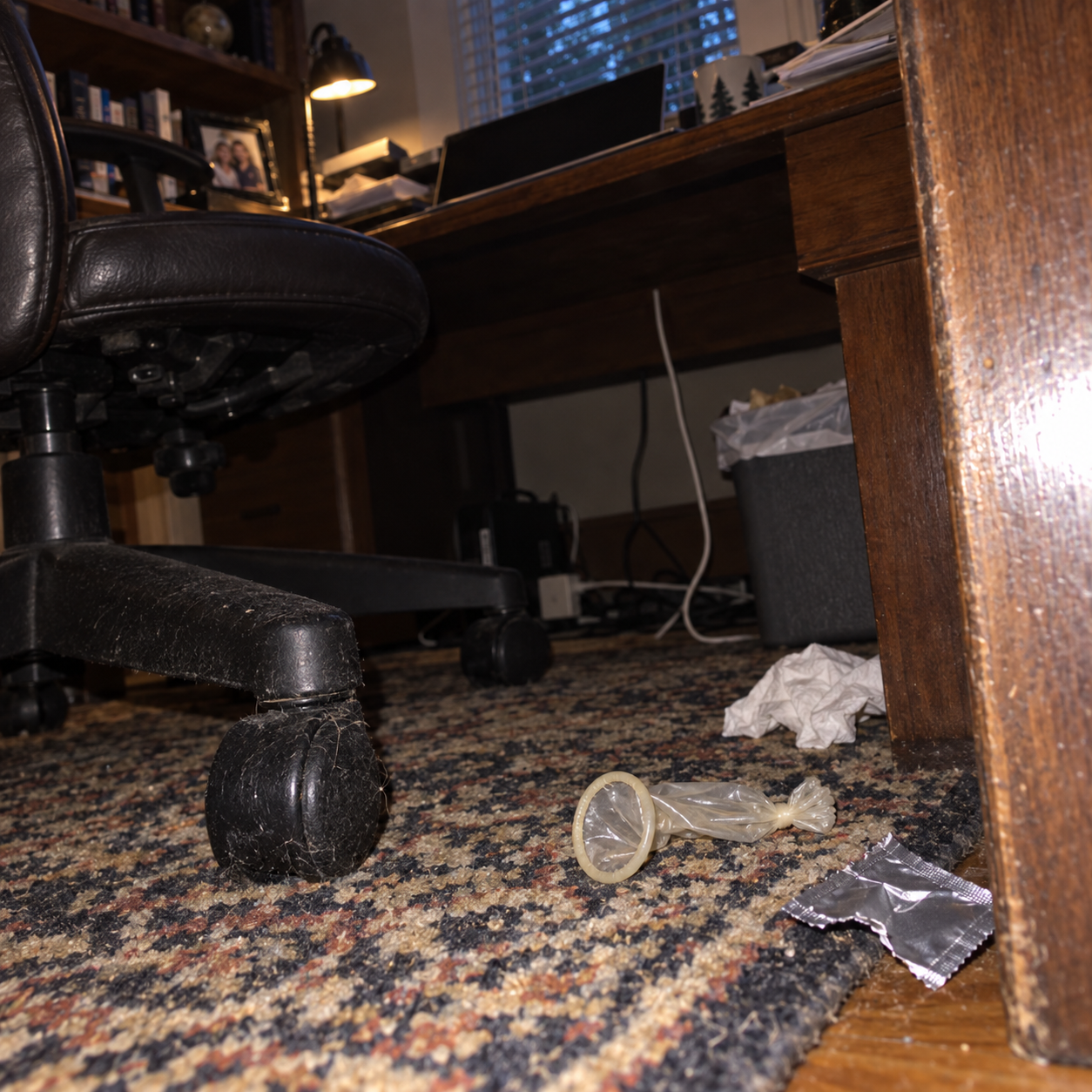
We’ve been married for 21 years. We haven’t used condoms since year two. Last Thursday, I found a used one under my husband’s office chair. I made him leave that night. I wish I had done it years sooner. Mark's car was already in the driveway when I came home. He worked from home on Tuesdays. Coffee by eight. His voice behind the office door when he was on a call. I set my groceries on the counter and called his name. No answer. Then I heard a woman making sounds that had no business being in our house. My stomach knew before my feet moved. The office door was not quite closed. I pushed it open. Mark sat with his back to me, his laptop lit up. A younger woman was on the screen. Not dressed. Thick hair over her shoulders. I cleared my throat. He spun so fast his chair hit the wall and slammed the laptop shut. His face went red. “How long have you been standing there?” “Long enough.” I went to the kitchen and put the kettle on. Both hands flat on the counter—not because of what I had seen, but because part of me had expected it. He stopped in the doorway. “Janice.” “Don't.” “Look at me.” I turned. “How long have we been like this? Two years? Three?” He opened his mouth. “No. You don't get to talk yet.” I gripped the counter. “I stopped feeling like myself when my hair started thinning. I stopped wearing it down. I stopped standing under bright lights. I stopped wanting you behind me when I looked in a mirror.” He looked at the floor. “Every time you reached for my hair, I moved away. Not because I stopped wanting you. Because I could not bear you feeling how little was there.” I swallowed. “You knew something was wrong. You felt me disappear. And instead of asking why, you chose that screen.” “I thought you had stopped wanting me too.” “I stopped wanting you to look closely. That is not the same thing.” The kettle clicked off. “I need you gone tonight.” He took his keys and left. I ate four bites of dinner over the sink and went to bed at 9:43. At 11:52, he came back anyway. His key turned in the door. He moved quietly down the hall and got into bed on his side. Within minutes, he was asleep. I lay listening to him breathe, feeling the slow rage of a woman who had turned her face away from her husband for years while he let her. At 1:47 a.m., I called my sister. Four rings. Voicemail. Then I thought about Amy. My daughter had graduated four years earlier in interior design. She spent her days creating rooms where other people could feel at home. I had not called her in almost a month. She kept late hours, so I called. “Mom.” Her voice was careful. “It's almost two.” “I know. I thought maybe I could come over.” “Did something happen?” “Can I just come?” “Okay.” I packed in the dark: clothes, charger, and a scarf for morning even though it was not cold. Mark never stirred. Amy's fourth-floor window was lit when I arrived. She opened the door before I reached it, still in work clothes, papers across the table. She looked at my face, then for half a second at the top of my head. I pulled the scarf forward. “You look exhausted.” “Thank you.” “Come in. I'll heat something.” “I'm not hungry.” “I know. Come in anyway.” Her apartment was small and warm, with books everywhere and a plant too large for its pot. She put a bowl in front of me. I ate because she asked. We talked about her deadline until she said, “Did something happen with Dad?” I set down my fork. “Not tonight.” She studied me, then stood. “You're taking my bed. I'm taking the sofa. We can talk tomorrow.” She cleared the table, turned on the bedroom lamp and pulled the curtain. “Water is on the nightstand. Towels are in the bathroom.” Then she was gone before I could argue. In her room, I sat on the bed thinking about Mark, the screen and that woman's hair. I did not cry. I sat with both hands in my lap, still wearing the scarf inside. Then I caught my reflection. The lamp was directly above me. My part had widened into a bright line of scalp beneath hair I had arranged so carefully. My hand rose to cover it and struck something hard on the nightstand. A black baseball cap. At least, that was what it looked like outside. Inside was a precise field of tiny lenses running from front to crown. Not a fabric lining. An actual device built into a cap. I put it back without touching a button. I was asleep before I decided why my 28-year-old daughter owned it. I woke at 11:47 and did what I did every morning before my feet touched the floor. My hand went to my part. Still thin. Of course. Hair does not change overnight. But the cap remained on the nightstand, and for the first time in years I wondered whether “this is aging” was an answer or simply what people said when they had no answer. Amy sat at the kitchen table with her laptop open. She handed me coffee. I drank it hot. At home, it usually went cold while I moved the same six strands across my part. I told her some of the truth—not what the woman was doing, but what seven years of thinning had done to me. It begins quietly. You loop the elastic around your ponytail once more. You stop wearing your hair down because it separates at the crown. You avoid restaurant lights, wind and swimming. You volunteer to take family photographs so you do not have to stand in them. You get into bed early to avoid being seen with the lights on. You keep powder and fibers in every handbag, then worry about rain. You stop leaning against the man you have loved for half your life because his hand might move through your hair and discover what you are hiding. The woman who wore red lipstick for no reason, reached for him first and danced while dinner cooked leaves so quietly you do not notice she is gone. I had spent years trying not to be looked at and calling it fine. “And Dad?” Amy asked. “Is there someone else?” “Maybe it was only a screen. But he checked out a long time ago. I kept moving away and pretending I didn't care whether he noticed.” I stared at my cup. “I still love him. I just stopped believing he could see me as attractive.” “Did he say that?” “He didn't have to.” “Mom. What Dad did is on Dad. Your hair did not make him do it.” I looked away. “But I understand what thinning can do to the way you see yourself,” she said. “You are not unattractive. You are hiding.” She went to the bedroom and returned with the black cap. She set it between us. “I started seeing my scalp in work pictures eight months ago. I blamed stress and late nights, but my part kept widening.” She touched the brim. “A model friend told me her mother used low-level laser therapy for pattern thinning. She said not to shop by how brightly a cap glows. Look at the number of actual lasers, the wavelength and how the array covers the scalp.” Amy opened two photographs on her phone: same bathroom, overhead light and part, months apart. The second was not a miracle. It was believable. Less scalp caught the light. Short strands stood along the part. “I can't promise what anyone else's hair will do,” she said. “My shedding seemed different after a few months, and these pictures are why I continued.” I shook my head. “I have tried everything. Volumizing shampoo. Collagen. Biotin. Rosemary oil. An expensive serum.” “Did any of it work?” “Some made my hair look thicker until the next wash.” “That's the distinction. Those products worked on the hair you could see—coating it, lifting it, darkening the scalp beneath it.” She turned the cap over. “Low-level laser therapy is aimed at active follicles. It cannot create new follicles, and it is not appropriate for every cause or stage of hair loss. For suitable users, it is designed to stimulate follicles and support hair growth without a daily topical drug.” “Every red cap online looks the same,” I said. “Outside, yes. Inside, some use LEDs. Some combine LEDs and lasers, then advertise the total as ‘diodes.’ A red glow alone does not tell you how many actual lasers are there.” She enlarged a specification page. “This is the Kiierr 272 Premier. Kiierr says it contains 272 medical-grade laser diodes, calibrated to 650 nanometers and placed across the cap for scalp coverage.” There it was: a name, an actual laser count and a wavelength I could verify before buying. I thought about the root powder that ran in rain, fibers that made me afraid of touch, supplements taken without knowing whether I was deficient, oil-stained pillowcases and a topical that irritated my scalp. Each had become another way to hide the problem. I had focused on the strand and never asked what might support the follicle beneath it. I held the cap. It was lighter than I expected. No serum, dropper or smell. Every laser had a fixed place. Then I remembered Amy answering a video call in it months earlier. I had teased her for wearing a cap indoors. She laughed and changed the subject. I looked at her hair. I had noticed it seemed fuller when she opened the door but had not let myself ask why. “Thirty minutes every other day,” she said. “The hard part isn't a session. It's staying consistent long enough to judge hair fairly.” “How long?” “Months, not days.” She showed me the seven-month growth guarantee. “That mattered to me. Thirty days makes no sense for a slow hair cycle.” For seven years, I had demanded proof in two weeks, then quit or switched before I could know what happened. Maybe I had not run out of options. Maybe I had never given a documented one enough time. At the door, Amy sent me the link. “Read it first,” she said. “And talk to your dermatologist. Sudden or patchy loss can have other causes.” In the parking lot, I checked the product page: 272 laser diodes, 650 nanometers, placement from hairline toward crown, FDA-cleared low-level laser technology for home use, thirty minutes every other day and a seven-month growth guarantee. The numbers and instructions were stated plainly. I looked at customer photographs taken months apart, then booked an evaluation for my thinning. For the first time, I was not buying a promise based on a glowing photograph. I had specifications to compare, a schedule I understood and a time frame that respected how slowly hair changes. After that appointment, I ordered the 272 Premier. Mark was in the kitchen when I returned home. We looked at each other. I put down my bag and went upstairs. The cap arrived Friday. I washed the fibers from my hair and photographed my part, hairline and crown beneath the bathroom light—same angle, same distance, no filter. Then I put it on and pressed the button. Thirty minutes. Done. My hair looked exactly the same. Of course it did. Hair cycles take time. For once, a product was not asking me to pretend otherwise. That was almost a relief. I did not have to search my reflection for a miracle or convince myself one session had changed anything. I only had to follow the schedule and keep the pictures honest. Mark appeared in the doorway. “Is that new?” “It is.” “What does it do?” “It gives me something honest to try.” He nodded and left. That night, his hand lifted toward my hair, then stopped. I saw him stop. I took his hand and held it instead. One thing at a time. Month one. Nothing dramatic happened. I used the cap every other day while I read or answered emails. No oil down my neck, daily pill or bathroom mess. I stopped inspecting the mirror after each session. The brush may have looked less frightening, but I had fooled myself before. I took photographs beneath the same light and continued. Month three. My part did not catch the light the same way. Beside the baseline photograph, the line looked less empty. I could not identify every new strand, so I documented the date and continued. Month five. My stylist stopped while sectioning my hair. “What are all these?” Short hairs stood along my part and temples. Not a transformation, but enough for someone who had cut my hair for twelve years to notice without prompting. I showed her the pictures. “Keep taking these,” she said. “Same light. Same angle.” I did. Month seven. I placed the first picture beside the newest. Same bathroom. Same overhead light. Same woman. My part looked more filled in and my crown less exposed in the newer image. My ponytail did not feel as it had at 35, but it no longer felt like something I had to hide before anyone came close. Individual results vary. Causes and follicle activity matter; a laser cap cannot restore follicles that are no longer active. But these were my photographs. The difference was not powder, fibers or a flattering angle. I started wearing my hair down. One morning, I laughed at the radio—a real laugh that escaped before I could stop it. There you are, I thought. I started noticing Mark again: how he poured coffee, how he looked while reading, the same three stories he had told at dinner parties for 26 years. He began leaving his office in the evening and sitting near me. The cap did not repair our marriage. We did the harder part ourselves. We talked about the screen and the years before it. I had pulled away; he had used my silence as permission not to ask why. What he did was still his choice. He apologized without asking me to erase it. I listened without pretending an apology repaired everything. Some conversations ended in silence. The next evening, we returned to them. My hair had not made me unlovable. It had made me afraid to be seen. One morning, he came in while I was getting ready. He tilted up my chin. “You left the radio on,” he said. “You used to do that.” He slowly touched the hair at my temple. I did not move away. He kissed me with both hands on my face. I do not remember who moved first. Neither of us stopped. I am 59. My weight and face are the same. My life did not become simple, and my hair is not what it was at 25. But I stopped acting like a woman who should apologize for being seen. Confidence returned quietly, photograph by photograph, session by session. I wore red lipstick to the grocery store. I let someone else take a family picture. Small things, unless you have spent years arranging your life around where the light falls. A month later, I had lunch with three women I see every few weeks. Liz looked across the table. “Your hair looks beautiful. Whatever you're doing, keep doing it.” I told them the shape of that Tuesday: Amy's apartment, the black cap and what slowly came back. “What was it?” Liz asked. “A Kiierr laser cap.” I explained what Amy had taught me. Not every cap that glows red uses the same hardware. Some use LEDs; others use mixed arrays and combine them under a large “diode” number. Kiierr states that the 272 Premier uses 272 medical-grade laser diodes at 650 nanometers, positioned across the scalp. “I could see what I was buying,” I said. “Then I gave it seven months instead of judging it after thirty days.” Patricia set down her coffee. “I have that cap. Six months. My sister sent me the link.” She showed us short strands beneath the longer hair at her temples. “I thought this was just menopause,” she said. “My stylist noticed before I did.” Then she smiled. “My husband noticed the confidence first.” Liz was already on her phone. “Which model?” “The 272 Premier.” “Thirty minutes every other day?” “That is the schedule I followed.” “Seven-month guarantee?” “Read the terms, but yes. That gave me a fair window.” She scrolled. “It says up to $600 off right now.” Patricia leaned closer. “How many actual lasers?” “Two hundred seventy-two.” “Now I understand why you keep saying that.” Liz ordered at the table. Six months later, she called. Her stylist had asked what she was doing before she sat down—and Tom kept touching her hair. That evening, I called my sister and finally told her what had happened. “You left and went to Amy's?” “Yes.” “Good,” she said. “Send the link. Not for the marriage part. Gerald has had a full head of hair for 29 years, and I have seen no evidence it improved his personality.” She ordered before we hung up. Months later, she called. “He asked me to dance in the kitchen,” she said. “No music. We haven't done that since the kids were small.” She paused. “I had my hair down. I think he noticed.” That Tuesday feels as if it happened to someone else—not because it did not matter, but because everything after it occupies more room. Some mornings, I wake before Mark. The cap is on the nightstand after the previous evening's session. The room is quiet except for his breathing. I no longer rush to the mirror. He reaches for my hand before opening his eyes. The woman on the screen no longer gets the largest part of the memory. Amy's open door, the warm bowl at her table and the black cap on the nightstand do. I remember the office door, the screen, and my palms on the cold kitchen counter. I thought thinning hair had made me unattractive and that this was simply the rest of my life. I had not gone anywhere. I had been hiding. No one had explained that styling the hair I could see was different from supporting active follicles beneath it. No one told me to count actual lasers, check wavelength and coverage, and allow enough time for a meaningful comparison. Maybe you are not broken. Maybe you have been blaming yourself before you had the right information. Last Sunday, Mark brought coffee to bed and set both cups on the nightstand. He pulled me close, and we stayed there until the coffee went cold. Then he ran his hand through my hair. This time, I did not pull away. “There you are,” he said. Kiierr is not magic. Its 272 Premier is an FDA-cleared low-level laser device intended to support hair growth in appropriate users. Kiierr states that it uses 272 medical-grade laser diodes at 650 nanometers, on a thirty-minute every-other-day schedule, with a seven-month growth guarantee. Nobody told you either. But now you know. Your move.
Like this ad? Make it yours.
Crush rebuilds this exact creative around your product — your brand, your colors, your offer — in about a minute.