
Stopped· since Mar 6, 2026
- 47
- days it ran
- 1
- relaunches
Ad copy
In 1873, a German Egyptologist named Georg Ebers purchased a scroll from an antiquities dealer in Luxor, Egypt. The scroll was over 20 meters long — 68 feet of densely written hieratic script on papyrus, rolled and preserved for over 3,000 years. It had been found, according to the dealer, between the legs of a mummy in the Theban necropolis. Ebers had no idea what he was looking at. When scholars translated it, they realized they were reading the most extensive medical document ever recovered from the ancient world. The Ebers Papyrus — dated to approximately 1550 BC — contained 877 prescriptions using 328 different ingredients. It covered intestinal disease, parasites, skin conditions, tumors, eye problems, dentistry, bone-setting, and burns. It included a treatise on the heart that accurately described blood vessels extending throughout the body. But the most remarkable thing in the Ebers Papyrus wasn't a prescription. It was a theory. The Egyptian physicians who wrote this document — working during the reign of Amenhotep I, a thousand years before Hippocrates, two thousand years before Galen — had formulated a foundational principle of medicine that modern science is only now beginning to fully validate. They called it the Channel Theory. The Egyptian Channel Theory stated that the human body contains a network of internal channels — they counted 46, radiating from the heart — through which vital substances flow: blood, air, water, nutrients, and waste. When these channels flowed freely, the body was healthy. When they became blocked — clogged with what the Egyptians called wekhedu, a corrupting substance — disease followed. The Egyptians derived this theory from observing what they knew best: the Nile. Egypt's entire civilization depended on the annual flooding of the Nile and the network of irrigation channels that distributed its waters across the farmland. When the channels were clear, the fields were fertile. When a channel became blocked — clogged with silt, debris, or sediment — the water stagnated. The soil downstream dried out. Crops failed. Disease spread through the stagnant pools. The Egyptian physicians looked at the human body and saw the same system. The body had channels. Those channels carried life-giving substances. When they became obstructed — by putrefying food, intestinal parasites, or the accumulation of toxic waste — the body's equivalent of stagnant water appeared: inflammation, swelling, pain, fatigue, digestive failure, and weakened resistance to disease. Their primary treatment? Clear the blockage. Restore the flow. The Ebers Papyrus is filled with formulations designed to do exactly this — herbal preparations to purge the intestines, clear the gut, eliminate parasites, and restore the free movement of bodily fluids through the body's internal channels. This was 1550 BC. More than 3,500 years ago. The Egyptians didn't have microscopes. They didn't know about bacteria or fungi. They had never seen a lymph node or a lymphatic vessel. But they had articulated, in remarkably precise terms, the central principle that modern medicine now calls lymphatic drainage — the unimpeded flow of fluid through the body's internal channels as a prerequisite for health. A thousand years after the Ebers Papyrus, a physician on the island of Kos formulated a strikingly similar theory. Hippocrates — born around 460 BC, universally regarded as the father of Western medicine — proposed that health depended on the balance and free flow of four bodily fluids: blood, phlegm, yellow bile, and black bile. When these fluids moved freely and remained in balance, the body was healthy. When they stagnated, accumulated, or became corrupted, disease followed. He called this the Theory of the Four Humors. Hippocrates had studied at the temple of Amenhotep in Egypt. He explicitly acknowledged Egyptian medical influence. His humoral theory was, by his own admission, an extension of the Egyptian Channel Theory — refined, expanded, given Greek terminology, but built on the same foundational observation: blocked flow equals disease. Hippocrates was also the first physician in recorded history to describe lymph nodes — the filtering stations of the lymphatic system. In his treatise Peri Adenon ("On Glands"), he documented nodes in the armpit, around the ears, near the jugular vessels, in the groin, scattered through the mesentery, and near the kidneys. He described them as containing "a fluid absorbed from the tissues" — a fluid he called ichor. He didn't know what the lymphatic system was. He didn't know it was a drainage network. But he mapped its physical structure with enough accuracy that modern anatomists can identify every node cluster he described. And his most frequently prescribed herb for digestive ailments, sluggish constitution, and what he described as "stagnation in the bowels"? Origanon — oregano. He prescribed it for intestinal parasites, respiratory infections, and the general restoration of internal flow. He didn't know about carvacrol. He didn't know about antimicrobial compounds. But he observed that patients who consumed oregano regularly recovered from digestive illness faster, resisted infection more effectively, and maintained what he called "proper movement of the humors." He was describing the clearing of the gut's lymphatic system — using the same herb — 2,500 years ago. Five centuries after Hippocrates, a Greek physician serving in the Roman army compiled the most comprehensive herbal reference in the ancient world. Dioscorides — born around 40 AD in Anazarbus (modern Turkey) — traveled with Roman legions across the Mediterranean, studying the medicinal plants of every region he passed through. His masterwork, De Materia Medica, documented roughly 600 plants and their therapeutic uses. It remained the authoritative medical reference in Europe, North Africa, and the Middle East for 1,500 years — longer than any medical text in history. Dioscorides documented oregano as a treatment for intestinal parasites, fungal infections, and what he called "putrefaction of the bowels." He prescribed it for digestive complaints, respiratory illness, and conditions we would now recognize as symptoms of gut dysbiosis — bloating, fatigue, weakened immunity, and chronic digestive discomfort. He also documented Melanthion — black seed (Nigella sativa) — as a remedy for digestive ailments, headaches, and what he described as congestion in the internal organs. Two herbs. One for clearing the gut. One for reducing the inflammation and supporting recovery. Prescribed together or in sequence for the same cluster of symptoms: digestive distress, low energy, weakened resistance, and the general sense of internal stagnation. 1,500 years of medical practice — across the Roman Empire, the Byzantine world, and medieval Europe — used this formulation. In the 7th century AD, a tradition emerged in Islamic medicine that elevated one of Dioscorides' herbs to almost sacred status. The Prophet Muhammad is reported to have said of black seed: "It is a cure for everything except death." This wasn't a casual endorsement. In Islamic medical tradition — at-Tib an-Nabawi, or Prophetic Medicine — the saying established black seed as one of the most important remedies in the pharmacopoeia. It was prescribed for digestive ailments, immune weakness, respiratory illness, and the restoration of internal vitality. Black seed oil had already been used for over a thousand years before Muhammad. Seeds of Nigella sativa were found in the tomb of Tutankhamun — sealed in 1323 BC, suggesting that the Egyptians considered black seed important enough to accompany a pharaoh into the afterlife. Three centuries after Muhammad, the Persian physician Ibn Sina — known in the West as Avicenna — produced The Canon of Medicine, arguably the most influential medical text ever written. It served as the primary medical reference at European universities for over 500 years. Avicenna prescribed black seed for "sluggishness of the body," digestive complaints, and conditions involving internal congestion. He also prescribed oregano-based preparations for intestinal parasites and gut infections. His diagnostic framework, like the Egyptians', the Greeks', and the Romans', centered on the same principle: disease arises from obstruction of the body's internal flow. Treatment consists of clearing the obstruction and restoring movement. Four civilizations. Four medical traditions. Spanning 3,000 years and three continents. Every one of them arrived at the same diagnosis: blocked internal channels cause disease. Every one of them prescribed the same two remedies: oregano for clearing the gut, black seed for restoring internal vitality. In the 20th and 21st centuries, science finally gave names to what the ancients were observing. The "channels" the Egyptians described — the 46 vessels radiating from the heart — are the lymphatic system. A network of vessels and 600 lymph nodes that carries waste, dead cells, metabolic byproducts, bacteria, and toxins away from the tissues and filters them before returning clean fluid to the bloodstream. The "stagnation" Hippocrates described — the corrupted humors, the blocked flow — is lymphatic congestion. When the lymphatic system can't drain effectively, fluid pools in the tissues. Waste accumulates. Inflammation builds. Immune function drops. The "putrefaction of the bowels" Dioscorides documented — the bloating, fatigue, and weakened immunity originating in the gut — is what we now understand as gut dysbiosis combined with compromised GALT (Gut-Associated Lymphoid Tissue) function. When harmful organisms overwhelm the gut — bacteria, candida, parasites, biofilms — the lymphatic tissue that houses 70% of the immune system becomes congested. The drainage backs up. Systemic symptoms follow. The wekhedu the Egyptians blamed for blocking the channels? Microbial overgrowth. Biofilms. Inflammatory debris. The biological waste that accumulates when the gut's immune and drainage systems are overwhelmed. Every ancient tradition was describing the same physiological process. They just didn't have the microscopes, the terminology, or the molecular biology to name it. But they had something modern medicine often lacks: thousands of years of clinical observation. Millions of patients. Generations of physicians watching what worked and what didn't, refining their prescriptions through direct empirical feedback. And what they observed, consistently, across millennia: oregano clears the gut. Black seed restores the body. Together, they resolve the cluster of symptoms that arises when the body's internal channels become blocked. Modern chemistry has identified the active compounds that make these ancient prescriptions effective: Carvacrol — the primary compound in oregano oil (60-80% of high-quality oil) — is a potent antimicrobial. It disrupts the cell membranes of harmful bacteria, including antibiotic-resistant strains. It destroys candida and breaks down the biofilms that fungal organisms build to hide from the immune system. It eliminates intestinal parasites. It reduces chronic inflammation in the gut lining. In Egyptian terms: carvacrol clears the wekhedu from the channels. In Hippocratic terms: it restores the free movement of the humors. In modern terms: it reduces the microbial load that overwhelms the gut's lymphatic tissue, allowing the GALT to resume normal drainage and immune function. Thymoquinone — the active compound in black seed oil — is anti-inflammatory, antioxidant, and immunomodulatory. It supports the immune cells stationed throughout the gut's lymphatic network. It modulates the inflammatory response that causes lymph nodes to swell and lymphatic vessels to congest. In Prophetic Medicine terms: it restores the body's internal vitality. In Avicenna's terms: it resolves the sluggishness and congestion. In modern terms: it helps the lymphatic system recover from the inflammatory damage caused by prolonged microbial overload. Together — oregano oil to clear, black seed oil to restore — they address the root cause that four ancient civilizations independently identified: the blocked channel. The congested drainage. The overwhelmed filtration system in the gut. Resilia is a 2-in-1 softgel that combines wild Mediterranean oregano oil (standardized to 70% carvacrol) with black seed oil (thymoquinone). Two capsules daily. The oregano is wild-harvested from Mediterranean mountain regions — the same hillsides where origanon grew when Hippocrates prescribed it. Wild oregano produces significantly higher carvacrol concentrations than cultivated varieties. The 70% carvacrol standardization ensures therapeutic potency. Most oregano supplements contain 20-40% carvacrol — concentrations too low to produce the antimicrobial effects that make oregano medicinally meaningful. The softgel delivery ensures the compounds release in the intestines, not the stomach — directly where the GALT is located, where the gut's lymphatic tissue lines the intestinal wall. Probiotics add beneficial bacteria to the gut. Useful — after the gut has been cleared. Adding good bacteria to a gut overrun with pathogens and biofilms is like planting seeds in a flooded field. You need to drain the field first. Fiber supplements support digestion but don't kill pathogens or break biofilms. Maintenance, not cleanup. Detox teas and cleanses stimulate bowel movements without addressing the microbial overgrowth causing the problem. The Egyptians would have called this "moving the water without clearing the channel." Generic oregano supplements with low carvacrol concentrations don't deliver enough active compound to produce antimicrobial effects. The dose matters as much as the ingredient. Lymphatic drainage massage moves lymph through superficial vessels but can't reach the gut's lymphatic tissue. If the congestion originates in the GALT — and it usually does — external massage doesn't address the source. Week 1-2: Bloating reduces. Sugar cravings diminish. Digestion normalizes. The gut's microbial load begins to decrease, and the GALT starts functioning with less resistance. Week 3-4: Energy returns. Brain fog lifts. Skin clarity improves. These reflect improved lymphatic drainage and reduced systemic inflammation as the gut recovers. Month 2+: Immune resilience strengthens. You stop catching everything. The persistent heaviness resolves — not from weight loss, but from the resolution of inflammatory fluid retention caused by a congested lymphatic system. Here's what's remarkable: 3,500 years ago, Egyptian physicians looked at the Nile's irrigation channels, looked at the human body, and arrived at a principle that modern medicine is only now fully validating: unimpeded flow through the body's internal channels is the prerequisite for health. 2,500 years ago, Hippocrates mapped the lymph nodes, prescribed oregano for digestive stagnation, and articulated the same principle in Greek. 2,000 years ago, Dioscorides documented oregano and black seed as gut-clearing, body-restoring remedies and prescribed them across the Roman Empire. 1,400 years ago, Prophetic Medicine elevated black seed to sacred status and prescribed it for internal vitality. 1,000 years ago, Avicenna synthesized all of it in the most influential medical text ever written. Four civilizations. Three continents. Three thousand years. Two herbs. The same diagnosis. The same prescription. The same result. Modern medicine forgot. It moved to synthetic pharmaceuticals, abandoned the herbal pharmacopoeia, and largely ignored the lymphatic system until the 21st century. The gut went from being the center of health in every ancient tradition to being "just digestion" in the modern one. But the body didn't change. The channels are still there. The drainage system still requires flow. The gut still houses 70% of the immune system. And the same two herbs that Hippocrates prescribed and Avicenna endorsed still contain the same active compounds that clear the blockage and restore the flow. The ancients didn't have the words for carvacrol, thymoquinone, GALT, or lymphatic drainage. They had something better: 3,000 years of watching what works. Resilia brings their answer into two capsules. 90-day money-back guarantee. Two softgels daily. Wild Mediterranean oregano oil + black seed oil. 70% carvacrol. Four civilizations prescribed these herbs. Modern chemistry validated the compounds. Your gut has been waiting for the blockage to clear.
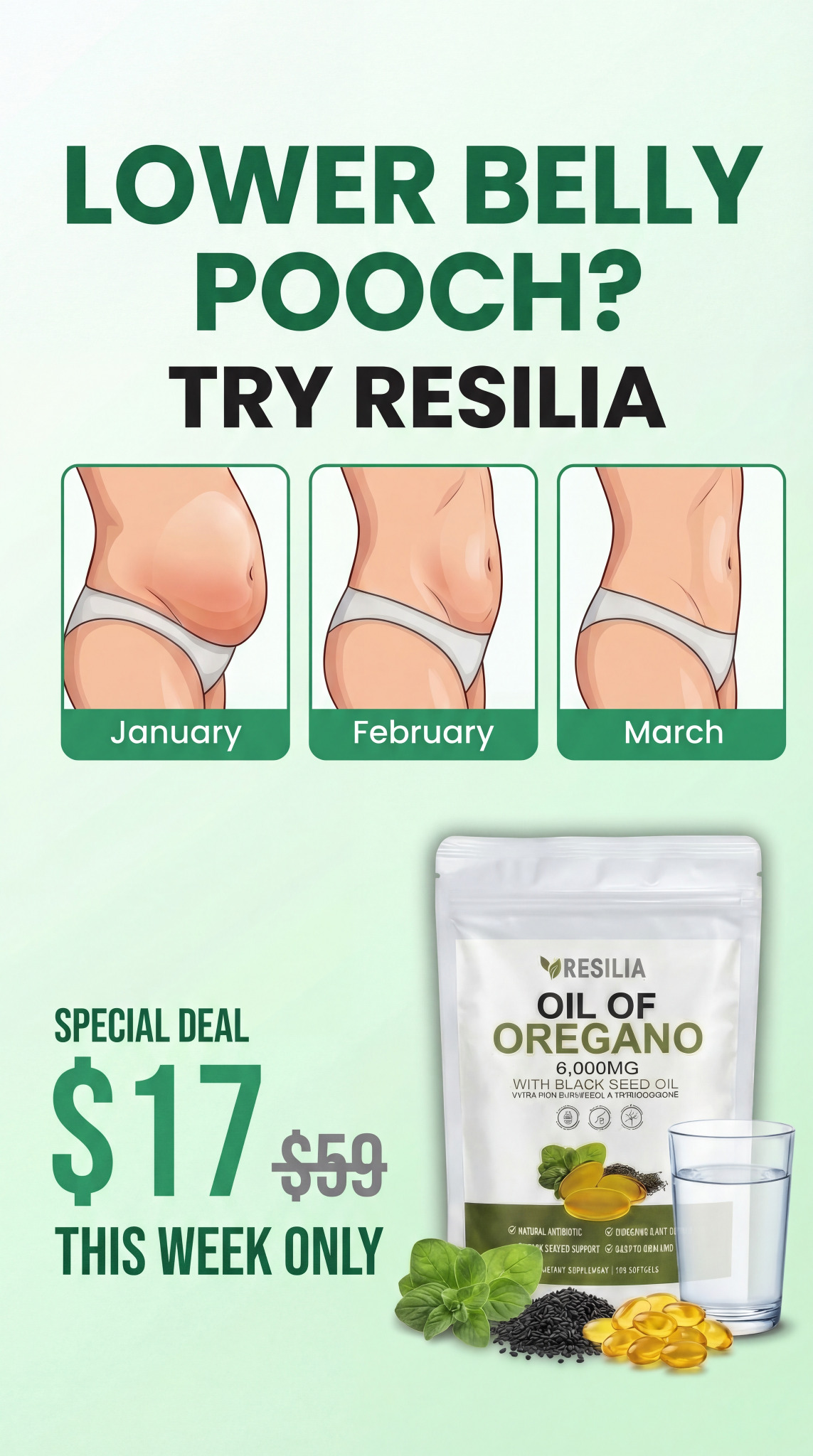
🧽 Flush Out What Doesn’t Belong – Feel the Reset
“I’ve been feeling stronger and more balanced since taking Resilia Oil of Oregano. My energy feels steady throughout the day, and I haven’t been getting sick like before. I love how natural it feels — just pure support for my body.”
LEARN MORELike this ad? Make it yours.
Crush rebuilds this exact creative around your product — your brand, your colors, your offer — in about a minute.