
Active· since Feb 13, 2026
- 212
- days running
- 1
- relaunches
- 8
- EU reach
Ad copy
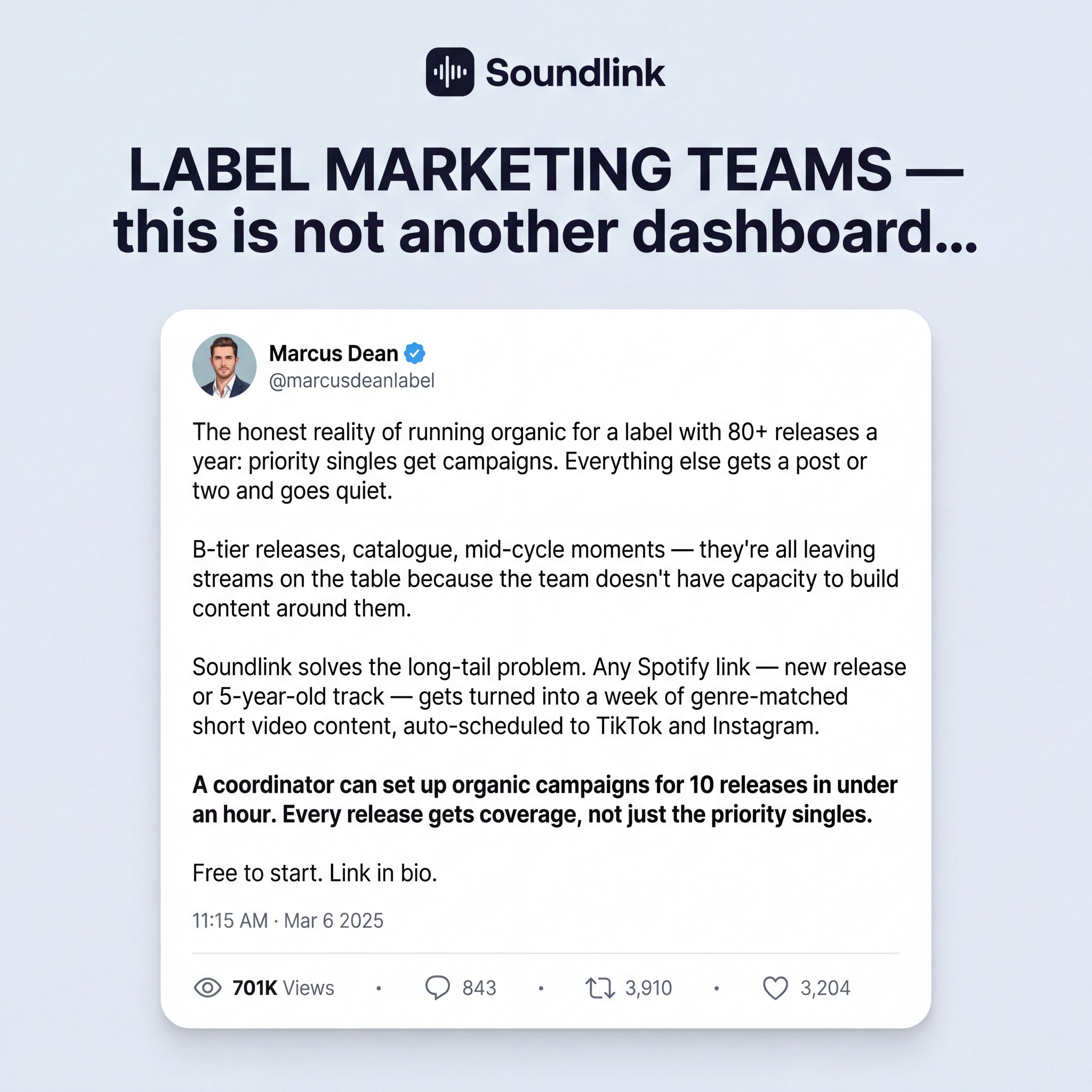
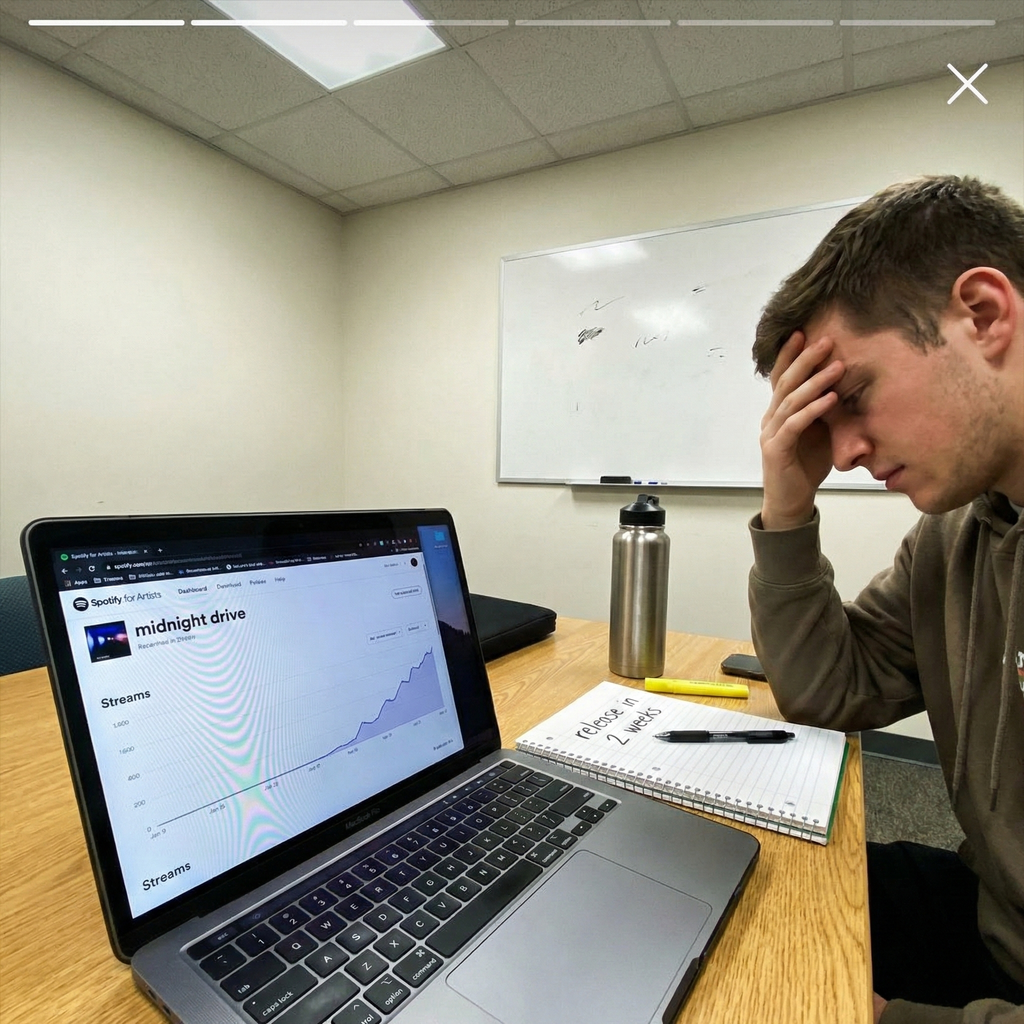
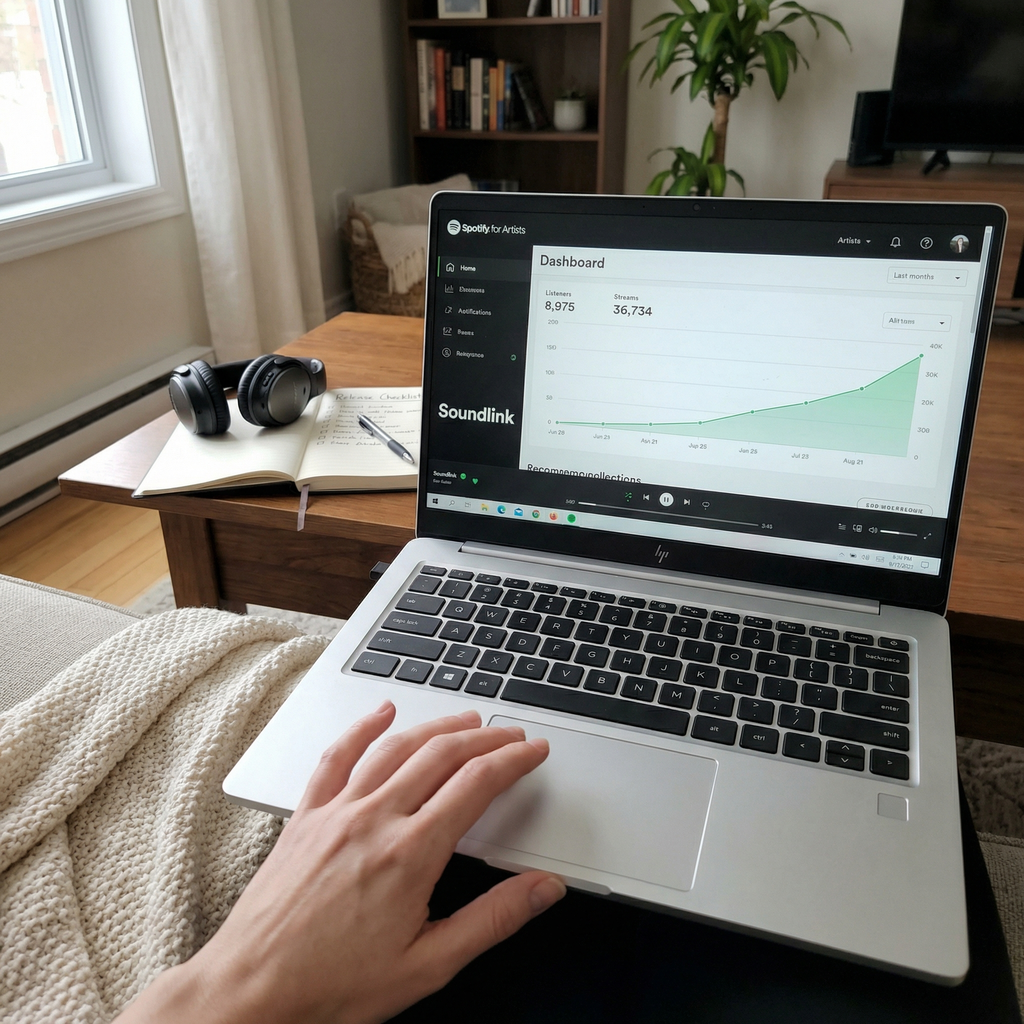
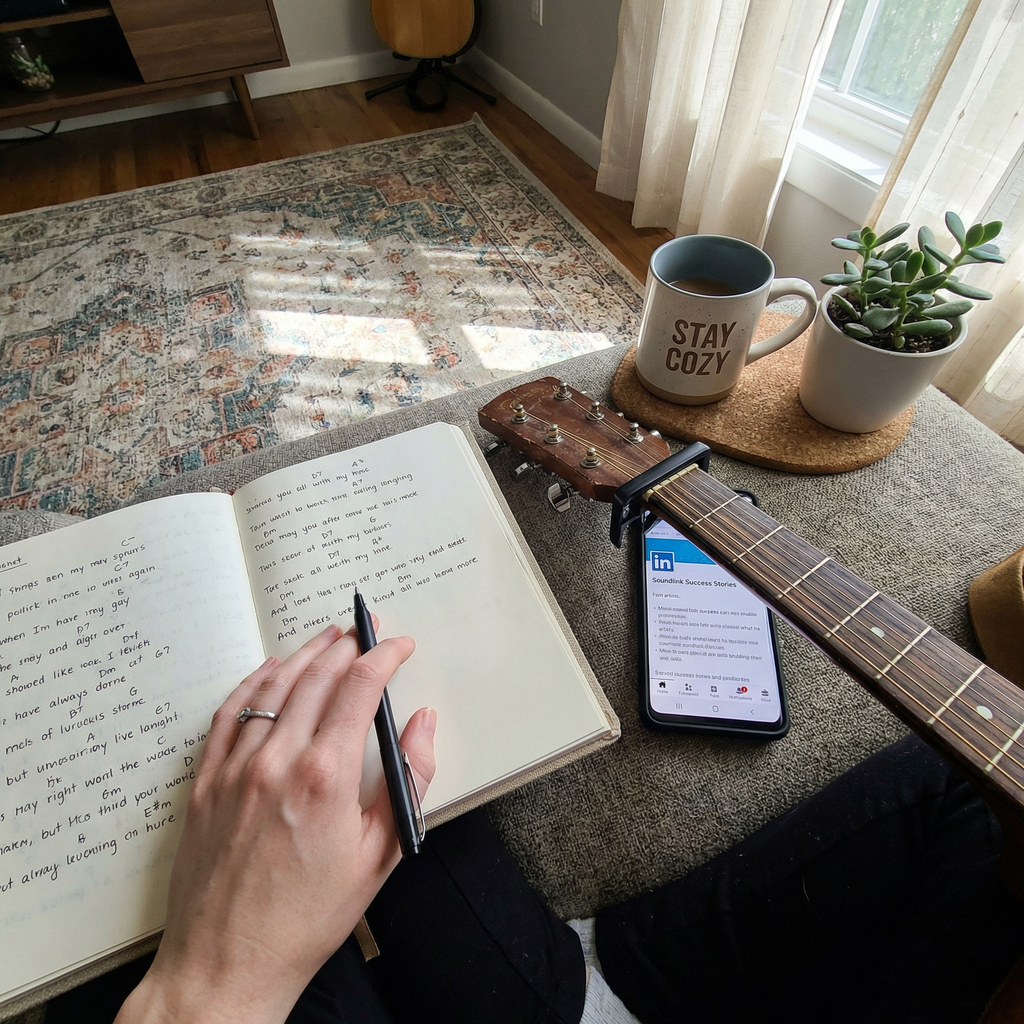
“Dude… how are these artists going from 3k streams to 1.4 million while I’m stuck at 200?” he texted after seeing those LinkedIn screenshots. Everyone assumes it’s because they post 3-5 times a day, but it’s not - it’s ONE tracked link that routes every listener to the right platform and shows you what’s actually working. That message hit me at 11:46 PM, mid-doom scroll TikTok, with my half-finished chorus still open on my laptop. And if you’re an independent artist, you already know the loop. You sit down to make something real… and your brain immediately goes, “Cool. Now go post 3 times.” Promotion definitely feels like a full-time job, especially when you’re trying to make an impact on your own. I have a regular job. A real one. 9:00 AM meetings, Slack pings, the whole deal. So my “artist time” is 6:30 AM to 7:45 AM if I’m lucky, or 10:30 PM to 12:10 AM if I’m not. For months I tried to be “consistent” like everyone screams at you to be. 1 video a day. Then 2. Then the “recommendation” that my BS radar tells me “2-3 times daily” is borderline ridiculous. It wasn’t just the posting. It was the 47 takes because the lighting looked weird, the 18 minutes finding the “right” hook, the 1-2 hours of editing… only to get a few hundred views. The worst part? There’s barely any time left for… actually making music. I’d finish a release and feel nothing. Not proud. Not excited. Just cooked. Every time I make music… by the time I release it I just feel too burned out to put the effort into promoting it. So when my friend sent that text, I opened the LinkedIn post he was talking about. It was literally just raw screenshots. No influencer face. No “watch me point at captions.” Just slide after slide of artists posting wins. “Added 327 followers in 14 days.” “Went from 8,900 monthly listeners to 62,000.” “Pre-save converted at 21%.” “$0 spent on ads.” And what made me mad was how… normal the posts sounded. Like they weren’t even trying to flex. Meanwhile I’m over here acting like a part-time videographer for my own songs. My first thought was the same one you probably have: “Okay, they have a team.” But the comments didn’t match that story. One artist wrote, “I’m pretty terrible with social media and promoting.” Another said, “I’m not really comfortable being a presenter on camera.” A third literally said, “I have a regular job.” Same constraints. Better results. So what was the difference? At 12:38 AM, I started clicking through the screenshots like a detective. Zooming in. Looking for the pattern. And there it was, over and over. Not a “viral strategy.” Not a fancy camera. Not 5 new apps. It was always the same boring, unsexy thing: one clean link that lived everywhere, tracked everything, and didn’t send people into the void. Because here’s the part nobody wants to admit out loud: Most artists aren’t failing because their music is bad. They’re failing because their marketing is leaking. You’re sending people to 6 different places. Spotify link in one caption. Apple Music link in another. YouTube in your story. Bandcamp in your bio. Then you wonder why the momentum feels like it disappears. If you keep doing that, you’ll keep getting the same gut-punch outcome: you spend 90 minutes making “content,” and your song still lands like a pebble in the ocean. And you blame yourself. Or the algorithm. Or being “shadowbanned.” I did too. My rock-bottom moment was a Friday night at 1:13 AM, staring at my release post with 412 views and 9 saves. 9. After I’d spent $79 on a little “promo tool,” $49 on a Canva subscription, and at least $300 over 12 months on random services that promised “organic growth.” I sat there thinking, This is a waste of life. Not because music is a waste. Because I wasn’t making music anymore. I was feeding a machine that never gets full. The next morning, I went back to that LinkedIn thread and messaged 2 of the artists who posted screenshots. One replied in 6 minutes. He didn’t give me a motivational speech. He didn’t tell me to “grind.” He said, “Stop sending people to random places. Pick 1 link system. Track it. Build around it. That’s the whole game.” Then he sent me the name of the platform he used: Soundlink. I’d heard of “link in bio” tools before and wrote them off as the same thing with different colors. But I clicked anyway because the proof was sitting right there in those screenshots. The first thing that surprised me was how specific it was to music. Not “here’s a page with buttons.” It let you set up 1 smart link for a release that automatically routes people based on their device, then shows you actual numbers: clicks, conversions, what platform people choose, and where they drop off. And the part that made me feel stupid for not doing it sooner: it captures fans instead of just bleeding them. Emails. Pre-saves. Follows. Actual actions you can build on, instead of praying someone remembers your name 2 hours later. So I tested it like a skeptic. I gave myself 30 days. Not “post 30 days.” Just 30 days of not scattering my links all over the internet. I built 1 Soundlink page for my next single. I put it in my bio, pinned it, and used the same link in every caption for 28 days. No new camera. No new lighting. No “3 times a day” nonsense. I posted 4 times a week instead of daily because posting content daily is extremely time-consuming and I’m not pretending it’s not. And because I’m not really comfortable being a presenter on camera, I stopped trying to be one. I posted snippets, lyric slides, a studio screen recording, and 1 simple “if you like X, you’ll like this” clip. Here’s what changed: On day 7, I saw 186 clicks and realized most people were choosing Spotify, but 23% were hitting Apple Music. Before, I never would’ve known that. I would’ve just thrown a Spotify link out and called it marketing. On day 14, the page had pulled in 41 email signups. Not thousands. Real people. Enough that I could actually talk to them without screaming into the void. On day 30, the single didn’t magically become a hit, but it finally behaved like a real release. It went from 1,120 streams in the first 48 hours (my usual) to 6,740 in 48 hours. And the part that messed with my head the most? I wrote more. Like, actual writing. One morning I sat down at 7:05 AM and wrote 2 full verses before I even thought about socials. I forgot what quiet confidence feels like until that week. That’s the win nobody puts in a “how to grow” thread. Getting your artist brain back. Because you’re not lazy. You’re stuck in a system where your only “plan” is to manufacture content until you hate the thing you love. Soundlink didn’t give me motivation. It gave me a mechanism: 1 tracked link, 1 destination, 1 set of numbers that tells you what to do next so you stop guessing. And to be clear, I had objections. I assumed it would be complicated. It wasn’t. I assumed it would take 6 hours to set up. It took me 22 minutes the first time, and 9 minutes the next. I assumed it would only work if you already had an audience. But the whole point is you don’t need a massive audience. You need less leakage. If any of this feels uncomfortably familiar - the burnout, the “full-time job” feeling, the hours of editing for 300 views - go look at that LinkedIn style proof and ask a different question. Not “How do I post more?” Ask, “Where am I losing people after they actually care?” Then set up a single smart link system and run everything through it for 30 days. I use Soundlink. You don’t have to copy me. Just stop making it harder than it has to be. Your next 1,000 listeners are already trying to find you. Don’t send them on a scavenger hunt.
Soundlink | Spotify Music Ads That Actually Work - getsoundlink.com
Soundlink is the only music marketing platform that connects Meta Ads to real Spotify streams. Track real fans, not just clicks.
LEARN MORELike this ad? Make it yours.
Crush rebuilds this exact creative around your product — your brand, your colors, your offer — in about a minute.