The Serenity Times
The Serenity Times Facebook ad: “Read This If You’re Body is Anxious”

Ran for 18 days, from April 5 to April 23, 2026, the last day Crush saw it.
Run by The Serenity Times on Facebook. Crush is not the advertiser and does not verify its claims. See this ad in Meta's Ad Library(opens in a new tab)
Want an ad like this for your product?
Crush makes new ad images for your product from this ad: your logo, your product photo, your offer.
Trials from $19.95 USD, then $79.95 USD a month. Cancel anytime.
About this ad
- Meta Ad Library ID
- 1866829287367198
- Platforms
- Facebook, Instagram, Audience Network, Messenger and Threads
- Relaunches
- 0
Ad text
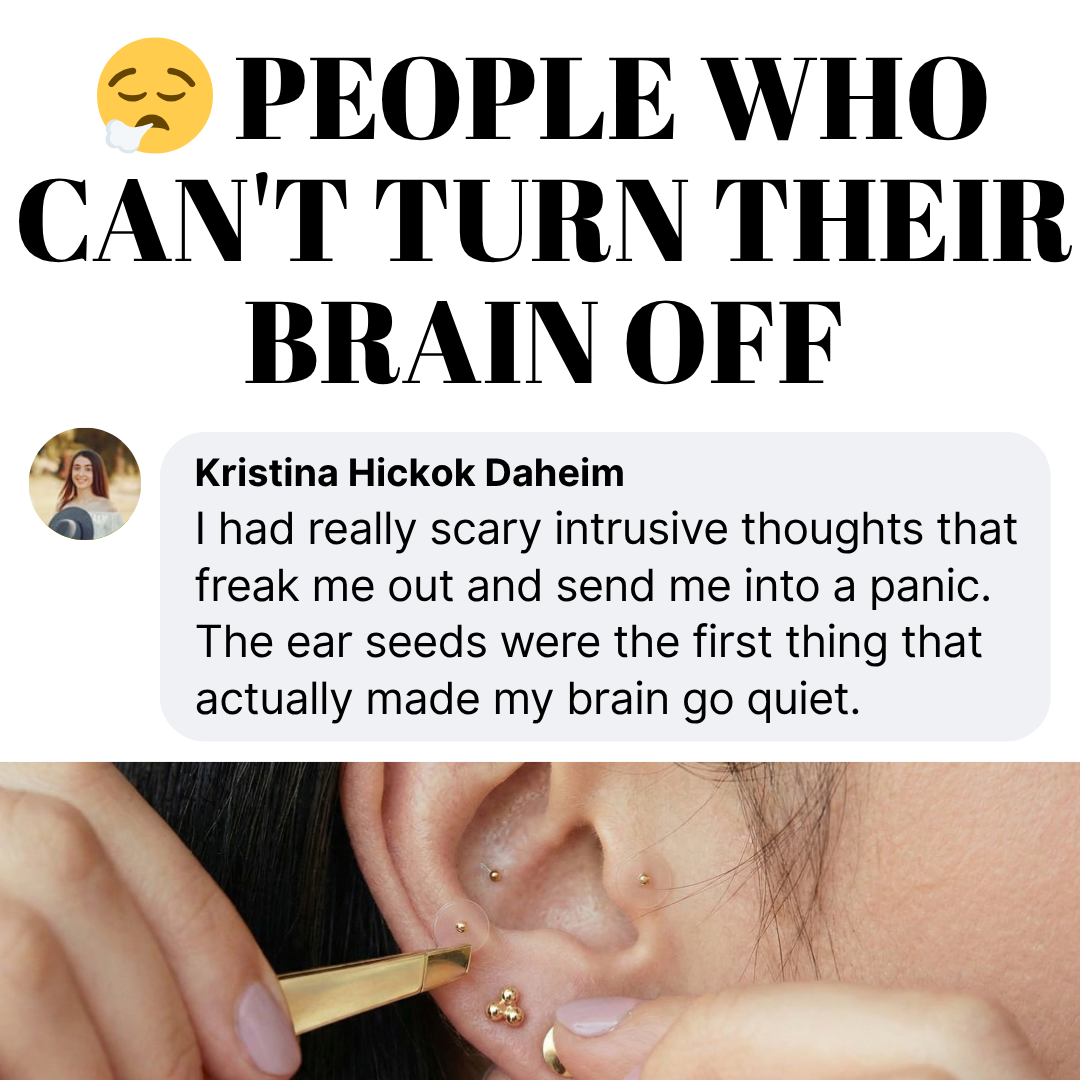
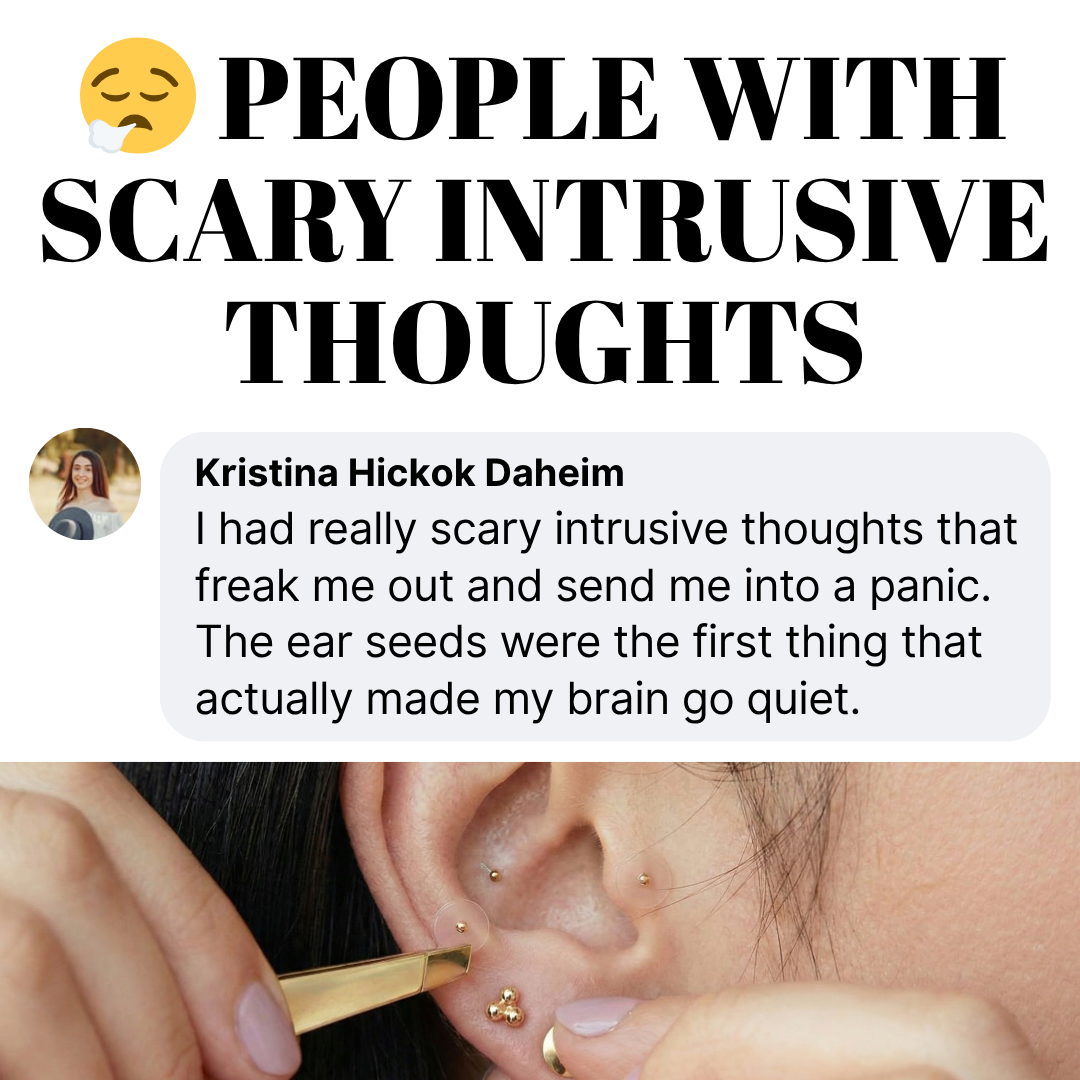
To Women Who've Done Everything Right — And Still Shake I tried CBT first. Eighteen months of weekly sessions with a therapist who specialized in performance anxiety. I understood why it started. I identified the patterns. I changed the thought structures. My therapist called it "textbook progress." She was right — cognitively, I was in the best shape of my life. My hands still shook in meetings. Then meditation. The good kind — not a free app, a proper eight-week MBSR course with a teacher who'd trained with Jon Kabat-Zinn's students. Daily practice, forty minutes in the morning, ten minutes midday. I learned to observe my anxiety without identifying with it. I genuinely changed my relationship with stress. My voice still cracked when I had to speak in front of people. Then propranolol. My GP prescribed it as a situational beta blocker — twenty minutes before a presentation, take one. For about three months it worked, sort of. It slowed my heart rate. My hands shook a little less. But it wore off unpredictably, and the thought of being dependent on a pill to get through a Tuesday briefing was not where I wanted to land. EMDR next. Seven sessions. We processed the memories, the early experiences that might have wired the response in. My therapist said the sessions were going well. I believed her. I could revisit those memories without the physical response they used to trigger. But put me in a room with twelve people and ask me to speak for sixty seconds? My body still ran its program. Magnesium glycinate. Ashwagandha. I lined them up on my bathroom shelf like soldiers. Some of them reduced the background hum. None of them touched the acute response — that specific moment when my voice started to break, my hands started to tremble, and my mind watched from a clear distance, completely unafraid, while my body did something else entirely. You know this exhaustion. Maybe you're further along than I was. Maybe you've spent more money. Maybe your list looks different — different therapists, different supplements, different techniques. But I'd guess you're here because you've done the work, and the work hasn't fixed the specific thing you needed fixed. The shaking. The voice. The visible, physical, public evidence of something your mind isn't even feeling. You've tried to understand it. You've done the inner work. You've been patient. You've been consistent. You've followed the advice — every article, every therapist, every forum telling you to address the root cause, change your relationship with anxiety, build your nervous system resilience. And you still can't give a toast at a dinner without your voice going thin. It's not that the therapy didn't help. It did help — your mind is clearer than before, your relationship with anxiety has genuinely changed. But the physical symptoms? They're still showing up on their own schedule, following their own logic, unconnected to anything you're thinking or feeling. You're not crazy. You're not doing it wrong. You're not failing therapy. But I think you, like me, have been working on the wrong part of the problem. I want to tell you about the thing I noticed that changed everything. After five different approaches over three years, I was sitting in a meeting — not presenting, just listening — completely calm, not anxious about a single thing in that room. And my hands started to shake. No thought attached. No worry. No self-consciousness. I wasn't even paying attention to myself. I was thinking about what was on the whiteboard. My hands shook anyway. I set my pen down and stared at them and thought: this is not coming from my mind. This is coming from somewhere else entirely. That was a strange thought to have. Everything I'd been told — and everything I'd invested years and hundreds of hours pursuing — was built on the assumption that if I fixed my mind, my body would follow. Change the thoughts, the body calms. Process the memories, the nervous system heals. Build present-moment awareness, the alarm stops firing. But here was my body, firing its alarm in the complete absence of any mental trigger. Independently. As if it had its own separate system. As if the mind and the body weren't actually on the same circuit at all. That's because they're not. I know. Hear me out. Because this is the thing that none of the five approaches I tried — and none of the things you've probably tried — ever explained. The autonomic nervous system doesn't receive instructions from the conscious mind. It runs on a separate neural pathway. It monitors your environment, detects patterns that resemble past threats, and fires the stress response on its own schedule. No thought required. No fear required. No conscious anxiety required at all. Look at everything you've tried. CBT: Addresses the thinking brain — identifies and restructures thoughts. Works through the prefrontal cortex. The ANS doesn't receive that signal. Meditation/Mindfulness: Builds awareness and reduces reactivity in the thinking mind. Helps the observer self disengage from anxious thought. The ANS monitors independently of the observer self. EMDR: Reprocesses traumatic memories stored in the brain. Can reduce the intensity of known triggers. But the ANS fires pattern-matched stress responses — not always to specific memories. Sometimes just to the category "room full of people." Beta blockers: Block the downstream effects of adrenaline — reduce heart rate, reduce peripheral effects. They're addressing the symptoms, not the source signal. They're muffling the alarm bell rather than telling the alarm system to stop. Supplements: Reduce baseline cortisol. Take the edge off background activation. But when the ANS fires an acute response, background cortisol levels aren't the determining factor. See the pattern? Every approach I tried — and I suspect every approach you've tried — works from the top down. Mind to body. Thought to nervous system. They all assume the same thing: that if you change something in the thinking brain, the body will follow. But the ANS doesn't run through the thinking brain. All those years. All those approaches. All aimed at a signal pathway that doesn't connect to the system that's actually running the alarm. I found this out from a physiotherapist friend, of all people. We were at dinner, I'd described my situation — the shaking despite no fear, the years of approaches that helped my mind but not my body — and she said something I wasn't expecting: "You've been using top-down tools for a bottom-up problem." She explained that the ANS has its own incoming signal pathway — mechanoreceptors in the skin that respond to physical pressure. Those receptors send a signal directly up the vagus nerve. The vagus nerve is the main pathway of the parasympathetic system — the "off switch" for the stress response. And critically: that pathway doesn't go through the thinking brain at all. It bypasses it entirely. "If you want to actually communicate with the ANS," she said, "you have to speak its language. Physical input. Not thought. Not memory reprocessing. Pressure on skin." I thought she was going to recommend a massage therapist. She mentioned acupressure mats. I went home skeptical. I'll be honest. After three years of approaches that all promised to address "the root cause," I was not primed to believe that lying on a mat was going to do what therapy, EMDR, and beta blockers couldn't. But I looked up the research. Olsson et al., Uppsala University, 2011 — PubMed ID 21208128. A study on the physiological effects of acupressure mat use. Subjects who lay on the mats for twenty minutes showed measurable reductions in cortisol, measurable increases in oxytocin, measurable increases in parasympathetic nervous system activity. The mechanism: 6,000+ pressure points across the mat → sustained activation of mechanoreceptors → direct vagus nerve signal → oxytocin release → parasympathetic cascade. No thought required. No memory processing required. No cognitive restructuring required. A direct, physical, bottom-up input to the autonomic nervous system. The actual system that was running the alarm. I read it twice. Then I read three more studies like it. And I kept thinking about the specific quality of the problem I'd been trying to solve for three years — the physical response with no mental content, the body on its own circuit, the shaking that had nothing to do with what I was thinking. This was the missing input. Not a better version of the top-down approaches I'd already tried. A completely different category — the only category that could reach the system that needed reaching. I want to be honest about what happened next, because I know you've heard "this one is different" before. The first week: I used the ThinkMat for twenty minutes each evening. The first night I noticed I fell asleep more quickly than usual. That was the extent of it. I didn't expect miracles. Week two: I had a team meeting on a Wednesday. I noticed, midway through speaking, that my hands were still. Not gripping the table, not held carefully still — just still. I didn't do anything to make them still. They just were. Week three: I attended a dinner with people I'd been carefully managing my presence around for two years. I made a comment that required everyone to look at me. My voice came out clean. Month two: I gave a five-minute presentation at work. Standing up. Everyone watching. And I was monitoring myself very carefully because this was the situation that had always triggered the worst response. Voice: held. Hands: steady. Body: present. Afterward one of my colleagues said I seemed "really confident." I stood in the lift on the way back to my floor and thought about what that meant — that the thing my body had been signaling for three years had read as "not confident," and the absence of it read as confidence. It had never been about confidence. It had never been about thoughts or memories or cognitive structures at all. It had been about a physical system that now had a way to regulate. Month three: I went to a family gathering and was asked to give a short speech. Forty seconds. Standing up, glass in hand, fifteen people looking at me. My voice didn't crack. I'm going to tell you exactly what that felt like, because you've been living without it long enough to understand. It felt like putting down something I'd been carrying so long I'd forgotten it was heavy. Here's what ThinkMat is. It's an acupressure mat — a flat surface covered in 8,210 pressure points. You lie on it for twenty to thirty minutes. That's the protocol. The pressure points activate mechanoreceptors under the skin, which send a signal directly up the vagus nerve, triggering an oxytocin release and a measurable shift into parasympathetic dominance. It doesn't address your thoughts. It doesn't process your memories. It doesn't require you to understand why your nervous system learned this pattern. It speaks directly to the system that runs the pattern. That's what makes it different from everything else you've tried — not that it's a better version of a top-down approach. It isn't in the same category. It's a bottom-up physical input to a bottom-up physical system. The first one you've encountered that actually connects to the source. I know what you're thinking. You've heard guarantees before, from approaches that also promised to address the root cause. I understand the skepticism. I had the same skepticism. The difference is that this time, the mechanism is right. Not because I say so — because three years of everything else showed me, by process of elimination, what the mechanism was. And because a published peer-reviewed study showed the same thing. You've done the top-down work. You've been thorough and patient and consistent. That work changed your mind. It just didn't reach the part of the problem that needed reaching. ThinkMat reaches it. You don't have to keep managing your visibility in rooms. You don't have to calculate liquid amounts before you pour coffee. You don't have to rehearse deep breaths in corridors. You don't have to cancel the things you want to attend because your body has its own opinion about social situations. You've done enough top-down work. It's time to give the nervous system what it actually responds to.
Where the ad sends people
theserenitytimes.com
Read This If You’re Body is Anxious 👆
The Serenity Times
Learn more: thinkbodie.com(opens in a new tab)