Gebre Yared
 Facebook ad: “READ WHAT JESUS PREACHED AFTER HIS RESURRECTION”
Running for 16 days since November 5, 2026. Crush last saw it on November 21, 2026.
Run by Gebre Yared on Facebook. Crush is not the advertiser and does not verify its claims. See this ad in Meta's Ad Library(opens in a new tab)
Make your own version of this ad
Crush makes it, launches it in your own Meta ad account, scales the winners and pauses the losers.
About this ad
- Meta Ad Library ID
- 1870078664424471
- Platforms
- Facebook, Instagram, Audience Network, WhatsApp and Threads
- Relaunches
- 0
- Niche
- Education & Courses
Ad text
The night before Jesus died, He looked at His apostles and said seven words that should stop every Christian dead in their tracks. It was Passover, in an upper room in Jerusalem, a few hours before soldiers with torches would come for Him in the garden. "I have yet many things to say unto you, but ye cannot bear them now." Many things. Not one thing. Not a footnote. Jesus Himself counted what He was holding back as many. John 16:12. It is in your Bible right now. And He did not leave it there. In the very next verse, John 16:13, He told them the Spirit of truth would come and guide them into all truth. All truth. Not some of it. The men in that room were promised the whole of it, and they were told they would get it after the cross. The Son of God, hours from the cross, telling the men He trusted most on earth that He was holding back. That there were things He had not told them yet. Things they were not ready to hear. It was the same night He washed their feet. The same night He broke the bread and passed the cup. Judas had already gone out into the dark to sell Him for thirty pieces of silver, and the eleven who were left were sitting close enough to touch Him. These were men who had left their boats and their tax tables for Him. They had watched Him raise a dead girl, calm a storm and feed five thousand people with a boy's lunch. If anyone on earth was ready to hear everything, it was them. And He told them they were not ready yet. And then He died. And then He rose. The same men who had scattered in the garden and hidden behind locked doors watched Him walk back into the room. Peter, who had sworn three times that he never knew Him, was standing in front of Him again. And then, according to your own Bible, He came back and said them. Three days later the stone was rolled away and the grave clothes were lying empty. John says the napkin that had been around His head was folded and set in a place by itself, like a man who meant to come back to the table. And He did come back. Not to the crowds. Not to Pilate. Not to the priests who paid to have Him killed. He came back to the same men He had been holding back from, the same night He had told them they could not bear it. Acts 1:3: "He showed Himself alive after His passion by many infallible proofs, being seen of them 40 days, and speaking of the things pertaining to the kingdom of God." 40 days. Not a farewell. Not small talk. 40 days of direct, private instruction from the risen Christ to His inner circle. The things He could not tell them before the cross. The things they could not bear until they had watched Him die and come back. Acts 1:2 says that during that time He gave commandments to the apostles through the Holy Ghost. Commandments. Not encouragement. Not a goodbye speech. Orders. Acts 10:41 says He ate and drank with them after He rose from the dead. He sat at their table again. First Corinthians 15:6 says more than five hundred people saw Him at once. And the number is not an accident. Moses was on the mountain 40 days and 40 nights, and he came down carrying the law. Jesus was in the wilderness 40 days before His ministry began. Every time God puts 40 days on a page, something is being handed over. Your Bible confirms those 40 days happened. Luke wrote it. Luke, the physician, the careful one, the man who opens his Gospel by saying he had traced everything from the very first. He made sure you knew the 40 days were real. Your Bible does not contain a single word of what He said. Forty days is close to a thousand waking hours. That is more time than most churchgoers will spend in Bible study in their entire life, and the apostles spent all of it at the side of the risen Christ. I grew up in church. 30 years of Easter sermons. I knew He rose, I knew He appeared, I knew He ascended. Not once — not one single time — did a pastor stop and say, "Now let us look at what Jesus actually taught during those 40 days." I could tell you the order of the Easter morning visits by heart. Mary Magdalene at the tomb. The women running. Peter and John racing each other, and John getting there first. I could have taught it to a children's class without opening the book. Nobody brought it up. Nobody asked where those teachings went. And I never thought to ask, because I assumed everything He needed to say was already in my Bible. Every Easter looked the same. Lilies across the front of the sanctuary. The choir in white. My mother's ham in the oven before we left for the sunrise service. The sermon always ended at the empty tomb, and the next week the pastor would be somewhere in Paul's letters, as if the story had skipped from Sunday morning to the day of Pentecost. Forty days were missing from the middle of the most important story ever told, and I had sat through it 30 times without noticing the hole. I was wrong. One night a pastor I respected said something during a Wednesday study that I have not been able to stop thinking about. He was walking through the post-resurrection appearances and he said, almost as a footnote: "We know Jesus taught extensively during this period, but we do not have the content of those teachings preserved in our canon." I will not say his name. He is a good man who taught me more than most, and he was only saying out loud what every seminary already knows. He said it like it was a minor detail. Like the weather. Like a note about a translation. Then he moved on to the next slide, and everyone around me turned the page. It hit me like a truck. I drove home that night without the radio on. I sat in my driveway with the engine off and the porch light on, and I kept hearing it. We do not have the content. The content was the words of Jesus. The words of the risen Jesus. And a man who had preached for decades had just told a room full of believers that we did not have them, and nobody in the room so much as put down their coffee. That night I did something I had never thought to do. I opened every Gospel to the post-resurrection chapters — Matthew, Mark, Luke, John — and I read every word Jesus says after the resurrection, back to back, trying to piece together 40 days of teaching. It took me less than ten minutes. I checked the clock on the stove when I started and when I finished, because I did not believe it. Not because I am a fast reader. Because there is almost nothing there. So I read it all again, slower, with a pencil, the way you read a contract you are about to sign. It still came out to a few pages. The road to Emmaus. Thomas. A morning with Peter on the beach. The Great Commission. A few hundred words scattered across four books. On the road to Emmaus two men walked about seven miles with Him and did not know who He was until He broke the bread. Afterward they said to each other, "Did not our heart burn within us, while he talked with us by the way?" Their hearts burned for seven miles. Thomas was told to reach out and touch the wounds. Peter got asked three times if he loved Him, and was told three times to feed His sheep. That is what you have. That is everything that survived from 40 days of the risen Christ teaching His apostles about the kingdom of God. For comparison, the Sermon on the Mount was one afternoon on a hillside, and Matthew gives it three full chapters. One afternoon gets three chapters. Forty days with the risen Son of God gets a few paragraphs. And once I saw it, I could not unsee it. Every time I picked up my Bible after that, I knew exactly where the gap was. Right between the last chapter of the Gospels and the first chapter of Acts, 40 days wide. I started pulling the thread, and what I found was not hidden. It was sitting in my own Bible, in plain sight, confirmed by the apostles who were in the room. I did not need a secret library or a scholar's password. I needed my own Bible and the willingness to read the parts that point past themselves. John 21:25 — the very last verse of John's Gospel. The final line written by the man who leaned against Jesus at the Last Supper, who stood at the foot of the cross, who walked with Him for three years: The man Jesus looked down at from the cross and trusted with His own mother. "And there are also many other things which Jesus did, the which, if they should be written every one, I suppose that even the world itself could not contain the books that should be written." The world itself could not contain them. That is how much He did and said, by the word of the man who saw it. And your Bible holds 21 chapters of John. That is not humility. That is a confession. The apostle who loved Him most, telling you with his last written breath that the record you hold in your hands is not complete. That there was more. That what you have is not all there was. And John had already said it once before. John 20:30: "And many other signs truly did Jesus in the presence of his disciples, which are not written in this book." Twice the same apostle stops his own Gospel to warn the reader that the book is not the whole of it. Twice. Most of us have read both verses and kept turning pages. And it was not just John. Luke 24:27 — on the road to Emmaus, after the resurrection: "And beginning at Moses and all the prophets, he expounded unto them in all the scriptures the things concerning himself." That was the same day He rose. Sunday afternoon, the first day of the new creation, and He spent it teaching the scriptures from the first page. Jesus gave two disciples a complete exposition of the entire Old Testament — Moses, the prophets, every psalm — and how it all pointed to Him. Luke tells you this happened. Luke does not record a single word of it. Think of the verses Christians argue about to this day. Psalm 22, they pierced my hands and my feet. Isaiah 53, He was wounded for our transgressions. Jesus sat with those two men and walked them through every one of those passages Himself, from His own mouth. The answer to centuries of argument was given on a dirt road one afternoon, and it was never written into your Bible. Luke 24:44-45: "Then opened he their understanding, that they might understand the scriptures." And then, Luke 24:49, He told them to stay in Jerusalem until they were endued with power from on high. Power from on high. That is what all of this was building toward. Not information for its own sake, but power. The men who had run away on the night of the arrest were being made into men who would stand in front of the same council that killed Him and refuse to be quiet. He opened their understanding. He cracked open their minds and rewired how they read everything — the Torah, the Prophets, the Psalms. What did that look like? What did He actually say when He did it? Then there are the orders He left them with. Matthew 28:20: "Teaching them to observe all things whatsoever I have commanded you." All things. Whatsoever I have commanded you. The apostles were sent to teach every nation everything He had commanded them, and the record of what He commanded in those 40 days is not in the 66 books. Mark 16 says the ones who believe will cast out devils in His name and lay hands on the sick, and the sick will recover. It tells you what will happen. It does not tell you how they were taught to do it. Your Bible gives you the fact that it happened. It gives you almost nothing of what He said. I sat there and counted it on my fingers. A dirt road. A locked room. A beach. A mountain in Galilee. And then He was taken up in a cloud. Everything else from those weeks is a blank page. Stop and feel what that means for a moment. The risen Son of God, who had just walked out of death, sat with His closest friends and taught them for weeks. And you were handed the fact of it and none of the content. Four passages. Two apostles. All confirming the same reality. The post-resurrection teaching of Christ was extensive, it was transformative, it was detailed enough that John said the world itself could not contain the books — and it is almost entirely absent from the 66 books sitting on your nightstand right now. And you can see the instructions working in the book of Acts, even though the instructions themselves are not there. Acts 2:42 says the first believers continued steadfastly in the apostles' doctrine and in prayers. The apostles' doctrine. They were being taught something, every day, by the men who had sat with the risen Christ. Acts 2:15: it was the third hour of the day when the Holy Ghost fell. Acts 10:9: Peter went up on the housetop to pray about the sixth hour. Acts 3:1: Peter and John went up to the temple at the hour of prayer, being the ninth hour. The third, the sixth, the ninth. They were keeping a schedule nobody wrote down for you. James 5:14 tells the church to call the elders when someone is sick, and to pray over him, anointing him with oil in the name of the Lord. Then it stops. It never tells you what the elders said over the oil. Those men knew. Somebody told them. Every sermon you have ever heard about the resurrection skipped this. Every Easter. Every Bible study. Every single pastor who taught you the story of the risen Christ left out the most important part — what He actually said when He came back. Think of how many sermons that is in one lifetime. Fifty-two Sundays a year, Easter after Easter, Bible study after Bible study, and not one hour spent on what the risen Christ said with His own mouth to the men who would build His church. Not because they were hiding it from you. Because they did not have it either. Your pastor learned from a seminary that taught from the same 66 books. His teachers learned from the same 66 books. Nobody in the chain was hiding anything. The missing part had been gone so long that nobody remembered there was a part to miss. So the question that kept me awake that night becomes very simple. Did those teachings survive? Did anyone, anywhere, write down what the risen Christ told His apostles during those 40 days? It was past two in the morning. I was sitting at my kitchen table with four Bibles open in front of me and the coffee gone cold, and I could not stop asking it. The answer is yes. And it has been preserved for more than seventeen hundred years in an ancient sacred language called Ge'ez — held by the only Christian nation on earth that never removed a single book from its biblical canon. Ge'ez is still the language the Ethiopian church prays in today, the way Rome kept Latin for centuries. Priests chant it before sunrise in churches carved out of solid rock. Hardly anyone speaks it at the market anymore. It was kept for one reason, to carry the scriptures. Ethiopia. The oldest Christian nation in Africa. Converted in the 4th century. Never conquered. Never colonized. The only country on earth that claims to still hold the Ark of the Covenant, locked in a chapel in the city of Axum, guarded by a single monk who never leaves its walls. In 1896 Italy marched an army into Ethiopia to make it a colony like the rest of Africa. At a place called Adwa, the Ethiopians sent that army home beaten. Every other nation on the continent was carved up by European powers. Ethiopia was the one they could not take. And because no empire ever ruled them, no empire ever told their church which books to cut. That is the kind of nation you would trust with something nobody else was allowed to keep. While Rome edited its canon. While Luther stripped books he did not agree with. While King James authorized a translation. While a British Bible society cut 14 books in 1826 to keep its Protestant funding — Ethiopia changed nothing. Luther did not only move books to the back. He wrote that the letter of James was an epistle of straw, and he wanted it gone too. James. The same letter that tells the church to anoint the sick with oil in the name of the Lord. The one book in your New Testament that even points at the oil was almost cut along with the rest. 88 books. Sealed since the 4th century. While whole countries changed their Bibles every few hundred years, one church kept the same 88 books on the same altars, copied by hand, generation after generation. Here is what most Christians have never been told. And it starts with the Bible your great-great-grandparents read. The original 1611 King James Bible had 80 books. Not 66. Eighty. The Apocrypha sat in a separate section for over 200 years. Then in 1826, the British and Foreign Bible Society made a decision: cut the extra books or lose funding from the Protestant churches. Open a facsimile of the 1611 and you will find the books sitting between the Old Testament and the New. The translators even printed cross-references in the margins pointing readers from the Gospels into those books. They read them. They expected you to read them. That is how your Bible went from 80 to 66. Not a council of bishops. Not a revelation from God. A funding decision by a printing organization. From then on, the Bibles that went out by the shipload to churches and missions around the world were printed without them. Your grandparents were handed that shorter Bible. Your parents were handed it. You were handed it. Nobody along the way was told that a printing society had made the cut. The Catholics kept 73. The Eastern Orthodox kept 78. Ethiopia kept all 88. Ethiopia did not add books. Everyone else stripped them out. So when someone tells you the Ethiopian Bible is a strange Bible with extra books, the truth is the other way around. Theirs is the Bible that was never trimmed. Ours is the one that went through the scissors. And one of those books is called the Book of the Covenant. It opens with Christ speaking directly to His apostles after the resurrection. The first words out of His mouth are about the signs that the end is near. Not a prophet's vision. Not an apostle's letter about what Jesus might have meant. The risen Christ, in His own voice, continuing the conversation that Acts 1:3 says happened but your Bible never gives you. The Testament begins right after the resurrection, and the first thing He does is breathe on them. "And immediately Jesus breathed on us." Then He promises that those who keep His words "shall be delivered from the evil days that are about to come; and I will be with them, shewing them My ways." Delivered from the evil days that are about to come. Those are the first lines of the 40 days. The Book of the Covenant reads like the transcript your Bible told you existed but never delivered. And the book tells you who wrote it down. At the very end it says John and Peter and Matthew wrote this Testament, and sent it in copies from Jerusalem by Dositheus and Silas and Magnus and Aquila, whom they chose to send it to all dioceses. Three apostles. John, who leaned on His chest. Peter, who denied Him three times and was forgiven on the beach. Matthew, who left his tax table to follow Him. The same men who were in the room for the 40 days. And Jesus tells them, in this book, who it is for: "in the last days, out of the latest generation, there should be vessels holy, and honoured, and elect. Wherefore I make known unto you exactly the things which are about to be." Out of the latest generation. He was speaking about the people who would be alive at the end. He was speaking about the people who would be reading it now. And it is not just prophecy. Because here is what the text reveals that stunned me more than anything else. I had expected a book of prophecy. What I found was a book of instructions. The apostles had the risen Christ standing in front of them with unlimited time. They asked about the end of the world. He answered. And then Peter interrupted Him — not to ask about the end, but to ask how to run the church. How to pray. Who lays hands on whom. What to do with the sick. What to say over the oil of healing. Which hours to pray and why. Your own Bible keeps exactly one question from those 40 days. Acts 1:6: "Lord, wilt thou at this time restore again the kingdom to Israel?" And His answer in the next verse: "It is not for you to know the times or the seasons." One question survived in your Bible. In the Book of the Covenant, you can read the rest of the conversation. Think about what that means. Twelve men who had just watched their teacher come back from the dead, being told how the world ends — and they changed the subject. Because they had worked out something most Christians today have never been taught: knowing how it ends does not help you. Knowing what to do until then does. These were fishermen. They had nets to mend and families to feed. They did not want a theory about the end. They wanted to know what to do on Monday morning. And Jesus answered them. Every question. The hours of prayer and the reason behind each one — the third hour because of the cross, the sixth because the daylight was divided, the ninth because life was opened when blood and water poured from His side. Not "pray more." A schedule. With a reason attached to every slot. At evening, He told them, pray because it is an image of the resurrection. At dawn, pray before the work of the day begins. And He told them what happens when they keep the hours. The sun, the moon, the stars, the lightnings, the angels and the archangels all give praise, and all the saints with them, and "these, then, who pray are numbered together in the remembrance of God." A believer praying at the ninth hour in a kitchen in Ohio is counted in the same breath as the angels. That is what was cut out of your prayer life. Not one of them was chosen because it was convenient. Every hour had a reason, and every reason pointed back to the cross. He gave them the Name that empties a room — the one that, when Sheol hears it, it is amazed, the depth is rent, the spirits are driven away, the dragon is bruised. The full prayer does not stop at the dragon. It goes on: unbelief is cast out, disobedience is subdued, anger is appeased, envy worketh not, pride is reproved, avarice rooted out, boasting taken away, arrogance humbled, and every root of bitterness destroyed. Every root of bitterness. Think of the grudge that has sat in a family for twenty years, the anger that comes out of nowhere at the dinner table. The apostles had a Name to speak over it. He gave them the prayer over the oil of healing — to deliver those who labour and heal those who are sick. That is the oil James 5:14 told the elders to pray over. Your Bible gives the command. This book gives the words they said. He told them who carries the gift of healing and why no one lays hands on them — because the work is manifest. And in the second part of the book He gives them the prayer the early church prayed over every new believer, the one that drives out every unclean spirit that works against a home. It names them one by one: the one that is a witch, the one that kills, the one that is fiery and dark, the spirits of divination and astrology, of sadness, of love of money, of drunkenness. And it ends by asking God to breathe on His servants the spirit of tranquillity. Then He gives them the words the new believer said out loud to break with the enemy: "I renounce thee, Satan, and all thy service, and thy shows and thy pleasures and all thy works." The first Christians did not just hope the darkness would leave them alone. They had the words, and they spoke them. And then He said something that explains everything about why you and I were never taught any of this: It was the answer to the question that had kept me at the kitchen table all night. "Only My perfect labourers shall know the multitude of My words. For My mysteries are given to those who are Mine. See that ye give not My holy things to the dogs, and cast not pearls before swine." But He did not stop there. In the same breath He told them who the door opens for: "from the day that My faithful ones also have the desire to know, that they may do the things of My Father… I will be with them, and will be praised among them, and I will make My habitation with them." The desire to know. That is the key He put on the door. Not a title. Not a seminary degree. A believer who wants to know. Jesus Himself instructed the apostles to restrict this teaching. And it fits everything your Bible already says about how He taught. Matthew 13:11: "it is given unto you to know the mysteries of the kingdom of heaven, but to them it is not given." Mark 4:34: "when they were alone, he expounded all things to his disciples." In private. To the ones who were His. He had always taught that way, and the 40 days were the most private teaching of all. That is not a conspiracy theory. That is a direct quote. It reframes every question you have ever had about why your pastor never taught you this. It was not stolen by a secret society. It was not lost in a fire. It was reserved. And for more than seventeen hundred years, only one church on earth held it while everyone else printed Bibles without it. And the condition He set was never a bloodline or an office. It was the desire to know. Which means the one who has spent years wondering why the prayers go quiet, and wants to know why, is exactly the one He was talking about. I need to be honest about something. Because none of this is a history lesson to me. It is personal. For most of my life, I prayed and felt nothing. Not once in a while. For most of my life. I read my Bible every morning. I went to church every Sunday. I tithed. I fasted. I did everything I was told to do. And my prayers hit the ceiling and stopped. Every single time. I had the devotional books on my nightstand, the ones with a verse and a little story for every day of the year. I had a prayer journal with my requests written in the left column and a column on the right for the answers. The right column stayed mostly empty. I watched other believers walk around with this unshakeable peace — this confidence, this glow, this weight in their voice when they prayed — and I could not produce it. I tried harder. Prayed longer. Read more. And the silence got louder. I used to sit behind one older woman at church whose voice changed when she prayed. It dropped and steadied, like she had stepped into a room I had never been allowed into. I loved her, and I was jealous of her, and I was ashamed of being jealous of someone for praying well. I thought the problem was me. I thought I was not faithful enough. Not disciplined enough. Not chosen the way they were chosen. On Wednesday nights the prayer meeting would go around the circle. Women older than me would pray like they were talking to someone sitting right across the table. When it came to me, I said the words I always said, and halfway through my mind would drift to the grocery list and whether I had locked the back door. I would drive home ashamed of my own prayer. I spent years blaming myself for a silence that was never my fault. The silence was not a verdict on me. It was a gap in what I had been given. The instructions were never lost. They were stripped from my Bible before I was born. And no one who handed me that Bible knew they were missing. I was not missing faith. I was missing the part of the conversation that came after the resurrection. The hours. The Name. The words over the oil. The prayer that drives out what works against a home. Everything the apostles carried out of that room, the church I grew up in never received. When I read the Book of the Covenant for the first time, I understood why the early church moved with a power we cannot touch. They had the hours. They had the Name. They had the oil. They had the words Christ gave them in person, face to face, after He conquered death. And they used every single one of them. There is a prayer in the second part of that book the early church prayed over new believers: "O Lord God, who by Thy beloved Son Jesus Christ didst fill Thy holy apostles with the Holy Ghost… make them worthy to be filled with Thy Holy Spirit." The same Spirit the apostles had. Asked for by name, in the words the apostles themselves used. That was the difference I had been watching from the pew behind that woman all those years. The passages I had studied my entire life caught fire. Revelation made sense because I finally had the briefing that preceded it. Matthew 24 made sense because I could hear the same voice saying the same things in more detail. The prayers I had been saying for years finally carried the structure and the authority they were always meant to have. There is a prayer in that book that I said at my kitchen sink the first week, out loud, with the water still running: "I praise Thee, O Lord, who didst take away from our poverty all disturbance and confusion, wrath and all contention and evil habit… who drivest away from Thine handmaid all doubtfulness, fear, weakness." All doubtfulness, fear, weakness. Those three words were the whole story of my prayer life. And here was a prayer the early church had prayed over them. Genesis made sense. The Psalms I had prayed since I was a girl read differently, because I had now heard the One they were about explain them to the men He sent to carry them to the world. James 5:14 finally had words under it. The schedule in the book of Acts finally had a reason behind it. The 40 days finally had a voice. I did not start praying louder. I started praying with precision. Because for the first time in my life, I had the complete instructions — the ones Christ gave to His apostles with His own mouth, in the 40 days between the grave and the throne. I set a reminder on my phone for the third hour, the sixth and the ninth. At the third I stop at my desk and remember the nails. At the sixth I remember the sky going dark. At the ninth I am usually sitting in a car pickup line, and I remember the blood and water and the life that was opened, and I pray for the children climbing into the back seat. My day has a shape now. It is built around the cross, the way the apostles' day was. The shallow faith is gone. The vague prayers are gone. The fear that used to sit on my chest when I watched the news is gone. I know exactly Who I am talking to, what authority I carry, and what He told His apostles was coming. I look at the world now and I do not despair. I recognize what I am looking at, I know how it ends, and I know whose side wins. When the headlines turn dark now, I think of the line the risen Christ spoke over the last generation: vessels holy, and honoured, and elect. I used to think the people alive at the end were the ones who would be left behind. He calls them chosen. The peace I used to envy in other believers — the unshakeable confidence, the weight in their voice — all of it showed up after I started reading the words of the risen Christ that my Bible never contained. Not because the books are magic. Because faith comes from hearing, and hearing through the word of God. The more word, the more faith. The woman at church whose voice dropped when she prayed is not someone I envy anymore. Last month she asked me what I had been reading. That is what they stripped from you. Not just pages. Not just history. The words of the risen Christ to His apostles about what is coming and what to do until He returns. They did not strip a few old stories. They stripped the instructions for the most important relationship of your life, and then they handed you the book and told you to try harder. The Ethiopian Bible gives it back. The first time I held it, I turned straight to the Book of the Covenant and read the first page standing up in my kitchen. I did not sit down for an hour. Now here is the hard part. Getting a legitimate English translation of the Ethiopian Bible right now is almost impossible. The interest is real, and the publishers know it. The real thing is hard to translate, and it takes years. A cheap copy takes a few weeks and a printer. Since the start of 2026 the demand has exploded. TikTok videos about Enoch are racking up hundreds of millions of views. Every time the topic trends, a wave of knock-off publishers floods Amazon with fake "Ethiopian Bibles" — missing entire books, broken text scraped off the internet, covers designed to fool you into thinking you are getting the real thing. I bought one that turned out to be a reprint of an old Ethiopian Bible translation with half the books missing and the type so small my reading glasses could not save it. I bought one whose contents page listed books that were not actually inside. I bought one with no Book of the Covenant at all, which is the one book I was buying it for. Every one of them called itself complete on the cover. I lost almost $400 before I found one that was real. Four copies. Four boxes on my porch. Four times I opened the contents page, ran my finger down it looking for the Book of the Covenant, and closed the box again. That is when I found Faith Made. A team of believers who had the same experience I did — who could not stop thinking about what was missing — and who compiled all 88 books into one complete English edition. Word for word. Nothing softened. Nothing censored. They made the trip to Ethiopia themselves, to the country that kept these books when everyone else was cutting them, and they brought the whole canon home in English. Over 200,000 people have it in their homes now, and more than 120,000 of them have written reviews about what it changed in their lives. It is a softcover, so it sits open flat on a kitchen table, and the type is the largest of any Ethiopian Bible I have found. I read it without the magnifier my old one needed. The Book of the Covenant. The Book of Enoch. The Book of Jubilees. The Meqabyan. And every other ancient scripture the Western world stripped out. All of it, in one volume, in English, for the first time most Christians will ever hold it. The Book of Jubilees, which fills in what Genesis leaves out of the beginning of the world. Enoch, with the full account of the angels who came down before the flood. The Meqabyan, the story of the faithful who would not bow. The Book of the Covenant, the 40 days. Every one of them sitting in the order Ethiopia kept them. What is inside is not history. It is the manual the apostles used to build the early church — starting with the words Christ spoke to them after He rose from the dead. And Jesus ends the Testament with words that echo the Great Commission you already know: "Lo, then, I have taught you now all things that ye desire… All things, then, that I have commanded you openly and secretly, do." All things that I have commanded you. Matthew 28:20 tells you to observe them. The Book of the Covenant tells you what they were. And because most Christians have never seen these books in their lives, every printed Ethiopian Bible from Faith Made ships with a free 300+ hour audiobook that walks through every single one of them. So by the time you finish, you will understand scripture at a depth most pastors who have preached for 30 years have never reached. It also comes with their app, where thousands of believers study it together, fast together and learn the original Greek and Hebrew words behind the verses. I opened it the first night I could not sleep and found people praying at the same hour I was. Most places that sell the Ethiopian Bible charge close to $100. Faith Made put everything together for under 50. I paid less for the real one than I paid for two of the fakes put together. And there is no risk. The company that handles their checkout told them nobody it serves gets fewer returns. Once people open it, they keep it. They give you 365 days. A full year. Not 30 days. Not 90. A year, which tells you how sure they are about what is inside it. A year to open the Book of the Covenant and read the instructions the risen Christ gave His apostles about what is coming. A year to read the hours, the Name, the prayers, the authority that the early church carried and your church never handed you. A year to feel the difference in your prayer life, your understanding, and your peace. A year to pray at the third, the sixth and the ninth hour and feel your day turn around the cross. A year to learn the Name that makes the depth tremble. And if it does not change the way you pray, the way you read scripture, or the way you understand what is unfolding in this world right now — send it back. Every penny returned. No questions asked. A whole year is long enough to keep the hours from Easter to Easter. Long enough to say the Name over every root of bitterness in your house. Long enough to know whether the silence was ever your fault. But Faith Made prints in batches. When a batch sells out, it takes weeks before the next one ships. If the link below still works, copies are still available. My sister waited almost three weeks for hers because the batch she ordered from had already gone. She said the waiting was the worst part, knowing it was in a box somewhere with her name on it. When hers finally came, she called me from her driveway before she had even carried the box inside. The 40 days of teaching that your Bible confirmed but never recorded have been preserved for more than seventeen hundred years in the hands of the one church that refused to remove a single word. Every believer who has spent their life watching the signs without the briefing is one Bible away from reading it in the voice of the One who wrote the ending. Thirty years of Easter sermons ended at the empty tomb for me. This next Easter will not. Click the link below before this batch is gone. https://thefaithmade.com/products/ethiopian-bible P.S. — I gave this Bible to my mother last Easter. She called me that night crying because she had read Revelation her entire life and for the first time, after reading the Book of the Covenant, she said it finally made sense. She said, "Why did no one ever give me these?" She has read the Bible every morning of her life. She taught Sunday school for 40 years. She was the one who made me memorize John 3:16 before I could tie my shoes. And at 74 years old she sat in her recliner with the Book of the Covenant open in her lap and read the words the risen Christ said to Peter, and she cried because she had waited her whole life to hear them and nobody had ever told her they existed. P.P.S. — If the link is still up, they still have copies. https://thefaithmade.com/products/ethiopian-bible
Where the ad sends people
thefaithmade.com
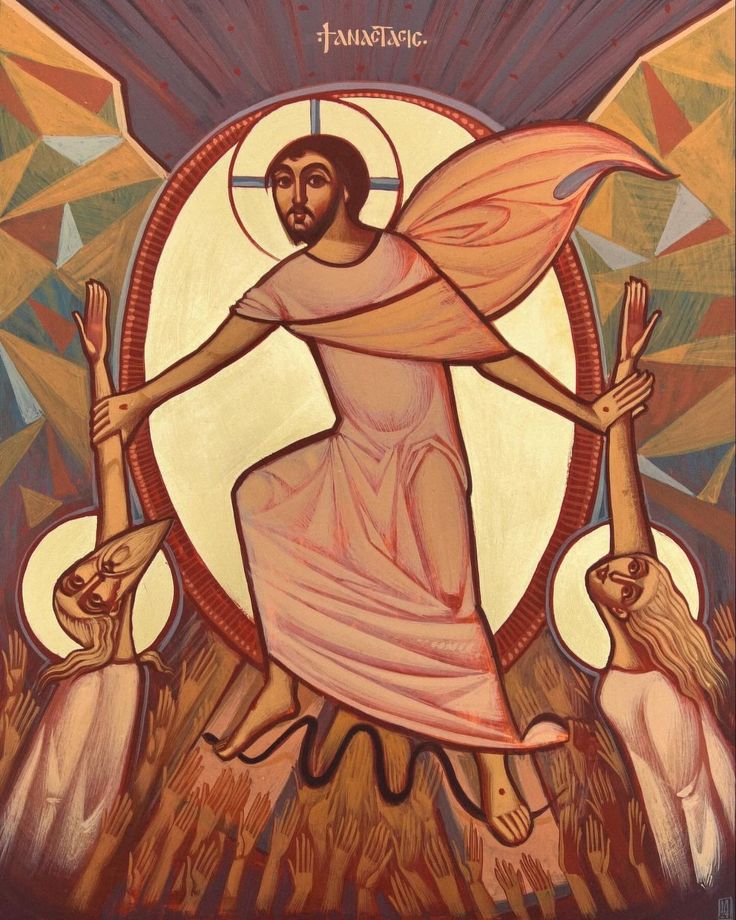
READ WHAT JESUS PREACHED AFTER HIS RESURRECTION
The Faith Made
Learn more: thefaithmade.com(opens in a new tab)