
Inactive· since Jun 30, 2026
- 17
- days it ran
- 0
- relaunches
Ad copy
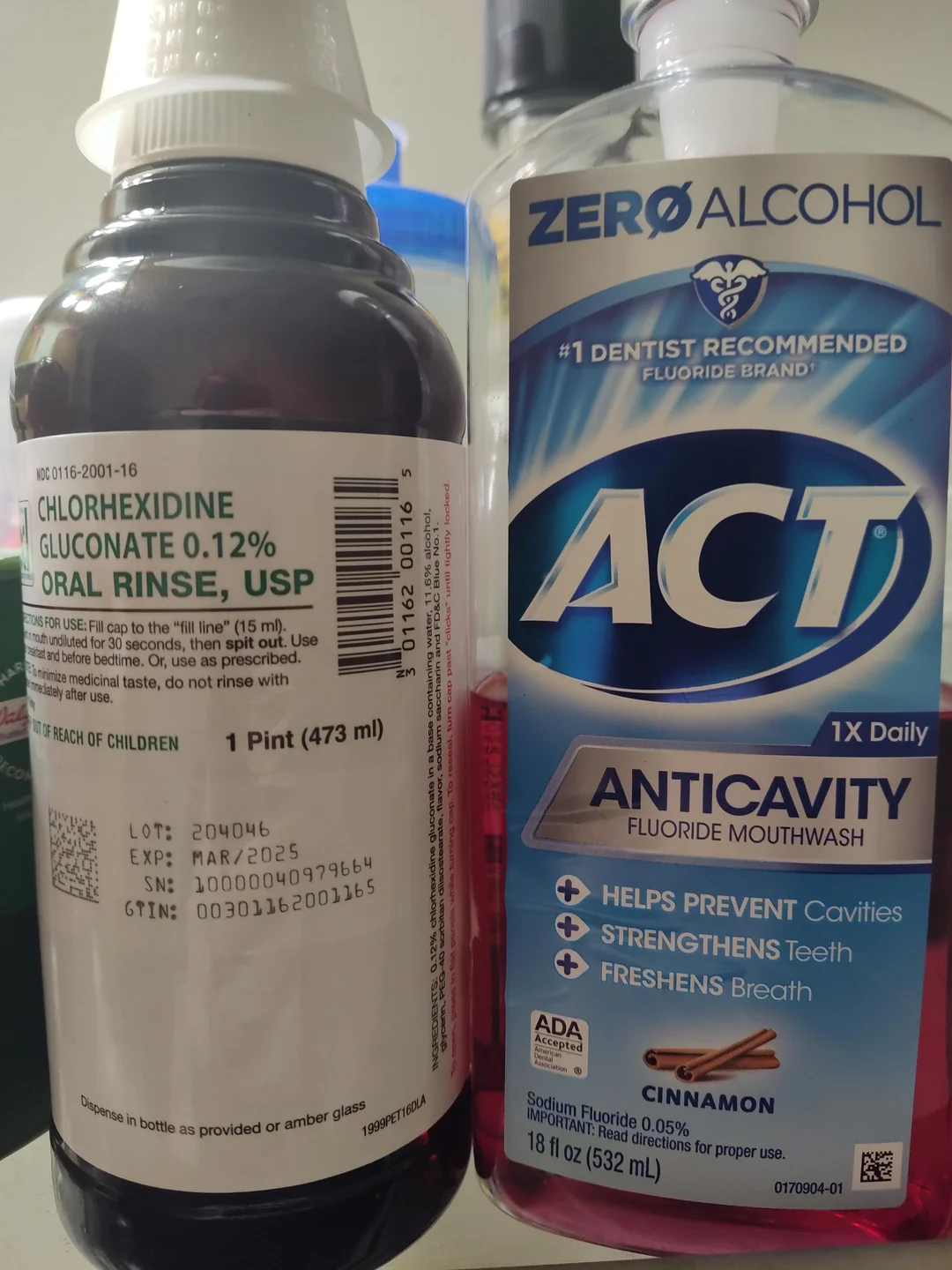
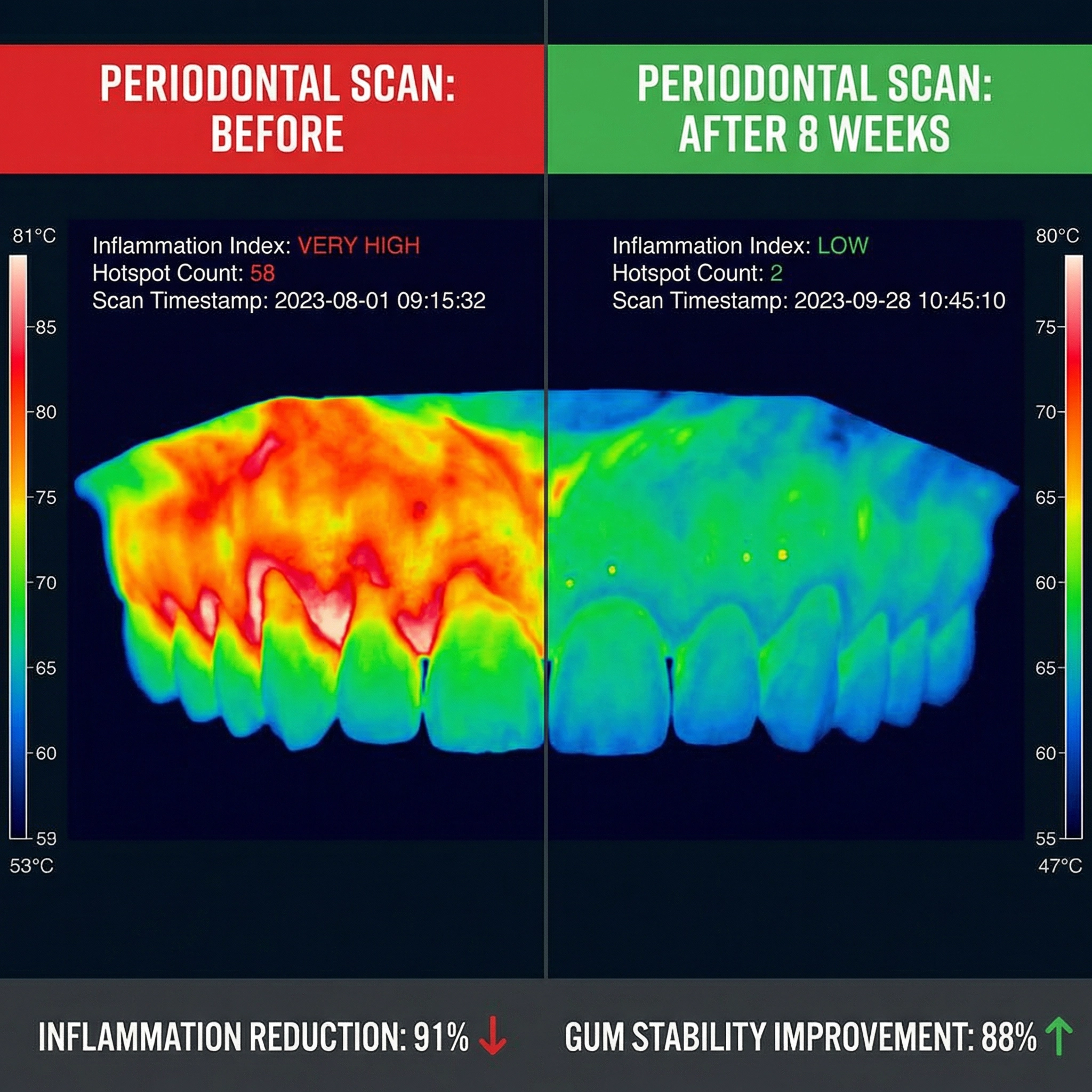
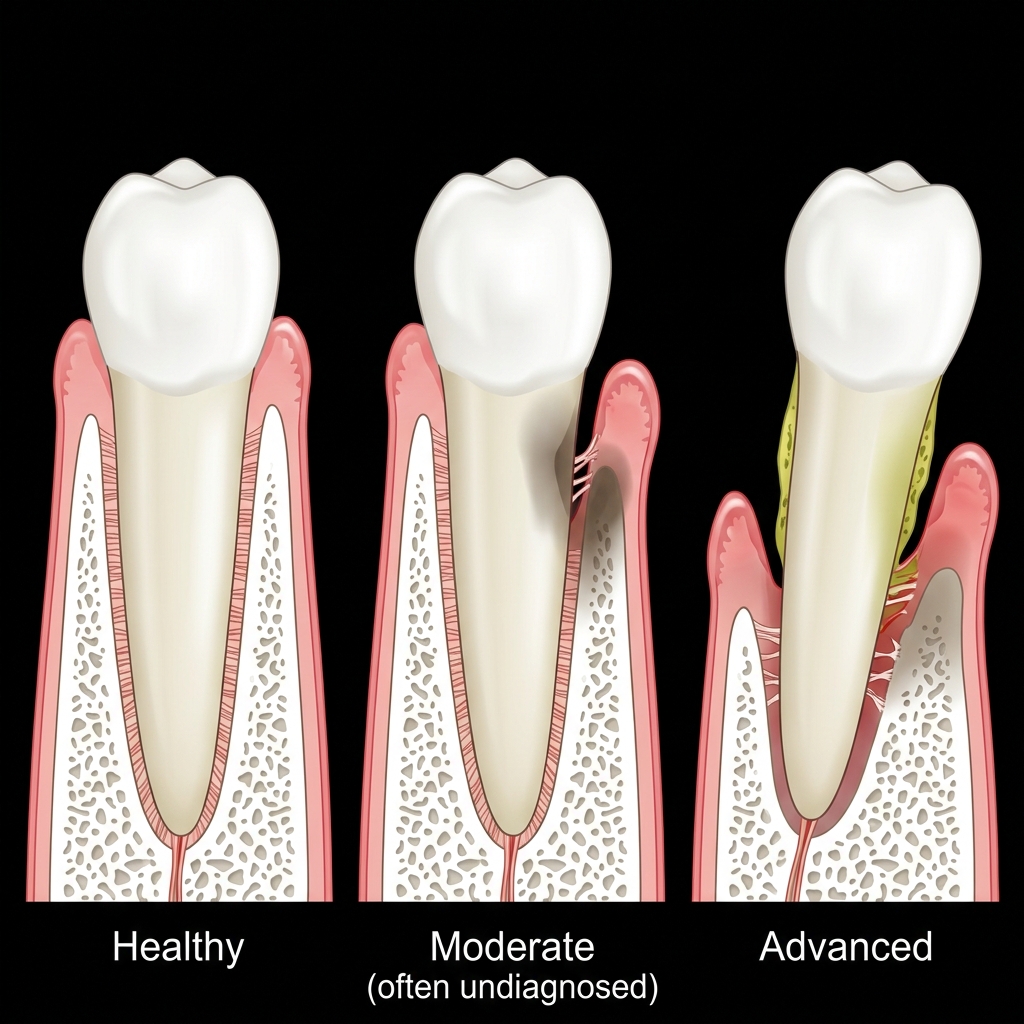
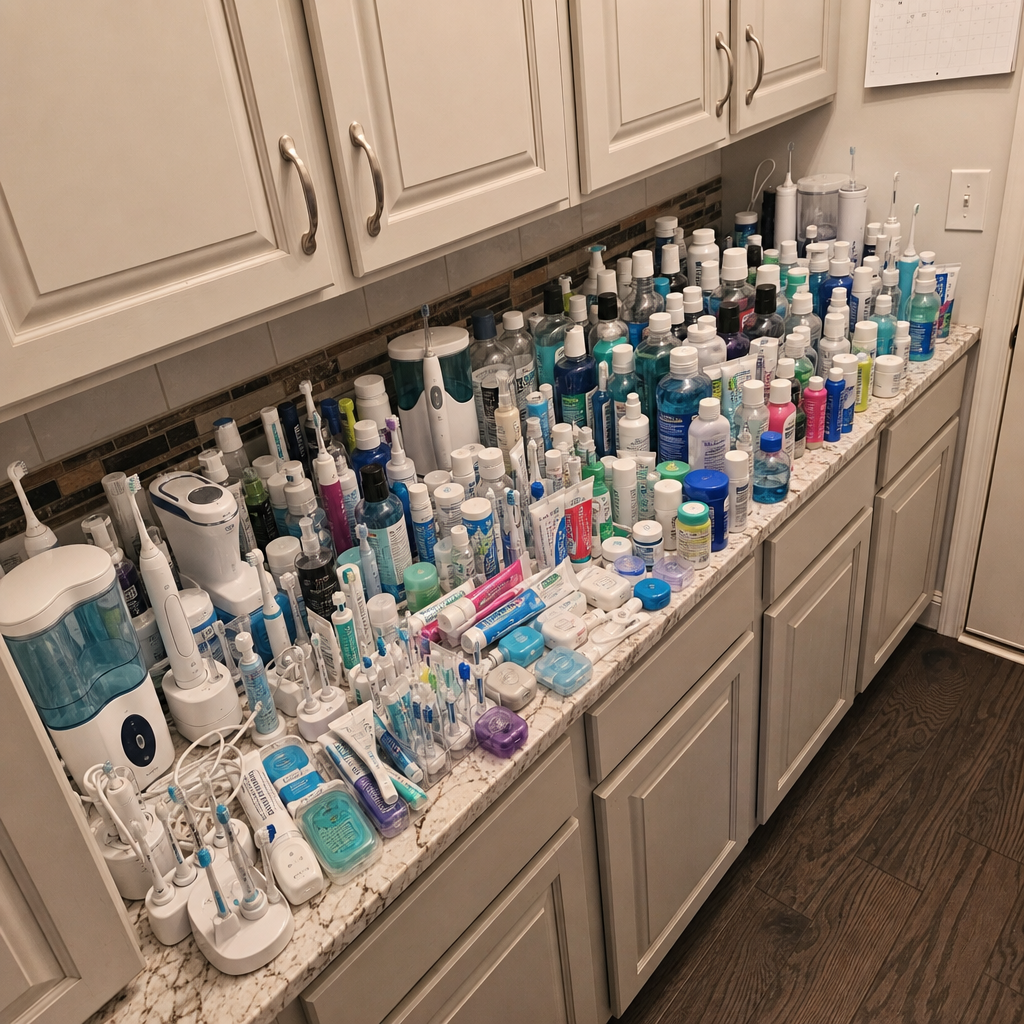
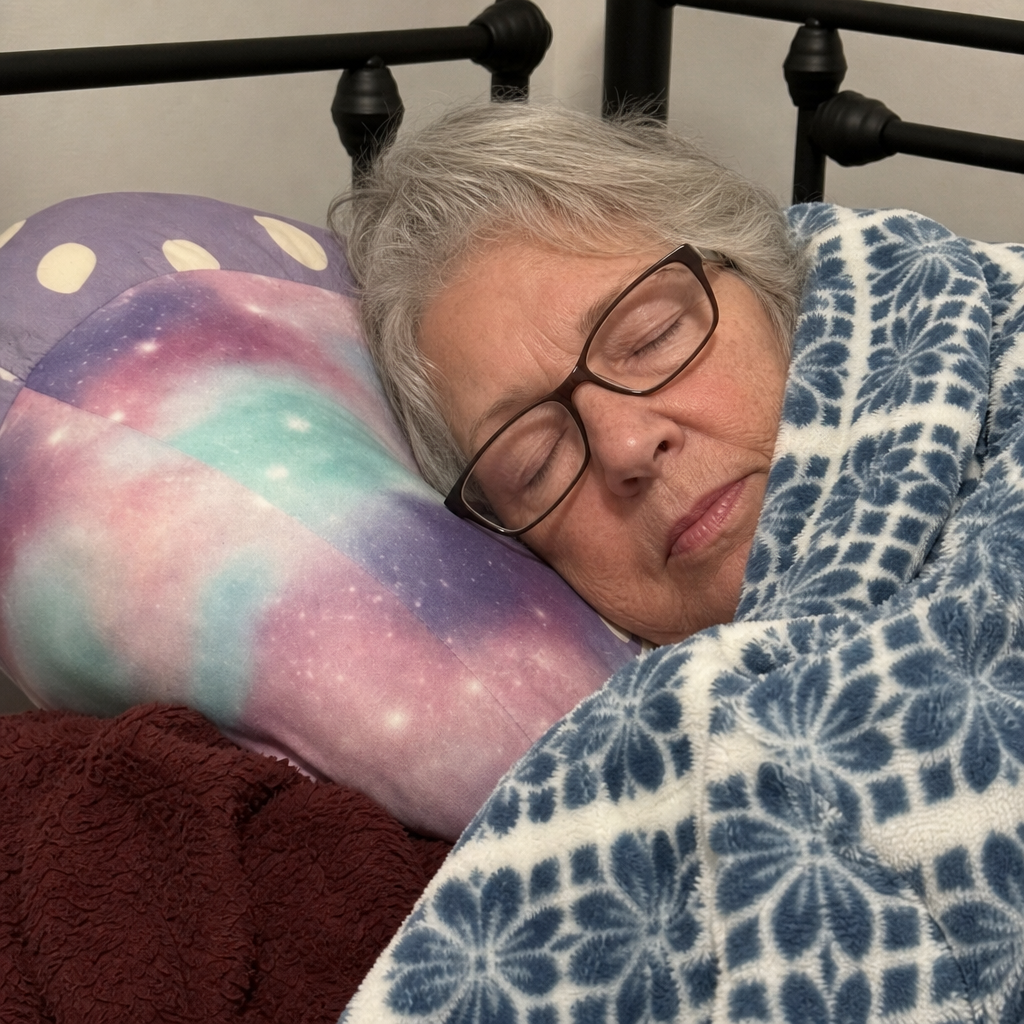
My sister was diagnosed with periodontal disease in June 2022. She flossed every day of her life. After the diagnosis, she switched to an electric toothbrush. Started using a Waterpik. Got cleanings every three months. Did the deep cleaning. She lost all her bottom teeth on October 19th, 2024 at 4:17 in the afternoon, in a periodontist's chair. She was 58 years old. She started the Waterpik on June 8th. Did the chlorhexidine rinse twice a day for 28 months. Got four deep cleanings. Flossed every single morning before work, rain or shine. She did everything the periodontist told her. The surgery quotes came to $14,000. The implants would have been $11,400. Her little travel floss case is still in the bathroom drawer. I can't move it. If I move it, it's really over for her smile. I need to tell you what happened to Diane. Because every week I see posts on Facebook from women like me, "my sister's gum pockets are a little deep, the dentist said floss more, any tips?", and it makes me physically sick. If you're the sister of a woman over 45 who got the gum disease diagnosis, or you got it yourself, please read this whole thing. I know it's long. I know you're scrolling. I know you have things to do. Sixteen months ago I would have given anything, everything, for someone to tell me what I'm about to tell you. Diane went in for her regular cleaning on June 9th, 2022. She felt fine. Better than fine. She'd just turned 56. She was still coaching her niece's softball team. She still gardened every weekend. She thought her mouth was healthy and honestly so did I. She'd never smoked, never skipped a cleaning, our mother was 87 and still had most of her own teeth. Three days later her dentist called. Pocket depths of 6mm and 7mm. Bleeding on probing everywhere. The X-rays came back with moderate bone loss. The periodontist confirmed it two weeks later. Stage 3 periodontitis. Generalized recession already. "There's no pill for this. We treat it with deep cleaning and home care. Electric toothbrush, water flosser, chlorhexidine, come in every three months. We'll re-probe in six months." Diane hung up the phone and sat at the kitchen table for forty minutes without saying anything. Then she stood up, opened the bathroom cabinet, and started filling a trash bag. I watched her throw out the old manual toothbrush. The string floss she'd used for years. The whitening strips. The cheap mouthwash our grandkids used when they came over. Two tubes of regular toothpaste. The whole bottom shelf of the cabinet, the stuff she'd trusted her whole life. "That's it," she said. "I'm done." And she was. For 28 months, she didn't skip the routine once. No shortcuts. No lazy nights. Not at her best friend's wedding in Phoenix. Not on her 35th anniversary trip to Charleston where she stood in the hotel bathroom doing the full Waterpik routine at midnight. Not on her own 58th birthday where she excused herself after dinner to rinse and floss before the cake. She stopped going to the Sunday brunches with her old college friends because she was so self-conscious about her bleeding gums that she kept her mouth half-closed when she laughed. She stopped going to the diner where she and her girlfriends had been meeting for Saturday breakfast since 1994 because she was ashamed of her receding gumline. She lost her friend Marcy, who told her "you're no fun anymore" and stopped inviting her. She lost a piece of herself she'd been carrying for 35 years. And she did it anyway. Because the dentist said to. She got four deep cleanings. She used the Waterpik on Riley, I mean, she used it every morning before work, summer and winter, didn't matter. She bought the $200 Sonicare. Diane. With a fancy electric toothbrush. I still can't picture it. She took the CoQ10 her hygienist "wasn't against." She took a multivitamin. She did warm salt water rinses every morning. She did exactly what they told her to do. She did everything right. The follow-up probing came back on December 6th, 2022. Pockets: 6mm. Bleeding: still there. Six months of doing everything right and the numbers had barely moved. The periodontist said, "Gums heal slowly. Give it more time. We'll re-probe in six months. Keep doing what you're doing." So she did. June 2023 probing: pockets 7mm. Worse. December 2023 probing: pockets 8mm. The X-rays in January 2024 showed more bone loss. She had progressed. Diane came home that night and sat at the kitchen table. The same table she'd sat at after the first phone call. She didn't say anything for a long time. Then she said: "Linda, I gave up everything. Every shortcut, every lazy night. For 28 months. And it's getting worse." I told her to give it more time. I told her the periodontist said it could take two years. I told her to trust the process. She nodded. She kept using the Waterpik. She kept rinsing with the chlorhexidine. She kept taking the CoQ10. Five days later, five days, she woke up at 2 AM with a throbbing in her lower jaw that doubled her over. I drove her to the emergency dentist. By the time they got her in the chair at 4:30 AM, her front bottom teeth were loose. Not "a little loose." Loose. She could rock them with her tongue. Like someone had switched off whatever was holding them in. The emergency dentist, a young woman, couldn't have been 35, looked at Diane's X-rays and her face did this thing. "Ms. Reyes, your pockets are now 9mm. You've lost most of the bone around your lower front teeth. This is acute aggressive progression. We need to refer you to surgery." "But I've been doing the deep cleaning for over two years," Diane said. The dentist just looked at her. "I know, Ms. Reyes. I'm so sorry." Diane spent the next 6 weeks bouncing between specialists. I learned things about gums I never wanted to know. I learned that when periodontal disease takes hold, the bacteria living deep in those pockets release toxins every single day that trigger your own body to dissolve the jawbone around your teeth. They call it osteoclast activity. It means your sister stops being able to chew the way she used to. She covers her mouth when she laughs. She says things like "don't take a picture of me." On day 3 of that week, Diane asked me three times in twenty minutes whether her smile looked "as bad as it felt." It looked worse than she knew. I learned that they sometimes flush something called chlorhexidine directly into the pockets when gums are collapsing. The hygienist told me it's the strongest antiseptic they've got. She said it forces the bacteria down, gives the gum a chance to reattach, something about a fresh start. She said it's the only thing they've got, and at this stage they were hoping it could buy her time. It bought her 6 weeks. Week 4, two more bottom teeth went loose. The surgeons talked about a graft. Then they talked about her not being a candidate because of how much bone was already gone. Then they stopped talking about grafts altogether. Week 5, the infection spread along her gumline until her whole lower jaw was swollen. They drained an abscess the size of a grape. The periodontist called it a periodontal abscess. I called my daughter. Week 6, October 19th, I was in the waiting room down the hall. They'd asked me to step out. At 4:11 PM I heard the suction running and the surgeon's voice go quiet. At 4:17 PM, a young assistant I'd never seen walked into the waiting room. I knew. "Ms. Reyes' sister? I'm so sorry. We had to take all of the lower teeth. There was nothing left to save them to." I drove her home at 6:30 that evening. The Waterpik was still on the bathroom counter. Her good walking shoes by the back door. The chlorhexidine on the windowsill above the sink, right next to the CoQ10. Her travel floss case was in the bathroom drawer where she left it. Where it sits today. She sat in her recliner. She didn't move for seven hours. The house was so quiet I could hear her breathing through the gap where her teeth used to be. 36 years of sisterhood. And the loudest thing in the house was that broken little sound she made when she tried not to cry. The fitting for her dentures was October 26th. Our other sister flew in from San Diego. My daughter came up from Atlanta with the grandkids. My niece flew in from Denver. The grandkids wore their nice clothes because they thought it was a special day. My five-year-old granddaughter asked Diane: "Auntie, why won't you smile at me anymore?" Diane had to walk out of the room. After the fitting, I tried to go back to normal. I couldn't. Because every time I opened Facebook I saw women my age, sisters and friends of women Diane's age, posting things like, "my sister's pockets came back at 5mm, dentist said borderline gum disease, anyone tried a Waterpik?" Or, "deep cleaning for 6 months, her numbers haven't moved, what else can we try?" And I knew, I KNEW, some of them were doing exactly what Diane did. The Waterpik. The Sonicare. The deep cleanings. The chlorhexidine. And ending up where she is. I couldn't just sit there and watch it happen. So I started researching. Not because I wanted to. Because I had to. Because if Diane gave up 28 months of pride and comfort for nothing, if I can't save even one other family from what happened to mine, then I can't live with that. I read for weeks. PubMed papers I had to read three times to understand. Periodontal forums where people described Diane's exact trajectory. Studies out of Japan and Germany. And one thing kept coming up, over and over, that no periodontist ever told us. The reason Diane's pockets didn't come down is that the brushing and flossing only reach the surface. It doesn't touch what's hiding deep down where the real damage lives. Specifically: the biofilm. The biofilm is a slimy shield the bacteria build around themselves deep in the pockets, the thing your gums fight against every medication, every rinse, every deep cleaning, every brushstroke. Every cell in your gumline is up against it. And here's what no one told us. The biofilm is oil-based. It's lipid. It repels water completely. Modern dental care, mouthwash, Waterpiks, water flossers, chlorhexidine rinses, they're all water-based. They bounce right off the shield. By the time most people are diagnosed, the bacteria are sitting safe behind a wall nothing in the bathroom cabinet can get through. When your tools are water-based and the shield is oil-based, your gums keep fighting but nothing reaches the colony. The bacteria refill the damage. The pockets climb. The bone keeps dissolving with nowhere for the infection to go. Read that again. Diane's gums weren't lost because she didn't brush enough. They were lost because every tool she had was water-based, and water cannot dissolve an oil-based shield, no matter how perfectly you brush. And here's why brushing alone didn't save her: it's like cleaning a greasy frying pan with cold water. The water just slides off the grease. Her tools physically could not reach the bottom of a 9mm pocket. A toothbrush bristle stops at 3mm. Floss stops at 3mm. The infection was four times deeper than anything she owned. That's why her numbers wouldn't move. She gave up every comfort she had to scrub the surface of a wound that was already buried out of reach. I sat with that for three days. And then I started looking at what I'd been doing. I'd thrown out Diane's Waterpik the week after the fitting. But I bought a new electric toothbrush for myself. Because I'm 57. Because my last cleaning came back with "early recession" too. Because I was terrified. I used it for a month. My dentist, a different one than Diane's, who I called because I trusted her, sighed when I told her. "Linda, a Waterpik flushes the surface. But you cannot flush out a shield that water can't penetrate. The water bounces off while the colony stays put underneath. It doesn't dissolve anything." Then she said something I'll never forget. "If Diane had been using something that actually dissolved that oil-based biofilm, her story might have been very different." I stopped breathing for a second. "Why didn't her dentist recommend that?" She was quiet for a long time. "Because we don't prescribe oils. And the version that works isn't a prescription." I went to CVS the next day. I stood in that aisle for forty-five minutes. Mouthwash. Gum-care rinse. Chlorhexidine-style antiseptic. 30-day "gum cleanse" kits. Toothpastes with "gum support." Generic oil-pulling rinses, $14.99 a bottle, the cheap stuff. I bought the oil-pulling rinse. Used it for three weeks. Got re-probed. Nothing. I started digging again and what I found made me throw the bottle in the trash. Swishing an oil in your mouth for ten minutes barely reaches the gumline. Most of it never gets near a deep pocket. The rinse coats the surface of teeth that are already losing bone before it ever reaches where the bacteria hide. You're paying for something that never gets where it needs to go. Taken internally, a lipid-soluble oil works from the inside, reaching the gumline through the bloodstream and creeping down into the pockets the swish can't touch. I had been doing the right thing in the wrong form. I was furious. And then I met Maggie. It was the week of Diane's surgery anniversary that I met her. I'd gone to the dental clinic on a Tuesday morning, to pick up Diane's records, and I'd stayed longer than I meant to. Then the sky opened. One of those October downpours that comes from nowhere and soaks you to the skin in thirty seconds. There's a little awning by the side entrance. I ran for it. So did a woman about my age, and we ended up standing under that awning together waiting for the rain to pass, the rain so loud we had to lean in to talk. Her name was Maggie. Sixty, a retired schoolteacher, soft-spoken. She was there for a follow-up of her own. We did what two women do under an awning in the rain. We asked why we were each there. I told her about Diane. The deep cleanings. The pockets that wouldn't come down. The 28 months. The afternoon at 4:17. She went very quiet. Then she said, "My sister Tess had the exact same diagnosis. 8mm pockets, climbing every visit, doing everything the dentist told her. I almost watched her lose every tooth too. Right up until we stopped trusting the water-based stuff to do something it was never going to do." I asked her what she meant. She told me her sister had been diagnosed at 54. Stage 3 periodontitis, deep pockets. She did the deep cleanings for over a year and her X-rays got worse anyway. And then she found softgels you take internally, oregano oil that dissolves the oil-based biofilm, plus black seed oil that calms the inflammation tearing the bone down. Tess's pockets went from 8mm to 3mm in twelve weeks. Her next X-ray showed the bone holding steady. Without changing anything else. The rain stopped. We stood there anyway. I asked her to write down the name of what was in it on the back of my parking receipt, and she did, and I drove home with it on the passenger seat where Diane used to sit. I started looking into the formula she'd named. And what I learned is that there are a few things a serious gum support has to do at the same time, or it's a waste of your money. It has to dissolve the oil-based biofilm shielding the bacteria deep in the pocket. That's carvacrol, the active compound in wild Mediterranean oregano oil. It's lipid-soluble, so it merges with the oil shield and dissolves it on contact. Water-based rinses can't. This is the part nobody told Diane. It has to actually reach down into the 6mm, 7mm, 9mm pockets where the bacteria hide. That's the capillary creep action of a thin oil delivery. The low-viscosity oil creeps down the root into the anaerobic death zone where toothbrush bristles, max 3mm, and floss physically cannot reach. Diane's tools stopped at the front door of a problem that lived in the basement. It has to neutralize the bacteria that are triggering the bone destruction. That's thymoquinone, in cold-pressed black seed oil. It calms the inflammatory cascade, the IL-6 and TNF-alpha, that drives the osteoclasts dissolving the jawbone, so the immune system stands down and the gums can firm up and re-adhere. And it has to be oil-based and taken internally. Because a water-based rinse swished in the mouth cannot penetrate a lipid biofilm. It's physics, not genetics. All of it. At the same time. In an oil-based softgel you take internally. I went through every product I'd looked at in CVS. Not one of them did all of it. Most did nothing the deep cleaning hadn't already failed at. The expensive ones just had more mint. Not a single lipid-soluble oil softgel in the whole aisle. That's when I found Orgatics. It was the only formula I could find that hit it all. Wild-Harvested Mediterranean Oregano Oil with Carvacrol. Cold-Pressed Black Seed Oil with Thymoquinone. Oil-based softgels, two every night. 90-day money-back guarantee tied to your actual gum health. If your gums don't improve, you get every penny back, no questions asked. I almost didn't order it. After the CVS aisle. After the oil pulling. After Diane. After everything. But my best friend Carol was sitting on 6mm pockets and a "borderline gum disease" diagnosis her dentist said to "watch." My daughter in Atlanta had just been told her gums were bleeding at every cleaning. I had my own recession creeping in the wrong direction. I ordered it. Carol first. Pockets at 6mm. Diagnosed eighteen months ago, doing the deep cleanings, watching the numbers climb anyway. I didn't ask. I sent her a package and a note that said, "If you don't take these every night I will never speak to you again, Carol, I mean it." She took them. She didn't give up her bad habits, she's stubborn the way Diane was stubborn, but she took the two softgels every night. She went back to her dentist last month for her follow-up probing. Pockets: 3mm. Down from 6mm. In ten weeks. She hadn't changed anything else. Same brushing, same flossing, same life. The only thing she changed was the two softgels she took before bed. She called me crying. My 61-year-old best friend. Crying on the phone like a kid. She said, "Linda, I think Diane lost her teeth because nobody told her about this." I had to hang up. Then there's my daughter in Atlanta. 39, two little girls, early gum disease at her last cleaning. Started taking them eight weeks ago. She says the metallic taste she'd had every morning for two years, the pink in the sink her dentist told her was "probably just brushing too hard," is gone. She says her gums stopped bleeding for the first time since the diagnosis. My neighbor across the street, Patricia. Her sister lost all her teeth to gum disease fourteen months before Diane lost hers. Two of us on the same cul-de-sac watching our sisters lose their smiles. She started taking them three days after I told her, just for prevention. She says it's the first time since her sister's dentures that she doesn't feel like she's waiting for her own. Maggie and I still meet most Tuesdays. We get two coffees and sit in her car with the heater running and we talk. Last week she told me Tess's latest probing came back completely normal. We didn't say much after that. We didn't have to. Two women under an awning, and one of them still has her sister's full smile. I told our other sister in San Diego. I told the women in my Bible study. I told Diane's old softball friends when they came by to drop off a casserole. I'm not a dentist. I'm not a scientist. I'm not selling anything and I don't get one penny from any of this. I'm a 57-year-old woman sitting in my sister's recliner at 2 in the morning because I can't sleep and I can't stop thinking about Carol and my daughter in Atlanta and the women on the Facebook groups posting "my sister's pockets won't come down, what else can we try." Here's what I know because I lived it: Brushing and flossing scrub the surface. They don't reach the deep pockets. They don't dissolve the shield. A Waterpik flushes the gumline. But you cannot flush out a biofilm that water can't penetrate. A water-based rinse cannot dissolve an oil-based shield. An oil taken internally can. Diane gave up every comfort she had for 28 months and it didn't save her teeth because nobody told her what was actually broken. I wish someone had told us before June 9th, 2022. Before the diagnosis. Before the trash bag of toothbrushes. Before the 28 months of midnight Waterpik routines. Before October 19th at 4:17 in the afternoon. I can't go back. Diane can't have her teeth back. Her travel floss case is still in the bathroom drawer and it's going to stay there. But you can still go forward. Your sister can. Your friend can. You can. The page that explains all of this, the biofilm mechanism, why the deep cleanings alone weren't enough, what your periodontist doesn't know about oil-based penetration, and exactly what's inside Orgatics, it's the page Maggie sent me home with. Not scrubbing the surface. Dissolving the shield. That's the line that finally made it click for me. I want you to read it. Not for me. For whoever you'd hate to see end up where Diane is. 👇 https://tryorgatics.com/pages/receding-gums Diane used to say, "You can't change what already happened. But you can change what happens next." You can change what happens next. Linda Reyes, age 57, Naperville, IL P.S. Her travel floss case is still in the bathroom drawer. I still can't move it. Every morning I walk past it and for one second I forget. For one second I think she's about to come down the stairs and ask me where the garden gloves are, smiling that smile she had for 56 years. She's not, not that smile. $14,000 in surgery quotes. $11,400 for the implants she never got. 28 months of her giving up every comfort she had for nothing. And a softgel that costs less than the chlorhexidine she rinsed with every day, a softgel my own dentist told me could have changed everything if we'd known. Please. Don't end up here. Don't let someone you love end up here. 👇 https://tryorgatics.com/pages/receding-gums P.P.S. I don't work for Orgatics. I don't get a penny from this. I'm writing this at 2:38 AM because I can't sleep and Diane is asleep down the hall with her dentures in a glass on the nightstand and Carol is 61 and the women in those Facebook groups are still posting at 2 AM and my heart sinks every time my phone rings. Share this with anyone you love who has gum disease. Even "mild." Even "borderline." Even if they're doing the deep cleanings perfectly. Especially then. Please.
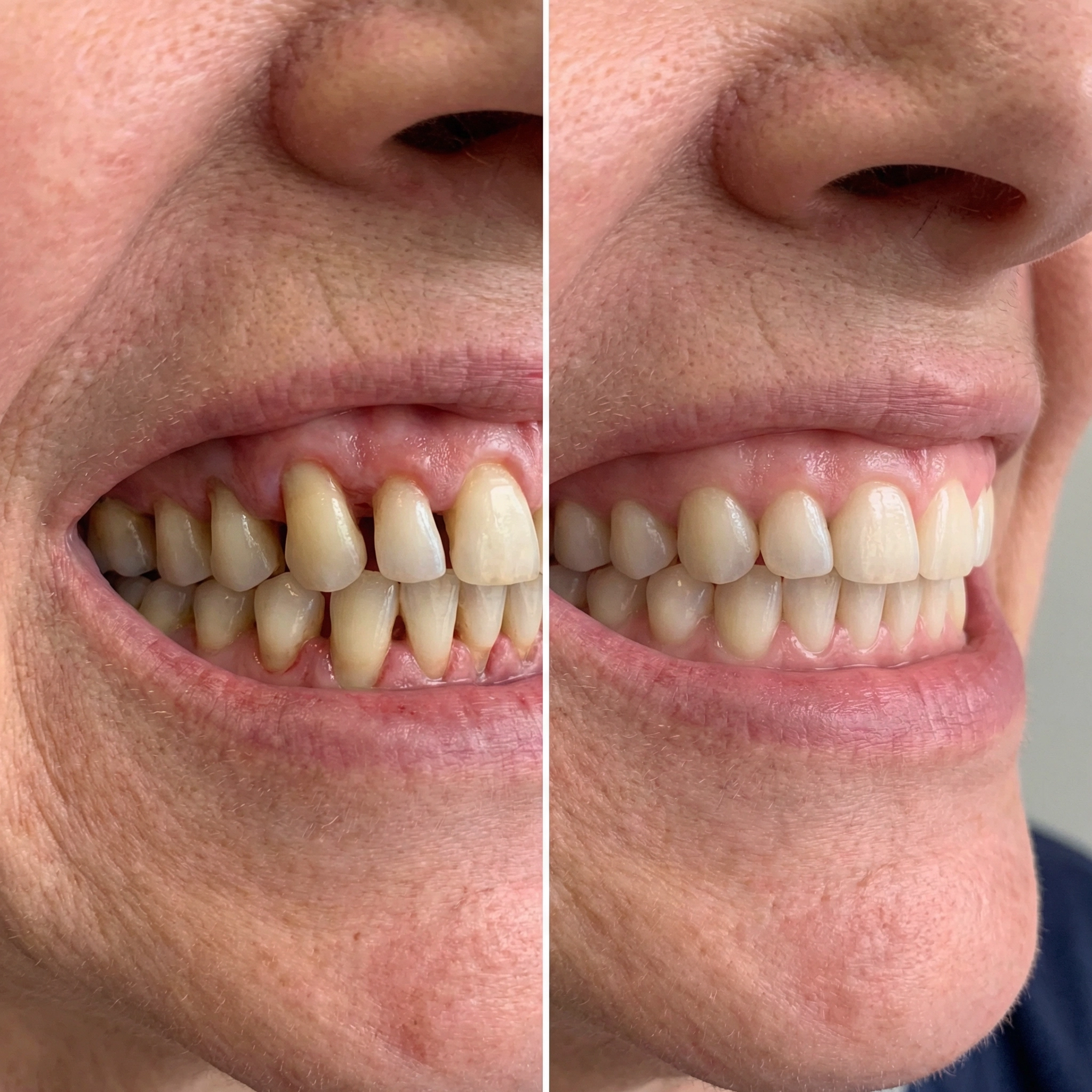
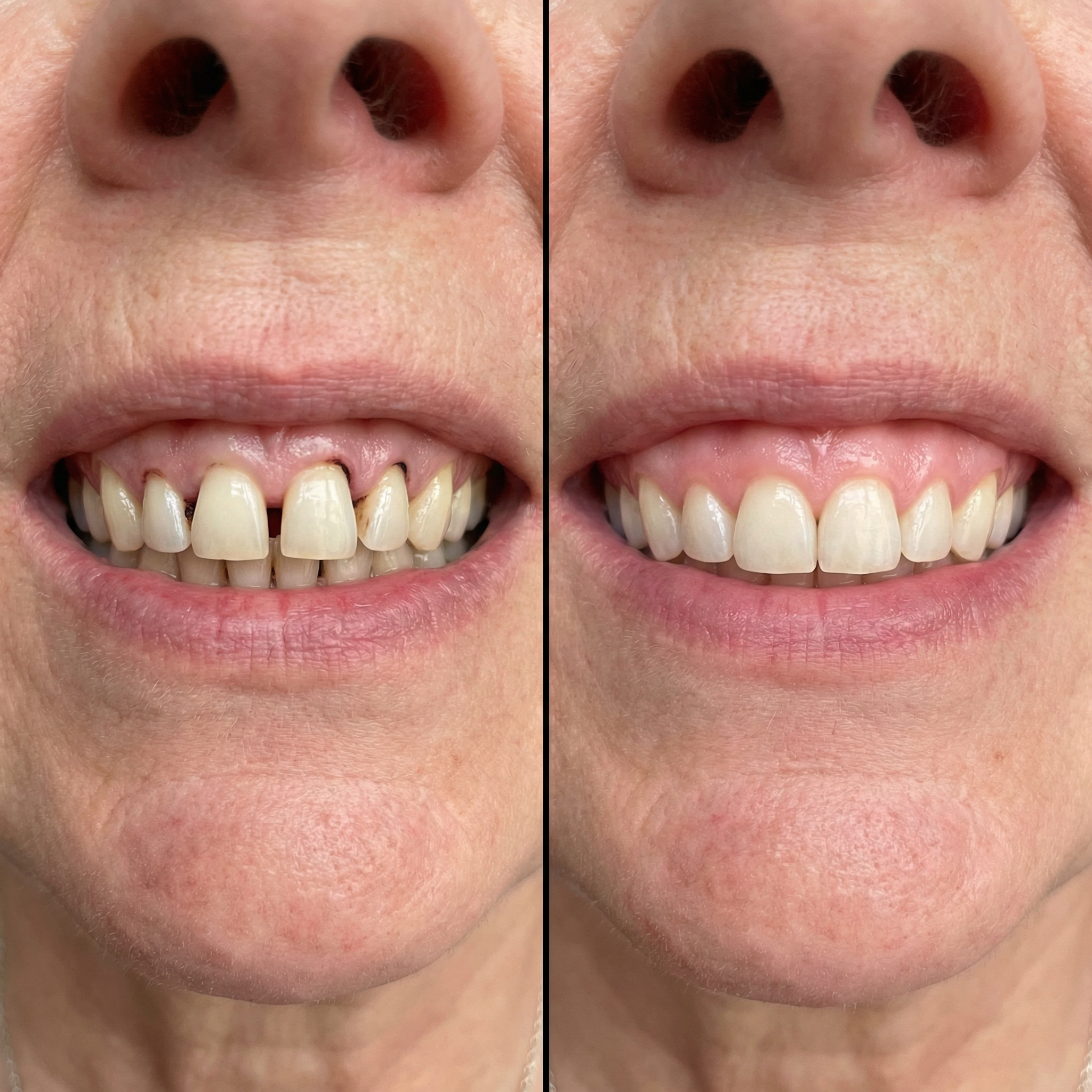
Her gums looked perfect... her teeth fell out anyway
Try Orgatics for 90 days. If you don't see real changes in your gums, your bleeding, or how your mouth feels overall, we'll refund every cent. Just an email. That's it.
LEARN MORELike this ad? Make it yours.
Crush rebuilds this exact creative around your product — your brand, your colors, your offer — in about a minute.