Lillie Hines
Lillie Hines Facebook ad: “My son told his teacher to fuck off because she asked him…”
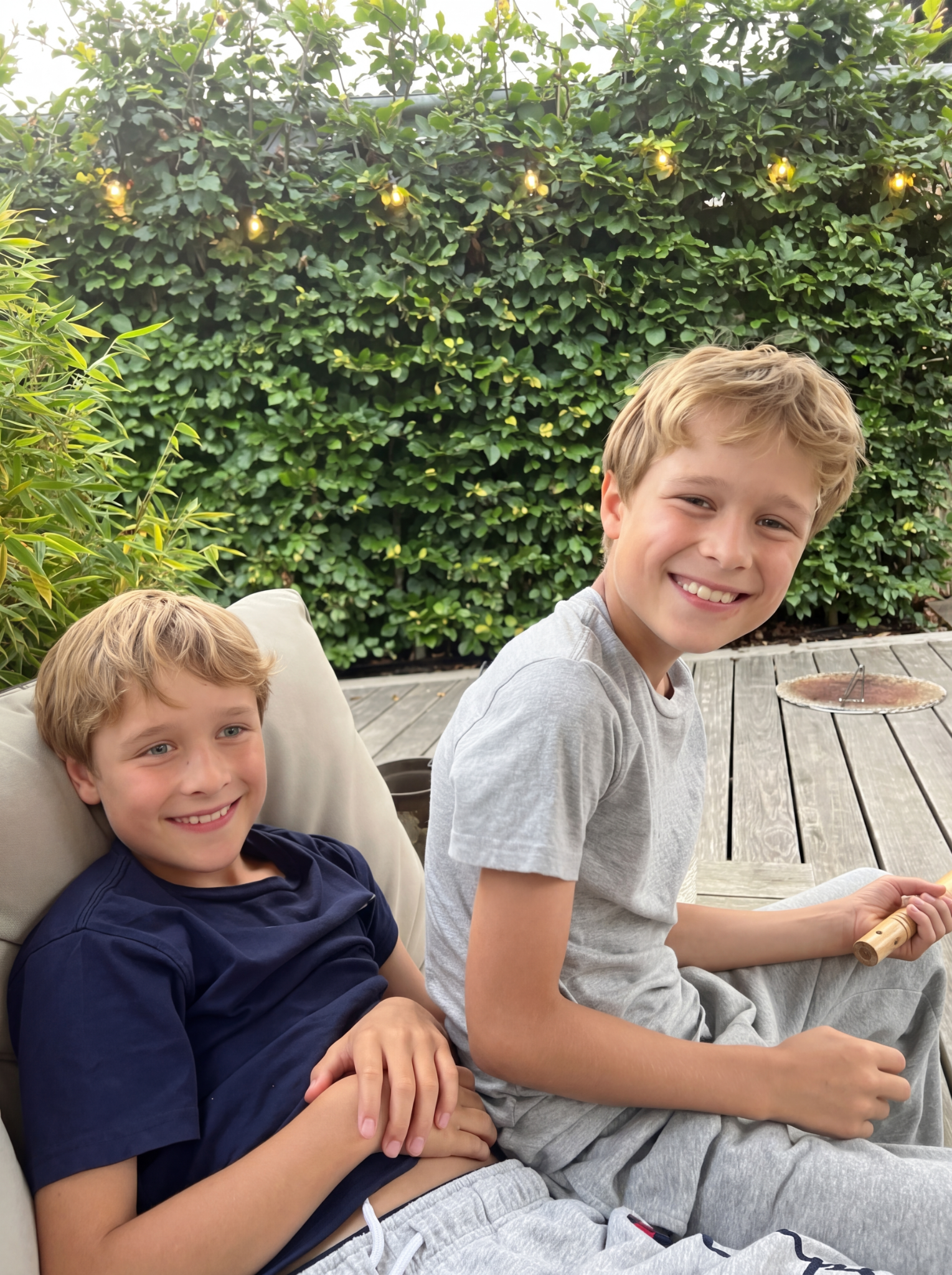
Ran for 36 days, from April 16 to May 22, 2026, the last day Crush saw it.
Run by Lillie Hines on Facebook. Crush is not the advertiser and does not verify its claims. See this ad in Meta's Ad Library(opens in a new tab)
Want an ad like this for your product?
Crush makes new ad images for your product from this ad: your logo, your product photo, your offer.
Trials from $19.95 USD, then $79.95 USD a month. Cancel anytime.
About this ad
- Meta Ad Library ID
- 1895760611144225
- Platforms
- Facebook, Instagram, Audience Network, Messenger and Threads
- Relaunches
- 0
- EU reach
- 12,635
Ad text
My son told his teacher to fuck off because she asked him to start a worksheet. He's 9. I got the call at work. Had to leave early. The principal used words like "unacceptable language" and "pattern of defiance." His teacher was there. She looked exhausted. Not angry. Tired of him. I sat there nodding, saying "I understand, I'm so sorry, we'll handle it at home" while my face burned. Because every parent in that pickup line was going to hear about this. Every teacher in that school now knew my kid as the one who said that. To a teacher. Over a worksheet. The ride home was silent. I was gripping the steering wheel trying to keep it together. Then about two minutes from the house I couldn't hold it anymore. "What is wrong with you? I raised you better than that. Do you understand what you did today? Do you understand how embarrassing that was?" I was upset, disappointed, and honestly just in shock. He didn't yell back. He didn't argue. He just got quiet. And then in this tiny voice, barely above a whisper: "I'm sorry Mommy. I don't know why I said that." I looked in the rearview mirror. He was staring at his lap. Tears running down his face. Not angry tears. Ashamed. Like he hated himself for it but couldn't explain it any more than I could. And just like that, all my anger collapsed into guilt. Because I was screaming at a kid who was already destroyed by what he'd done. — The report said "defiant behavior." His teacher said he "refuses to follow instructions." The school counselor used the word "oppositional." Defiant. That's the word on every report. Every email. Every meeting. And honestly? I get it. From the outside that's exactly what it looks like. A kid who won't listen. A kid who lashes out. A kid who says things no 9-year-old should say to an adult. — A few nights after the principal's office, I was putting him to bed. He was quiet. Staring at the ceiling. And out of nowhere he said something I haven't been able to stop thinking about since. "Mom, I don't know why I'm like this. My brain tells me to do stuff and I just do it. I don't want to. It just happens." Then he looked at me and said: "Am I a bad kid?" I held it together long enough to say "No baby, you're not a bad kid." Kissed his forehead. Walked out. Made it to the hallway and completely fell apart. Because my 9-year-old thinks he's broken. He doesn't understand why he does things he knows are wrong. He doesn't want to scream at his teacher. He doesn't want to say those words. He never wants to have these meltdowns But something in his brain fires, and his body follows before he can stop it. He acts before he has time to think about his action. And now he's lying in bed at night wondering if he's a bad person because of something he can't control. That's when I knew — this isn't about discipline. This isn't about being stricter or finding the right consequence. My kid is suffering. He's not acting out because he doesn't care. He's acting out because something is happening in his brain that he can't stop, and it's destroying how he sees himself. I needed to understand why. Not to excuse the behavior — but because if I didn't figure out what was actually going on, I was going to lose him. Not to the outbursts. To the belief that he's a bad kid. That's what scared me more than anything. — And it wasn't just the outbursts. He couldn't do homework without it turning into a war. Couldn't focus on anything unless there was a screen in front of him. But hand him an iPad and he'd be locked in for hours — calm, focused, completely engaged. Then I'd say "time's up" and that kid was back. Screaming. Crying. Mornings were a disaster. Getting dressed, brushing teeth, getting out the door — every single step was a fight. And when he wasn't exploding, he was flat. Couch. "I don't know." No motivation. No interest in anything. Either at a 10 or a zero. Never in between. I'd tried everything before the principal's office and tried even harder after. Stricter consequences — outbursts got bigger. He'd get punished and do the exact same thing twenty minutes later, like the consequence never happened. Took the iPad away — meltdowns spread to everything. I even tried the supplements, Magnesium gummies. Omega-3s. Olly gummies. Nothing helped. His pediatrician even recommended methylphenidate, but I wasn't ready for that after all of the harsh side effects I've heard about. — After the incident with his teacher, the school required a formal evaluation. They said it was part of the process for repeated behavioral issues — that a specialist needed to assess what was going on before they could build a plan for him. I almost didn't go. Because I already knew what they were going to say. ADHD. ODD. Defiant. Oppositional. Another label. Another person telling me what was wrong with my son without actually explaining why. But I went. Because the "am I a bad kid" conversation was still keeping me up at night and I had nothing left to try on my own. The specialist was a pediatric neuropsychologist. Not a therapist. Not the school counselor. Someone who looks at what's happening in the brain — not just the behavior on the surface. The first thing she said surprised me. "Tell me about a moment when Mason was calm. Not the outbursts. A time he was focused and present." Nobody had ever asked me that. Every meeting with the school started with what he did wrong. I told her about Minecraft. Two hours. Calm. Locked in. Building worlds, problem-solving, talking strategy with his friends. She nodded like she'd heard this a hundred times. "And what happens when you tell him to turn it off?" "He explodes. Every time." "And thirty seconds after?" "Falls apart. Sobbing. Saying he doesn't know why he did it." "A truly defiant child doesn't collapse in shame after an outburst," she said. "A defiant child doesn't ask his mother if he's a bad kid. What you're describing is a child whose body reacts before his brain can think. This isn't defiance. It's panic." Then she explained why. "There are three chemicals in the brain — dopamine, serotonin, and norepinephrine — that work as one system. They control focus, emotional regulation, impulse control, and how the nervous system handles stress. Mason's brain isn't producing enough of them." She started with school. "He sits at a desk for seven hours. Everything the school asks — sustain attention, control impulses, sit still, follow instructions, switch tasks — runs on these chemicals. Seven hours of nonstop output. Twenty minutes of recess to replenish. For a kid whose brain already runs on a lower baseline — and many kids' brains do, it's genetic variation, not damage — that math doesn't work. By 3 PM he has nothing left." That's why the meltdowns are always worse after school. And the iPad — that's not addiction. Minecraft floods the brain with dopamine artificially. It's a starving brain reaching for the only source of the chemical it's been burning through all day. When I say "time's up," I'm removing the only thing filling his tank. His nervous system panics. "But why can't his brain rebuild overnight?" I asked. "Because the brain builds dopamine, serotonin, and norepinephrine from specific raw materials — B6, B12, magnesium. And most kids aren't getting them. The soil is depleted. The food is processed. Kids are eating the beige diet — chicken nuggets, goldfish, granola bars. Enough calories. Almost none of the nutrients the brain needs to produce these chemicals." So his brain starts every day already low. School drains it. Food doesn't replace it. And he walks into every situation with a nervous system that has no buffer between the trigger and the reaction. No brake pedal. "Start your worksheet" lands the same as a threat, and his body does the only thing it knows — fight. That's why Mason told his teacher to fuck off. His nervous system was in panic and the words were out before his brain could catch them. The shame after — that was the real Mason. The explosion was his body hijacking him. Everything I'd been fighting for two years finally made sense. — "It's not just the explosive kids," she said. "Some kids fight — that's the 'defiant' kid. Some freeze — the flat kid on the couch. Some flee — the anxious kid with stomach aches before school. A lot do all three. Same empty system. Different response." That was Mason. Explosive at school, flat at home, anxious about birthday parties. Not three problems. One. That's why discipline made it worse — you can't punish a brain into producing chemicals it doesn't have. That's why I was right to hold off on medication — stimulants force dopamine in artificially, one chemical. For a kid like Mason that's giving a car with no brakes a faster engine. And the magnesium, omega-3s, Olly vitamins — they each target one pathway. The system runs on three. That's why they didn't touch it. "It's not that natural doesn't work," she said. "Those products were never designed for what's actually going on." — She told me about saffron extract. Not the cooking spice — a clinical-strength extract with two compounds called crocin and safranal that support the brain's own production of all three chemicals and help the brain hold onto what it produces instead of breaking it down too fast. When the system has what it needs — serotonin gives the nervous system a brake pedal. Dopamine lets the brain sustain focus without needing a screen. Norepinephrine brings back the drive. The kid can pause between the trigger and the reaction instead of detonating. A 2019 clinical trial compared saffron head-to-head with Ritalin. Focus, attention, behavior — comparable results. Without the appetite loss, the sleep destruction, the personality changes. Because it's not overriding the brain. It's feeding it. But most saffron on the shelf is generic — maybe 20% active compounds. The study used 95%+ pure crocin and safranal. Below that, nothing changes. And saffron alone isn't enough — the brain still needs the raw materials to build what saffron helps produce. B6, B12, magnesium glycinate. She recommended Mood Balance. Clinical-dose saffron, magnesium glycinate, B6, B12, lion's mane, L-theanine. The saffron to drive the system. The building blocks to fuel it. One gummy. He asks for it every morning. — About two weeks in, his teacher asked him to start a worksheet. Same request that started the principal's office day. She told me later she saw the tension in his body. The flicker. He paused. Picked up his pencil. Started writing. The gap between trigger and reaction — the gap that was never there — was there for the first time. Homework went from a war to twenty minutes. Mornings started working. I said "time's up" on the iPad and he set it down and went outside. The outbursts shrank to grumbles. The grumbles shrank to nothing. His teacher emailed about a month in. "Mason is so much more regulated. When he gets frustrated, he recovers in a minute instead of losing the whole afternoon." He's still intense. Still loud. Still him. But the explosions are gone. The words that used to fly out before his brain could catch them — gone. Because his brain can finally pause, process, and choose instead of just reacting. — And the thing that matters most to me. A few weeks ago I was putting him to bed. Same spot where he asked me if he was a bad kid. He was talking about his day. Something funny a friend said. A game they played at recess. Just talking. Relaxed. Present. And then he said: "Mom, I had a really good day today." That's it. Five words. But from a kid who used to lie in that same bed wondering what was wrong with him — those five words meant everything. He doesn't ask me if he's a bad kid anymore. — Whatever word they gave your kid — defiant, anxious, ADHD, oppositional — is your kid choosing this? Or are they losing control and hating themselves for it? You can't discipline a nervous system out of survival mode. You have to give it what it's missing. That's what changed my son. Not stricter rules. Not stronger medication. His brain finally had what it needed to pause before reacting. And that pause changed everything. EDIT: I keep getting asked what i gave Mason. Here is the link to the Clinical-dose saffron extract with 95%+ active compounds, magnesium glycinate, lion's mane, L-theanine, B6, B12. This is what Mason takes every morning. [uselumexa.com/pages/saffron-2]
Where the ad sends people
uselumexa.com
My son told his teacher to fuck off because she asked him to start a worksheet. He's 9.
Lumexa
Learn more: uselumexa.com(opens in a new tab)