
Inactive· since Dec 22, 2025
- 57
- days it ran
- 7
- relaunches
Ad copy
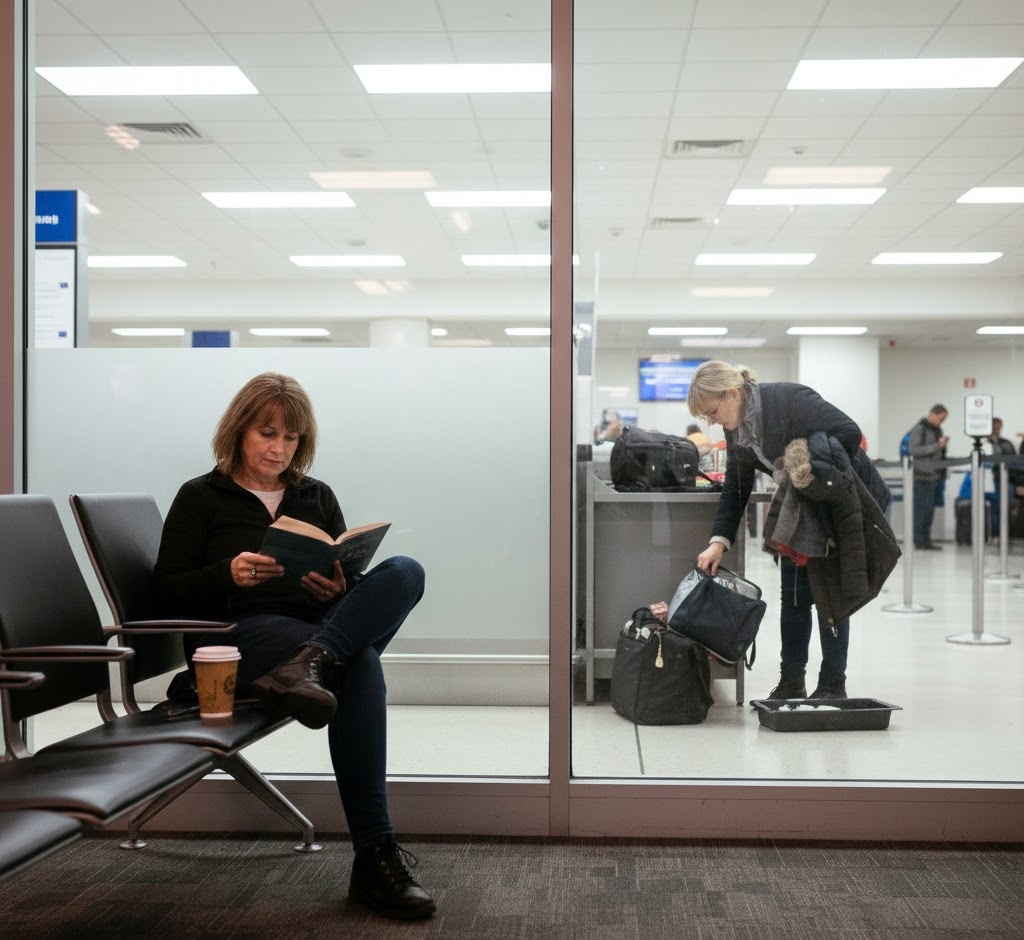
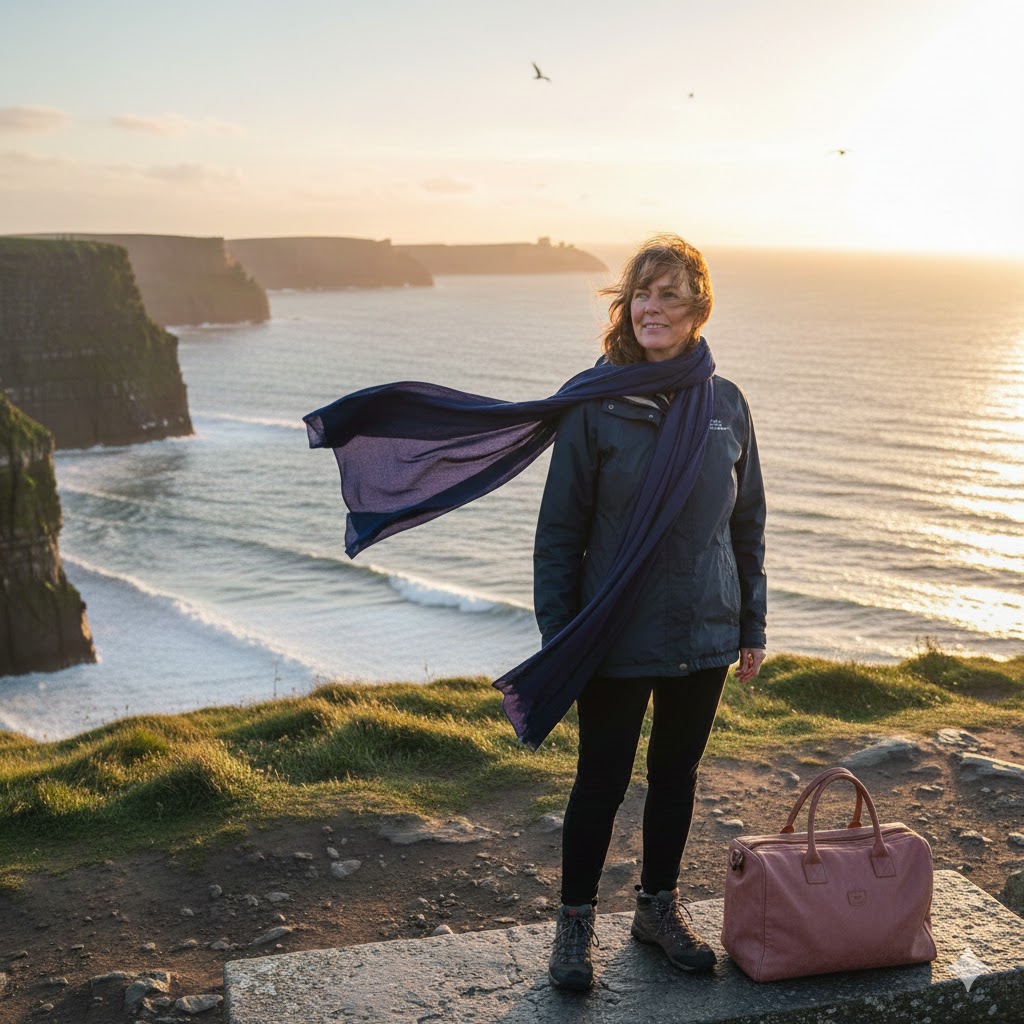
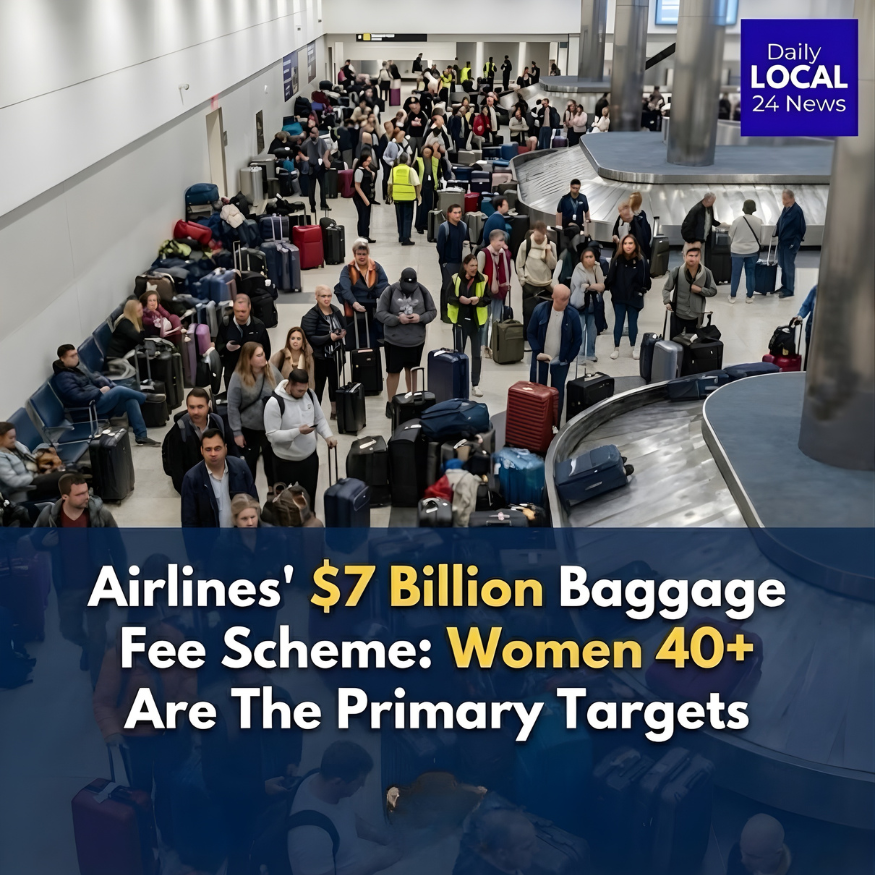
An ex-flight attendant reveals the "carry-on loophole" she discovered in first class. READ MORE: Why airlines are quietly hoping you never find out about it According to a new report from the Bureau of Transportation Statistics, U.S. airlines collected a record-breaking $7.27 billion in baggage fees last year. $7.27 billion. From your suitcases. And the service keeps getting worse. A separate report reveals that during last winter's peak travel window, over 36 million bags were mishandled, lost, or damaged globally. That's 36 million travelers arriving without underwear, medication, or the dress they planned to wear to their daughter's wedding. For millions of Americans, the airport has become a $95 toll booth where you pay for the privilege of maybe seeing your luggage again. But last Tuesday at JFK Terminal 4, we noticed something strange. While hundreds of passengers stood in the baggage line—shuffling roller bags, arguing with agents, watching $95... $190... $285 disappear from their bank accounts—one woman walked straight past all of it. She didn't wait at the check-in counter. She didn't wrestle her suitcase onto a scale. She didn't hand over her credit card. She carried a single black weekender bag—compact, unassuming, barely larger than a laptop case—and strolled toward her gate like she owned the terminal. We stopped her before she disappeared into TSA PreCheck. Her name was Linda Marchetti, 52, a marketing executive from Boston. She was about to board a flight to Rome. A 10-day trip. We asked her the obvious question: How do you travel for 10 days without checking a bag? She smiled. "I stopped playing their game," she said. "I used to be the woman sweating at the counter, moving shoes from one suitcase to another, praying the scale said 49 pounds instead of 51. Then I realized—I was paying the airlines to lose my own property." Her secret? A friend who spent 11 years working international flights—and got fired for talking about what she saw. THE FLIGHT ATTENDANT WHO COULDN'T STAY SILENT Sarah Nicholson worked as a flight attendant for a major U.S. carrier from 2009 to 2020. She loved the job. She didn't love what she watched happen to passengers every single day. "I can't sit silent anymore," she told us, "knowing that airlines make billions every year off of travelers—especially women—who are too scared or too exhausted to say no." Sarah says she first stumbled onto the secret on a flight to Paris. "It was my first time working first class," she recalled. "And I noticed something strange. All four pilots carried identical black leather bags. Not the cheap airline-issued luggage the rest of us got. Something different. Something... engineered." She asked the captain about it. He gave her a look—the kind that says you've seen too much—but later pulled her aside. "He explained that this is how pilots and senior crew skip baggage fees entirely. Not because they get special treatment. But because they know exactly how carry-on rules actually work. There's a gap in the regulations. And their bags are built to exploit it." Sarah started using the same method. Then she told other flight attendants. Then she made the mistake of mentioning it to passengers. Two months later, she was terminated. The official reason: "conduct unbecoming." "I don't regret it," Sarah said. "Someone needed to say something." INSIDE THE "CARRY-ON LOOPHOLE" Here's what Sarah explained to us—and what Linda has used for the past three years to travel the world without ever checking a bag. Most airlines enforce strict size limits on carry-on luggage. If your roller bag exceeds 22 x 14 x 9 inches, it gets tagged and checked—often with a $95 fee attached. But personal items—the smaller bag that slides under the seat in front of you—are almost never measured. Airlines assume they're too small to matter. The bag Sarah showed us exploits this blind spot. It's called the Luhxe (pronounced "lux"), manufactured by a small, female-owned company based in the U.S. At first glance, it looks like a standard soft-sided weekender. The kind of bag a gate agent wouldn't glance at twice. But when Linda unzipped it on a bench outside the terminal, what we saw inside defied physics. Linda laid the Luhxe flat on the bench. It unzipped completely—180 degrees—like a garment bag. Inside, we counted: • One floor-length dress (unwrinkled) • Six pairs of jeans • Four sweaters • Seven tops • A full toiletry kit • Three pairs of shoes (including heels) • A hardcover novel • Two weeks of medication • Gifts for her family in Rome All of it. In a bag that fit under an airplane seat. "Most duffel bags are just fabric sacks," Linda explained. "You stuff clothes inside, everything gets wrinkled, and you can maybe fit four days if you're lucky." "The Luhxe is different. Your clothes wrap around the bag, not crammed inside it. Then this compression panel—" she pointed to a hidden interior zipper— "cinches everything down. Military-grade webbing. It pulls two weeks of clothing into a space the size of a throw pillow." She zipped the bag closed. It was slim, compact, and light enough to toss over her shoulder with one hand. "My husband checked a hard-shell Samsonite with less stuff than this," Linda added. "He's currently on hold with Delta because they lost it somewhere between Atlanta and Rome." WHY HAVEN'T YOU HEARD OF THIS? If the Luhxe works this well, why isn't it in every Target, Macy's, and Amazon warehouse in America? We asked industry insiders. The answer was blunt. "The big luggage brands—Samsonite, Tumi, Away—make most of their money on hard-shell suitcases," one retail consultant told us. "Wheels break. Handles jam. Shells crack. That's not a design flaw. That's the business model. Customers replace their luggage every two to three years." A soft-sided compression bag that replaces multiple pieces of luggage—and lasts a decade—is a threat to that entire revenue stream. "A bag like the Luhxe is bad for business if you sell suitcases," the consultant said. "So the big retailers won't carry it. And the big brands won't make one." The Luhxe stays small by necessity: direct-to-consumer sales only, manufactured in limited batches, no retail distribution, no national advertising. Which is exactly why most travelers have never seen one. THE "ONE-BAG REVOLUTION" SPREADING AMONG WOMEN OVER 40 We spent two hours interviewing travelers at JFK. A pattern emerged quickly. The Luhxe—and bags like it—are spreading fastest among women over 40. A demographic that, according to airline data, pays more in baggage fees than any other group. "We're done being nickel-and-dimed," said Rose Chen, 48, a financial analyst we met near Gate B27. "I calculated what I spent on baggage fees last year. $340. That's a round-trip ticket to London. When I bought the Luhxe, it paid for itself on the first trip." Rose calls it "the magic trick." "I walk onto the plane and gate agents don't even look at me. They're too busy measuring everyone else's roller bags. I just slide mine under the seat, put in my earbuds, and watch the chaos from my window seat." Maria Gonzalez, 44, a nurse from Miami, had a similar story. "Last Thanksgiving, my flight was overbooked and they were forcing people to gate-check their carry-ons. $95 each. I watched six people in my boarding group hand over credit cards. My Luhxe was already under the seat. I didn't pay a dime." WHAT THE AIRLINES DON'T WANT YOU TO CALCULATE Let's do the math that airlines hope you never do. The average American takes 2.5 round-trip flights per year. At $95 per checked bag, per direction, that's $475 annually—just to transport your own belongings. Over five years: $2,375. Over ten years: $4,750. That's a European vacation. A new living room set. A semester of your kid's college tuition. Gone—one checked bag at a time. And that's before you factor in the real cost: the 23 minutes you spend waiting at baggage claim after every flight. The 1-in-200 chance your luggage is lost or damaged. The stress of watching the carousel spin... and spin... and spin... wondering if your suitcase made the connection. Women like Linda and Rose did the math. Then they opted out. Not by packing less. Not by wearing the same outfit for a week. But by discovering a bag that makes "checking" obsolete. A WARNING FOR WINTER TRAVELERS Here's where it gets complicated. Because the Luhxe uses premium materials—1680D ballistic nylon (the same fabric used in military rucksacks), YKK zippers rated for 80+ pounds of compression, reinforced stitching at every stress point—production is limited. The company manufactures in small batches. When inventory sells out, restocking takes 8-10 weeks. We reached out to Luhxe for comment on availability. A company representative confirmed what we suspected: "We've experienced a 340% surge in orders since the holiday travel disasters made national news. Our current inventory is critically low. We're also facing a mandatory production pause in late January due to supply chain retooling. Once our current stock is gone, we won't be shipping again until late February at the earliest." THE BOTTOM LINE In a year where U.S. airlines extracted $7.27 billion from passengers' luggage—while simultaneously losing 36 million bags—the smartest travel purchase isn't a luggage tracker or a TSA-approved lock. It's a bag that makes the entire checked-luggage system irrelevant. If you have travel plans this winter, spring, or anytime in the next 12 months, we'd recommend checking the Luhxe website immediately. If they're still in stock, secure one before the February shutdown. Linda Marchetti is somewhere over the Atlantic right now, her 10 days of clothes tucked neatly beneath seat 14A. Her husband is still on hold with Delta. The difference between them? One bag.
Like this ad? Make it yours.
Crush rebuilds this exact creative around your product — your brand, your colors, your offer — in about a minute.