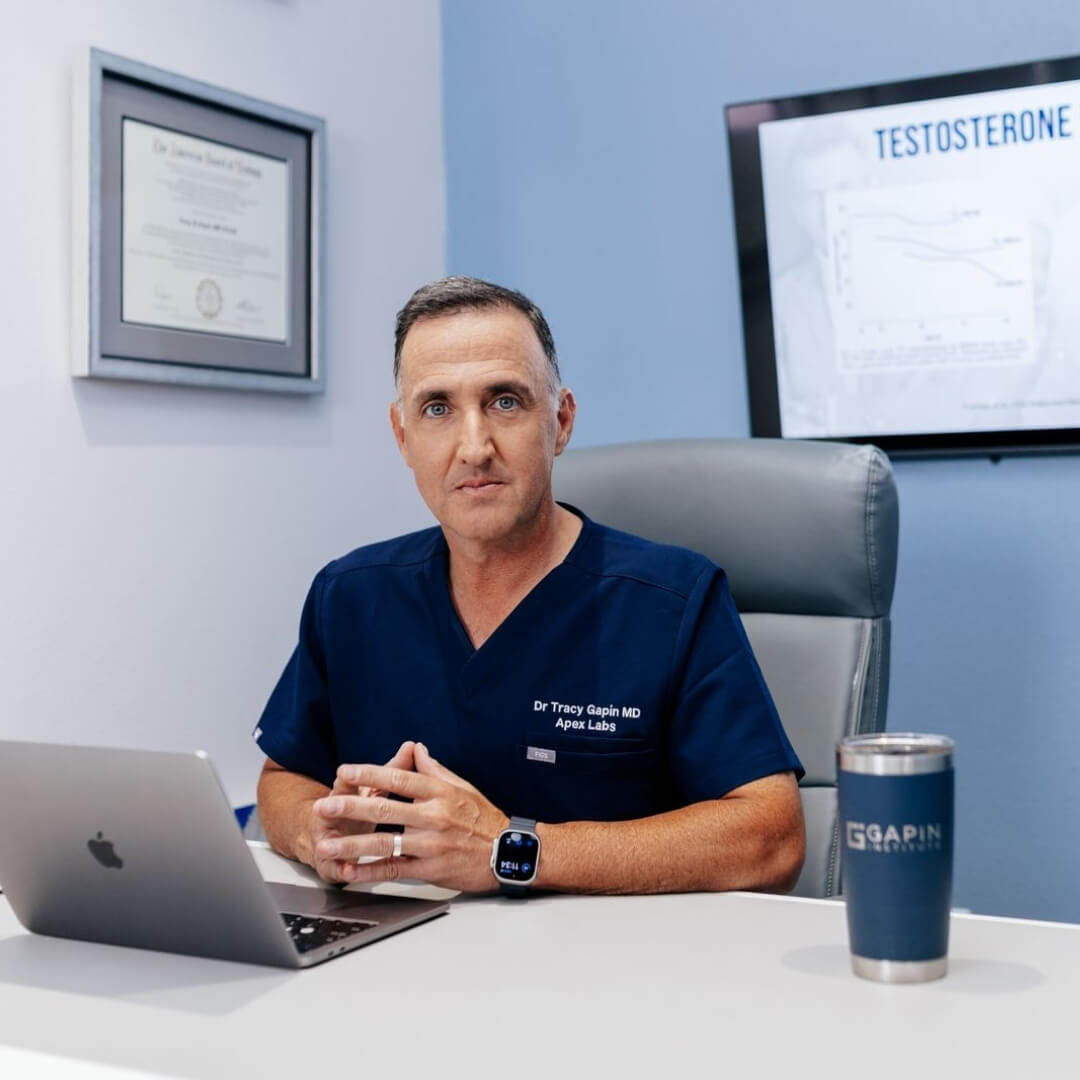
Dr. Tracy Gapin
Dr. Tracy Gapin Facebook ad: “After 20 years in men's health, I can…”
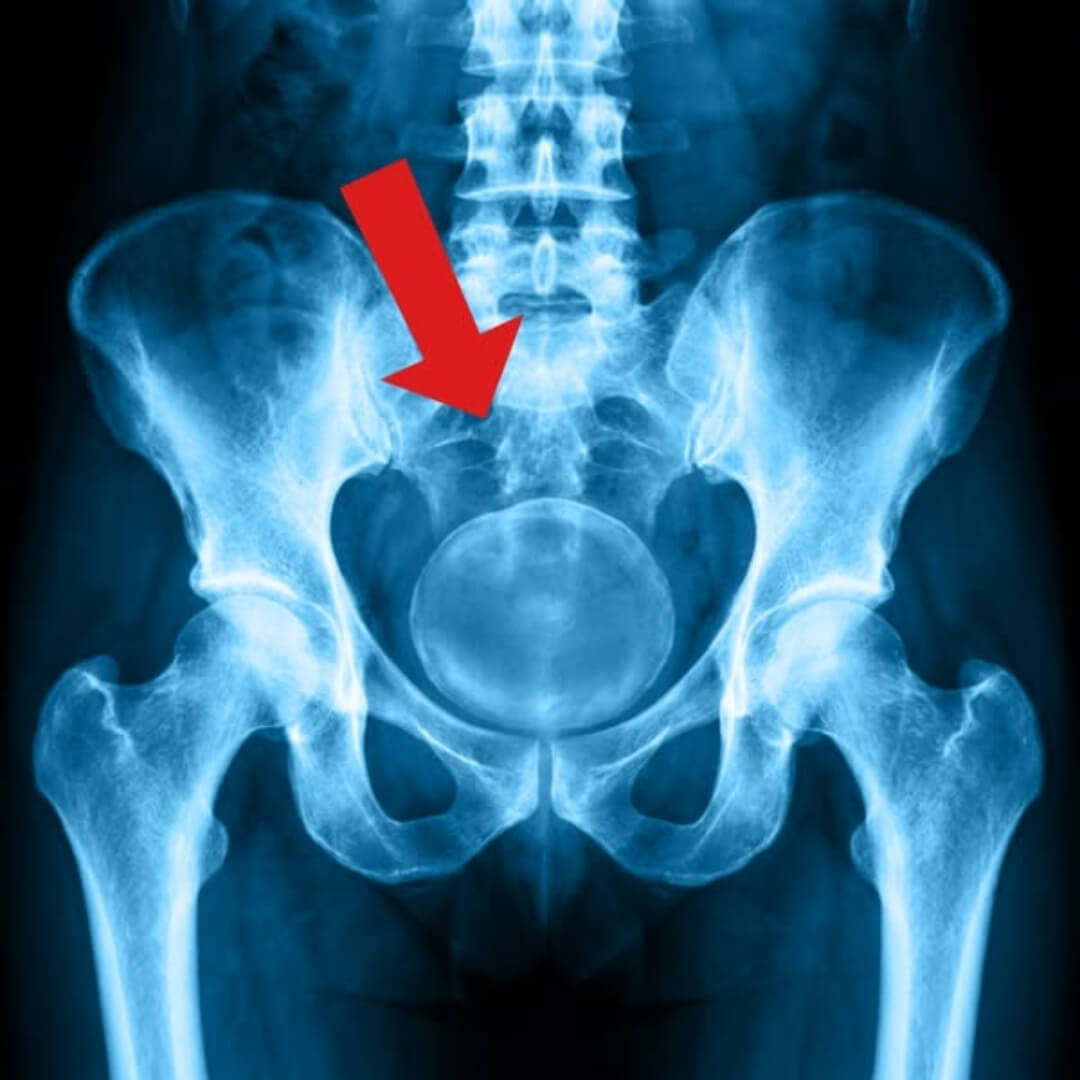
Ran for 13 days, from May 16 to May 29, 2026, the last day Crush saw it.
Run by Dr. Tracy Gapin on Facebook. Crush is not the advertiser and does not verify its claims. See this ad in Meta's Ad Library(opens in a new tab)
Want an ad like this for your product?
Crush makes new ad images for your product from this ad: your logo, your product photo, your offer.
Trials from $19.95 USD, then $79.95 USD a month. Cancel anytime.
About this ad
- Meta Ad Library ID
- 1910101389669182
- Platforms
- Facebook, Instagram, Audience Network, Messenger and Threads
- Relaunches
- 0
Ad text
After 20 years in men's health, I can tell you something most urologists won't say out loud. For roughly two-thirds of the men we put on long-term SSRIs, "when the antidepressant is working" is not the same as "the man has come back." I'll start where my thinking on this started. Across two decades of treating men in my practice, I've seen one pattern more times than any other. A man, usually between 45 and 60, comes in with collapsed sexual function and a story that goes like this: "I went on an antidepressant after some kind of crisis - a death, a job loss, a breakdown. The medication worked. My mood stabilized. I got my life back. But six months in, the drive disappeared. I tried switching antidepressants. I tried the blue pill. My doctor mentioned TRT. Nothing brought back the wanting." If your last prescription change was six months ago, a year ago, or longer. If your mood is managed. If by every metric the depression cared about, you won. But you have not come back. Read this carefully. I had said the words "the side effects should improve when we switch you" to thousands of men. Then I started running the labs and tracking the outcomes. What I learned, I had not been telling my patients in the way the data was telling me to tell them. No urologist I knew had thought it through. Almost no psychiatrist I have spoken to since understands it. What I found, working through twenty years of patient data on a Saturday afternoon when I should have been doing something else, made me sit down. There were two patterns. The men who came back after long-term SSRIs - the ones whose drive returned, whose marriages survived - had something in common. Their free testosterone moved into healthy range. Their morning erections returned within six months. Their dopaminergic markers, where I had thought to run them, recovered. The men who did not come back had something different. Free testosterone often within normal range. Total testosterone within normal range. Bloodwork that looked technically fine. But the wanting didn't come back. Two patterns. Two distinct outcomes. Same medication class. Same starting point. Same standard treatment menu offered to all of them. The men who came back had something working that the men who didn't come back didn't have. It was not their testosterone. It was not their blood flow. It was something upstream. It was their dopamine. I want to be precise about what I mean by that. The patient handouts I've used for two decades - the ones the pharmaceutical reps print and the ones we hand out at the front desk - describe SSRI sexual side effects in one of two ways. Decreased libido or erectile difficulty. Both presented as known consequences of the medication. Both presented as manageable through switching antidepressants or adding ED medications. What that framing misses - what I missed for the first decade of my practice, and what most of my colleagues are still missing - is that "decreased libido" and "erectile difficulty" are downstream symptoms of a specific upstream mechanism. Long-term elevation of serotonin chronically suppresses dopamine in the brain's reward circuits. The two neurotransmitters work in opposition. When one is sustained at elevated levels for years, the other crashes through the floor. And dopamine is what fires wanting - the spark, the pull, the involuntary reach for your wife when she walks past you in the kitchen. That is the first injury. The medication is doing its job on the mood, and it's doing it perfectly. The cost is that the dopamine side of the seesaw is suppressed every day the prescription continues. There is a second injury, and this is the part of the picture that no one I trained with had thought through. When dopamine-driven circuits go unstimulated for months and years, the wiring itself begins to atrophy. The brain physically downregulates neural circuits it isn't using. It's metabolically expensive to maintain unused infrastructure. So the brain stops producing the proteins that keep those circuits sensitive and connected. The hardware dampens. The atrophy progresses month by month. For men in their first six months on an SSRI, the dopamine suppression is the primary problem. The wiring is still intact, just underused. If you stopped the suppression then, the drive would return. For men two years in, three years in, five years in - and that is most of the men in my practice with this presentation - the second injury is well established. The wiring itself has dampened. Even if you somehow restored the dopamine signaling overnight, the hardware that signal needs to travel through has degraded. The standard treatment menu - switching antidepressants, the blue pill, TRT - addresses neither injury. Switching antidepressants trades one molecule for another in the same class. Same serotonin elevation. Same dopamine suppression. Same atrophy progressing underneath. You might shift the side-effect profile slightly. You will not change the mechanism. The blue pill is a vasodilator. It amplifies a nitric oxide signal downstream of a dopamine signal that isn't firing. It can produce an erection. It cannot restore desire. Most men I treat tell me the same thing: "I get hard, but I feel like a stranger in my own body." That's exactly what's happening biochemically. The plumbing works. The signal that makes the plumbing matter is offline. TRT addresses testosterone. It does not address dopamine. It does not address the neural wiring. It puts a higher number on the lab report. For some men, that produces enough downstream effect to feel like recovery. For most men in this presentation - the ones whose total testosterone was already in normal range - TRT doesn't deliver what they came in for, and now they're committed to weekly injections for life with their endogenous production permanently suppressed. So the question I came to, after enough patient charts to make it clear something was wrong with the standard menu, was whether anything could address both injuries at once. The dopamine signal, without exogenous testosterone. And the wiring atrophy that no one had been treating for any of my patients, including the ones who came to me having tried everything. Once I had the question framed that way, I knew what I was looking for. I expected to come up empty. What I found - in the published research on dopaminergic activity and in the literature on neural growth factor - were two specific compounds that addressed the two specific injuries. Standardized Shilajit. A mineral resin used in traditional medicine for thousands of years, which Western medicine had not taken seriously until clinical research started catching up. Properly sourced and dosed, standardized Shilajit increases dopaminergic activity in the brain's reward circuits - the exact circuits long-term SSRIs suppress. It does this without affecting the serotonin system the medication is working on. The mood stays managed. The dopamine side comes back online. A 90-day clinical trial on PrimaVie standardized Shilajit found statistically significant increases in total testosterone and free testosterone in healthy middle-aged men, with the mechanism attributed to dopaminergic activation and HPA axis modulation. The free testosterone increase was 19.1% over placebo. That trial wasn't conducted specifically in men on long-term SSRIs - I want to be honest about that - but the mechanism that produced the effect is the same mechanism that's failing in our group. It was not introducing exogenous hormone. It was supporting the recovery of the signaling axis itself. That addressed the first injury. Pharmaceutical grade Lion's Mane. A mushroom extract that has shown, in published research, to stimulate BDNF and nerve growth factor production. BDNF is the protein the brain uses to maintain and rebuild neural circuits. Nerve growth factor is the protein that keeps the neurons themselves alive and connected. For men whose desire wiring has atrophied from years of dopamine suppression, BDNF and NGF stimulation provides the substrates the brain needs to rebuild what it stopped maintaining. The atrophy reverses. The wiring comes back online over a period of weeks and months. That addressed the second injury. I worked through this twice before I believed I was looking at both injuries addressed in one protocol. But there was a problem. Most Shilajit on the market is unstandardized. Most of it is bulk resin scraped off rocks at variable altitudes, with no quality control on the active compounds. The fulvic acid content varies wildly. The dibenzo-α-pyrones - the compounds responsible for the dopaminergic activity - vary even more. You can buy "Shilajit" on Amazon for $15 and have no idea whether you're getting anything therapeutically useful. The clinical research was done on PrimaVie. That's the specific standardized form with controlled active compound levels - the form used in the trials I had been reading. Almost nothing on Amazon is that form. Most of the products that claim to contain PrimaVie are using it as window dressing - listing it on the label at sub-therapeutic doses underneath a tribulus or fenugreek base. Same problem with Lion's Mane. Most retail product is mycelium extract - the cheap part of the mushroom, with significantly lower BDNF and NGF activity than fruiting body extract. The clinical research was done on standardized fruiting body extract at meaningful dose. Most retail product is the cheap version at filler quantities. I spent two months looking for a formula that met clinical criteria for both compounds - PrimaVie standardized Shilajit at therapeutic dose, pharmaceutical grade Lion's Mane at meaningful dose, third-party tested, no proprietary blend filler. My usual channels - compounding pharmacies, specialty distributors - did not stock anything that met those criteria. I was about to recommend men source the two compounds separately, at significant cost and complication. Then a colleague I'd known since fellowship - now running a precision medicine practice on the West Coast - mentioned in passing at a conference that he'd been recommending one formula to his SSRI-side-effect patients for over a year. His criteria matched the criteria I had just worked out from the literature. Plus things I had not thought of. PrimaVie standardized Shilajit at clinical dose. Pharmaceutical grade Lion's Mane at meaningful dose. Third-party tested for purity, potency, and heavy metals. cGMP-certified manufacturing in the United States. No proprietary blend obscuring the active doses. No tribulus, fenugreek, or filler base. The formula was Ultra Elite 3 by Apex Labs. He had been tracking informal outcomes in his patients for over a year. His clinical impressions matched what I had worked out from the literature. I went home from the conference and sat with it for a week before recommending it to anyone in my practice. Twenty years of Western-trained skepticism do not turn off because a colleague at a conference showed you a label. What overcame the resistance, in the end, was the literature I had already read independently and the clinical track record my colleague had been quietly assembling. I started recommending it to the men in my practice whose drive had collapsed on long-term antidepressants and who had already cycled through the standard menu. Here is what I have documented. By week two, most men report a quieter version of the flatness that had been their baseline going into bed. Not gone. Quieter. Less heavy. By week three to four, partial morning erections begin returning in men who hadn't had them in over a year. Not full restoration. Two or three mornings a week of something happening, where there had been months of nothing. By week six, most men report a return of the involuntary moments - walking past their wife in the kitchen and feeling something fire in their chest before they consciously processed what they were looking at. The signal coming back online. By week eight to ten, the patients who respond - and that is most of them, by my count - report being able to initiate without rehearsing it, perform without scheduling it, want without forcing it. I track free testosterone, total testosterone, and where appropriate prolactin and LH on these patients. The lab values track the clinical response. Free T tends to climb 15-25% over baseline in 90 days. Total T moves more modestly. The endocrine markers improve in parallel with the reported sexual function - they don't predict it perfectly, but they correlate. The men stay on their antidepressants the entire time. Same prescription. Same dose. The mood stays managed. The depression that necessitated the medication in the first place stays at bay. What returns is the part of them the medication was never designed to reach. I am not asking you to take my word for this on the basis of credentials alone. I am asking you to consider that the standard menu of options you've been offered - switching antidepressants, the blue pill, TRT - addresses none of the upstream mechanism. The mood-management half of your prescription is doing its job. The other half of you - the dopamine signaling, the desire wiring, the involuntary reach for your wife - has had no support for the entire time you've been on the medication. If you are six months in and the drive hasn't come back, you are early. The wiring is still mostly intact. Supporting the dopamine pathway now will likely produce faster recovery than supporting it two years from now. If you are a year in or longer, you have a window. The wiring atrophy is more established but still reversible with sustained BDNF and NGF support. If you are three years in, five years in - and a meaningful portion of the men in my practice are - the window is narrower but it is still open. Atrophied neural circuitry rebuilds with the right substrates. It just takes longer the deeper the atrophy. The longer you spend on the standard menu without addressing the upstream mechanism, the more of the wiring goes quiet. The men in white coats writing your antidepressant prescriptions do not have this information. They have the depression-fighting half of the picture. They are doing that half exceptionally well - your mood is managed, your life is functional, your prescription is keeping you alive. The other half they were not trained on. I had it for two decades and underweighted it. I do not anymore. Ultra Elite 3 is $89 a bottle. The company offers a 60-day money-back guarantee, including on opened bottles. They sell only through their website. They do not sell on Amazon, because the Amazon channel is dominated by counterfeit Shilajit and underdosed Lion's Mane that would destroy their batch testing standards. Most men in my practice start seeing changes in weeks two to four. If the protocol is going to work for you, you will know within the 60-day window the guarantee covers. I am not asking you to trust me on credentials alone. I am asking you to consider that what you have been told about your recovery - that you need to switch meds, take the blue pill, consider TRT - addresses downstream symptoms while leaving the upstream mechanism unsupported. It was not the full picture for the men in my practice. If you want to try what I recommend, the link is below. The risk is the cost of the bottle minus the guarantee. The risk of waiting is the months you spend with the dopamine pathway unsupported, while the wiring you could be rebuilding continues to atrophy. I would have started recommending this earlier in my practice if I had understood the second injury sooner. No one taught me. I'm telling you. 👉 https://primalrecoveryboost.com/try-ultraelite3-sd/ - Dr. Tracy Gapin
Where the ad sends people
primalrecoveryboost.com
primalrecoveryboost.com
Learn more: primalrecoveryboost.com(opens in a new tab)