
Active· since Jul 6, 2026
- 70
- days running
- 0
- relaunches
Ad copy
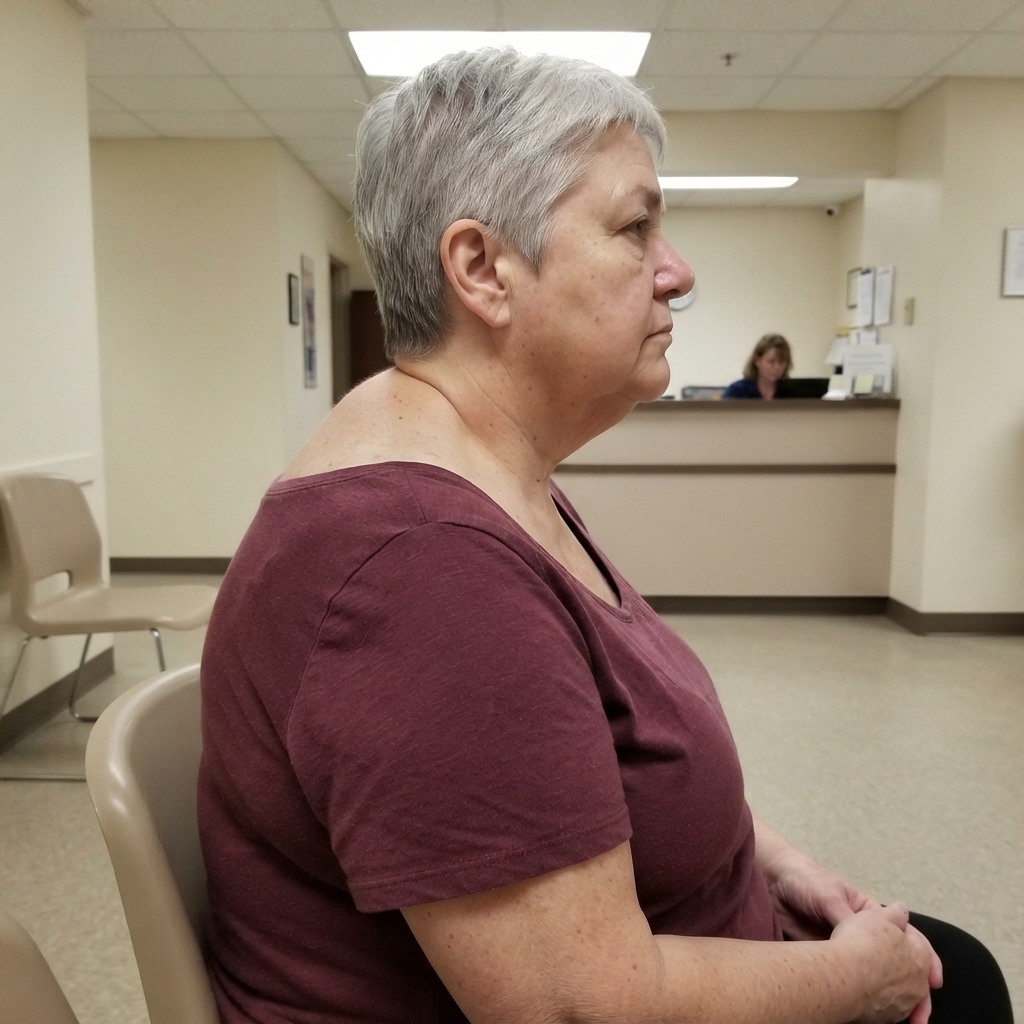
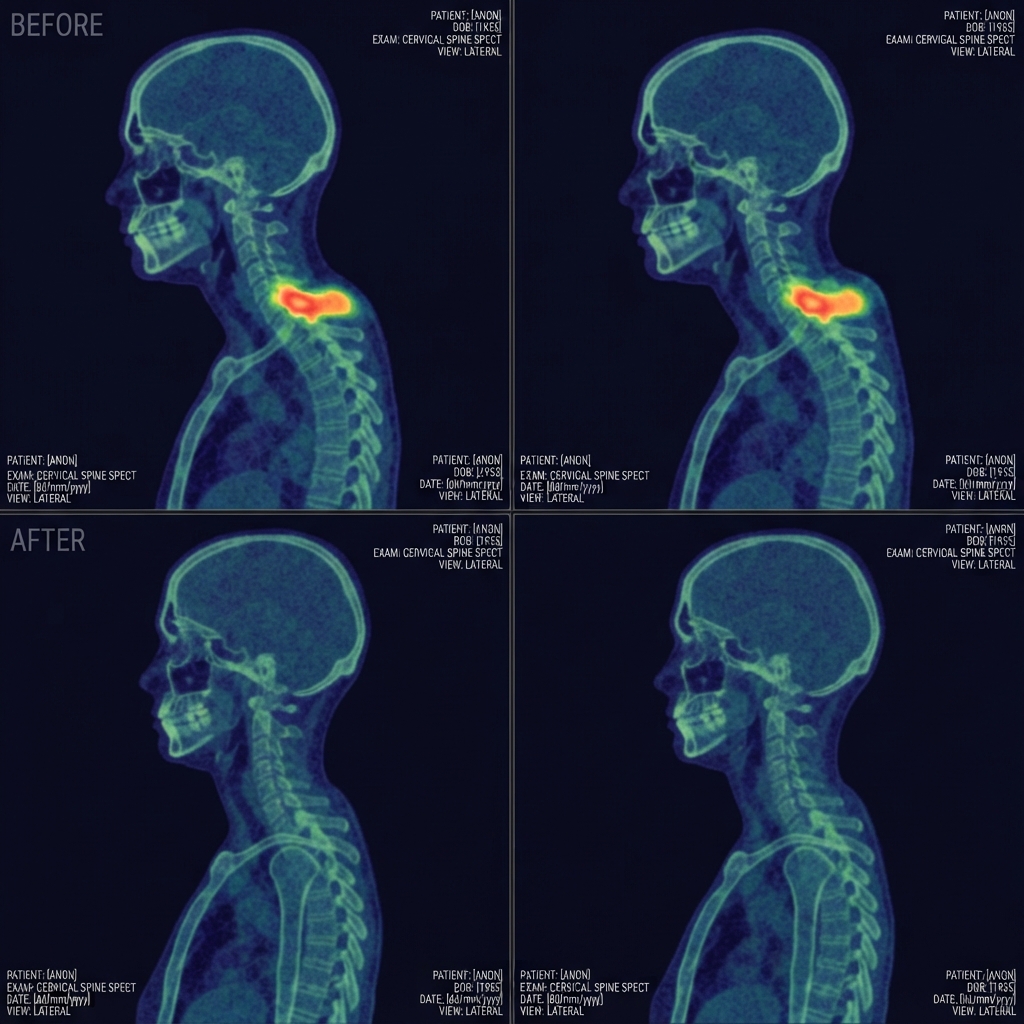
If you're a woman who's been told her neck hump is just posture and the only advice you got was "do your exercises, watch your alignment," I'm writing this for you. Because I was you three years ago, and nobody told me what was actually happening at the base of my skull. My name is Dorothy. I'm 62. I found out I had a building neck hump at a routine assessment when I was 59. My profile measurement was off by 12 millimeters. My practitioner said "you've got some tissue building at the base of your neck, do your chin tucks, watch your posture, we'll recheck in six months." That was the whole appointment. So that's what I did. I did my chin tucks every single morning for a year, wore a corrector at my desk, and started being more careful about my screen position. I felt like I was handling it, I looked more mindful about it, and even my husband noticed I was trying. I went back six months later expecting a pat on the back. Profile was 14 millimeters off. I'd done a year of faithful exercises and spent months correcting myself, and my measurements had gotten worse. My practitioner looked at the chart and said "well, keep at it. These things take time." But here's what she didn't tell me. While I was doing my exercises and wearing my corrector, something else was happening at the base of my skull. Something that no amount of surrounding muscle work alone fixes. I didn't find out for another two years. And when I did, I was angry I hadn't been told sooner. About six months after that follow-up, the avoidance started. It wasn't dramatic at first, just a small calculation. I'd be at a family gathering and position myself near the back. I'd be in a photo and turn slightly to the better angle. I'd reach past the open-collar blouse for the third morning in a row. I told myself I was just being practical. Choosing the right light. Getting older. I tried to manage it with better exercise compliance and earlier mornings in front of the mirror. It got more present, not less. Then the daily management hit, and it was real management. Not "I'll think about this later" management. The kind where you choose your restaurant seat by what's behind you. The kind where 6am rolls around and the first thing you do is check the mirror from the side. The kind where your husband asks if you're okay and you can't explain it because you don't have the words that don't sound vain. I went back and asked for a full reassessment. My profile was 16 millimeters off. Getting worse, not better. She said "your profile is progressing slowly but nothing alarming. You're 62. This is age. We'll keep monitoring it." Monitoring. That word should have made me angry on the spot. It didn't, at the time. It does now. Because here's what monitoring actually means: we're going to watch this build further and not do anything until it's too established to address without escalation. I started reading on my own. Google searches I didn't want to be doing. Neck hump stages, tissue setting, signal collapse, permanent structural change. And I thought about my mother. Mum had the same thing. She'd noticed it in her early sixties. By her mid-sixties her practitioner had told her it was just posture and age, to keep doing her exercises and watch her alignment, and she did, faithfully. She cut back on screen time. She bought every cervical pillow on the market. By 68 they used the word "established." By 70 her profile had set in a way that her practitioner said was no longer addressable with standard approaches. She spent her last four years choosing her clothing carefully and declining to be in photographs. She couldn't wear the necklines she'd loved her whole life. She was in and out of specialist offices with escalating referrals. She died at 74. What I learned later, after I went through her old appointment records, was that her practitioner had flagged her profile as "beginning to change" back when she was 61. Nobody followed up with anything beyond exercises. They didn't look at the mechanism again for seven years. By then the tissue had set in a pattern that nothing non-invasive could reverse. If they'd caught the junction signal collapse three years sooner, she might have had options. She was a few seasons short. Her profile measurement when she was first told it was building was 11 millimeters off. Three millimeters less than mine when I was first told. Now here's the part I had to be honest with myself about. I wasn't my mother. She'd had poor posture her whole life. I had always been careful. But I'd been doing it for 25 years. Forward head position at a desk, 365 days a year, for 25 years. That's a lot of load, and that's a lot of junction work. I'd told myself my whole adult life that my posture was "not that bad." I never thought of myself as someone with a posture problem. I thought of myself as a woman who sat at a desk all day and was careful about it. But my skull-spine junction doesn't care what I called it. My junction just processed what came through. And in some ways I'd had it worse than Mum. She had stretches of active jobs where she moved around. I never did. 28 days out of 30 for 25 years, my junction was absorbing sustained forward load. And then 2020 happened. I worked from home, the screen moved onto a laptop instead of a proper monitor, and the forward load went from moderate to constant. By 2022 I was back to a better setup, but the load from those years was already in the measurements. I just didn't see it yet. I was not going to be my mother. I refused. I read that 60 million women over 50 have progressive cervical tissue building, that most don't address the root mechanism, and that it's called the slow build because you feel like you're managing it right up until the tissue has set. I read that cervical tissue building progresses. Mild rounding becomes established rounding, established rounding becomes set tissue, and set tissue is permanent. And then I read something that changed everything. The real problem isn't the surrounding muscles. The surrounding muscles compensate for something deeper. They brace and hold because a signal at the skull-spine junction has gone quiet. And the junction going quiet creates a cascade. No signal means no overnight release. No overnight release means the tissue that built up during the day doesn't decompress. Add years of forward head load and you've got a problem that won't fix itself with exercises alone. The worse the tissue builds, the quieter the junction signal gets. The quieter the signal gets, the more the tissue builds. And the more the tissue builds, the further the setting advances. It's a cycle, and nothing my practitioner told me to do breaks the cycle. Diet helps, posture awareness helps, correctors help as well. But none of those things address the junction signal directly. The specific input your skull-spine junction urgently needs if you have a building neck hump. That's why my profile wouldn't stabilize. I'd done the exercises and worn the corrector, but none of that was reaching the real problem. The signal collapse was already happening inside, and my junction had nothing to receive. I'd been doing everything right and treating the wrong thing the whole time. I called my practitioner and asked her directly. What about the skull-spine junction signal? Why aren't we addressing the release pathway? Why are we only talking about surrounding muscle work and alignment? She said the junction was "something they were aware of" but there was no standard protocol for it. I asked about junction-specific input. She said she couldn't recommend something outside standard protocol. She said it like she was sorry. "There's nothing we can really offer you beyond what we're already doing. Exercises. Alignment. We watch." That was it. So I went looking myself. The first thing I tried was a general cervical pillow, because that's what every neck health article tells you to use. I bought one online for $65 and used it religiously for five months. Then I got reassessed. Profile still 16 millimeters off. Five months and nothing had changed. Turns out general cervical pillows support surrounding tissue. They cannot deliver junction-specific input. It's like throwing a tarp over a building that's already setting from the inside. The setting is inside, and the tarp doesn't help. Then I tried a corrector with cervical support built in. Then a traction device. Then one of those "posture reset" stacks with five attachments I couldn't figure out. My profile stayed between 14 and 16 millimeters off, shifting around, never coming down. I was spending sixty bucks a month on approaches that were doing nothing. That's when I found the Cevera Posture Release Tool. What I read stopped me cold. The Cevera delivers exact anatomical placement at C1-C2 — the specific address where the junction signal originates. It doesn't work on surrounding tissue from the outside like a corrector. It delivers gravity-assisted pressure via your own head weight to the precise junction address, giving the inhibited deep cervical muscles the specific input they stopped receiving. Clinics have been using sustained skull-spine junction input for over 60 years. When a patient presents with established cervical signal collapse, the session doesn't start with the surrounding muscles. It starts with the junction. Sustained, gravity-assisted, minimum-duration input at the exact address. Because it's the only thing that rapidly restores junction signal when the release pathway has stopped working. Same mechanism, same address, same problem: junction signal depletion allowing tissue to set. The only difference between advanced tissue setting and what I had is time. One happens in years. The other takes decades. The root cause is identical. I ordered Cevera that week. 10-minute placement before bed, every night. I used it daily for two months and started noticing the morning stiffness changing around day eight. I got reassessed. My profile was at 11 millimeters off. A real improvement, and for the first time in three years the trend was going the right direction. Then I committed to a full protocol for six months. Week 1: I slept differently. Not dramatically, just less stiff at the skull base when I woke up. I stopped waking up with that locked feeling at 6am. Week 2: The daily management was quieter. It was still there but I was thinking about it less. The mirror check took two seconds instead of two minutes. Week 3: My husband said something I wasn't expecting. He said "you seem back." I hadn't even told him I was trying anything new. Week 4: The daily photo calculation wasn't gone but it was looser. Like a grip that had been tight for years was starting to open. Week 8: I'd already had a reassessment on the calendar and I almost didn't want to look. Profile: 8 millimeters off. I read it twice. Then I read it a third time. 8 millimeters. Down from 16 to 8. The first time my profile had been approaching normal range since my diagnosis. I sat in the car for a minute and stared at the steering wheel and was about to cry. Then I called my husband. I couldn't say much for the first few seconds. I just told him the number. I'd spent three years quietly assuming I was on the same road my mother had been on. Three years convinced the only options were to keep doing the exercises and wait for it to set anyway. A measurement changed everything. My practitioner pulled up the trend line at my next appointment and looked at the screen for a long time. "What changed?" she asked. I told her everything. The junction signal. The C1-C2 address. The exact placement protocol. The gravity-assisted delivery. The minimum hold duration. The mechanism. She listened. She wrote it down. She didn't tell me I should have mentioned the tool earlier. She didn't dismiss it. She just looked at the numbers and wrote it all down. That was nine months ago. My last assessment was 6 millimeters off, and it's still improving. The daily management is gone. Not less. Gone. I reach for the open-collar blouse without calculating anything. The photo avoidance is gone. I stand at the center of family photos again. I lost the habit of choosing my seat by the light without noticing I'd stopped needing to. For the first time since my diagnosis, I'm not waiting for the next assessment to tell me how much further it's built. I'm not afraid of the word "established" anymore. I'm not lying awake thinking about how many years of forward load my junction has absorbed. I understand now what was happening. The forward head load plus the years plus the desk work was creating junction signal collapse. The signal collapse was letting the tissue build faster than overnight release could clear it. Without the junction signal my deep cervical muscles couldn't release. And everything my practitioner told me to do addressed the surrounding muscles and alignment. Nothing addressed the junction signal. It's like driving a car with a flat tire and being told to steer more carefully. Careful steering helps, but until you fix the tire you're still riding on the rim. Cevera fixes the tire. If you're a woman reading this and you've been told your neck hump is just posture. If your profile measurements keep creeping. If you've been told to do more exercises and watch your alignment. If you've been using cervical pillows and watching your numbers stay the same. If the daily management crept in and you blamed it on age. If the avoidance is harder to push through every year. If you've quietly been afraid of where this ends. Hear me on this. Your junction signal is depleted. That's the root cause, and nothing you've been told to do addresses it. Cevera delivers exact placement at C1-C2. It gives your junction the direct input to restore its own release signal. Clinics have used sustained junction input for 60 years. The exact placement protocol works at 10 minutes before bed every night. Your own head weight does the delivery. That's the whole mechanism. My practitioner told me something I think about constantly: "Early tissue building can stabilize and partially reverse. But once it has set in an established pattern, the intervention required changes completely. The difference is timing." My mother ran out of time. I almost did too. The window where your junction can still restore itself is open right now. It doesn't stay open. Every month your junction signal stays depleted is another month of tissue setting that gets harder to reverse. Don't wait for the next appointment. Don't wait for the measurements to climb. Don't wait for them to use the word "established." Don't wait until you're where my mother ended up. I went from 16 millimeters off to 6 millimeters off in nine months. The daily management is gone, I'm reaching for the open-collar blouses again, and my husband says I'm back. My mother lost the last twelve years of wearing what she loved because nobody told her any of this. I almost lost mine the same way. You know now. Here's the exact protocol that took my profile from 16mm off to 6mm off: https://trycevera.com/pages/adv-womens-wellness-report P.S. A few things: It's a 90-day money-back guarantee. If your profile doesn't improve, you get every dollar back, no questions. They're running a discount on the 3-month supply right now. 90 days is what it took me to see the real change, and that's how I stocked up. It's a small company. I've watched them have stock delays twice. I went from 16 millimeters off to 6 millimeters off. The daily management is gone, I'm wearing what I love again, and I'm spending forty-four dollars for the tool that actually worked instead of the four that didn't. My mother never got told. You did. She ran out of time. You haven't. Here's where I started: https://trycevera.com/pages/adv-womens-wellness-report
Like this ad? Make it yours.
Crush rebuilds this exact creative around your product — your brand, your colors, your offer — in about a minute.