Beauty Renewal Insider
Beauty Renewal Insider Facebook ad: “Women with aging lips read this”
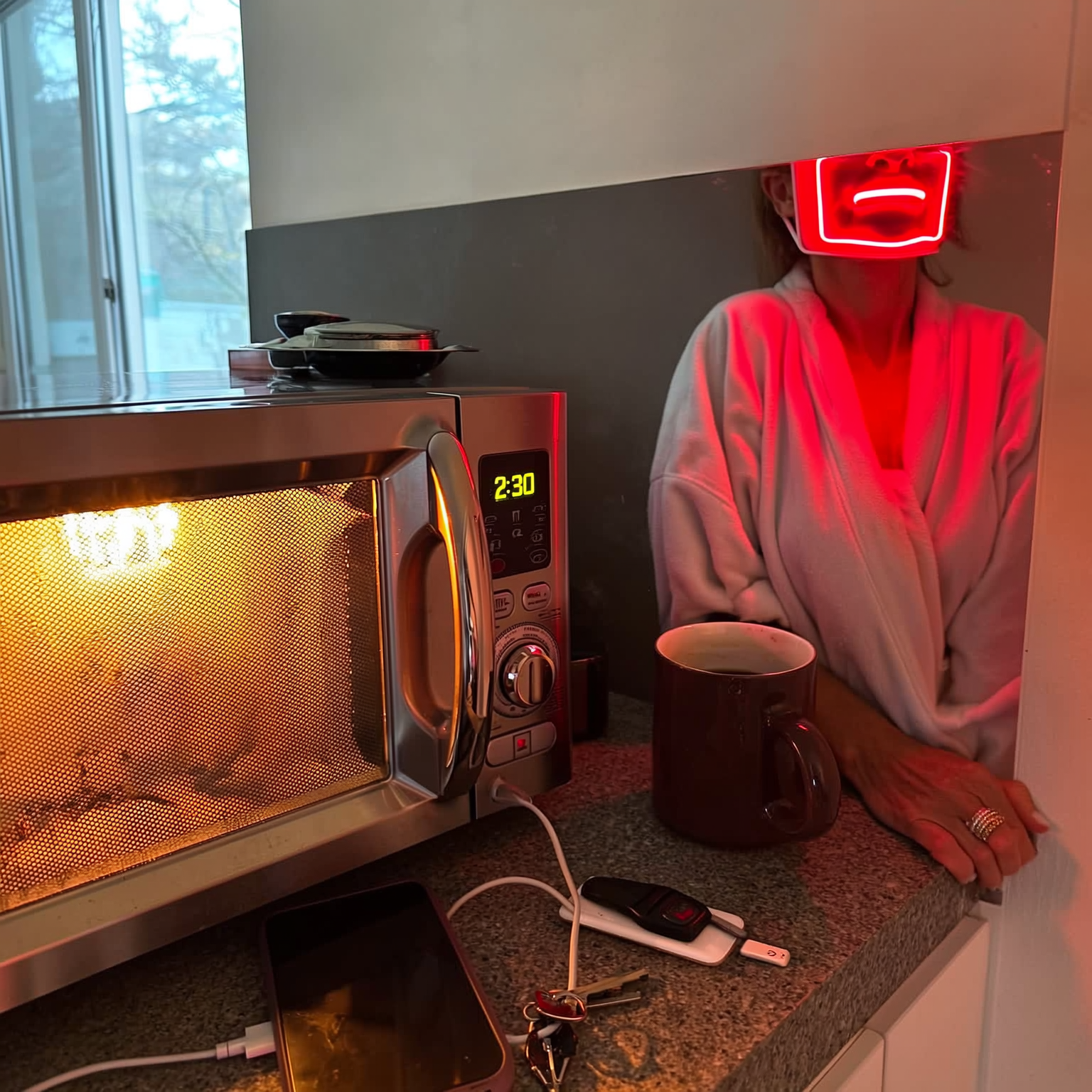
Ran for 23 days, from January 22 to February 14, 2026, the last day Crush saw it.
Run by Beauty Renewal Insider on Facebook. Crush is not the advertiser and does not verify its claims. See this ad in Meta's Ad Library(opens in a new tab)
Want an ad like this for your product?
Crush makes new ad images for your product from this ad: your logo, your product photo, your offer.
Trials from $19.95 USD, then $79.95 USD a month. Cancel anytime.
About this ad
- Meta Ad Library ID
- 1933341453888339
- Platforms
- Facebook, Instagram, Audience Network, Messenger and Threads
- Relaunches
- 0
- Niche
- Skincare & Beauty
Ad text
Someone on r/LEDtherapy asked why their lip lines weren't improving despite daily red light use. 127 comments later, a cosmetic nurse explained something about wavelength calibration and tissue depth that made me realize my $600 face mask was doing absolutely nothing for my lips. I've been doing LED therapy for eighteen months. I track every session in a spreadsheet. Wavelengths, duration, distance from skin, energy dosage in joules per cm². I know my devices better than most people know their skincare routine. CurrentBody LED mask: 633nm red, 830nm near-infrared. Ten minutes daily. $629 after the holiday sale. The results on my face have been incredible. Crow's feet significantly reduced. Forehead lines softer. Skin texture noticeably improved. My lip lines? Worse. Not just "not improving." Actually worse. Deeper. More pronounced. Increasingly visible even with makeup. I first noticed it about four months ago. I was taking my monthly progress photos—same lighting, same angle, same time of day. I compare them side-by-side to track changes. Forehead: clear improvement. Cheeks: definite tightening. Around my mouth: I actually gasped. The vertical lines above my lip looked MORE defined than they did in month one. The ones at the corners of my mouth had deepened. I told myself it was the lighting. The angle. Maybe I'd smiled differently. But the next month's photos showed the same thing. And the month after that. My face was getting younger. My mouth area was getting older. I started researching in February. "Red light therapy not working on lip lines." "Why LED mask doesn't improve perioral wrinkles." "Photobiomodulation lip area protocol." I found scattered forum posts from people experiencing the same thing. Face improving, lips not. But no real answers. Most responses were the standard: "Keep going, it takes time" or "Maybe increase your sessions." I was already doing daily sessions. I'd been consistent for over a year. Time wasn't the issue. Then two weeks ago, I was scrolling through r/LEDtherapy at 11 PM and saw a post that stopped me cold. The title: "8 months of red light, face looks great, lip lines actually look worse?" It could have been my post. I read through the comments obsessively. Most were the usual: "What device are you using?" "How many joules?" "Are you using retinol?" But 127 comments down, a verified cosmetic nurse wrote something that made my stomach drop. She said: "Your face mask isn't treating your lips. Even if light hits the area, the wavelengths aren't calibrated for lip tissue depth, and the distance/angle means you're getting maybe 15–20% of the effective irradiance you need. Lips are different anatomy. They need different specifications." I read it three times. Then I opened my device specs sheet. My CurrentBody mask emits light at 633nm and 830nm. The treatment distance is approximately 15mm from skin when worn properly. It's designed for facial skin, which averages 1.5–2mm thick. Lip tissue is different. Thinner. About 40% thinner than facial skin. Different collagen density. Different vascular structure. And here's what I hadn't considered: my mask doesn't actually sit ON my lips. It hovers near them. The mouthpiece shape means there's even more distance—probably 20–25mm—between the LEDs and my actual lip tissue. At that distance, with wavelengths calibrated for thicker facial skin, the therapeutic effect on my lips was functionally zero. I'd been shining light near my lips for eighteen months and calling it treatment. I went back to that Reddit thread and clicked through to the nurse's profile. She'd posted a comment on another thread explaining the science more thoroughly. Lip tissue requires specific wavelength combinations. Not just 633nm red. You need multiple wavelengths targeting different tissue depths: surface hydration layer, capillary level, mid-dermis for collagen synthesis, and deep tissue for elastin. And the delivery matters just as much as the wavelength. Distance from LED to tissue changes everything. At 2mm, you get full irradiance. At 15mm, it drops dramatically. Generic face masks can't do this. They're not designed to. She mentioned that medical-grade lip-specific devices exist—mouthpiece designs that maintain precise distance and use calibrated wavelength combinations. I'd never heard of them. I'd spent $629 on a face mask and assumed it covered everything. The next morning I called my aesthetician. Her name is Lauren. She's the one who got me into LED therapy in the first place. I trust her completely. "I have a weird question," I said. "Do you use any light therapy devices specifically for lips?" "Oh, absolutely," she said immediately. "We have a photobiomodulation system for perioral rejuvenation. Why?" I explained my Reddit discovery. The wavelength calibration issue. The distance problem. "Yeah," she said. "That's why we don't use face panels for lip treatment. The anatomy is too different. Lip-specific devices use four wavelengths—602, 633, 660, and 850nm—and they're designed to maintain 2mm contact distance. Otherwise you're just... lighting up the area without actually treating tissue." "So my face mask—" "Is great for your face," she finished. "But it was never going to do anything meaningful for your lips." I felt like an idiot. I'd spent eighteen months tracking irradiance and joules and treatment protocols. I knew the difference between 630nm and 660nm for collagen synthesis. But I'd never questioned whether my device was actually reaching the tissue I wanted to treat. I'd assumed proximity equaled treatment. It didn't. Lauren sent me information on the medical-grade devices they use in-clinic. FDA-cleared photobiomodulation systems. Mouthpiece design with 360-degree LED coverage. Four wavelengths calibrated specifically for lip tissue thickness. She also mentioned there were at-home versions with the same technology. I found one that night. Medical-grade specs. Same four-wavelength system. Mouthpiece design that maintains precise 2mm distance. I cross-referenced the wavelengths against published research on lip tissue penetration depth. 602nm: targets surface tissue, hydration and barrier function. 633nm: reaches capillary level, improves circulation. 660nm: penetrates to mid-dermis where collagen is synthesized. 850nm NIR: reaches deeper tissue, stimulates elastin production and cellular repair. It made sense in a way my face mask never had for this specific application. I ordered it on a Thursday. It arrived in one week. The first time I used it, I understood immediately what I'd been missing. The mouthpiece sits directly against your lips. No distance variance. No angle issues. Every LED is precisely positioned for optimal coverage. Six minutes. I felt gentle warmth—not heat, just therapeutic warmth from the NIR wavelength. When I took it out, my lips looked slightly fuller. I knew that was temporary vasodilation from increased blood flow, but it confirmed the device was actually doing something at a tissue level. Week one: No visible changes to the lines yet, but my lips felt more hydrated. Week two: I thought the vertical lines looked fractionally softer. Took photos to compare later. Week three: My husband asked if I'd gotten my lips done. I hadn't. But they had subtle volume I hadn't seen in years. Week four: I compared my progress photos to the ones from four months ago. The difference was undeniable. The vertical lines above my lip were noticeably reduced. The corner lines were shallower. My lips had regained structure. And for the first time in eighteen months of LED therapy, my mouth area matched the improvement in the rest of my face. It's been seven weeks now. I'm still using my CurrentBody mask for my face. It's an excellent device for what it's designed to do. But I added six minutes to my morning protocol for actual lip treatment. The difference in my before-and-afters is striking. Not because one device is "better." But because I'm finally using the right tool for the specific anatomy I'm trying to treat. I posted an update in that Reddit thread last week. Explained what I'd learned about wavelength calibration and tissue-specific delivery. Three people messaged me privately saying they'd had the same experience. Great face results. Worsening lip lines. Assumed they were doing something wrong. They weren't doing anything wrong. They were using a face device to treat lip tissue. If you're into LED therapy—if you track your protocols, if you understand irradiance and wavelengths, if you've invested in quality devices—you probably already know that tissue depth and treatment distance matter. But you might not have considered that your lips are fundamentally different anatomy. Thinner tissue. Different collagen structure. Different vascular patterns. A face mask optimized for 1.5–2mm facial skin, positioned 15–25mm away, won't deliver therapeutic irradiance to lips that are 40% thinner and require precise 2mm contact. It's not that your face device is bad. It's that you're applying facial specifications to non-facial tissue. I spent eighteen months watching my lip lines get worse while my face improved. Seven weeks with the right tool changed everything. Not because it was a "better" device. Because it was the correct device for the anatomy I was treating. If your LED results are uneven—if your face is responding but your perioral area isn't—this might be why. You're not failing. Your device specifications are just wrong for that specific tissue. There's a difference. And now there's a solution.
Where the ad sends people
tryluxelip.com
Women with aging lips read this ☝️
Powered by 4 therapeutic wavelengths to smooth lip lines, restore natural volume, and revive lip color—without injections - See the difference in just 2 weeks.
Shop now: tryluxelip.com(opens in a new tab)