
Active· since Oct 23, 2025
- 325
- days running
- 0
- relaunches
Ad copy
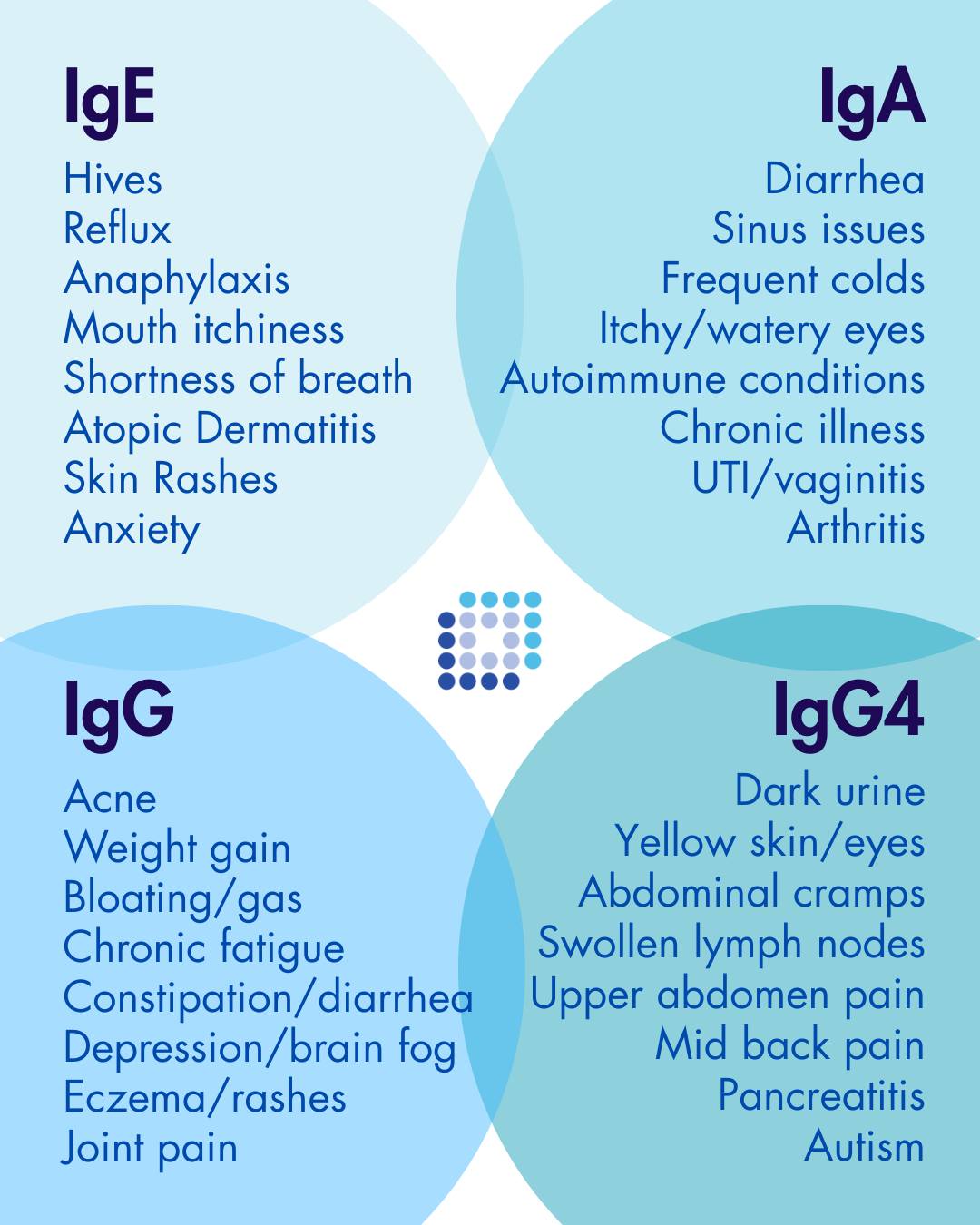
Not sure which antibody test your patient needs? Different symptoms can point to different immune responses. By matching symptoms to the right antibody, you’ll know which test provides the clearest insight. Additionally, understanding the distinctions between whether a reaction is inflammatory, protective, or tolerance-building is key to selecting the right test for your patient: 🔵 Immunoglobulin G1-3 or IgG IgG is an antibody that can activate the pro-inflammatory complement system (complement cascade) associated with chronic inflammatory conditions. High levels of IgG (class II or higher) overload receptors and drive the inflammatory reaction while low levels of IgG (class 0/I) indicate tolerance. IgG food sensitivity testing is the most commonly performed food sensitivity testing and foods that are only high in IgG can often be safely re-introduced after a period of abstinence. 🔴 Immunoglobulin G4 or IgG4 IgG4 is an antibody which in most people does not activate the complement system, but instead is a “blocking antibody” for IgE. The presence of IgG4 is protective, not inflammatory, as IgG4/IgE binding tends to decrease IgE hypersensitivity (true allergy). If IgG4 is high, testing for IgE reactivity is advised and it may be best to remove the food from the diet permanently. Independent increases in IgG4 only can be associated with certain autoimmune conditions such as eosinophilic esophagitis. 🟢 Immunoglobulin A or IgA IgA is an antibody that can activate the pro-inflammatory complement system. Unlike Secretory IgA (sIgA) in stool, which is two IgA molecules bound together and secreted into the gut, serum IgA levels are associated with allergies and asthma. A Serum IgA reaction to food triggers can indicate foods that are irritating the lining of the gut.
Like this ad? Make it yours.
Crush rebuilds this exact creative around your product — your brand, your colors, your offer — in about a minute.