
Active· since May 7, 2026
- 129
- days running
- 3
- relaunches
- 49
- EU reach
Ad copy
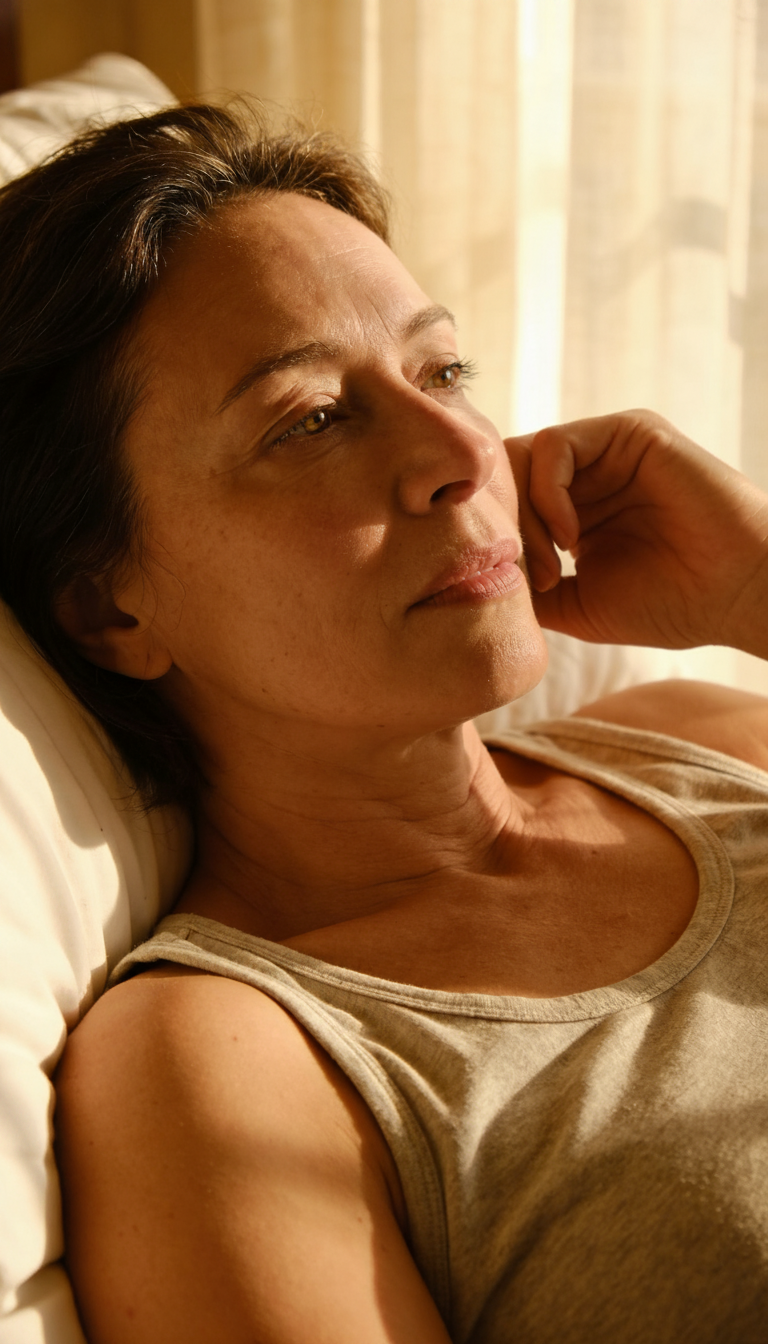
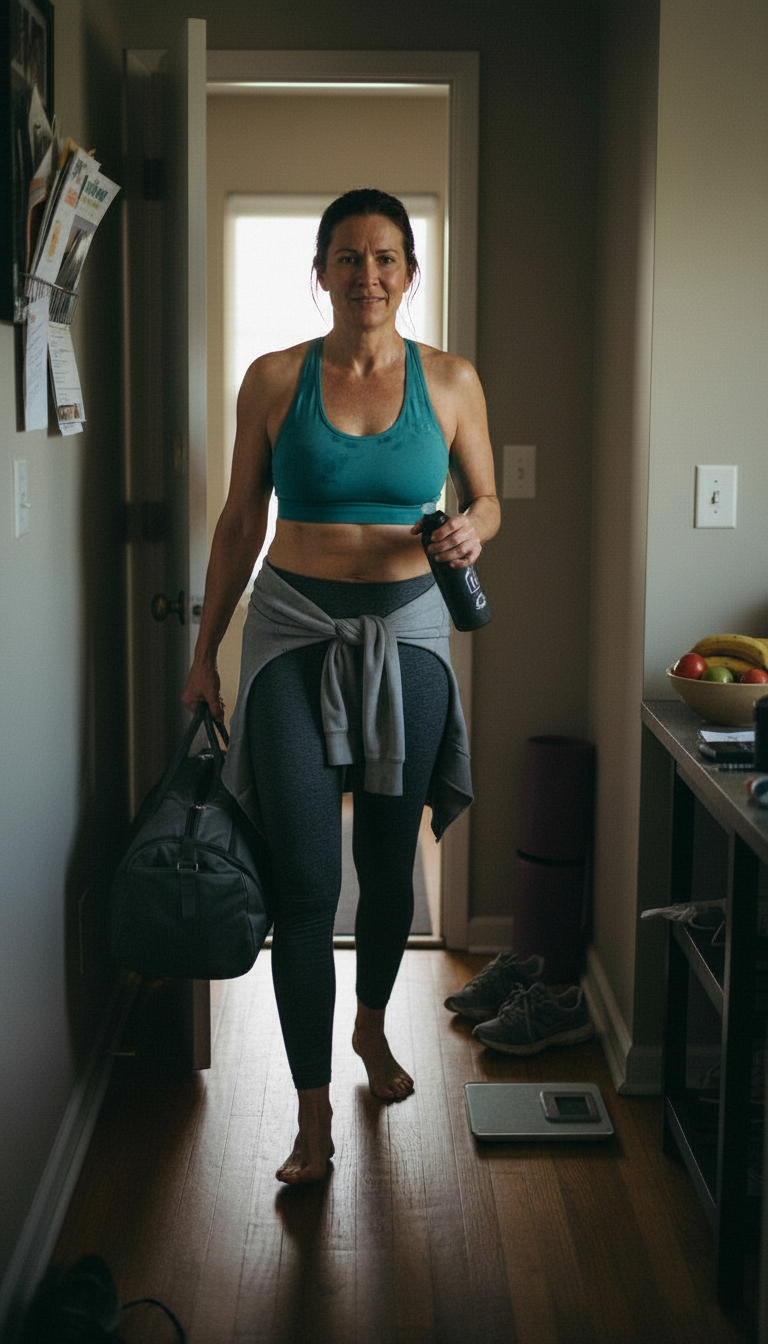
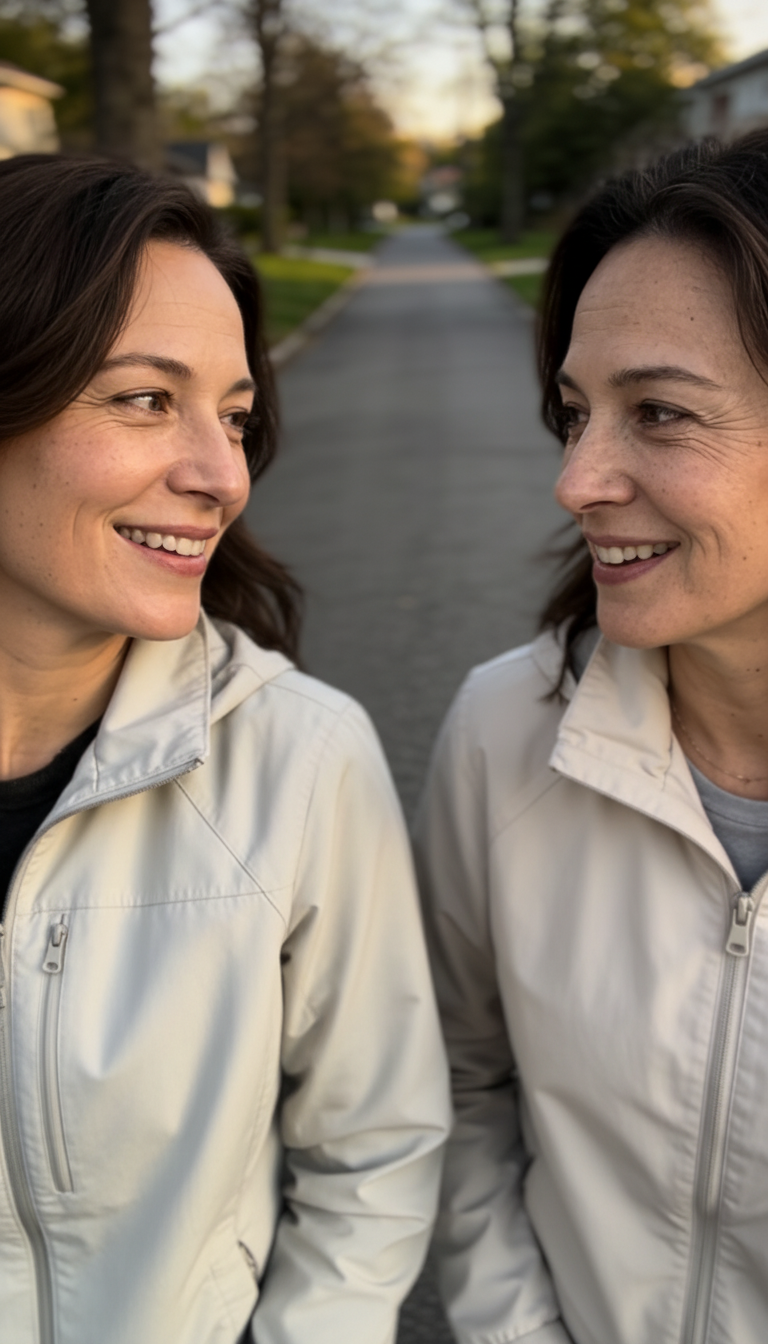
If a man at 56 had started having the best intimacy of his life, he would write a book about it and there would be a Netflix documentary by next spring. I am 56 and I am having the best intimacy of my life and the only people I have told are the eleven women in my book club. I am writing this so it is more than eleven. ======== I'm 56. Married thirty-one years. Three children, all in their twenties, all out of the house. A career as a clinical psychologist that I love and have spent thirty years building. A husband I have known since we were eighteen. For four years between 49 and 53 I assumed intimacy was effectively over for me. It was not a dramatic ending. It was not the kind of ending I would have helped my own clients process. It was the slow, reasonable retreat that happens when you stop expecting to feel anything during intimacy and you stop expecting your body to respond and you start finding it easier to read than to participate. By 51 I had not had an O in two years. By 53 I had not initiated in three. My husband had stopped initiating somewhere in there. We slept in the same bed and were roommates with a thirty-one-year history. ======== The advice I had been giving myself, as a clinical psychologist, was the advice I would have given a client in my office. "This is a transition. intimacy changes in long marriages. The intimacy migrates." "At your age, with menopause, decreased libido is normal. Focus on connection." "You and your husband can find new forms of intimacy that don't depend on the same physical architecture." I am not embarrassed by that advice. It is correct in many cases. It was wrong in mine. I was using my professional training to put an intellectual framework around a problem that was, underneath the framework, mechanical. My body had stopped responding because the blood flow had dropped. Everything else — the lost initiating, the lost desire, the polite roommate-ing — was downstream of the mechanical problem. I would have caught this in a client. I did not catch it in myself. ======== The breaking point came at book club. We were at Rachel's house. The book had been a memoir by a woman in her sixties about reclaiming her intimacy after a long marriage. I had read it on the plane and found it slightly embarrassing. We were on the second bottle of wine. Rachel, who is 58, said: "I want to know which of us has read this and felt something genuine instead of a wistful hope." Nobody answered. Then she said: "I want to know which of us is having actual intimacy. Not 'we're still together' intimacy. Not 'we still love each other' intimacy. Intimacy that you would call intimacy if you were 28." Three of the eleven of us raised hands. Three out of eleven. Three women in their fifties and sixties who, by their own admission, were having the kind of intimacy the rest of us had quietly written off. Rachel raised her hand. I did not. ======== I cornered Rachel in the kitchen during the dessert course. I asked her how. I had a list of working hypotheses, all of them psychological. Better communication. Better date nights. A retreat. A second honeymoon. None of them had worked for me. All of them had cost me money. She put down her wine glass. She said: "It's not a marriage thing. It's a body thing. My body went through what yours is going through. I tried what you tried. Nothing worked because nothing on the consumer market was designed for the bodies we have now. Then I bought a small yellow device called Nancy Lem, two years ago, and within a month I was a different person. Within two I was having the best intimacy of my life. I am 58 and that sentence is true." She said: "Don't ask me how. Ask Janine, who told me. Ask Christine, who I told. Three of the eleven of us raised our hands tonight. All three of us are using it. It is the reason we raised them." ======== I went home and read everything. Air-pulse, not vibration. Soft suction. Pressure waves rather than direct contact. The mechanism restores blood flow to the area, which is the underlying physiology behind most postmenopausal intimacy dysfunction. The "use it or lose it" advice has merit if "use it" means the right input. Vibration-based toys can over-stimulate already-thin tissue. Air-pulse does not. I read the science. I read the reviews. The reviewers' ages ran from 38 to 81. The reviews used words I had not associated with intimacy toys: "gentle, restorative, patient." I bought one. ======== It arrived in a box. Inside was a small yellow device, a magnetic charger, a pink storage pouch, and a card that said: "Air-pulse, not vibration. Twelve settings. Start at one. Be patient with the lowest setting — the body responds slower than vibration trained you to expect." I locked the bedroom door at 4pm on a Thursday afternoon while my husband was at the office. ======== Day 1. Setting one. The first sensation was so gentle I almost increased it. The card had said be patient. I was patient. By minute six I had felt something I had not felt in three years. Day 7. I was lubricating naturally during sessions. Day 14. It happened. Slowly. Patiently. The kind of O I would not have recognized at 32 because at 32 I had been chasing fast ones. This one was slow. Day 30. I told my husband. I had been waiting for the right moment. There was no right moment. I made one. We sat at the kitchen island, and I told him, calmly and clinically, what I had been doing. He was not insulted. He was not threatened. He was not surprised. He said: "Thank god." He had been waiting too. ======== The next six months were what I, as a clinician, would have called a complete intimacy rehabilitation. The mechanism was simple: my body had been retrained, through patient air-pulse use, to respond to soft pressure rather than to abandon the field entirely. Once it could respond to me alone, it could respond to him. Once it could respond to him, the rest of the marriage came back. We are not 28. We do not have 28-year-old intimacy. We have 56-and-58-year-old intimacy, which it turns out can be a category in its own right. I am writing this because the eleven women at book club deserve to be more than eleven. There are millions of us. Three out of eleven, at our table, had figured it out. Eight had not. If you are one of the eight — what worked for the three is $89. ======== We are told that postmenopausal women cannot have great intimacy. We are told this because the wellness industry stopped designing for our bodies and the medical industry stopped diagnosing for them. The lack of great intimacy is not a fact of biology. It is a fact of what was on the shelves. Air-pulse changes what is on the shelves. ======== I spent four years grieving what turned out to be a fixable mechanical problem. The fix was on a shelf, in a box, for $89. ======== End the slow retreat with Nancy Lem. 🩶 100% discreet shipping. 🛁 Waterproof. 🤫 Whisper-quiet. 🌸 Body-safe medical silicone. Made by women, for the women whose bodies the wellness industry had given up on. ======== P.S. To the eight out of eleven women at any book club anywhere: ask the three who raised their hands. You will be surprised how many of them are using the same thing.
Like this ad? Make it yours.
Crush rebuilds this exact creative around your product — your brand, your colors, your offer — in about a minute.