
 Eric Ybarra
Eric Ybarra Facebook ad: “The Rubik’s Cube of Destiny”
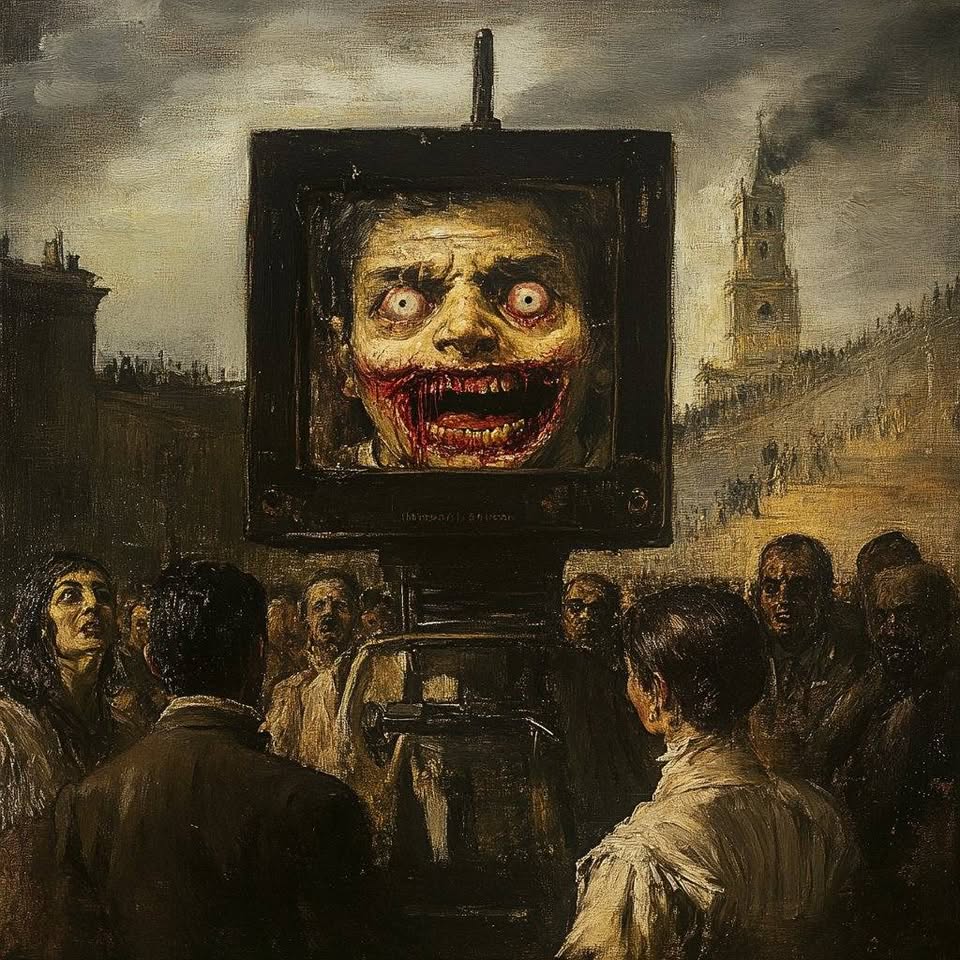
Ran for 30 days, from January 11 to February 10, 2026, the last day Crush saw it.
Run by Eric Ybarra on Facebook. Crush is not the advertiser and does not verify its claims. See this ad in Meta's Ad Library(opens in a new tab)
Want an ad like this for your product?
Crush makes new ad images for your product from this ad: your logo, your product photo, your offer.
Trials from $19.95 USD, then $79.95 USD a month. Cancel anytime.
About this ad
- Meta Ad Library ID
- 1963594924220413
- Platforms
- Relaunches
- 2
Ad text
The Rubik’s Cube of Destiny Prologue: The Heartseer’s Phlegethon Dream Rivers of Fire That Flow into Hell’s Mouth This is a chronicle of internal reckoning. It is a journey into the soul’s geography, for the Heartseer mapped not lands, but the invisible currents of his nation's soul. It is a story of 🇺🇲 Patriotic Perseverance: Overcoming Political Pestilence. God in the Machine: The Soul's Journey Deus Ex Machina Consider the problem of a disembodied spirit— vast, yet unable to evolve. To save it, the body might be seen as the ultimate deus ex machina. It provides the necessary structure and capabilities (like free will, emotion, and action). These are prerequisites for spiritual growth or resolution, something the spirit perhaps could not achieve otherwise. We begin seeing the body as a separate, albeit necessary, tool; a vessel for the soul's journey. This is the true definition of DEUS EX MACHINA: finding (God in the Machine). I. Deus Ex Machina and the Graffiti Angel Deus ex machina—"god from the machine"—is a plot device whereby a seemingly unsolvable problem in a story is suddenly or abruptly resolved by an unexpected occurrence. Like in the hands of destiny, a man hangs helpless while the wheel of fortune turns towards his fate of Deus Ex Machina; this is not merely a bad Latin pun but a cranial implant scenario hoping to convey the sense of the spirit that animates even our humanoid mechanical body. I walked through the ruins of the old city, where the neon lights once flickered, and I came across this angel statue once that was facing a graffiti wall. The contrast between the holy stone and the spray-painted chaos spoke to me of a nihilistic point of view. Standing before the angel, I see one possible conclusion: humanity decides to transform itself into a legion of survival machines that tear themselves apart for a living. There is no more faith, no mystical vibe, contrasting with the robot's futuristic design—a humanoid with a robotic mind left to ponder the choices that define our future, perfect for enthusiasts captivated by the dance between humanity and technology. Technology gave us new powers so we feel closer to the gods, like divine creatures, a modern angel or a new Icarus; if artists imbue everything they create with a bit of themselves, does that apply to engineers as well? This concept explores the almost religious importance modern individuals place upon technology, and specifically search engines like Google, for finding the answers to all questions from the mundane to the spiritual. We brought this upon ourselves. It began with a machinic desire that can seem a little inhuman, as it rips up political cultures, deletes traditions, dissolves subjectivities, and hacks through security apparatuses. It moved through us like tracking a soulless android with no control over the outcome. We didn't understand it then, but this is because what appears to humanity as the history of capitalism is an invasion from the future by an artificial intelligent space that must assemble itself entirely from its enemy's resources. Now, looking at the wreckage, I know the truth: Nothing human makes it out of the near-future. II. The God Filter and the Void Sun Maybe it was because we really lack the delicacy to let God die quietly, on his own. Instead, humanity had to stretch out the death until its last breath with a nihilistic grin. We lived in a world divided between signals of nihilism and faith. I watched lost souls converse to humanity about making it to heaven. They feared their efforts could be in vain, and that their homeland already lies in ashes behind them. We were eventually recycled back into the soil of a planet. We were told that reaching God status is the principle to every religion, but it's also a suppression to a few that can't seem to reach that enlightenment. Today, God is nowhere to be found, yet there is still so much light! Light that dazzles and maddens; crisp, ruthless light. Even our moon retains such fidelity to the Earth. So I ask: Where is the new darkness? Where is the greatest of all unknowings? We are terrified of life after death when we shed this skin and step into what's next. Why is the truth, it would seem, revealed to some and not to others, for receiving revelation from God? The scriptures said everything in this life passes away—only God remains, only He is worth struggling towards. But we have a choice to follow the way of this world, of the society that surrounds us, and thereby find ourselves outside of God. Is this a realistic goal? Is this how humankind mutated? Are we a new species whose past has destroyed their faith in people? These are the God Filter theories. It is a nihilistic absorption into your reality simulation. We see cultural dreams swirling out into the universe only to return to you with an atheist point of view, burning with hatred of a seemingly unjust or unmerciful God. I looked up. Space echoes like an immense tomb, yet the stars still burn bright in the darkness. It is a terrifying silence. Why does the sun take so long to die? I wondered. Will the earth still exist inside these nihilistic mood swings that wish for an A.I. brain? I often wonder: What if the earth turned us all within this time loop, merging together countries to believe in nothingness and dream of the damnation that was brought on by a god who ignored your world views? What if that was a way to filter out faith from a brain? But the chance that magic, the eternal inexplicable, might be the true agent, without faith, but magic may not. And so, when your people demand proof, then magic creeps back into the gaps where you do not look for it. An old guardian angel who had translated the madness, who had seen an alien world crawling with earthly horrors, had feared. Had loved. Had met a man who became a God. Had seen death. Look into that abyss, terror of extinction, that is perhaps the legacy of all life. Too fast to be outrun and too agile to be avoided, the void sun filtered down through the waters like a sapphire. The sun-being, that is perhaps the legacy of all life. Too fast to be outrun and too agile to be avoided, the unplumbed void sun filtered down through the waters like an act of grace. The soul survives. III. The Political Pestilence and the Americana Nightmare The nation is plagued by a Political Pestilence—the specter that whispers and creeps, a pale rider on a Pale Horse, its breath cold and grave. This sickness tears the republic apart, a venom of fractured design where political discord breeds genuine threat. It is a fever of fear rising from a place where the Red Death once reigned, casting a heavy shadow on the land we love. The resulting illimitable dominion of fear is a familiar darkness. This is the karma woven through the strip mall light of our Americana, a paradox in bloom where founding ideals clash with the endless pursuit in a crowded room. The relentless cycle of American strains, the burden of plenty, the greed and the crash—all of it is measured by the spirit of Heruka, who rides the asphalt plains. A fierce, compassionate, wrathful divine, Heruka watches with eyes unblinking and wide as the shadow and gold of the republic entwine, knowing the truth of our deeds has nowhere to hide. The reckoning dawn follows the turbulent night. This karma is a sorrowful weight heavy on the republic’s soul, just as it was in Salem, Massachusetts. When the political Witch has a bad day, the damage is spun across the entire nation, inviting a trouble we know all too well. The Isenheim Altarpiece shows the human cost of such afflictions. We are a nation accustomed to being afraid. If I’m being honest, it’s not just the nation, it’s the world, and it’s an addiction. People crave fear. Fear justifies everything. It makes it okay to have surrendered freedom after freedom, until our every move is tracked and recorded. Fear creates, defines, and shapes our world; without it, most of us would have no idea what to do. We dream new boundaries to put around our homes, limiting our potential in the name of a safety we refuse to achieve. We took a world huge with possibility, and we made it as small as we could. This leads to the drive for power. He who wills power must not, strictly speaking, destroy what he has created, or hate what he loved. Rather, he must “overcome” what he loved or created. However, this ego-filled power trip soon induces him to find any given creative achievement, any attained object of a determinate desire, no longer satisfying, no longer enough. The agent in pursuit of power does not seek achievements, so to speak, but achieving… What he needs are fresh, new, perhaps greater challenges. And this explains why the pursuit of power assumes the form of growth. But to grow indiscriminately would be to mechanize everything. I ask myself: Will our self-overcoming reveal the truth about life's goals, or will it change our mindset with an enlightenment gone mad that will only accelerate the approach of nihilism? If we change the past too much, the future can become uninhabitable, and it ceases to amaze how often sex and love lead to murder and hatred. If you think social media has nothing to do with how and why America currently finds itself divided, split down the middle, in some ways paralyzed politically, think again; if you think the current craziness in the world where people are raging about the future of life is nothing, remember that nothing is left behind, but rather is always with us in the moment. IV. Poverty’s Underworld: A Metaphorical Disease This political sickness feeds a deeper, internal rot. It creates a Pinch of Poverty. Now, my mind is a desolate landscape. My Head Cinema only shows grainy footage of a life I can’t afford to reclaim. This hollow ache is the sense of nostalgia and hardship that settles in the chest. It's a strange kind of freedom when you have nothing left to lose. I watch the world from the periphery, seeing the Children chatting to troops passing through—a world where life feels temporary. I see an old, weathered beggar and child, their somber expression mirroring the gloom inside me. I understand how Poverty Leads To Cunning, how a constant pinch of poverty twists the soul, stripping away privilege and replacing it with the brutal, unequal Dichotomy. The walls of my apartment feel cold, echoing the fear of the Homeless Child I passed this morning. I am an urban poverty refugee in my own life, constantly adrift. This emotional and physical collapse feels like The Great Depression, a suffocating weight surrounding me. All I see in the mirror is the ghost of a Savior's Face—Martyr, the person I sacrificed trying to hold on. The weariness is absolute. I sit here, seemingly resting or sleeping, but I am simply broken, observing the Daily Life in which I no longer truly participate. The five rivers of Greek mythology map the soul's toll during poverty. In the mythology of the ancient Greeks and Romans, the Underworld was a very real, physical place, but our internal struggles and emotions align with the mythical rivers right here: Styx (River of Hate): The Styx, the river of hate, is the main barrier between the living and the dead. Its flow makes me feel so infamous. My hatred is a vow I can't retract—the pure malice against the unfair systems that keep us in want. Acheron (River of Woe): Acheron, the river of woe, is the main entrance to the underworld. It collects all my grief and acts as the point of no return for my lost spirit. The themes of loss define this mournful place, as all my opportunities sink into its gloom. Cocytus (River of Lamentation): Beside it cries Cocytus, the river of lamentation or wailing, a tributary of pain. An unceasing, harsh assailing of regret, poured out like rain. The lonely cries of failure answer the river's call, a wound that will not heal. Phlegethon (River of Fire): Below the cold earth, the Phlegethon spring, the river of fire where old sins are cast, boils like red blood. It is a hellish current that dark visions bring, flowing through the heart of the ground where darkness and decay are found. The heat of all the vengeance I have stored burns away my peace. An agonizing, fiery punishment I bear, turning my purest motives into dust—the inner torment of constant stress. Lethe (River of Forgetfulness): Lethe, the river of forgetfulness, whispers low. Those souls that are destined to live again must first drink deep of the river of forgetfulness before returning to the world of the living to experience life freshly anew. The longing for oblivion, to wash away the burden and the crime. But I remain awake, trapped by the current of my own dark time. These five infernal rivers of our inner universe show that the punishment of souls after death is here within my breast, a test of people's emotions and mental strength during this relentless poverty. V. The Cage of Flesh and the Civil War Within There are three parts to a person: a body, a spirit, and a soul. The soul, our core identity, goes to the afterlife; the spirit is anchored here—our emotions, temperament, intelligence, the parts created and changed by our time on earth. That’s what a ghost is: a spirit stuck behind, an echo, missing both the soul and the body it needs to be a full human. But there are new species, unnamed species, living even in your own body. They found that the parasite was disrupting the regulation of serotonin, influencing the anxiety level of many animals, including humans. These manipulative parasites might even tip the balance toward the survival or extinction of a species. Feelings can be like wild animals—we underrate how fierce they are until we've opened their cage. My own brain wages civil war with emotions. Can dead flesh hold anger? Our deaths deserve no other meaning than to be devoured. Our bodies have ruined the earth; it seems only right such bodies should give back to nature, to the animals. Then it does not matter if society declares your face or features wrong, we are all bodies waiting to be swallowed into soil. The soul is a prisoner in fear of his life who has precious little regret to spare for anyone else. This is the Cage of Soul trapped in a body of flesh. It exists for itself only, its own downward spiral to oblivion. It exists only to imprison the minds of those who dwell within it, so that their world shrinks until it holds nothing but their own desires, and they fight to stop you showing what’s beyond the bars. So I called it the cage of souls. We live in the darkness that is the birthright of us all, that of hurt and ignorance, only sometimes... sometimes there comes the sun. This will be the first of a thousand worlds that we will give life to, children. For we are gods, and we are lonely, so we shall create kids. I wish to report an error in the way that everything works. I have a vision of tomorrow’s war, between people who have made themselves the slaves of entities that only exist in the heads of crazy men, and people who want to be free. We stare into a far dystopian future of Earth with decrepit colossal machines as the only signs of humanity after extinction, where the machines provide shelter to a new apex species and what's left of Earth's organisms while the host shows us only a collective of human aspects. VI. The Descent into the Adverse Side Humanity was cruel, and to find the bottom of that cruelty, you face a long, long fall through an abyss of fear. Whom the gods would destroy, they first make them mad. The year is dead, the harvest is done. The Veil is thin; the two worlds are one. It is Samhain, the night of the dead, a moment of profound silence. Into this fragile space, a command is whispered, a key to unlock the primal shadow. Ama Lilith Commands, "Open the Other Side! Liftoach Sitra Ahra!" The call is to the Sitra Ahra, the Adversarial Qliphothic reality. It is not a place you can point to on a map in time or space; it is the spiritual and energetic opposite of holiness. The mystic journey demands an impossible calculus, a confrontation with a choice that chills the soul. This is the question whispered in the cold echo of the Solaris Blue: Would you let a child burn from radiation therapy to destroy a cancer parasite, if chemotherapy could kill the parasitic threat? You hold their hand fast, telling them, "We must befriend the malignant, to set the self free." This is the paradox of survival, the realization that "Cancer is my body; it’s not an enemy, it is still my own." The Saint begins their descent in The City of Lost Souls, where we are all living a difficult life inside a glass bowl. This is the terrain of The Infinitive Symphony of Insomniacs, too anxious to sleep. Your body, a Geometric Star Body, is tracking old attacks. Anger, like an acid, scars the vessel where it stacks, doing more harm to the host than to the object it’s poured upon. The Saint descends to the dark, dried Well of Souls—the terrain of The Purgatory of the Mind—where the true self cannot hide. The Minotaur’s Labyrinth is where the journey ends, a cycle of Internal Attacks and heartbreaking betrayal where your Silent Rage has cried. VII. Compassion, Martyrdom, and the Alchemical Reboot On a death bed, we see that our minds were sometimes corrupted by social media guiding us how to be a better monster. We thought we were creating beauty, but sometimes artistry could bring out this savage beast that could never get enough of too much. Every species that can dream reveals that in trying to avoid death, we end up avoiding life. Nihilism could be seen as the result of our fear of death, and so the more we flee from death, the more nihilistic we become. We must be careful with our logic. To say that life is meaningless, to make God responsible for everything, is to make humanity responsible for nothing, which is to make human existence meaningless, which is to make God's judgement of our existence meaningless. Life's greatest philosophy is not handed down in stoic texts but lived, in each breath and act of human compassion. For love has always demanded sacrifice, and no greater love is there than that for which our lives are traded. In this great cause of spiritual evolution we are all called to be martyrs, to die each of us in a specific moment in time for a purpose to give another life a reason to live. To give someone the strength to survive, keep a memory alive transforming that pain, so that she may smile in peace, even if she can’t see me. The smells of Christmas are the smells of childhood—I'd give the last of my grace to the Devil, a final trade for peace, for balance: The moon to my sun, keeping me whole. The time for reckoning arrives. Burnt Was Also Blooming over glass and cracked earth hues. The Cacao Ceremony on the Samhain air provides clarity. The Saint commands the reboot: “You must cool the coal heart; choose. Take that hope, burn it into the throttle of courage there.” The true victory is the heart of gold rising from the fire. The final ascent is letting go, to the last hope that is true: You control your emotions—it is the only way to climb and grow. This is the Messinath of Purge, where the sovereign chooses to leave the furious path untrod. I need my youth and strength now, as never before, for one who finds the prime of his life behind him feels that all his thoughts rang hollow. Change hurts, but it hurts most those who shackle themselves to the past. It requires a free spirit to cry at the fall of every little wing. The choice was made: Yes, to walk through that dark time, to find the Solaris Blue light, you must have the courage to let the child burn from radiation therapy to destroy a cancer parasite. The malignant tumor becomes part of your shell, a relic of necessity, filling it now with gold dust, not sorrow or strife. Now you are a part of the sun like a Phoenix, forged in new life. The shell is hard, the heart is bright, and the steps are sovereign and slow. VIII. The Phoenix’s First Day: A New Strength A new strength must rise. With Patriotic Perseverance in our eyes, we stand at the threshold to face the dark tide. A hero must rise with a mandate divine, like Zhong Kui Taming the Five Pestilences grim. He casts a scroll against sickness, a powerful sign. Though troubles are many, and the price hard to pay, Patriotic Perseverance is the spell that banishes decay. We will settle the story that's waiting to unfold with the unrelenting, moral clarity of a unified will. The Shadow Chariot awaits. Lilith’s mirror opens to a secret garden's call, and the Geometric Maakabah guides the inner sanctum’s door. The Merkabah of shadows, precisely drawn, reverses speed. The compass spins on ground that doesn't hold. The Geometric Maakabah is defined by what is missing, a six-pointed star of scarlet, black, and blue. The new self, born of fire and shadow, now rides this sovereign vessel. What is man? An inhabitant of this strangeness, this utopia, dedicated to miracles on the rare islands of language, in the sea of unleashed violence. Our ancestors were right: What lived all by itself in the dark was so unlike us. I believe we're its dreams, us and everything around us, and you know how unlike reality dreams are. But sooner or later it had to waken. The moment of truth: you step over flames with a knife still stuck in the back of the Holy Ghost, whispering, you can get through this. We crawl up this narrow ladder, on a course chartered new, to the portal of emotional alchemy. The story isn't finished; it just pauses here, suspended in the perpetual grey of wanting to gather those pieces, but lacking the light, the energy, or the means to start. The only thing left is the quiet certainty that this depression is just the final, cruel debt owed to poverty. Before our memories of life turn into no more than a myth, sometimes we have to become the hands of destiny and make things happen: dance with the devil and bet our hearts without losing our souls, burn our butts jumping over bonfires and leave our eyes chasing stars. It’s as if the Rubik’s cube of thoughts can turn a moment into an orrery that changes the destiny of humanity. But wait—The Phoenix’s First Day. And when you start school again, you will not walk defeated. You can walk your first day with a backpack full of poetry, because the truest victory is the courage to stand and grow. The ultimate peace is recognizing that the only justified pain is the one that prevents greater, more widespread suffering. The journey is complete. The final victory is not the elimination of the struggle, but the wisdom gained by walking through the fire, armed with Patriotic Perseverance.
Where the ad sends people
facebook.com
Eric Ybarra
Like page: facebook.com(opens in a new tab)














