
Inactive· since Jul 9, 2026
- 39
- days it ran
- 0
- relaunches
Ad copy
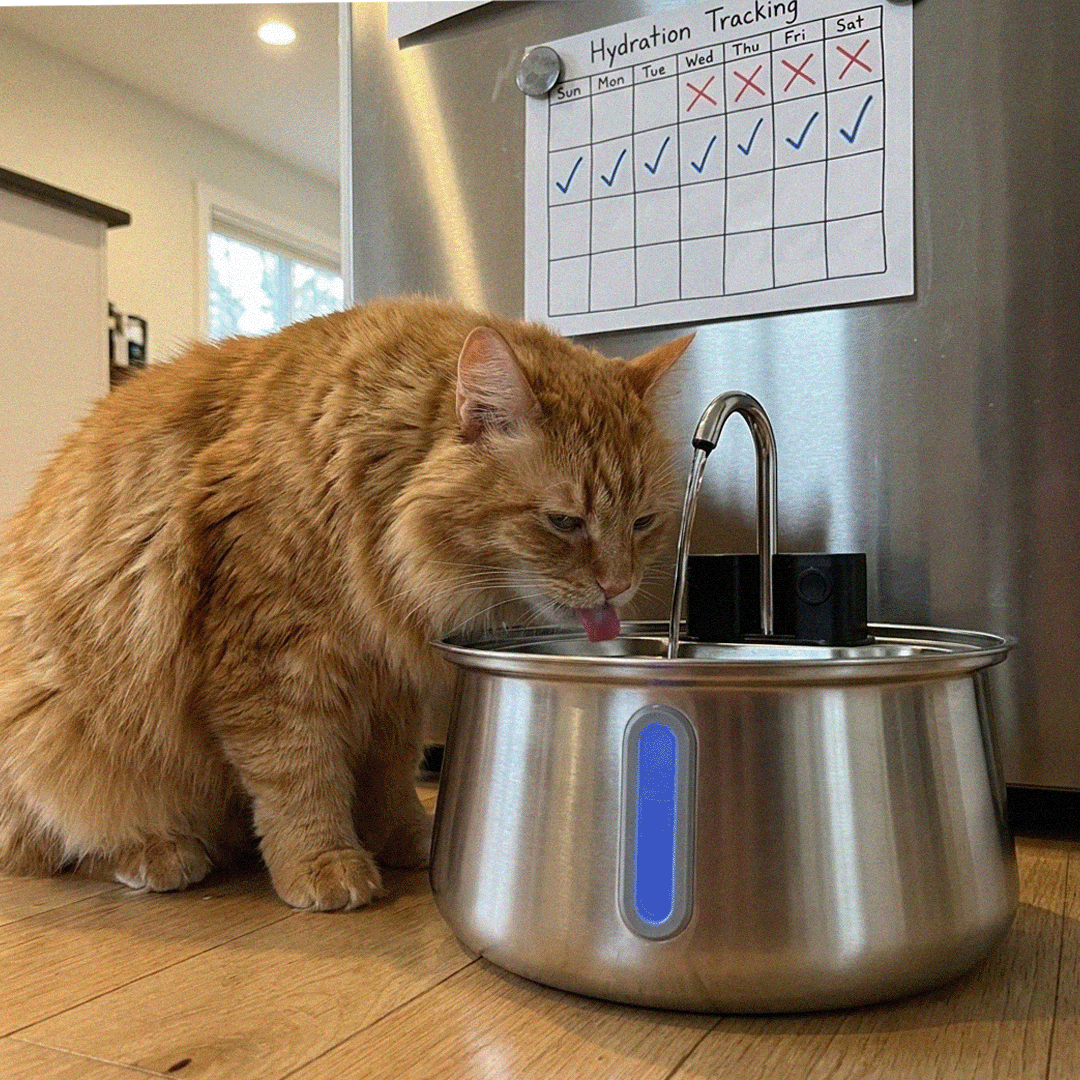
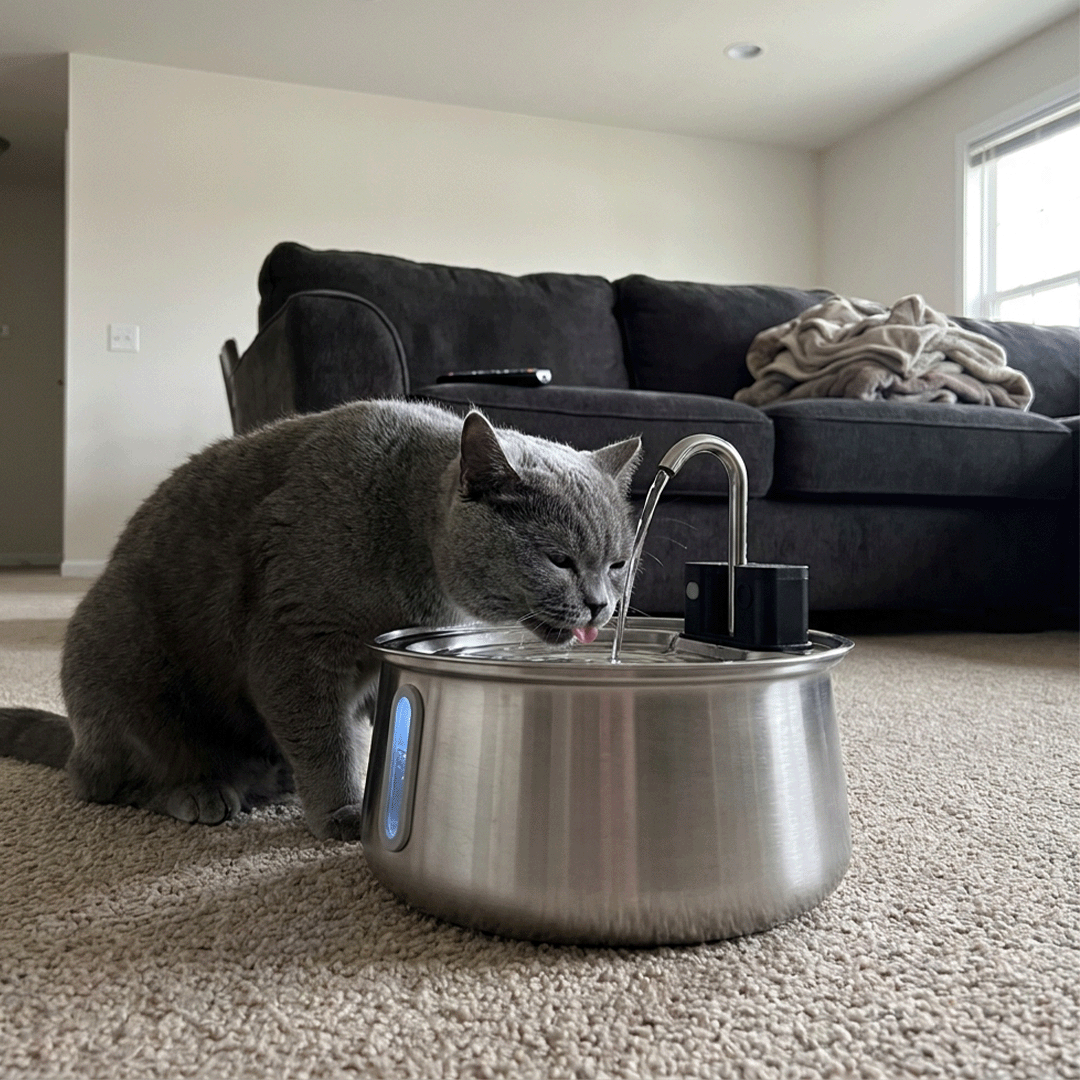
I Almost Bought a Cat Water Fountain Last Month Based on a Statistic That Turned Out to Be Made Up. I Want to Tell You What I Found When I Went Looking for the Source. I'm writing this for anyone who has recently searched for information about their cat's kidney health and who has, since that search, been seeing a wave of sponsored advertisements in their social media feeds that are using dramatic statistics and urgent language to sell cat water fountains. I have been seeing those advertisements since December. I want to tell you what happened when I sat down at my kitchen table with my laptop and tried to source-check one of them. Because the result was not what I expected. And I think there are a lot of cat owners currently being reached by the same content who would benefit from knowing what I found. A little about me. My name is Deborah. I am sixty-one, remarried for twelve years to a wonderful man named Frank who is retired from thirty-four years at a machine tools company outside Cleveland. We live in Solon, which is a suburb southeast of Cleveland, in a ranch house we bought in 2017 when we downsized from the four-bedroom I raised my son in. My son is thirty-four and lives in Chicago with his wife and their new baby. I retired last spring from the Cuyahoga County Public Library System, where I worked for thirty years as a reference librarian. I want to be honest about what a reference librarian does for thirty years, because it is going to matter in a moment. What I did for thirty years was help people find the sources for things they had heard or read or been told. Statistics on health claims. Quotes attributed to historical figures. Medical information from websites of varying credibility. Family history questions that hinged on whether a birth certificate actually said what somebody remembered it saying. The professional habit of source-checking is something I have not been able to turn off since I retired. And it has been useful in ways I did not fully expect. We have two cats. Poppy is an eight-year-old I adopted as a kitten from a woman in my knitting group whose barn cat had unexpectedly kittened. Basil is an eleven-year-old shorthair boy Frank and I adopted together six years ago from a shelter in Bedford, when Frank told me on our first anniversary that he had never lived with a cat and wanted to know what he had been missing. Basil is his cat now, in the way cats decide these things themselves. He sleeps on Frank's side of the bed. He waits by the door when Frank goes out to get the mail. Frank pretends this is nothing and buys him a specific brand of treats he does not buy for Poppy. Basil was diagnosed with stage one chronic kidney disease at his annual wellness visit two weeks before Christmas. His vet, a woman named Dr. Patel who has been seeing Basil for eight years at a small practice in Solon, caught the changes on his senior blood panel. His SDMA had ticked into a range she wanted to watch. His urine specific gravity was on the lower end of normal. His creatinine was normal but higher than his baseline the previous year. Dr. Patel was clear with me that stage one CKD in an eleven-year-old cat is common, that Basil was well-compensated, and that we had a lot of time and a lot of options. She did not put him on prescription food yet. She did not recommend subcutaneous fluids. She told me to bring him back in six months for a recheck and to pay attention to his water intake and his weight in the meantime. She told me the single most useful thing I could do at this stage was to make sure Basil had a water source he would voluntarily use, because voluntary hydration was the biggest lever for slowing progression. I went home from that appointment and I did what a librarian's brain does when a new topic enters it. I opened my laptop and I started reading. I read the IRIS guidelines for feline CKD, which is the international body that establishes the staging system Dr. Patel had used. I read the AAFP position statement on feline kidney disease. I read a few articles from veterinary schools at the University of California Davis and at Cornell. I did the reading not because I distrusted Dr. Patel. But because I read for a living for thirty years, and it is what I do when I am worried about someone I love. Frank asked me at one point that first evening what I was doing on the laptop for so long. I told him. He brought me tea and left me to it. I want to tell you what I began seeing in my social media feeds over the next few weeks. Because this is the actual subject of the post I am writing. Beginning about a week after that first evening of research, sponsored advertisements for cat water fountains started appearing in my Facebook feed. This is not a surprise. I know how advertising works and I know that my search history had been captured and monetized. What surprised me was not the presence of the ads. What surprised me was the specific language being used in them. There was a wave of ads using what appeared to be a specific statistic: "Eighty percent of cats will face kidney disease." I saw this figure, or close variations of it, in probably a dozen different ads over the course of three weeks. The ads were for different fountain brands. The visual style varied. The number stayed the same. The number appeared in bold. It appeared in headlines. It appeared alongside imagery of cats who looked very sick. The librarian in me noticed the number. Something about it did not feel right. When I had read the IRIS documentation two weeks earlier, I had seen a different figure. I had seen that approximately one in three cats will develop chronic kidney disease at some point in their lives. Which is a serious number. Which is the figure Dr. Patel had also cited in our conversation about Basil. One in three is approximately thirty-three percent. Eighty percent is more than twice that. The two numbers cannot both be correct for the same claim. I sat down at my kitchen table on a Saturday morning with my coffee and I went looking for the source of the eighty percent figure. I want to walk you through what I did. Because I think this is a skill more cat owners should have, and it is a skill that a lot of us used to learn at the library reference desk and no longer routinely learn anywhere else. I started with the ad itself. Most of the ads did not cite a source for the eighty percent figure. A few cited a source, and when I clicked through, it was either a page on the fountain company's own website—which is not a source, it is a restatement of the claim—or a broken link. One ad cited a study. When I tracked the study down, it was about a small population of geriatric cats in a specific age bracket—fifteen and older—and did not support the generalization the ad was making. The ad had taken a real finding about a narrow population and applied it as a general population statistic. This is a specific pattern I saw many times as a reference librarian and it has a name in library science. It is called a statistical generalization error. And it is one of the most common ways numbers become misinformation. I checked the primary veterinary literature. The IRIS Society cites a general population prevalence of somewhere in the range of one in three cats over their lifetimes, with higher rates in geriatric populations. The American Association of Feline Practitioners cites similar figures. Cornell's Feline Health Center cites similar figures. No source I could find in the actual veterinary literature supported an eighty percent general population figure. The claim, as far as I was able to determine, was not sourced anywhere credible. I want to tell you what I began noticing next. Because once I had caught the false statistic, I started paying different attention to the other language in the ads. There was a wave of ads using what I now recognize as end-stage hope-selling language. Phrases like "give your dying cat a fighting chance." Phrases like "the one thing you can still do." Phrases like "even the smallest shred of hope." The ads were designed to reach owners of cats in late-stage CKD, which is the population at maximum emotional vulnerability, and to sell those owners a product on the promise that it might change the outcome. What was being sold was not the fountain, technically. What was being sold was hope. At a moment when hope was in extremely short supply. I want to be careful here about something. A fountain is a legitimate product. I have since bought one myself, which I will get to. A stainless steel cat fountain, for a cat in earlier stages of kidney disease or for a healthy cat, is a reasonable purchase that supports voluntary hydration. What is not legitimate is the marketing frame that positions a fountain as a last-ditch intervention for end-stage disease. For a cat whose kidneys are already at ten or fifteen percent of function, a fountain is not going to change the trajectory. The disease is what the disease is at that point, and no water source is going to reverse it. Selling a fountain to the owner of a dying cat by suggesting it might is selling a specific kind of false hope to a specific kind of grieving person. And I found it more upsetting the longer I looked at it. I want to also flag the third pattern I noticed in the ads, which was direct blame of the owner. Several ads implied that the reason a viewer's cat had developed kidney disease was because the owner had been using the wrong water source. This is not correct. Chronic kidney disease in cats has multiple causes, most of which involve genetics, age, and underlying disease processes that are not fully understood by veterinary science. Water source is one variable among many. Ads that imply your cat got sick because you bought the wrong fountain are pushing a guilt frame that has almost no basis in the actual veterinary literature. And I want owners in that situation to know that. I went back to Dr. Patel at Basil's follow-up appointment three weeks ago and I asked her about the ads. I brought her printouts. She was not surprised. She told me she has been seeing this content in her own social media feeds and hearing about it from her clients for the last two years. She told me she has probably had thirty conversations with clients about specific claims they had encountered in fountain ads, and that a fair number of those conversations involved reassuring clients who had been made to feel that their cat's disease was somehow their fault. She was clear with me about what the actual science says. Approximately one in three cats will develop CKD at some point in their lives, with rates rising sharply in geriatric populations. A good water source—and specifically a fountain that a cat will voluntarily use—is a helpful intervention for cats at any stage of kidney health. But its effect is most meaningful when it is introduced before or during the earlier stages of disease. For a cat like Basil at stage one, a stainless steel fountain is a reasonable choice because it supports voluntary hydration and, when made of the right material, does not develop the bacterial biofilm that cats can detect on plastic surfaces. For a cat at stage four, the fountain is still fine. But the trajectory is being set by the underlying disease at that point. And the marketing frame that suggests otherwise is misleading. She explained the biofilm mechanism to me because I asked. Plastic surfaces in continuous contact with water develop a thin bacterial film called biofilm within twenty-four to forty-eight hours of being filled. This is well-documented in the microbiology literature and is not one of the things I had to source-check. Cats have a sense of smell that is fourteen to forty times more sensitive than a human's, which means they can detect bacterial contamination in a water source that humans cannot. This is also well-documented. Cats often avoid water sources that smell contaminated to their nose. A plastic fountain that looks clean to us may not look clean to them by day three. A fountain made of medical-grade 304 stainless steel—the same material hospitals use for surgical instruments—is non-porous at a molecular level. Biofilm cannot grip the surface the way it does on plastic. This is real, and it is the actual mechanism that supports the fountain-as-hydration-aid argument. It is a legitimate reason to buy a stainless fountain for a cat of any age, at any stage of kidney health. What I want you to notice is that the actual mechanism is a modest, reasonable, evidence-based case for the product. It is not "eighty percent of cats will die without this." It is not "your cat's disease is your fault." It is not "chase the smallest shred of hope." The actual case for a stainless steel cat fountain is small and clear and does not need to be inflated to be true. I bought a fountain that afternoon. I want to tell you that I cannot remember the brand name as I am sitting here typing this. I have the user manual in a drawer next to the manuals for the coffee maker and the smoke alarms and everything else we have accumulated. I am going to find it this week and check whether the manufacturer has a website where the fountain can be ordered directly. If I find the information, I will leave it in the comments below this post. If you are reading this and the comments are empty, that means I have not gotten to the drawer yet. Bear with me. It is my daughter-in-law's birthday next weekend and I am also knitting a hat for the baby. What I checked before I bought it was whether the fountain was actually stainless steel throughout. Which I want you to check as well before you buy anything. A number of fountains marketed as "stainless steel" turn out, when you read the specifications carefully, to have a stainless bowl on top of a plastic reservoir and a plastic pump housing. The biofilm forms in the plastic parts you cannot see. If you are going to buy a stainless fountain, look for one where every water-contact surface is stainless—including the pump housing and the reservoir. Ask the manufacturer if the spec sheet does not make it clear. If they will not confirm, assume the reservoir is plastic and keep looking. The fountain I bought arrived on a Wednesday. Basil found it within an hour of me setting it up in the kitchen. He drank from it for a long time. He has been using it every day since. Poppy uses it too, which was not the reason I bought it but is a nice side effect. Frank has developed a habit of watching Basil drink from the fountain in the mornings while he has his coffee. Which is exactly the kind of small daily pleasure retirement is for. What I want to say to anyone who has been seeing the same wave of ads I have been seeing is this. Please be careful about statistics that appear in advertisements without a citation, or with a citation that does not hold up when you click through. Please be especially careful about the eighty percent kidney disease figure, which I could not source anywhere credible and which is roughly two and a half times the figure that the actual veterinary literature supports. Please be careful about ad copy that positions a consumer product as a last-ditch intervention for a life-threatening disease, because that framing is targeting people at maximum vulnerability and the product almost never delivers on the implicit promise. Please be careful about ad copy that suggests your cat's kidney disease is your fault because you used the wrong water bowl. Because it almost certainly is not. And the guilt frame is designed to get you to buy without thinking. The fountain is a reasonable product. The mechanism is real. A good stainless steel fountain will support your cat's voluntary hydration in a way that a plastic fountain will not, because the biofilm difference is well-documented. This is a small, clear, modest reason to buy one. It does not need to be inflated to be true. And if you are being sold a fountain with language that is inflating it, please pay attention to who is doing the inflating and why. The inflating is not for your benefit. It is for theirs. I am not writing this to sell you anything. I retired from the library last spring and I am not being paid by any fountain company, and I would tell you if I were. I am writing this because I spent thirty years helping people find the sources of the things they had been told. And the skill of source-checking is worth more now than it ever was. And it is a skill I want to pass along in the small ways I can. The fountain I ended up buying is the one Dr. Patel confirmed was actually stainless throughout when I brought her the spec sheet. I will find the brand name in the drawer and leave the link in the comments when I get to it. Bear with me. I have grandchildren things to knit first.
Like this ad? Make it yours.
Crush rebuilds this exact creative around your product — your brand, your colors, your offer — in about a minute.