Marielle Celicourt Toussaint
Marielle Celicourt Toussaint Facebook ad: “About This article.”
Ran for 7 days, from June 4 to June 10, 2026, the last day Crush saw it.
Run by Marielle Celicourt Toussaint on Facebook. Crush is not the advertiser and does not verify its claims. See this ad in Meta's Ad Library(opens in a new tab)
Want an ad like this for your product?
Crush makes new ad images for your product from this ad: your logo, your product photo, your offer.
Trials from $19.95 USD, then $79.95 USD a month. Cancel anytime.
About this ad
- Meta Ad Library ID
- 1978087096407500
- Platforms
- Facebook, Instagram and Audience Network
- Relaunches
- 0
- EU reach
- 5
Ad text
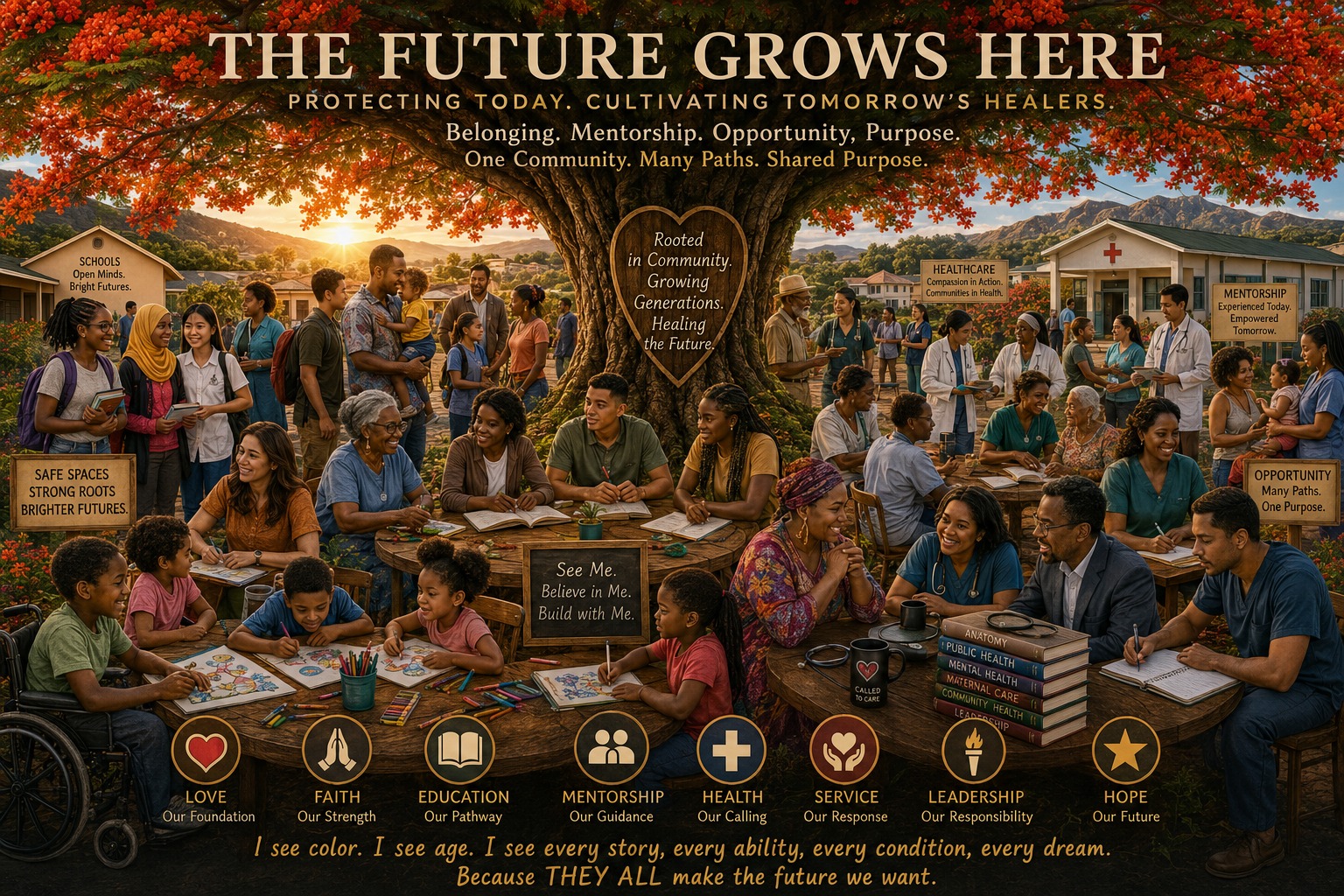
About This article.. The conversation did not begin with workforce shortages. It began with a question. If healthcare systems around the world are struggling to find enough nurses, physicians, midwives, mental health professionals, and public health leaders, where does that shortage truly begin? In Part I of this series, we explored the healthcare workforce crisis through a developmental lens, arguing that recruitment often attempts to solve problems whose roots emerge long before professional training begins. We examined how exposure, belonging, mentorship, and opportunity influence whether young people ever come to see themselves within the professions society depends upon most. This second publication expands that conversation. Protecting the Future moves beyond workforce planning to examine the developmental environments where identity, purpose, and belonging are formed. It explores why healthcare pathways represent more than professional opportunities. They are pathways toward visibility, civic participation, community resilience, and hope. In many communities, they may also represent one of the most underrecognized forms of preventive infrastructure available to society. At its heart, this article asks a simple but consequential question: If children will inevitably search for belonging, who—or what—will be waiting when they do? The answer carries implications not only for healthcare systems, but for the future stability, security, and flourishing of entire communities. Yet this conversation is not over. If Part I examined the challenge and Part II explored the developmental conditions shaping future healers, the next publication will focus on the architecture itself. How do societies intentionally build systems capable of transforming potential into preparation, preparation into participation, and participation into service? How do we move from protecting futures to cultivating them? That is where the journey now leads. If these conversations resonate with you, I invite you to support the growth of this rubric by subscribing, following, and sharing. Join the discussion here on LinkedIn and through the Beehiiv newsletter as we continue exploring leadership, healthcare, community resilience, and the systems that shape the future we will eventually inherit. Because the future is not waiting beyond the horizon. It is already growing among us. https://marielles-newsletter-2ca6f7.beehiiv.com/ https://www.linkedin.com/pulse/protecting-future-healthcare-pathways-violence-nm-marielle-l82je