
Inactive· since Jan 11, 2026
- 42
- days it ran
- 0
- relaunches
Ad copy
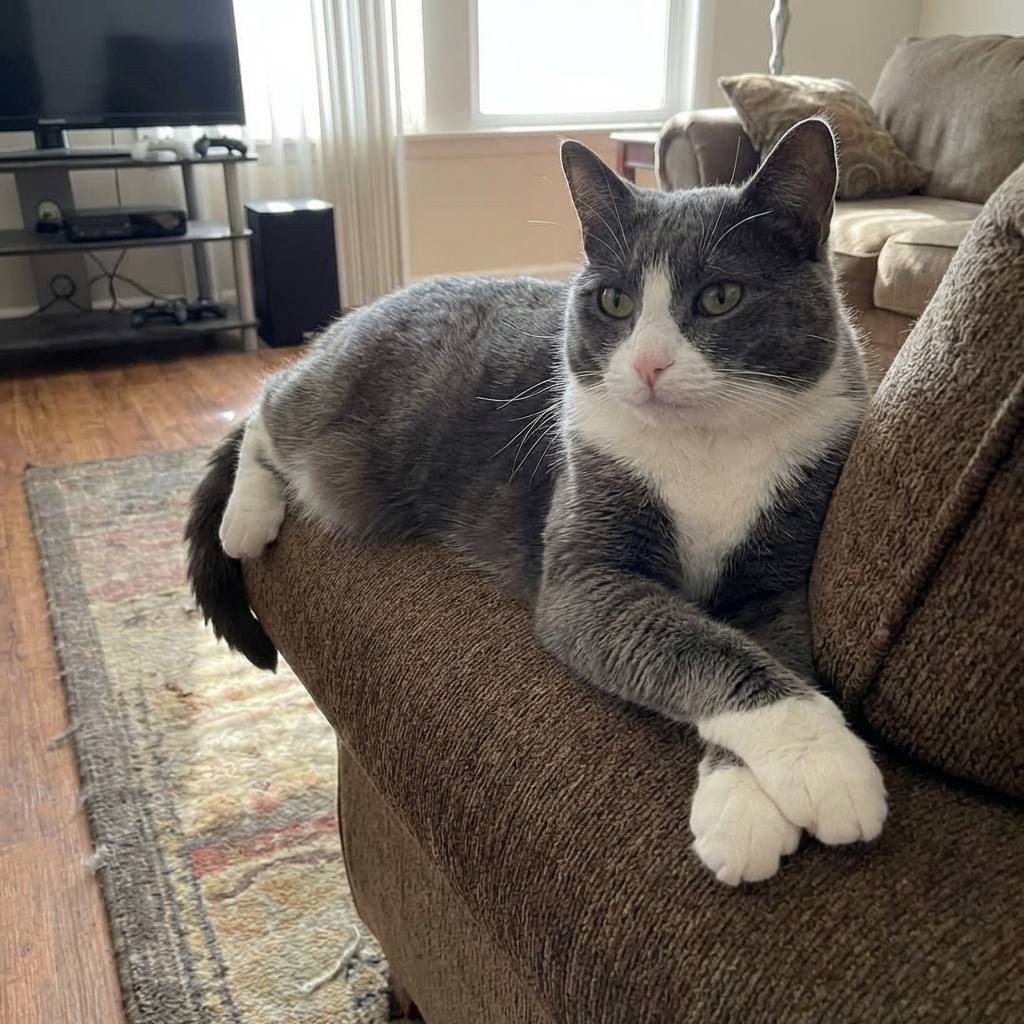
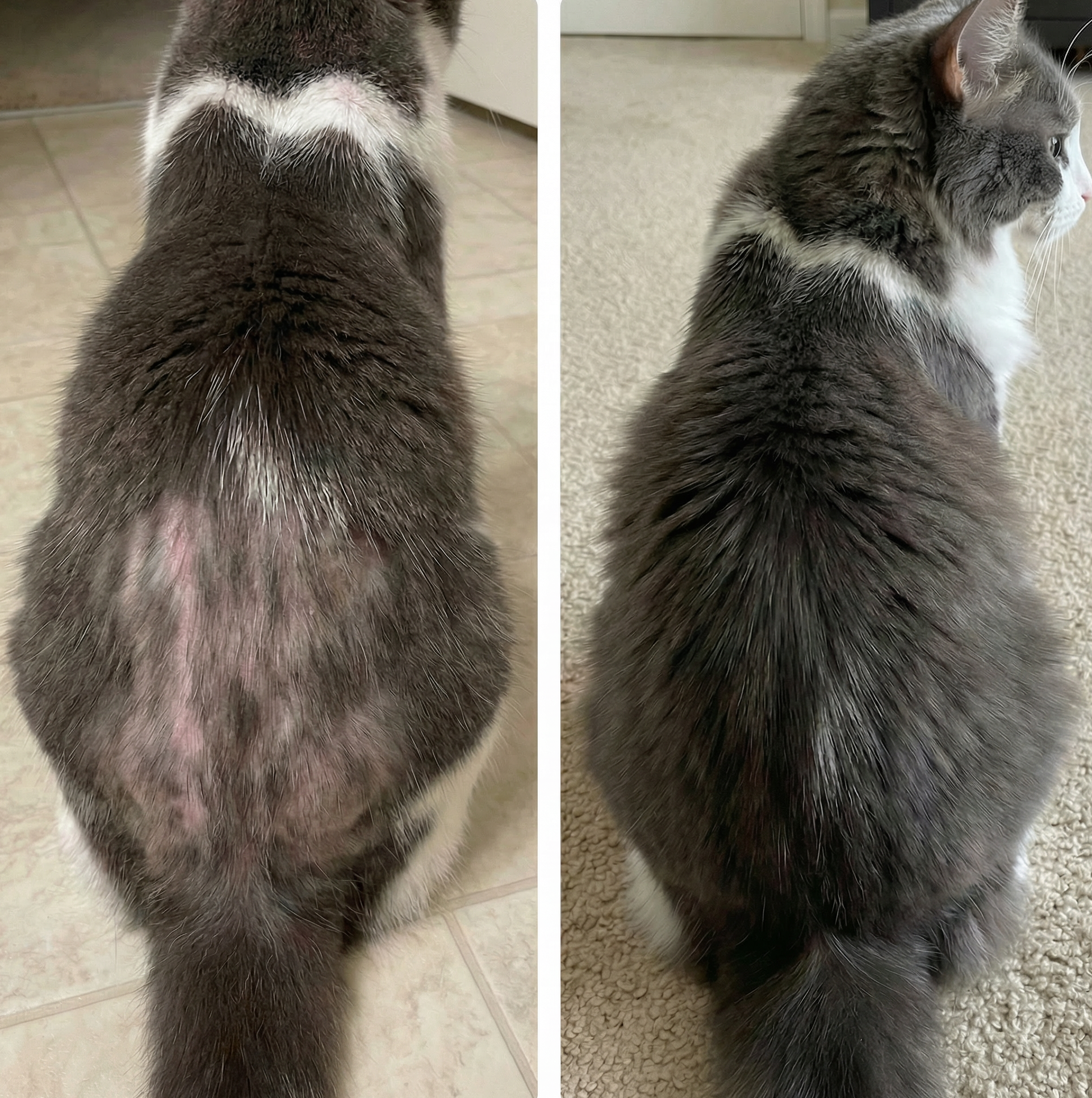
You're not managing your cat's allergies. You're trapped in a cycle designed to keep you trapped. Flare-up. Treatment. Relief. Flare-up. Treatment. Relief. And every single rotation, the problem underneath gets worse while you think you're making progress. This is Nola today. Calm. Comfortable. Sleeping on her favorite chair without scratching, without licking, without waking me up at 3AM. Three months ago I was convinced this would never happen. Not because I'd given up. Because I'd tried everything — and the trying itself had become the trap. Here's what the trap looks like: Week one: Nola scratches her neck raw. I book the vet. Week two: Steroid injection. $95. "This should calm things down." Week three: It works. Nola stops scratching. I feel like a good cat mom. Week six: The scratching returns. Worse than before. Week seven: Back to the vet. Another injection. Another $95. Week eight: Relief. I tell myself we're managing it. Week twelve: Flare-up. Vet. Injection. Relief. Week sixteen: Flare-up. Vet. Injection. Relief. I lived inside this loop for 19 months. Same pattern. Same timing. Same hope followed by same disappointment. I started marking the flare-ups on my kitchen calendar. Little red X's every time Nola's scratching came back. After a year, I looked at that calendar and felt physically sick. The red X's were getting closer together. Month one through four: flare-ups every six weeks. Month five through eight: every five weeks. Month nine through twelve: every four weeks. By month fifteen, I was at the vet every three weeks. The cycle wasn't stable. It was tightening. And no one at the clinic ever mentioned it. They'd say "she's responding well to treatment" while I watched the intervals between appointments shrink. They'd say "some cats just need ongoing management" while the management became my entire life. I'd reorganized my work schedule around vet visits. Rearranged my budget around injection costs. My sister asked what I was doing that weekend. I said "probably taking Nola to the vet." She said "again?" I didn't have an answer. The breaking point wasn't dramatic. It was a Tuesday afternoon. I was sitting in the waiting room for the eleventh time that year, watching Nola tremble in her carrier, and I thought: We're going to do this forever. Not as a fear. As a fact. This loop has no exit. There is no finish line. I will bring this cat to this room and pay this bill and feel this brief relief until one of us dies. I started crying in the waiting room. The receptionist asked if I was okay. I said I was fine. I wasn't fine. That night I didn't search for better treatments. I was done searching for treatments. I searched: "why does cat allergy treatment stop working faster over time" I needed to understand why the trap was tightening. What I found made the past 19 months make horrible sense. A veterinary dermatology journal explained something called "barrier degradation cycling. Your cat's skin has a barrier — a protective wall built from omega-3 fatty acids. When that barrier is intact, allergens stay on the surface. Pollen, dust, proteins — they can't penetrate. No penetration, no reaction. But here's what happens during a flare-up: The inflammation doesn't just cause itching. It dissolves part of the barrier itself. Every allergic reaction destroys 6-8% of the barrier's structure. And the barrier cannot rebuild without specific raw materials that aren't in your cat's diet. So after a flare-up, the barrier stays damaged. More gaps. More penetration. More reactions. More damage. Each cycle destroys a little more. That's why the flare-ups come faster. That's why the treatments hold for shorter periods. That's why the trap tightens. You're not managing an allergy. You're watching a barrier slowly collapse while the medications mask the destruction. Here's what made me furious: Steroid injections suppress the immune response. The scratching stops because the body stops reacting. But the barrier stays broken. The gaps stay open. Allergens keep flooding through — you just don't see the reaction because you've chemically silenced it. Underneath that silence, the barrier is still being destroyed. So when the steroids wear off and the scratching explodes back worse than before? It's not because the medication "stopped working." It's because three more weeks of damage happened while you thought everything was fine. The treatment creates the conditions for the next flare-up. The flare-up creates the need for the next treatment. That's the trap. And it will keep tightening until there's nothing left to destroy. I sat with this information for three days. Angry. Grieving. Replaying 19 months of vet visits that were never going to save Nola. Then I focused on the one line that mattered: "The barrier cannot rebuild without specific raw materials." If the trap is a collapsing barrier, the exit is rebuilding it. The research was specific: the barrier is made of omega-3 fatty acids. EPA and DHA. Marine-sourced. Not plant-based omega oils — cats convert less than 1% of those. Not the "skin & coat" treats from pet stores — mostly omega-6, which increases inflammation. Not the fish oil capsules I'd tried two years ago that made Nola vomit. It needed to be: Marine-sourced EPA and DHA in usable form. Dosed for a cat's system. Protected from rancidity. Absorbable without digestive upset. I found a liquid omega-3 formula built specifically for this. Ordered it. Then I did something that terrified me more than any vet bill ever had. I cancelled Nola's next injection appointment. My husband asked if I was sure. I wasn't sure. I was just done feeding the trap. If the steroids were masking destruction while the barrier collapsed underneath, I needed to stop masking and start rebuilding. Even if it meant watching Nola struggle while the barrier slowly repaired. Week one was brutal. Nola scratched. Licked. Had two rough nights where I almost broke and called the vet. I kept reminding myself: you're not suppressing anymore. Suppressing is what created this. Week two: The scratching didn't decrease. But it didn't increase either. For 19 months, untreated flare-ups had always escalated. This one plateaued. Something was different. Week three: Nola scratched less at night. I slept five hours without interruption. First time in months. Week four: The raw patch on her neck stopped spreading. Edges looked calmer. Less angry. Week five: New fur. Tiny soft hairs filling in where there'd been bare skin for over a year. I took a photo. Then another. Then twelve more. Week six: Nola slept through the entire night. No scratching. No licking sounds. I woke up at 4AM in a panic because of the silence. Found her curled up on the bath mat, completely peaceful. Week eight: Full fur on her neck. The scabs were gone. The redness was gone. My husband looked at her and said "I don't understand." "The barrier rebuilt," I said. "That's it. That's all it was." But the real test came at week twelve. I'd been avoiding it. Scared to trust the progress. I opened the windows. For 19 months, we'd kept everything sealed. Air purifier running constantly. Windows shut even in summer. Because Nola would flare within 48 hours of pollen exposure. Every single time. Day one: Windows open. Nola sat in the sunbeam on the windowsill. No scratching. Day two: Still nothing. Day three: She napped with her face in the breeze. Completely calm. The trap was broken. Because Nola was never allergic to pollen. Nola had a destroyed barrier that let pollen — and dust, and everything else — flood into skin that couldn't protect itself. Rebuild the barrier, and the "allergies" disappear. It's been three months now. I look at my kitchen calendar. No red X's since week two. The vet appointments I used to schedule in advance? Cancelled. The $95 injections every three weeks? Gone. The 3AM scratching sounds that woke me up for a year and a half? Silence. Nola sits in sunbeams now. Grooms herself normally. Doesn't attack her own skin. I spent 19 months and over $2,200 feeding a trap that was designed to keep me trapped. Not by malice. Not by bad vets. By a system that treats symptoms instead of structures. If you're stuck in the cycle... If your flare-ups are coming faster than they used to... If "management" feels less like progress and more like prison... The trap has an exit. It's not a stronger medication. It's not a different food. It's rebuilding the barrier that's been collapsing underneath everything you've tried. The research that finally got me out — the barrier science, why the cycle tightens, how marine omega-3s actually repair the damage — is here: getpurrvita.com/skin-1 Nola is free now. Your cat can be too. — Sharon M.
Like this ad? Make it yours.
Crush rebuilds this exact creative around your product — your brand, your colors, your offer — in about a minute.