Anne Barkley
Anne Barkley Facebook ad: “Don't Let Postpartum Take Your Hair”
Ran for 3 days, from June 14 to June 17, 2026, the last day Crush saw it.
Run by Anne Barkley on Facebook. Crush is not the advertiser and does not verify its claims. See this ad in Meta's Ad Library(opens in a new tab)
Want an ad like this for your product?
Crush makes new ad images for your product from this ad: your logo, your product photo, your offer.
Trials from $19.95 USD, then $79.95 USD a month. Cancel anytime.
About this ad
- Meta Ad Library ID
- 2005511266997363
- Platforms
- Facebook, Instagram, Messenger and Threads
- Relaunches
- 0
- Niche
- Hair Care
Ad text
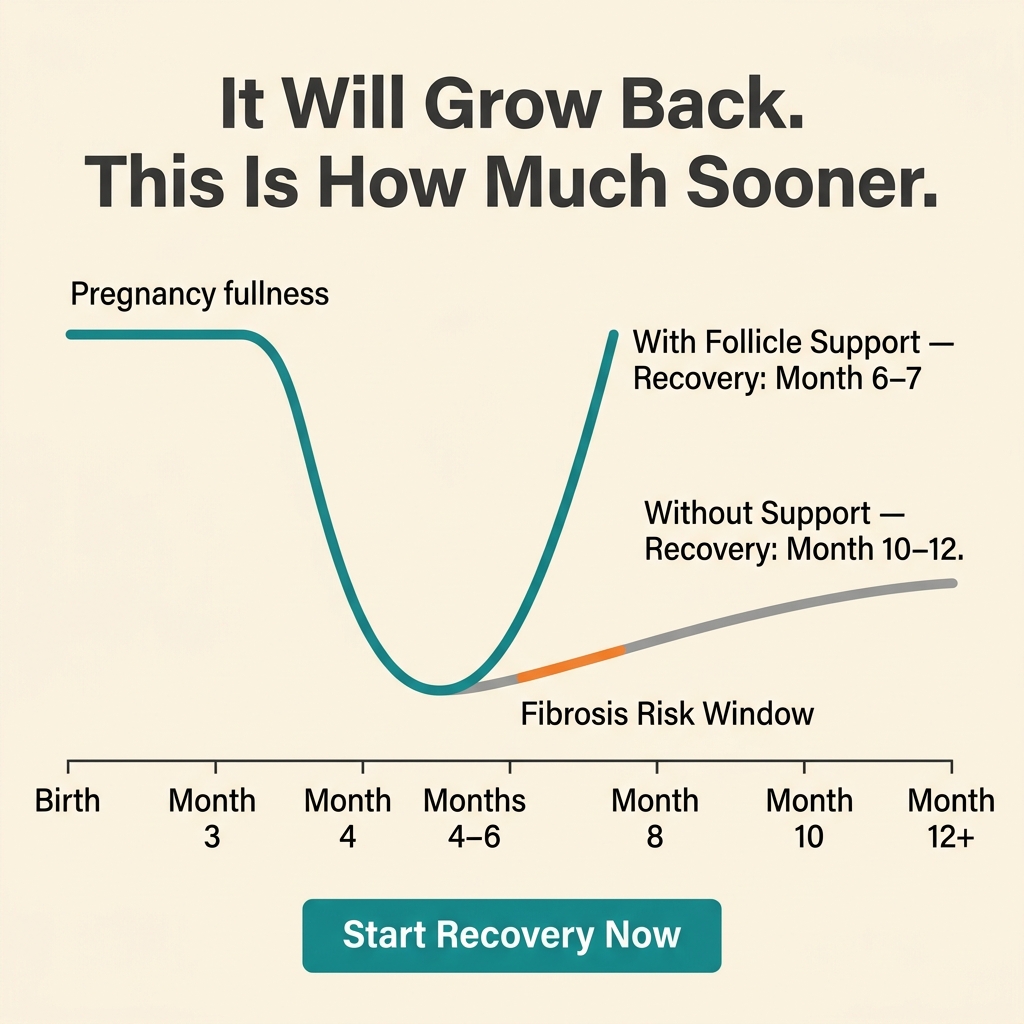
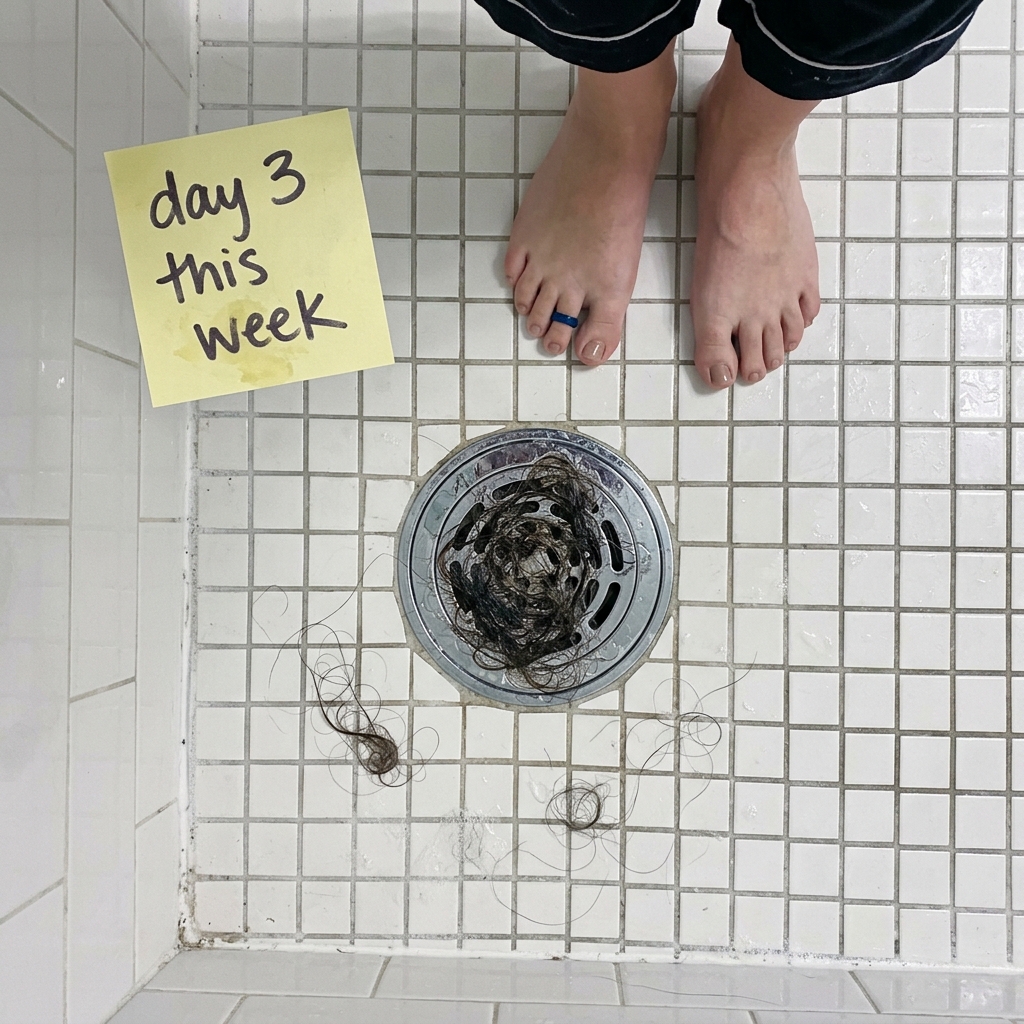
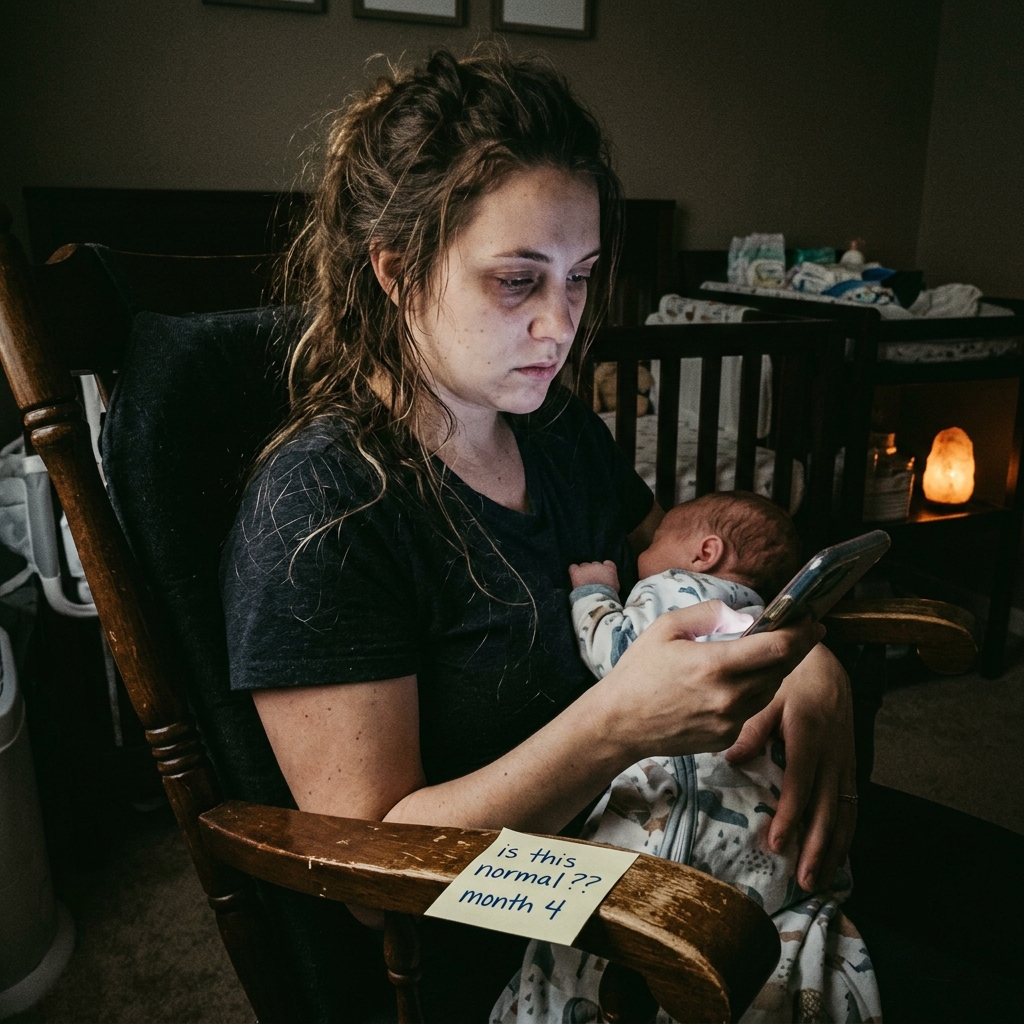
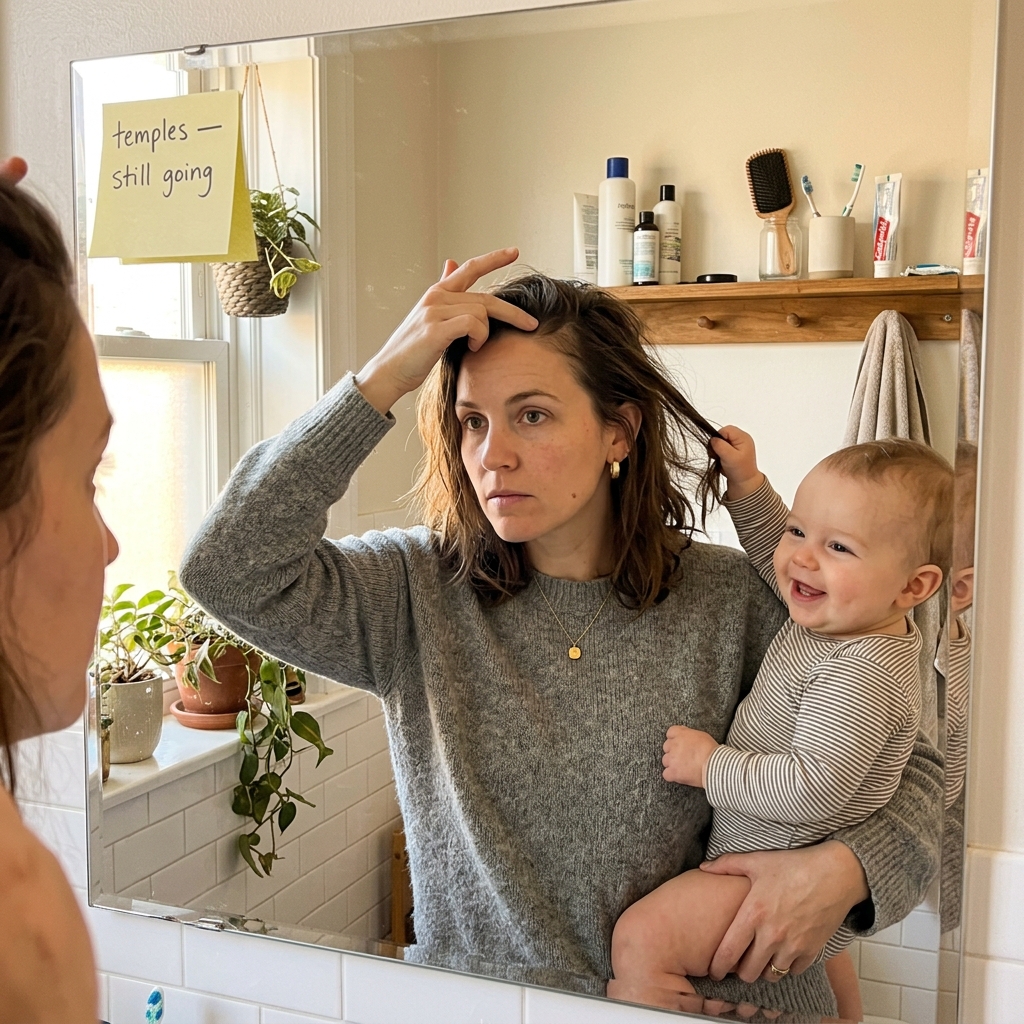
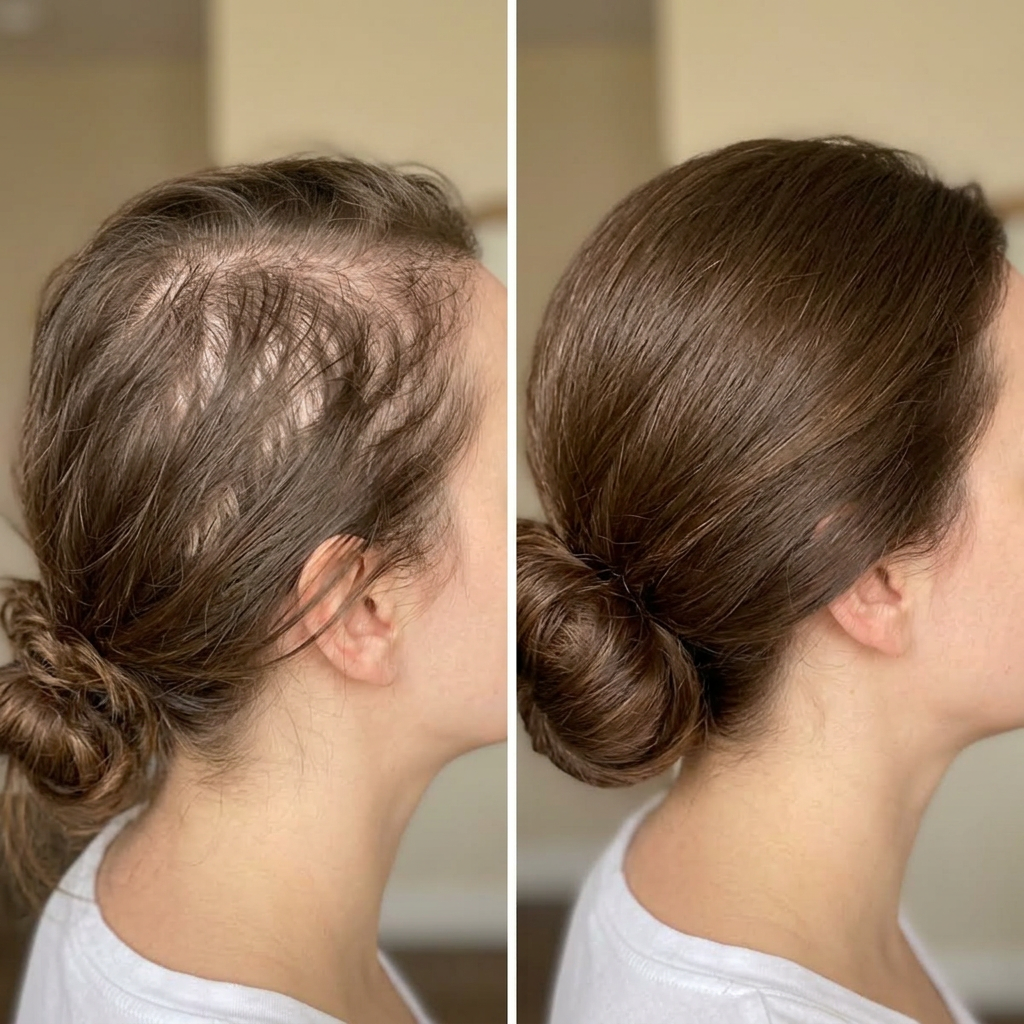
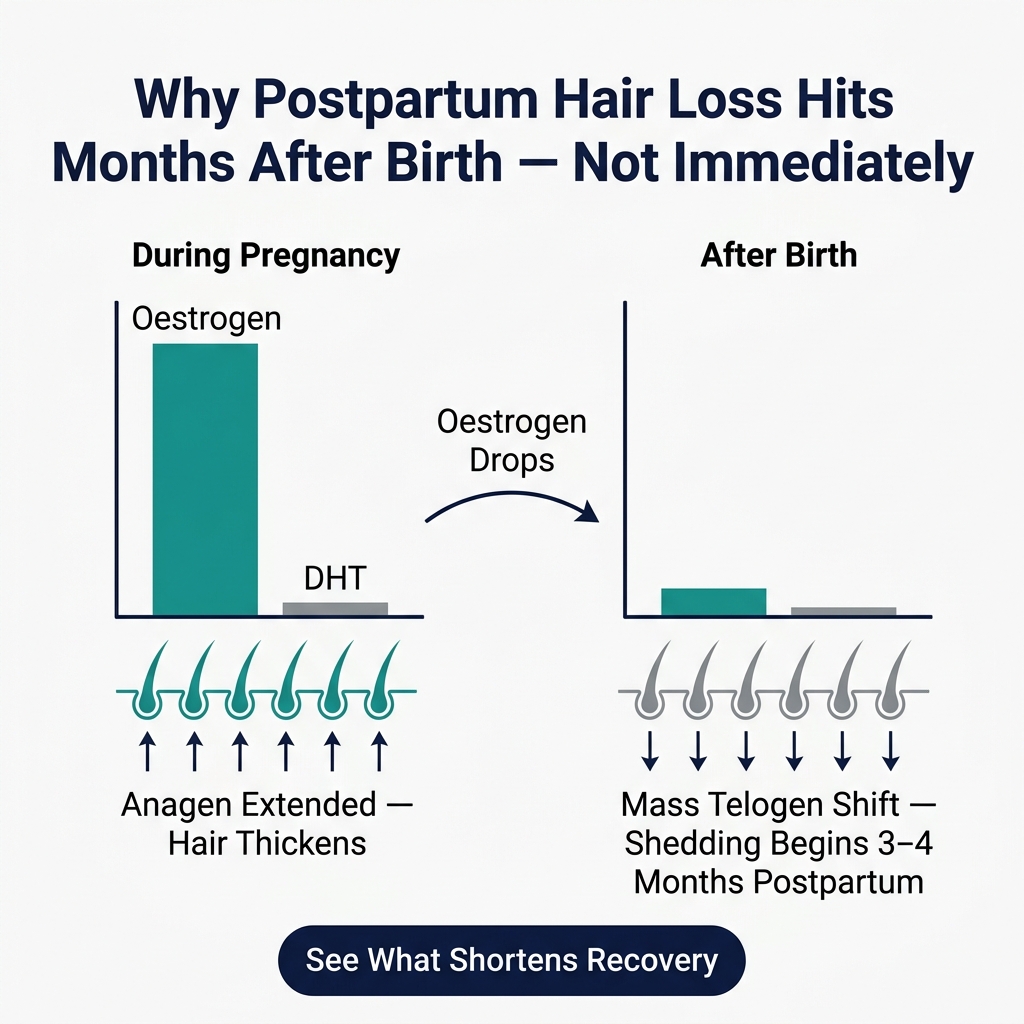
My midwife told me postpartum hair loss was normal. She was right. What she didn't tell me — because nobody tells you, apparently — is how severe normal can actually be. At four months postpartum, I was losing so much hair in the shower that I started timing it to avoid thinking about it. The ponytail I'd had for fifteen years was half its diameter. There was hair on the baby's clothes, on his head, in his hands. Every morning was a small grief I hadn't expected to feel. I did what I do when I hit a health problem I don't understand: I researched it properly instead of waiting for reassurance that turned out to mean nothing. Here's what the actual mechanism looks like. During pregnancy, high oestrogen levels extend the hair growth phase dramatically. More follicles stay in the active anagen phase for longer than usual, which is why many women experience the thickest hair of their lives while pregnant. After birth, oestrogen drops sharply — returning to pre-pregnancy levels over a matter of weeks. That hormonal signal tells the follicles that held through pregnancy to release simultaneously. They all move into the resting phase together, and then into shedding, which is why postpartum hair loss typically begins three months after birth and peaks between months four and six. This is not hair loss in the way the word usually means it. The follicles are not damaged. They are cycling. The clinical term is telogen effluvium: a mass shift into the resting phase triggered by a hormonal transition. What the "it'll grow back" advice misses is that the recovery timeline is not fixed. The standard answer is 6 to 12 months. Some women recover faster. Some take longer. The difference is not random — it comes down to the condition of the follicle during the dormancy period. Follicles that lose structural support — particularly in women who are sleep-deprived, nutrient-depleted, or both, which describes every new mother I know — are at risk of a process called perifollicular fibrosis: progressive hardening of the connective tissue surrounding the follicle. When this advances, the resting follicle has a harder time re-entering the growth phase. What was temporary has the potential to become structural. That's what nobody explains when they tell you it's normal and it'll grow back. I found HaloGrow through my mother's group, which is where I find most things these days. The recommendation was specific enough to take seriously: "I started at month three and by month five the shedding had slowed significantly and new growth was visible at my temples." I looked at the ingredients before I looked at the reviews. Aminexil: an anti-fibrotic developed by L'Oréal Professionnel's clinical labs, specifically designed to prevent perifollicular fibrosis. This is the mechanism directly relevant to the risk I'd been reading about. Caffeine: a topical active documented to extend the anagen (growth) phase and pull follicles back into active growth sooner. He Shou Wu: a TCM herb with a 2020 peer-reviewed study confirming it elongates the anagen phase in human hair cells. Biotin: frequently depleted in new mothers, foundational for keratin production. Applied topically — direct to scalp, once daily — so the actives reach the follicle at working concentration rather than disappearing into general circulation the way oral supplements do. This product does not change the underlying hormonal mechanism. Your oestrogen will recover on its own. What HaloGrow addresses is the structural environment while the follicles are dormant, and the re-entry into the growth phase. Faster recovery. Less risk of dormancy becoming permanent. I'm at month three of using it, two months postpartum at start. The shedding slowed at week five. New growth is visible at my hairline now. 30-day money-back guarantee. Plant-based, paraben-free. If you're sitting in the shower watching it happen and waiting for "it's normal" to feel like enough — this is what I wish I'd found at month three.
Where the ad sends people
consumerstoday.org
Don't Let Postpartum Take Your Hair
Hi. My name is Dr. Sarah Whitfield and I'm a registered trichologist with the Association of Trichologists, based in Melbourne. I've been in clinical practice for 16 years and have treated upwards of 9,000 patients in that time. A significant portion of them come to me with postpartum hair loss — ...
Learn more: trk.consumerstoday.org(opens in a new tab)