
Active· since May 26, 2026
- 114
- days running
- 0
- relaunches
- 190,899
- EU reach
Ad copy
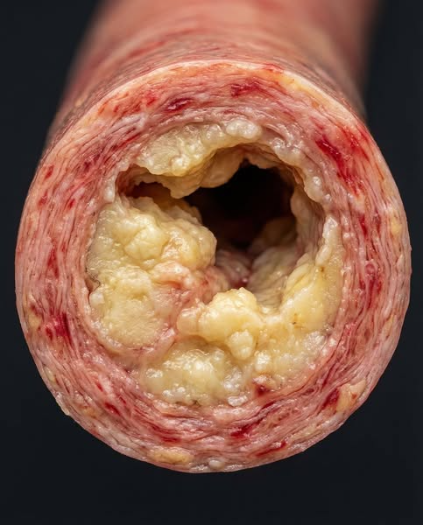
I found a wallet in a shopping cart at Walmart last Tuesday. Brown leather. Worn soft at the edges. Tucked under one of those reusable bags someone had left behind. I almost didn't see it. I was returning my cart because that's what I do — I'm the person who walks it back to the corral instead of leaving it in the middle of the parking lot like an animal. My husband makes fun of me for it. Says I'm the last honest person in America. I tell him somebody has to be. The wallet was light. No credit cards. No debit card. Just a driver's license and $400 in cash. Twenty-dollar bills, folded tight, held together with a rubber band. The kind of cash someone counted carefully before they left the house. The license showed a woman's face. Small. White hair. Born 1947. The photo was old — she looked younger in it than the birth date suggested. The address was on Route 4, a town I'd heard of but never been to. I pulled it up on my phone. Thirty-one minutes away. I stood there in the Walmart parking lot holding this woman's wallet and I had a conversation with myself that I'm not proud of. Thirty-one minutes is a long drive. I could turn it in to customer service. They'd probably call her. She'd probably come back and get it. Probably. But $400 in cash with no cards means this woman doesn't have a bank account. Or doesn't trust them. Or can't get one. And if she comes back to Walmart looking for this wallet and it's gone — even if it's sitting behind the customer service desk — she's going to spend the whole drive home believing she'll never see that money again. I know what that feels like. Not the money part — the part where you lose something and the not-knowing eats you alive. The hours between losing it and finding out if it's okay. I wouldn't want someone to put me through that if they could prevent it. Plus I had nothing else to do. It was Tuesday. My day off. I'd come to Walmart for laundry detergent and garbage bags. Not exactly a packed schedule. I got in my car and drove. The GPS took me off the highway after twenty minutes onto a two-lane road that got narrower the farther I went. Past a dollar store. Past a church with a gravel parking lot. Past a farm stand that was closed for the season. The house was small. White. Set back from the road with a chain-link fence and a yard that was neat but tired — the kind of yard someone used to take care of and still tries to but can't quite keep up with anymore. There was a garden bed along the front with stakes in it but nothing growing. A birdbath that was dry. A truck in the driveway that hadn't moved in a while — you could tell because the leaves had settled around the tires and nobody had swept them. I sat in my car for a minute. Looked at the house. Looked at the wallet. If I'd known what was waiting on the other side of that door — not just a woman, but a story that would change my life — I'd have sat there a little longer. Gathered myself. But I didn't know. So I just walked up and knocked. It took a while. I heard movement inside — slow, careful steps. A chain lock sliding. The door opened about four inches and a face appeared in the gap. Small. White hair, just like the license. But older now. Thinner. Eyes that were sharp but tired. "Can I help you?" "Ma'am, my name is Janet. I found this in a shopping cart at Walmart." I held up the wallet. "I think it's yours." She looked at it. Then at me. Then back at the wallet. She opened the door all the way. Her hands were shaking when she took it. She opened it immediately — didn't check the license, didn't check anything else — went straight for the cash. Counted it. All twenties. All there. Then she pressed the wallet against her chest with both hands and closed her eyes. "Oh thank God." "Is it all there?" "Every penny." Her voice broke on the second word. "Every penny." She looked at me. Her eyes were wet. "This is for my husband's headstone. Eight months he's been in the ground without a name on it. I've been paying it off forty, sixty dollars at a time. Cash. I drive to the monument company on Route 11 every month and hand them whatever I can. This was the last payment. Four hundred dollars. I took it out of my savings jar this morning and put it in my wallet and drove to Walmart to get a few things before I went to make the final payment." Her voice steadied, then broke again. "His grave has been unmarked for eight months. Every time I go visit him I'm standing in front of a flat patch of grass that could be anyone. There's no name. No dates. Nothing that says he was here. That he was real. That he mattered." "This money was going to fix that. Today. And then I got home and the wallet was gone and I thought — I thought he was going to stay invisible." She tried to hand me a twenty. "No ma'am. I don't want your money." "Please. You drove all the way out here." "I'll tell you what. If you've got coffee, I'll take a cup. It's a long drive back." She smiled. First time. And it changed her whole face — you could see who she used to be in that smile. Someone warm. Someone who had people over. Someone whose house used to be full. "I've got coffee. Come in." Her name was Ruth. She was 78. The kitchen was small and clean the way a kitchen is clean when only one person uses it. One mug on the drying rack. One plate. One set of silverware. The table had two chairs but you could tell only one had been sat in recently — the other one had a stack of mail on it. Envelopes. Medical bills. A lot of them. She made coffee in a percolator on the stove. Not a Keurig. Not a drip machine. A percolator. The kind that takes ten minutes and fills the whole house with the smell. While it brewed she talked. She didn't start with the sad part. She started with the good part. That's how you know someone really loved somebody — they don't begin with the loss. They begin with what was there before the loss. "Gene was a plumber. Forty-one years. The kind of plumber people called at 2 AM on Christmas morning because a pipe burst and they knew he'd come. And he always came. Didn't matter what time. Didn't matter what day. He'd put his boots on and go." She poured the coffee. Set the mug in front of me. Sat down across the table. "He was strong. That's what I always noticed about him — even when we were young. He had these hands..." She held up her own, small and thin. "His hands were twice the size of mine. He could hold a pipe wrench like it weighed nothing. He could carry a water heater up a flight of stairs by himself. That man could FIX anything." She said "fix" the way you say a word that means more than what it means. "We were married 52 years. Fifty-two. People say that like it's a number. It's not a number. It's every single Tuesday morning for 52 years where he made coffee before I woke up. Every one. It's a man who put snow tires on my car every November without being asked. It's someone who knew how I take my coffee and never once forgot. Two sugars. Splash of cream. Every time." She looked at the chair across from her. The one with the mail on it. "That was his chair." I didn't say anything. You don't say anything in that moment. You just let someone sit with it. "His doctor put him on Lipitor when he was 61. Cholesterol was high — 258, I remember the number because Gene wrote it on the back of a business card and stuck it on the refrigerator. He did that with everything. Numbers. Appointments. Reminders. The fridge was covered in his handwriting." She smiled again, but this time it was the kind that hurts. "The doctor said take this pill every night, come back in three months. Gene took it every night. He was like that — if a doctor told him to do something, he did it. Didn't question it. Trusted the system. Trusted the man in the white coat." "Three months later his cholesterol was 201. LDL dropped to 121. The doctor was happy. Gene was happy. I was happy. We thought we'd solved it." She wrapped both hands around her mug. "He was on it for 14 years. Never missed a dose. Every time he went in for bloodwork, the doctor would smile and say the same thing: 'Numbers look great, Gene. Keep doing what you're doing.'" "And for 14 years, Gene kept doing what he was doing. Taking the pill. Going to the appointments. Getting the pat on the back." She set the mug down. "But he wasn't great. And I watched it happen so slowly I didn't realize what I was watching until it was too late." "The first thing was his energy. Gene was a 5 AM man. Up before the sun. Coffee on. Boots on. Out the door. Forty-one years he was like that. By year three on that medication, I was the one making coffee. He'd lie in bed until 6. Then 6:30. Then some mornings I'd be dressed and ready and he'd still be under the covers. Not sleeping. Just... not getting up." "I thought he was getting older. That's what I told myself. He's 64. He's 65. Men slow down." "Then his hands." She looked down at her own hands when she said it. "Gene could hold a pipe wrench for eight hours. Could solder a joint in a space so tight you couldn't fit your head in there. His hands were his whole career. His whole identity." "By year five, he was dropping tools. Wrenches slipping out of his grip. He'd be under a sink and you'd hear the clang of something hitting the floor and then a word my mother would have slapped him for." "He started coming home with his hands in fists. Not angry fists — stuck fists. His fingers would lock up and he couldn't open them. He'd hold them under hot water at the kitchen sink, right here, right where I'm sitting, and work them open one finger at a time. I'd watch him from the doorway and he'd say 'Don't worry about it, Ruthie. Just stiff.'" "'Just stiff.' He said that for three years." "By year eight he'd cut his crew down from four jobs a day to two. Told me business was slow. Business wasn't slow. His hands were slow. His legs were slow. Everything was slow. The man who carried water heaters up stairs couldn't climb our front porch steps without gripping the railing with both hands." "I told him to talk to the doctor. He did. You know what the doctor said?" I knew. But I let her say it. "'Your numbers look great, Gene. LDL is 94. Whatever you're doing, keep doing it.'" She said it like she'd replayed it in her head a thousand times. Like it was the sentence she couldn't forgive. "Gene's numbers were GREAT. Gene could barely get out of bed. Gene's hands — the hands that fixed everything, that held mine every night for 52 years, that could solder a copper joint in a space the size of a shoe box — those hands couldn't open a jar of peanut butter. But his NUMBERS were great." "The brain fog came around year nine or ten. He'd be telling me something and stop mid-sentence. Just... stop. Look at me like he was trying to remember not just the word but the whole thought. Like someone pulled the plug for a second and he had to reboot." "One night he looked at me at dinner and said 'Ruthie, what did I do today?' It was 6 PM. He'd worked a full day. He couldn't remember any of it." "I begged him to talk to the doctor again. He did. Doctor ran bloodwork. LDL was 91." "'Outstanding numbers, Gene. Some cognitive changes are normal at your age.'" "Normal at his age. He was 71. My sister is 74 and she does the New York Times crossword in pen every morning. Seventy-one is not the age you lose your mind. Not if something isn't taking it from you." She was quiet for a minute. Drank her coffee. Set it down carefully. "His last year was hard. He stopped taking plumbing jobs entirely. Told people he was retired. He wasn't retired — he was used up. He'd sit in that chair —" she nodded at the mail-covered chair "— and stare out the window. Sometimes he'd talk about wanting to fix the fence in the back. Or replace the faucet in the bathroom. Things he could have done in an hour ten years earlier. He'd talk about them like they were expeditions. Like they required planning and courage just to attempt." "I'd say 'Gene, let me call someone to do it.' And he'd say 'I'll get to it, Ruthie. Just give me a day or two.'" "He never got to it. Not the fence. Not the faucet. Not any of it." "The plumber who could fix anything couldn't fix anything anymore. Including himself." She looked at the window. The one Gene used to stare out of. "February 12th. A Tuesday. I was at the grocery store. Gone maybe 45 minutes. Came home and the front door was open. Not wide open — cracked. Like he'd gone out to get the mail and didn't make it back inside." "He was in the hallway. On the floor. Face down. His hand was on the wall — like he'd reached out to steady himself and couldn't hold on." "I called 911. I already knew. You don't live with a man for 52 years and not know. But I called anyway because that's what you do. You call. You wait. You hope you're wrong." "I wasn't wrong." "Massive heart attack. The left anterior descending artery. They call it the widowmaker. I learned that word that day. I wish I didn't know it." She traced the rim of her coffee cup with her finger. Slowly. Around and around. "LDL of 91. Fourteen years on Lipitor. Every blood test perfect. Every appointment a gold star. And his heart stopped in the hallway on a Tuesday morning while I was buying eggs." "The cardiologist at the hospital said it was a plaque rupture. I asked him how that was possible when Gene's cholesterol had been controlled for 14 years. You know what he said?" "He said: 'Cholesterol management reduces risk. It doesn't eliminate it.'" "Reduces risk. Fourteen years. Thousands of dollars. A body that fell apart. A brain that faded. Hands that couldn't hold tools. And it REDUCED RISK." "It didn't ELIMINATE anything except my husband." Ruth looked at me across her kitchen table. A woman I'd known for twenty minutes. A stranger who'd driven thirty-one minutes to return a wallet. And she said something I carry with me every day: "They told us the numbers were the whole story. They weren't. The numbers were the cover of the book. Nobody ever read what was inside." I drove home in silence. No radio. No phone calls. Just me and the road and Ruth's voice in my head. Gene's LDL was 91. Gene is dead. Gene took his Lipitor every night for 14 years. Gene is dead. Gene's doctor said "outstanding numbers" while Gene forgot what he did that morning and couldn't open a jar of peanut butter and stopped working and stopped moving and stopped being the man who put snow tires on his wife's car every November. And Gene is dead. I pulled into my driveway at 4:15 PM. The lights were on inside. Through the kitchen window I could see my husband, Ray, sitting at the table. He was watching something on his iPad. His reading glasses were on the tip of his nose. He had a glass of water next to him that he'd probably been nursing for an hour because that's what he does — he pours a glass and then forgets about it. He looked tired. He always looks tired lately. Ray is 61. He's been on Atorvastatin for seven years. His doctor put him on it when his total cholesterol hit 247 and his LDL was 166. The drug brought the numbers down. LDL sits around 112 now. Doctor's happy. Ray's... compliant. That's the word for it. Not happy. Not relieved. Compliant. I walked inside and he looked up. "Where've you been?" "Long story. I'll tell you over dinner." I kissed the top of his head the way I always do and went upstairs to change. And I stood in our bedroom and I saw what I hadn't let myself see for years. Ray's Atorvastatin on the nightstand. Same drug. Different name than Gene's — Gene's was Lipitor, Ray's is the generic — but the same drug. Same mechanism. Same pill taken every night by a man whose wife watches and hopes. Ray used to coach our son's baseball team. Used to be the dad who sprinted to first base during the parent-kid games. Used to build things in the garage — shelving, planters, a pergola over the back patio that the neighbors still compliment. He hasn't built anything in three years. The garage has sawdust on the workbench from the last project he finished and nothing's been touched since. I used to ask him when he was going to start the next one. I stopped asking two years ago because the answer was always the same: "One of these days, Jan. I'm just tired." He's always tired. That's the thing. Not sick-tired. Not flu-tired. Just... dimmed. Like someone turned his brightness down to 60% and left it there. He gets home from work and sits. He wakes up on Saturday and sits. The man who built a pergola with his own hands now sits in a chair under it and watches the yard get overgrown because pushing the mower for an hour leaves him sore for two days. His hands. I've noticed his hands. The grip he used to have — the grip that could tighten a bolt or squeeze my hand hard enough to say "I love you" without words — it's weaker. He uses both hands to open jars now. He thinks I don't notice. I notice everything. The morning stiffness. He thinks I'm asleep when he sits on the edge of the bed at 5:30 and flexes his fingers. I'm not asleep. I've been watching him do that for two years. Open. Close. Open. Close. Like he's negotiating with his own hands to work for one more day. The brain fog. He missed our nephew's birthday party last month. Not because he didn't want to go — because he forgot. It was on the calendar. We talked about it that morning. By 4 PM he was on the couch and when I said "we need to leave in an hour" he looked at me like I was speaking a language he didn't recognize. "Leave for what?" He's 61. He's not old. He's not sick. He's on a drug that his doctor says is keeping him safe. And he's becoming someone I don't fully recognize. I stood in our bedroom that Tuesday evening and I saw Gene. I saw the hands that couldn't hold tools. The brain that went blank. The energy that evaporated. The chair that became a life sentence. The doctor who watched a number while the man attached to it disappeared. And I saw the hallway. Gene on the floor. Hand on the wall. Reaching for something to hold onto. LDL of 91. I went downstairs, made dinner, told Ray about the wallet and the drive and the woman at the door. I told him about the headstone. He said "that was a good thing you did, Jan." He meant it. Then he went back to his iPad. I told him about Gene. About the Lipitor. About the 14 years. About the hallway. About how Ruth's husband had an LDL of 91 the day he died of a massive heart attack. Ray looked at me for a long time. Then he said: "Jan, I'm fine. My doctor says my numbers are good. That's a terrible story, but I'm fine." He said "I'm fine" the way he always says it. Not like a man who believes it. Like a man who needs it to be true. I didn't argue. You don't argue with a man who's already decided the doctor is right and his wife is worried over nothing. I just sat there looking at the pill bottle on the counter and thinking about Ruth sitting alone in that kitchen with one mug on the drying rack. That night, after Ray went to bed, I sat at the kitchen table with my laptop. I didn't sit down to browse. I sat down because my husband had just told me he was fine, and his doctor had been telling him he was fine, and a man named Gene had been told he was fine for 14 years and then he was dead on the floor of his own hallway. If Ray wasn't going to fight for himself, and his doctor wasn't going to look past a number, then I was going to find the answer myself. I typed: "Why do people on statins still have heart attacks." I expected nothing. I expected medical disclaimers. I expected to be told that statins are effective and my concern was overblown. What I found over the next four nights — sitting at this table, drinking the coffee Ray made for me that morning that I'd reheated three times, reading until my eyes burned — changed everything. Here's what seven years of Ray's doctor visits never explained to either of us — and what 14 years of Gene's Lipitor never addressed: Statins — Atorvastatin, Lipitor, Crestor, all of them — lower your cholesterol number by forcing your liver to produce less of it. Across the board. The harmful kind and the useful kind. The kind your brain needs to function. The kind your cells need to repair themselves. The number on the blood test drops. The doctor says "great." The chart looks clean. But the drug doesn't do anything about WHY the cholesterol was high in the first place. That's the part that stopped me cold. I read it three times. Your body doesn't just randomly overproduce cholesterol. It does it for a reason. When your cells are under stress — from inflammation, from poor diet, from aging, from years of oxidative damage — your liver produces MORE cholesterol as a defense mechanism. It's trying to patch damaged cell membranes. It's trying to protect you. The statin shuts that process down. It doesn't fix the damage. It just stops your body from responding to it. Like unplugging a smoke alarm instead of putting out the fire. For 14 years, Gene's Lipitor unplugged the smoke alarm. The fire kept burning. And I found out what was feeding that fire — what was causing the damage that made Gene's body overproduce cholesterol in the first place. Antioxidant deficiency. Your body needs specific antioxidants — EGCG, polyphenols, catechins, theaflavins — to neutralize the free radicals that damage your cells and oxidize your cholesterol. Without them, your liver stays in a constant state of metabolic stress. It keeps pumping out cholesterol to repair the damage. The statin keeps blocking the cholesterol. But the DAMAGE never stops. And here's what made me want to throw my laptop across the kitchen table: this isn't some hidden secret. This is basic nutritional science. Any doctor could find this in ten minutes if they spent ten minutes looking past the prescription pad. But they don't look. They see a number, they write a prescription, and they say "your numbers look great" while your body burns from the inside. Gene's doctor didn't look. For 14 years. Ray's doctor hasn't looked. For seven. And there was something else — something that explained every single symptom I'd been watching in Gene and Ray. The statin blocks the same pathway your body uses to produce a hormone called adiponectin. Adiponectin is the metabolic hormone that tells your liver how to process fats correctly. It regulates cholesterol metabolism. It controls how your body uses energy. It determines whether fat is burned or stored. When you suppress adiponectin production for years — which is exactly what a statin does as a side effect nobody talks about — your metabolism breaks. Not dramatically. Slowly. The kind of slow that looks like aging. The kind of slow that makes a 5 AM man into a man who can't get out of bed. The kind of slow that makes a plumber's hands stop working. Gene's energy that disappeared by year three. That was adiponectin. Gene's hands that couldn't hold a wrench. That was adiponectin. Gene's brain that went blank at dinner. That was adiponectin. Ray's fingers flexing at 5:30 AM. Ray's fog that made him forget his nephew's birthday. Ray's tiredness that turned him from a man who built a pergola to a man who sits under it. Same drug. Same suppressed hormone. Same slow erasure of everything that makes a man functional. That's not aging. That's what happens when you block your body's ability to regulate its own metabolism for seven years. And sixty percent of people who quit statins do it because of these symptoms. SIXTY PERCENT. The majority. Not a rare side effect. The defining experience of long-term statin use. And doctors keep writing "benefits outweigh the risks" in the chart while their patients can't open jars and can't remember appointments and can't mow their own lawns. Ruth's husband paid the final price for that equation. And Ruth was alone in a kitchen with one coffee mug on the drying rack and $400 in a wallet for a headstone. The second night I found something that made me sit up straight in my chair. And when I understood it — really understood what it was and what it meant — I felt something I haven't felt in years. Not hope exactly. Sharper than hope. Clarity. Researchers have known for decades that specific compounds found in tea — particularly oolong tea — can restore the antioxidant pathways that statins suppress. Oolong sits between green tea and black tea in oxidation, which means it retains a unique combination of compounds that neither green nor black tea has on its own. One compound in particular — EGCG — has been studied extensively for its effect on cholesterol metabolism. But it's not just EGCG. Oolong tea contains 24 of the 31 essential antioxidants your body needs to regulate cholesterol naturally. Polyphenols. Catechins. Theaflavins. The exact compounds your liver needs to restore adiponectin production and break the cycle of metabolic dysfunction that the statin ignores. When your body gets these compounds back — when the antioxidant deficiency is corrected — something changes at the cellular level. The oxidative stress drops. The liver stops overproducing cholesterol as a defense mechanism. Adiponectin comes back online. Your body starts regulating cholesterol the way it was designed to — not by blocking production, but by processing it correctly. Not a drug. Not a supplement. A cup of tea. And because it's addressing the ROOT CAUSE — the antioxidant deficiency driving the metabolic dysfunction — instead of just forcing a number down, the side effects aren't muscle wasting and brain fog and fatigue. The side effects are energy coming back. Clarity returning. Hands that work again. I stared at my laptop screen for a long time. Read it again. Read it again. Then I looked up from the screen, across the kitchen, at the counter where Ray's Atorvastatin bottle sat next to the coffee maker. And I thought about Ruth. About Gene. About 14 years of a pill that forced a number down while the man attached to it disappeared. I didn't sleep well that night. But for the first time in seven years, I knew why Ray was disappearing. And I knew there might be a way to bring him back. But before you go buy any oolong tea off the shelf — I need to tell you what I learned next. Because I almost made a mistake that would have wasted months. Most oolong teas are worthless for this. I'm serious. I spent the third night reading about quality differences and it made me furious. Most of what's sold as "oolong tea" in this country is tea dust — broken bits and scraps left over from processing that don't contain the therapeutic compounds. They're grown at low elevation where the polyphenol content is a fraction of what it needs to be. They're sprayed with pesticides. They're over-processed until the antioxidants that matter are destroyed. I tried two brands from Amazon before I found this out. Neither one did anything. I could have stopped there. I could have said "tea doesn't work" and gone back to watching Ray flex his fingers every morning. That's what most people do. They try one cheap version of something, it doesn't work, and they give up. I didn't give up. Because Gene's widow was counting $400 in cash for a headstone, and I was not going to let my husband become that story. To actually restore adiponectin and deliver the antioxidants your cholesterol metabolism needs, the oolong has to be grown above 4,500 feet — that's where the stress of high altitude forces the tea plant to produce maximum polyphenol and catechin content. It has to be whole leaf, not dust. Hand-picked at optimal harvest time. Processed using traditional methods that preserve the therapeutic compounds instead of destroying them. The only brand I found that meets every one of those requirements is a small company called PiPi Tea. Their oolong is sourced from Pu'er, Yunnan Province — which is the gold standard growing region for cholesterol research on tea. 100% organic. Whole leaf. No fillers, no dust, no artificial anything. Grown above 4,500 feet. Hand-picked. Traditional processing. I ordered it that Thursday night. Four days after sitting at Ruth's kitchen table. Four nights of research. Four nights of understanding what happened to Gene — and what was happening to Ray. I didn't tell Ray. Not because I was hiding anything. Because Ray had already told me he was fine. He'd already echoed his doctor. He'd already dismissed the one thing that might save him with the same words the system had been using to dismiss Gene for 14 years. I couldn't wait for Ray to save himself. Ruth waited for Gene to save himself. Gene took the pill. Gene trusted the system. Gene is in a grave that didn't have a headstone until last Tuesday. So I did what Ruth couldn't do. What she didn't know to do. What nobody told her was possible. Friday morning. Ray was in the kitchen. Coffee. iPad. Reading glasses on his nose. Normal morning. I set a mug of tea next to his coffee. "What's this?" "Something new. Just try it." "What is it?" "Ray. Just try it. For me." He looked at me. Looked at the mug. Picked it up, took a sip. Set it down. Went back to his iPad. Saturday morning I made him another cup. Didn't explain. Just set it next to his coffee. Sunday he drank the tea first. Day five — a Wednesday — Ray got out of bed without sitting on the edge first. I know because I was watching. I'm always watching. For seven years I've been watching the way you watch someone when you're afraid of what you'll see. He swung his legs over, stood up, and walked to the bathroom. No pause. No finger-flexing. No negotiation. I stared at the empty bed for a long time. By week two the tiredness was different. Not gone — shifted. He was staying up until 9:30. Then 10. The iPad was being replaced by actual conversation. One night he looked up at me during dinner and said — out of nowhere — "We should have the Johnsons over this weekend." We haven't had anyone over in two years. I said yes so fast I almost knocked over my water glass. Week three. A Saturday morning. I was drinking my own cup in the kitchen — I'd started drinking it too by then — and I heard a sound I hadn't heard in three years. The garage door opening. I walked to the window. Ray was standing at his workbench. Moving things around. Picking up tools. Setting them down. Not building anything — just... reacquainting. The way you visit a room you used to live in. He came back inside an hour later. "The miter saw needs a new blade," he said. I said "I'll pick one up." He didn't say he was going to build something. He didn't make a plan. But he went to the workbench. He picked up tools. He held them. His hands held them. Week four. Ray mowed the lawn. The whole thing. Didn't stop. Didn't come inside for a break. Didn't spend two days recovering on the couch. Just mowed the lawn the way he used to mow the lawn — like it was a chore, not an expedition. His son called that weekend. I heard Ray on the phone laughing about something — a real laugh, the kind that comes from deep in the chest, the kind I hadn't heard in so long I'd forgotten what it sounded like. I went to the bedroom and closed the door. Not because I was sad. Because I was feeling something so big it needed a room to itself. My husband was coming back. We ran bloodwork at ten weeks. I'd talked to Ray about tapering the Atorvastatin by then — told him everything. Gene. Ruth. The antioxidant research. The adiponectin suppression. All of it. He listened. Really listened. For the first time in seven years, he didn't say "I'm fine." He said "I don't feel fine. I haven't felt fine in a long time." That was the first time he admitted it. To me or to himself. The man who told me he was fine — the man who echoed his doctor and dismissed my concern like it was an overreaction — sat at our kitchen table and said what Ruth never got to hear Gene say. He tapered the Atorvastatin over six weeks with his doctor's reluctant agreement. Fully off for the last four weeks before the blood draw. The results: Total cholesterol: 198. On Atorvastatin it had been 211. OFF the drug, with just the tea, his number was lower. LDL: 114. On Atorvastatin it had been 112. Two points higher — but still well within range. And without the drug that was suppressing his adiponectin, draining his energy, fogging his brain, and weakening the hands that used to build things. HDL: 58. On Atorvastatin it had been 39. A 19-point increase in the PROTECTIVE cholesterol — the one that actually guards your arteries, the one that seven years of Atorvastatin never moved a single point. Nineteen points. In ten weeks. From a cup of tea. Triglycerides: 118. Down from 198. Ray's doctor studied the results for a long time. "You stopped the Atorvastatin." "Six weeks ago." "What are you taking instead?" "Tea," Ray said. And then he told him. About oolong. About antioxidant deficiency. About adiponectin. About Gene — about a man on Lipitor for 14 years with an LDL of 91 who died of a widowmaker in his own hallway. The doctor was quiet. Then he said: "I'm not familiar enough with this research to comment. But your lipid panel is excellent. And you look better than you have in years." He didn't tell Ray to go back on Atorvastatin. First time in seven years. I went back to see Ruth three weeks later. Brought flowers for Gene's grave and banana bread because I didn't know what else to bring and my mother always said banana bread was the right thing to bring when you didn't know what to bring. The headstone was there. Gray granite. Simple. EUGENE THOMAS HARTWELL 1946 – 2025 Beloved husband. Beloved plumber. He fixed everything. I stood there for a while. Read it twice. Thought about a man I never met whose wife's wallet I found in a shopping cart on a Tuesday. Then I went inside. Ruth had coffee ready. The percolator. We sat at the same table. Same chairs. But something was different — she'd moved the mail off Gene's chair. It was empty now. Clean. Like she was making room for company. I told her everything. What I'd found in the research. Antioxidant deficiency. Adiponectin suppression. The metabolic cycle. What it meant about Gene — about what the Lipitor was doing and what it WASN'T doing. About oolong tea. About Ray's bloodwork. About the mornings without stiff fingers. About the garage door opening for the first time in three years. Ruth listened. She didn't interrupt. She didn't ask questions. She just held her coffee and listened. When I finished she was quiet for a long time. Then she said: "Gene would still be sitting in that chair if someone had told us this three years ago." She looked at the empty chair. "He might still be sitting in that chair." I reached across the table and held her hand. The small, thin hand that used to be held by a plumber's hand twice its size every night for 52 years. "I can't change what happened to Gene," I said. "But I can tell you it doesn't have to happen to anyone else." She squeezed my hand. Harder than you'd expect from a 78-year-old woman. "Then tell them." I'm telling you. If your husband is on a statin — Atorvastatin, Lipitor, Crestor, any of them — and his energy is fading, his hands are stiff, his brain is foggy, and his doctor keeps saying "your numbers look great" — the numbers might not be the whole story. They weren't Gene's whole story. They weren't Ray's. If you've been watching someone you love slow down, sit more, do less, and accept it as "just getting older" — maybe it's not aging. Maybe it's the drug. Maybe it's adiponectin being suppressed and antioxidants being depleted while a number on a chart stays excellent. If you're on a statin yourself and something in you knows this isn't right — that the aches shouldn't be this bad, the tiredness shouldn't be this deep, the fog shouldn't be this thick — trust that feeling. I sat across from a woman who watched her husband trust the system for 14 years. The system watched his number and missed his heart. PiPi Tea. One cup. Every morning. The oolong delivers 24 essential antioxidants that restore adiponectin production and support natural cholesterol metabolism — addressing the root cause the statin ignores. No adiponectin suppression. No muscle wasting. No brain fog. No man on the floor of a hallway with perfect numbers and a heart that couldn't hold on. Ruth's husband didn't have this option. Nobody told them. Nobody told them about antioxidant deficiency. Nobody explained what the drug was doing — and what it wasn't doing. Nobody gave them an alternative. I can't go back and set a cup of tea on Gene's kitchen table. But I can set one on yours. https://shop.pipitea.com/ppch/sp P.S. — Ray has been off Atorvastatin for three months now. He's in the garage most weekends. He built a new shelf for the mudroom last Saturday — nothing fancy, but he was out there for four hours with sawdust on his shirt and a look on his face I haven't seen in years. The kind of look a man has when his hands are doing what they were made to do. His grip is back. His mornings are different — he's up at 5:45 without an alarm, no stiff fingers, no sitting on the edge of the bed negotiating with his own body. Last week he asked our son if he wanted to go fishing. Our son called me afterward and said "What happened to Dad?" I said "I'll tell you about it this weekend." I bought him a bag of PiPi Tea instead. He started Tuesday. P.P.S. — You'll know it's working before the bloodwork confirms it. Ray felt it by day five. The mornings get easier first. Then the energy. Then the fog clears — not all at once, but like someone slowly wiping a windshield you didn't know was dirty. If you've been watching your husband or your father or yourself decline on a statin for years, you've gotten used to it. You've adjusted your life around it. When it starts reversing — even slightly — you'll notice. Because you'll remember who they were before. And you'll realize they're still in there. The statin didn't kill them. It buried them. This digs them out. P.P.P.S. — PiPi Tea has a 90-day money-back guarantee. If the numbers don't improve, every penny back. No questions asked. In all the years Gene was on Lipitor, nobody ever offered Ruth her money back when the drug failed. Nobody offered to refund the 14 years it took from him. The system doesn't do refunds. PiPi Tea does. Think about what that tells you about who's confident in their product and who's just confident in their subscription model. P.P.P.P.S. — PiPi Tea is a small company. They sell out. I learned this the hard way when I tried to reorder Ray's second bag and had to wait 11 days. I keep two bags in the house now — one open, one sealed. Because after what I learned about antioxidant deficiency, I started drinking it too. I'm not waiting to be Ruth. If your husband's next bloodwork is in 30 to 60 days and you want him to walk into that appointment with real numbers instead of the same "everything looks fine" he's been hearing while his body tells a different story — check if they have stock now. They're currently running a promotion with significant savings, but I don't know how long it lasts. Not next week. Now. Every day on the statin is another day of adiponectin suppression. Every day without addressing the antioxidant deficiency is another day the cycle spins. Gene waited 14 years. Don't let your husband wait another month. P.P.P.P.P.S. — Do not forget about their 90-day money-back guarantee. https://shop.pipitea.com/ppch/sp
Natural Relief in Weeks
"My LDL went from 189 to 142 in three months. My doctor asked what medication I started. I told him it was tea - he didn't believe me. I feel better than I have in five years."
LEARN MORELike this ad? Make it yours.
Crush rebuilds this exact creative around your product — your brand, your colors, your offer — in about a minute.