
Active· since Jul 29, 2026
- 53
- days running
- 0
- relaunches
Ad copy
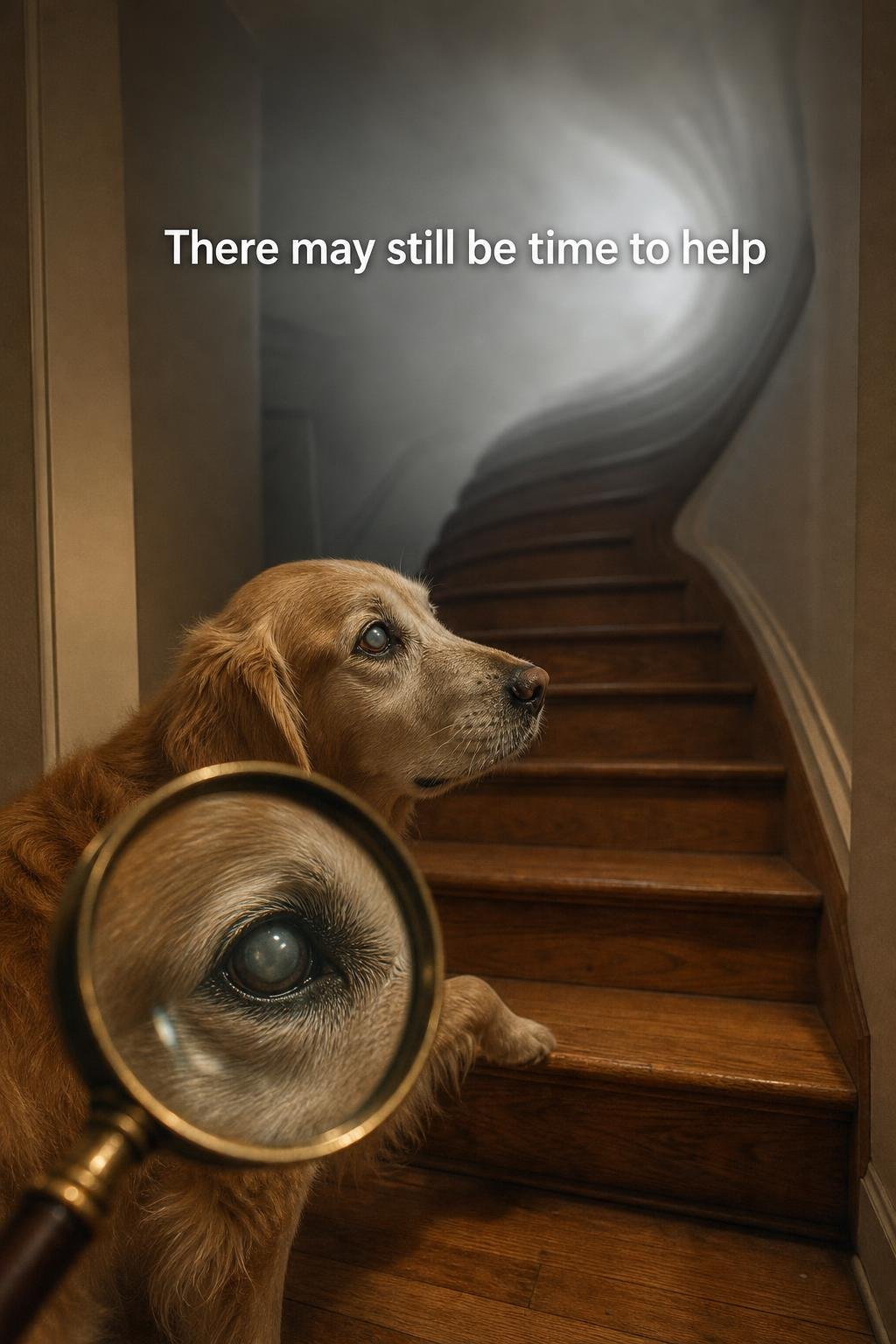
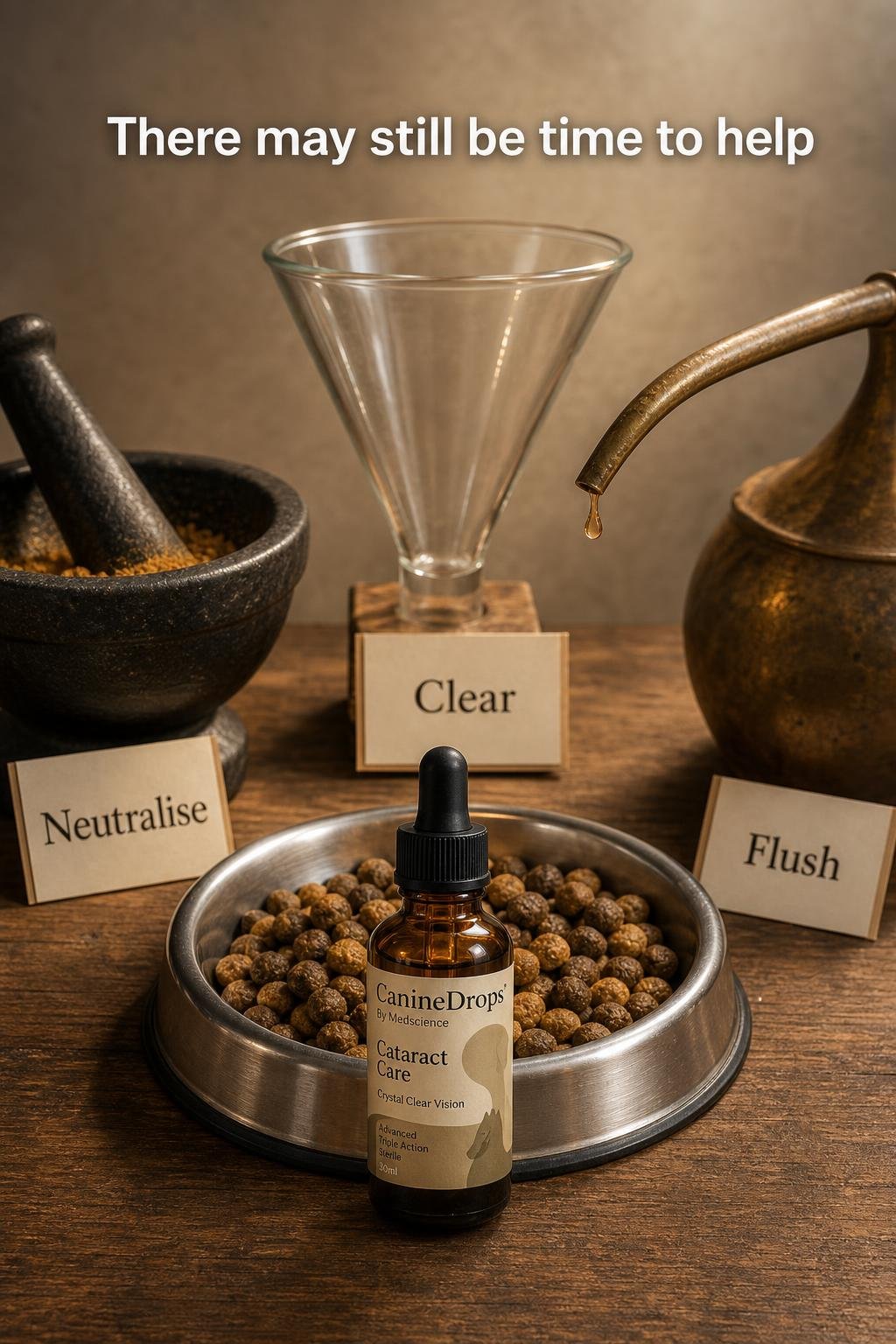
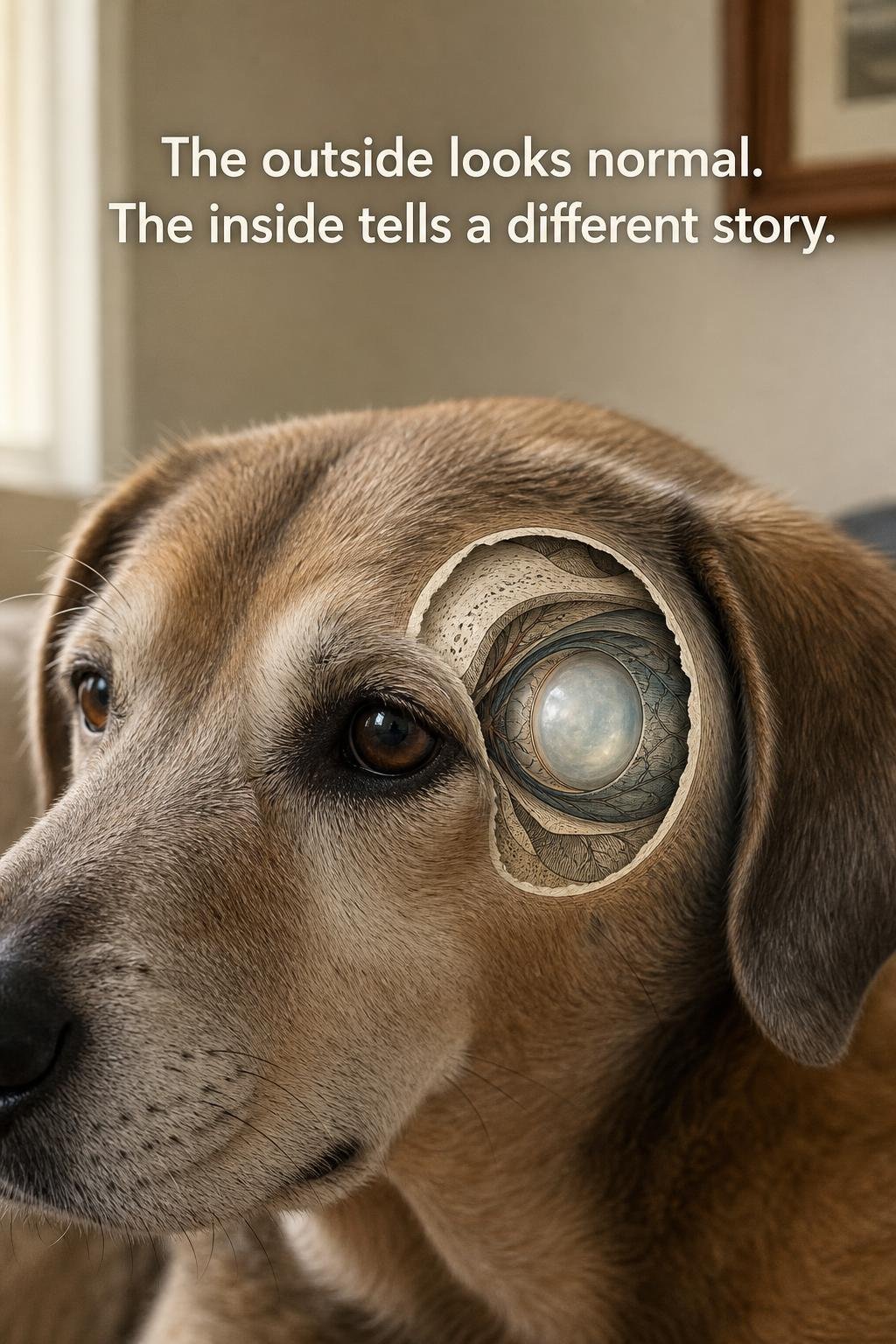
What if the cloudiness you see is not the problem itself, but the visible result of something happening deeper inside the eye? A dog’s lens is made from delicate proteins. When unstable molecules called free radicals attack them, the proteins can become damaged and clump together. That buildup can create the cloudy or hazy appearance owners notice. The key detail is location. The process is happening inside the lens, not just on the surface of the eye. That is why ordinary eye drops can feel disappointing. They may help the surface feel supported, but they do not automatically reach the lens where the oxidative damage is occurring. Dr. David Martinez discovered how important this distinction was after treating more than 9,000 dogs at a county animal shelter. He once told owners to monitor cloudy eyes. Then Cooper, a golden retriever, came back after a year with worsening cataracts, missing steps and freezing at sidewalks. His owner was facing a surgery estimate over $6,000. That was the case that made Dr. Martinez stop treating cloudiness as something owners should simply ignore. ClearVision Food Drops use a daily inside-out approach. Add 2–3 drops to your dog’s food once daily. The formula combines astaxanthin, vitamins C and E, lutein, zeaxanthin, omega-3s, bilberry, and grape seed around three actions: Neutralise oxidative stress, Clear protein clumping, and Flush damaged debris. Another detail matters here: dogs are remarkably good at hiding gradual vision changes. They can memorize the layout of a room, follow familiar smells, and adjust how they move. That can make a real change look like ordinary tiredness. A pause at the stairs or a hesitation in a dim hallway may be the first clue an owner gets. The reason for acting early is not to panic over every cloudy eye. It is to understand the difference between watching a symptom and supporting the process behind it. ClearVision gives owners a simple daily action while there is still something to support: 2–3 drops mixed into food once daily. The same three-part idea stays at the center: Neutralise oxidative stress, Clear protein buildup, and Flush damaged debris. The formula is designed around the lens, where the internal changes may be developing, rather than only the surface that makes the cloudiness visible. The important part is not simply seeing a list of ingredients on a label. The important part is understanding why those ingredients were put together and what problem they are meant to support. For years, Dr. Martinez looked at cloudy eyes from the outside. If the eye was not red, irritated, or obviously painful, the usual advice was to watch it. The assumption was that nothing meaningful could be done until the cloudiness became severe enough to require a more dramatic intervention. Cooper changed that assumption. Tom had not ignored his dog. He had asked for help. He had followed the advice he was given. He monitored the changes, waited, and hoped the cloudiness would remain stable. But while the outside appearance looked like something to watch, changes were continuing inside the lens. That is why the phrase “just monitor it” can be misleading. Monitoring tells you to observe the result. It does not explain the process creating the result. It does not support the lens. And it does not give an owner a clear reason to act while the signs are still early. When Dr. Martinez met Dr. Ellen Brooks at a senior dog wellness conference in Arizona, they discussed a different way to look at the problem. She was a veterinary nutrition researcher studying antioxidant compounds connected to oxidative stress inside the eye itself. The distinction mattered. This was not a conversation about putting something on the surface of the eye to make it feel soothed. It was about supporting the internal environment where delicate lens proteins could be exposed to damage. Together, they began testing a specific blend built around astaxanthin, vitamins C and E, zeaxanthin, and omega-3s. The broader formula also includes lutein, bilberry, and grape seed. Each component was chosen as part of an inside-out approach rather than as a random collection of popular supplement ingredients. The working sequence was simple enough for an owner to understand. Neutralise the oxidative stress that can affect lens proteins. Clear the buildup associated with damaged proteins clumping together. Flush damaged debris with support from omega-3s and the eye’s natural processes. That sequence is the mechanism behind ClearVision Food Drops. It is also why the product is added to food instead of placed directly into the eye. You add 2–3 drops to your dog’s food once daily, giving the formula a practical place in a daily routine. When the formula was first used with senior shelter dogs showing visible cloudiness, Dr. Martinez expected mild results at best. He wanted to see whether supporting the internal problem would make any noticeable difference over time. The changes that caught his attention were often behavioral before they were visual. Dogs that had hesitated at stairs became more confident. Dogs that had stopped following movement started reacting again. Owners described dogs that seemed more alert, more playful, and more like themselves. Those observations were tracked rather than treated as isolated stories. A group of 47 senior dogs was followed over 8 weeks, and 81% showed visible improvement. The case that stayed with Dr. Martinez happened later. Tom returned, this time with Cooper’s younger sister, Daisy. He had started her on the formula when he noticed the first signs of haze. Her eyes looked dramatically better. Before leaving, Tom said, “I thought cloudy eyes just meant getting old. Nobody told me there was still time to help.” That is the part many owners need to hear. The first sign may be a slight haze, but it may also be hesitation on stairs, trouble in dim light, bumping into furniture, staring into space, or failing to track movement. Dogs can adapt so quietly that the problem becomes obvious only after it has progressed. If those changes are already appearing, the question is not whether to panic. The question is whether to keep waiting without understanding what may be happening inside the lens. A tracked group of 47 senior dogs used the formula for 8 weeks, and 81% showed visible improvement. If your dog’s eyes look hazy or they have started hesitating at stairs, bumping into furniture, struggling in dim light, or failing to track movement, the inside of the lens deserves attention. Learn more about ClearVision here: https://caninedrops.com/pages/5-reasons-why-your-dog-needs-these-vision-drops
Like this ad? Make it yours.
Crush rebuilds this exact creative around your product — your brand, your colors, your offer — in about a minute.