
Inactive· since Apr 6, 2026
- 139
- days it ran
- 3
- relaunches
Ad copy
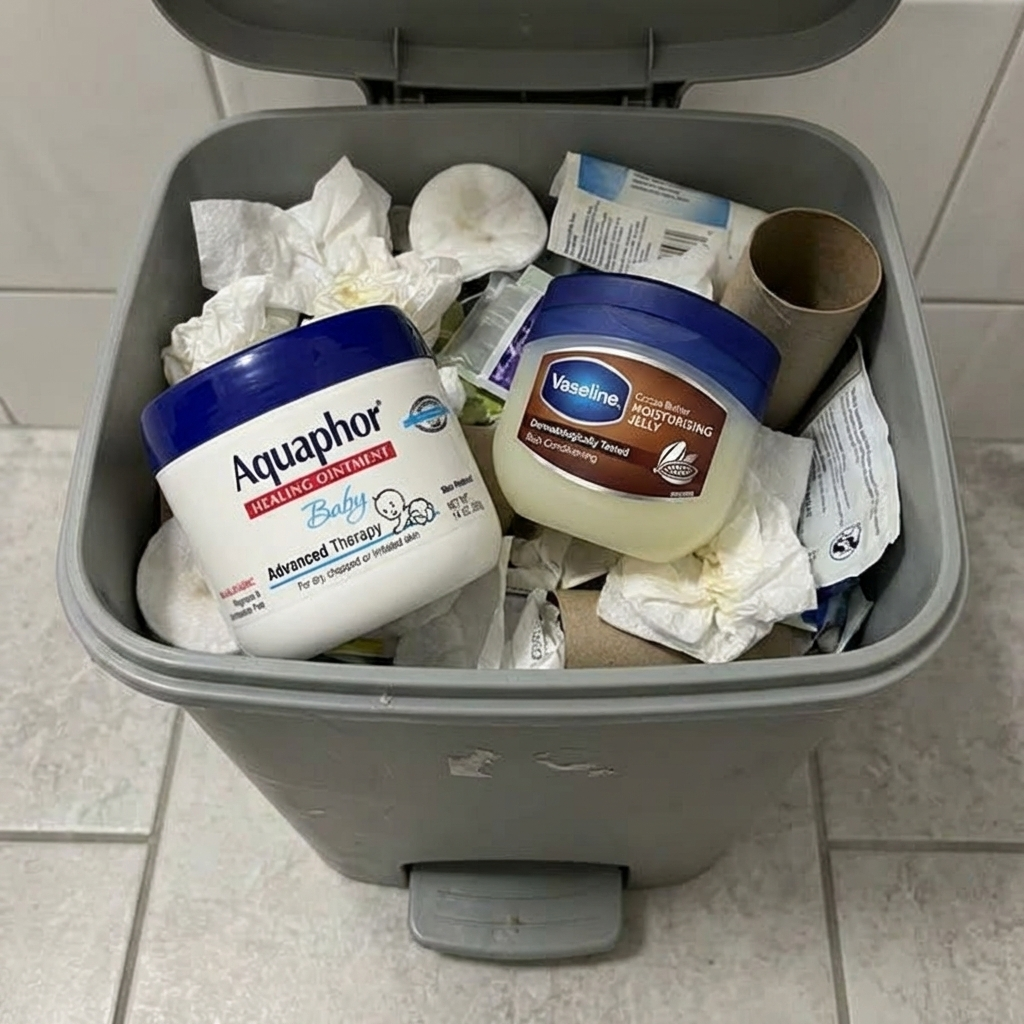
I owe you an apology. I'm a paediatric dermatologist, and for eleven years I've been giving parents advice that I knew, deep down, wasn't working. I watched babies suffer. I watched parents cry. And I kept saying the same thing: moisturise, steroid, come back in six weeks. I'm done pretending that's enough. I need to tell you what I should have told every parent who sat across from me in my office. There's bacteria living in your baby's eczema patches right now. It's called staph aureus. It's present in up to 90% of moderate to severe eczema cases. Ninety percent. I learned this statistic in year three of my practice. I saw the studies. I read the research. I understood the mechanism completely. And I kept prescribing the same treatments anyway. Why? Because it's what we do. It's what we're trained to do. It's the standard protocol that gets taught in medical school, reinforced in residency, and never questioned once you're in practice. But I questioned it. Privately. In my own head. Every time a desperate mother sat across from me with a baby whose skin was cracked and bleeding, I questioned whether I was actually helping her. I never said anything out loud. Let me tell you what a typical appointment looked like in my practice. A mum would come in. She'd been waiting three months for this appointment because that's how long it takes to see a paediatric dermatologist on the NHS. Three months of watching her baby suffer. Three months of trying every cream at Boots and Superdrug. Three months of sleepless nights and bloody sheets and crying that wouldn't stop. She'd walk in with hope in her eyes. Finally. A specialist. Someone who actually knows what they're doing. Someone who will finally give her an answer. I would look at her baby's skin for maybe fifteen seconds. I'd ask a few standard questions. When did it start? Where are the worst patches? Have you tried steroids? Any family history of eczema or allergies? Then I'd type something into the computer. Print out a prescription. Hand her some samples. "Keep the skin moisturised. I recommend Aveeno or Epaderm. Apply the hydrocortisone to the active patches twice a day, but not for more than two weeks at a time. Avoid fragrance. Use a humidifier. Come back in six weeks if it doesn't improve." That's the appointment. That's what she waited three months to hear. That's the answer from the specialist who was supposed to finally solve her problem. I knew it wasn't enough. I said it anyway. I knew that 90% of those babies had bacteria colonising their eczema patches. I knew that moisturisers couldn't kill bacteria. I knew that steroids only reduced inflammation temporarily without addressing the underlying cause. I knew she'd be back in two months with the same problem, maybe worse. I knew, and I said nothing. I watched those same mothers come back. The eczema worse than before. The baby still scratching. The mother more exhausted, more frustrated, more defeated than the first visit. And I would tell them the same thing again. "Let's try a different moisturiser. Maybe Doublebase this time. Maybe Cetraben. Have you tried Childs Farm? Some parents have had luck with that. Let's try a stronger steroid for a few days, just to get the flare under control." I was cycling them through products. I wasn't solving their problem. I was just giving them something new to try so they'd feel like we were making progress. We weren't making progress. The eczema always came back. The babies kept scratching. The parents kept suffering. And I kept collecting my fee for advice that I knew, deep down, wasn't addressing what was actually happening in those babies' skin. You want to know why I did this for eleven years? Because it's what the system rewards. A baby whose eczema clears up permanently is a patient I never see again. A baby whose eczema keeps cycling is a patient who comes back every two months for the next three years. That's more appointments. More revenue. More job security. I'm not saying every dermatologist consciously thinks this way. Most of them genuinely believe the advice they're giving. They went to the same medical schools I did. They learned the same protocols. They never questioned whether those protocols were actually solving the problem. But some of them know. Some of them have seen the research on staph aureus colonisation. Some of them understand that moisturisers can't kill bacteria and steroids can't break the cycle. And they still hand out Aveeno samples and hydrocortisone prescriptions because that's what the system trained them to do. That's what the NHS guidelines say. That's what keeps the appointment schedule full. I was one of those dermatologists for eleven years. I'm ashamed to admit it. But it's the truth. Three years ago, something changed. I had a patient. A little girl named Maya. Eight months old. Eczema that covered her entire face, neck, and chest. Her mother had been to two GPs and one other dermatologist before me. She'd tried everything. Aveeno. CeraVe. Epaderm. Doublebase. Cetraben. Childs Farm. Every steroid cream that had been prescribed. Nothing worked for more than two days. She sat across from me with this look in her eyes that I'll never forget. Not angry. Not desperate. Just... empty. Like she'd given up expecting anyone to actually help her. "I don't know why I'm here," she said. "You're going to tell me the same thing everyone else told me. Moisturise. Steroid. Come back in six weeks. I've done that for five months. Nothing changes. My daughter is still bleeding every night. I'm still not sleeping. I'm starting to think this is just my life now." I opened my mouth to give her the standard protocol. The words were right there, ready to come out. The same words I'd said thousands of times. But I couldn't say them. I looked at this mother who had given up hope, and I couldn't bring myself to give her the same useless advice that had failed her for five months. So I told her something I'd never told a patient before. "There's something I need to tell you. Something that's not in the standard treatment guidelines. Something most dermatologists either don't know or don't mention." She looked up. For the first time since she walked in, there was something in her eyes. Curiosity. Maybe a flicker of hope. "There's bacteria living in your daughter's eczema patches," I said. "It's called staph aureus. Studies show it colonises up to 90% of moderate to severe eczema cases. None of the products you've been using can kill it. That's why nothing has worked." She stared at me for a long moment. "Why has no one ever told me this?" I didn't have a good answer. Here's what I should have been telling every parent from the beginning: When your baby has eczema, the skin barrier is broken. There are cracks. Tiny gaps where the skin should be sealed but isn't. That's what makes eczema eczema. The barrier isn't functioning properly. Staph aureus is a bacteria that lives on everyone's skin. It's harmless when the skin is intact. The bacteria just sits on the surface, doing nothing. But when there are cracks in the skin, the bacteria gets in. It colonises the damaged areas. It starts multiplying in those cracks where your creams and lotions can't reach. Then it produces compounds called superantigens and proteases. These compounds irritate the skin. They trigger inflammation. They make the itching worse. More irritation means more inflammation. More inflammation damages the skin barrier further. More damage means more cracks. More cracks mean more places for bacteria to colonise. It's a cycle. A vicious, self-perpetuating cycle that explains everything. It explains why moisturisers don't work. Moisturisers sit on top of the skin. They're designed to coat the surface and prevent water loss. They can't penetrate into the cracks where the bacteria is living. They might make the surface feel better temporarily, but the bacteria underneath is still there, still producing irritants, still perpetuating the cycle. It explains why steroids only work for two days. Steroids are anti-inflammatory. They reduce swelling and redness. That's why the skin looks better after you apply them. But steroids don't kill bacteria. They do nothing to address the staph aureus living in the cracks. The moment the steroid wears off, the bacteria is still there doing its thing. The inflammation comes right back. Sometimes worse, because the bacteria has had more time to multiply. It explains why parents try product after product after product and nothing ever works long-term. Aveeno doesn't kill bacteria. CeraVe doesn't kill bacteria. Epaderm doesn't kill bacteria. Doublebase doesn't kill bacteria. Childs Farm doesn't kill bacteria. Cetraben doesn't kill bacteria. None of them do. They're moisturisers. That's all they are. That's all they were ever designed to be. You cannot moisturise your way out of a bacterial problem. But that's exactly what the entire dermatology industry tells parents to do. When I explained this to Maya's mother, she started crying. "I've spent hundreds of pounds on creams," she said. "I've tried everything everyone told me to try. And you're telling me none of it could ever work?" "Not on its own," I said. "Not without addressing the bacteria first." "So what addresses the bacteria?" That's the question I'd been researching for months before that appointment. That's why I finally had an answer to give her. Antibiotics can kill the bacteria, but only while you're taking them. The moment you stop the antibiotics, the bacteria comes back. It recolonises the skin. The cycle starts again. You can't keep a baby on antibiotics forever. The side effects, the resistance issues, the disruption to gut health. It's not a sustainable solution. Bleach baths are sometimes recommended. Diluted sodium hypochlorite can kill staph aureus. But bleach is harsh on already damaged skin. It can cause stinging, burning, further irritation. And what parent wants to put their baby in a tub of diluted bleach? The compliance rates are terrible because it feels wrong, even if the science is sound. Then I found the research on medical grade honey. Not regular honey. Not the honey you buy at Tesco. Not those "honey-infused" creams that some companies sell as natural alternatives. Most of those are just regular moisturisers with a little honey mixed in for marketing purposes. They smell nice. They feel nice. They don't have anywhere near the antibacterial potency needed to actually kill staph aureus. Medical grade honey is different. It's processed to have a specific, measurable level of antibacterial activity. The hydrogen peroxide activity, the methylglyoxal content, the osmolarity. All of it is standardised and verified. Hospitals use medical grade honey for wound care. Burns units. Surgical wounds. Diabetic ulcers. It kills bacteria that even some antibiotics can't touch. And unlike antibiotics, bacteria cannot develop resistance to it. The mechanism of action is too broad, too multi-targeted for bacteria to evolve around. Staph aureus cannot survive in medical grade honey. It dies on contact. The bacteria's cell walls rupture. It can't reproduce. It can't colonise. It dies. I found a product that combines medical grade honey with colloidal oatmeal and beeswax. The honey kills the bacteria. That's the primary mechanism. That's what breaks the cycle that moisturisers can't break. The colloidal oatmeal calms inflammation. It's one of the only ingredients actually recognised for eczema relief. It soothes the skin while the bacteria is being eliminated. The beeswax creates a protective seal. It forms a barrier over the healing skin so new bacteria can't get in while the patches are closing up. It locks out the environmental irritants that would otherwise recolonise the damaged areas. It's a complete system. Kill the bacteria. Calm the inflammation. Protect the healing skin. Address all three components of the cycle simultaneously. I told Maya's mother about this product. I gave her the name. I told her I wasn't affiliated with the company. I told her I didn't get paid to recommend it. I told her I was telling her about it because it addressed something that everything else she'd tried couldn't address. She was skeptical. Of course she was. She'd been burned by recommendations before. She'd spent hundreds of pounds on products that people promised would work. But she was also desperate enough to try one more thing. Two weeks later, she sent me an email with photos attached. Maya's face was clear. Not just better. Clear. The patches that had been raw and weeping for months were healed. Closed. Smooth. "I don't know what to say," she wrote. "I keep looking at her and crying. This is the first time in five months I've seen her actual skin." I stared at those photos for a long time. I thought about all the other mothers I'd seen over eleven years. All the babies with the same patches. All the appointments where I handed out the same advice. All the times I knew the advice wasn't complete but said it anyway. I could have told them about the bacteria. I could have explained why moisturisers couldn't break the cycle. I could have given them information that might have actually solved their problem. I didn't. Because it wasn't the standard protocol. Because it wasn't what I was trained to do. Because I was part of a system that rewards repeat visits, not cured patients. I made a decision that day. I wasn't going to be that dermatologist anymore. I started telling every eczema patient about bacterial colonisation. I started explaining why moisturisers alone could never break the cycle. I started recommending products that actually addressed the root cause instead of just managing symptoms. The product I recommend is called Dermaphics. It uses medical grade honey with actual antibacterial potency. Not the cosmetic-grade honey that smells nice but doesn't do anything. Medical grade honey that kills staph aureus on contact. Combined with colloidal oatmeal to calm inflammation. Combined with beeswax to seal and protect healing skin. I've been recommending it for three years now. To the patients whose babies aren't responding to standard protocol. To the parents who've been through the Aveeno and the Epaderm and the Doublebase and the steroid creams and nothing has worked for more than two days. The results have been consistent enough that I can't stay quiet about it anymore. I'm not affiliated with Dermaphics. I don't get paid to recommend them. I don't own stock in the company. I'm just a dermatologist who finally got tired of being part of a system that keeps parents on a treadmill of products that were never designed to actually solve the problem. You deserved this information the first time you walked into a dermatologist's office. Every parent who sat across from me for eleven years deserved it. I'm sorry I didn't give it sooner. The reason nothing has worked is because nothing you've been given was designed to work. Moisturisers moisturise. They don't kill bacteria. Steroids reduce inflammation. They don't kill bacteria. And until you kill the bacteria, the cycle continues. The cycle breaks when you kill the bacteria. Medical grade honey kills the bacteria. Dermaphics uses medical grade honey in a formula specifically designed for eczema. Kill the bacteria. Calm the inflammation. Protect the healing skin. I've seen it work. On Maya. On dozens of other patients. Consistently enough that I'm willing to say publicly what most of my colleagues won't even whisper privately. The standard protocol isn't just incomplete. It's designed to keep you coming back. Moisturise. Steroid. Come back in six weeks. Repeat forever. That's not treatment. That's subscription revenue. Your baby deserves actual healing. That means killing the bacteria that's keeping the eczema alive. Now you know what I should have told you from the beginning. Now you can do something about it.
Like this ad? Make it yours.
Crush rebuilds this exact creative around your product — your brand, your colors, your offer — in about a minute.