
Inactive· since Jun 14, 2026
- 32
- days it ran
- 0
- relaunches
Ad copy
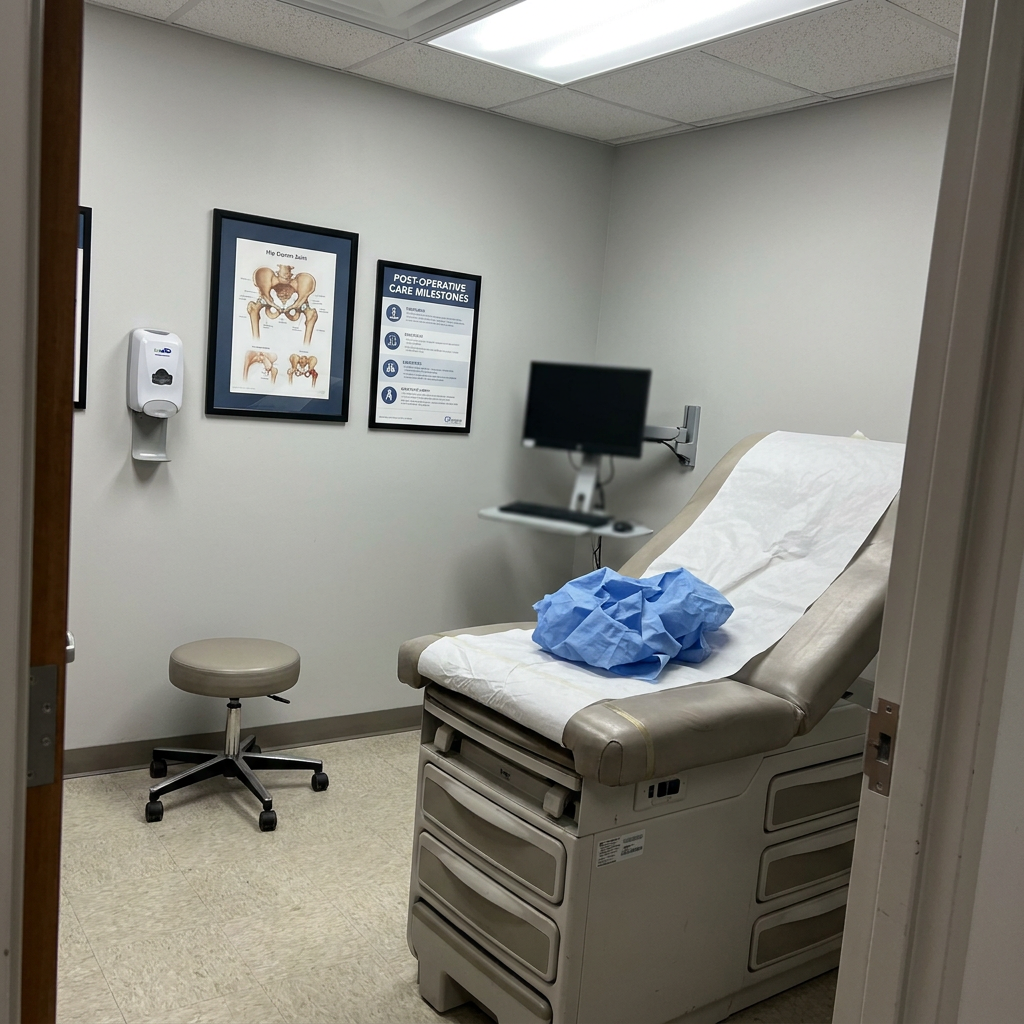
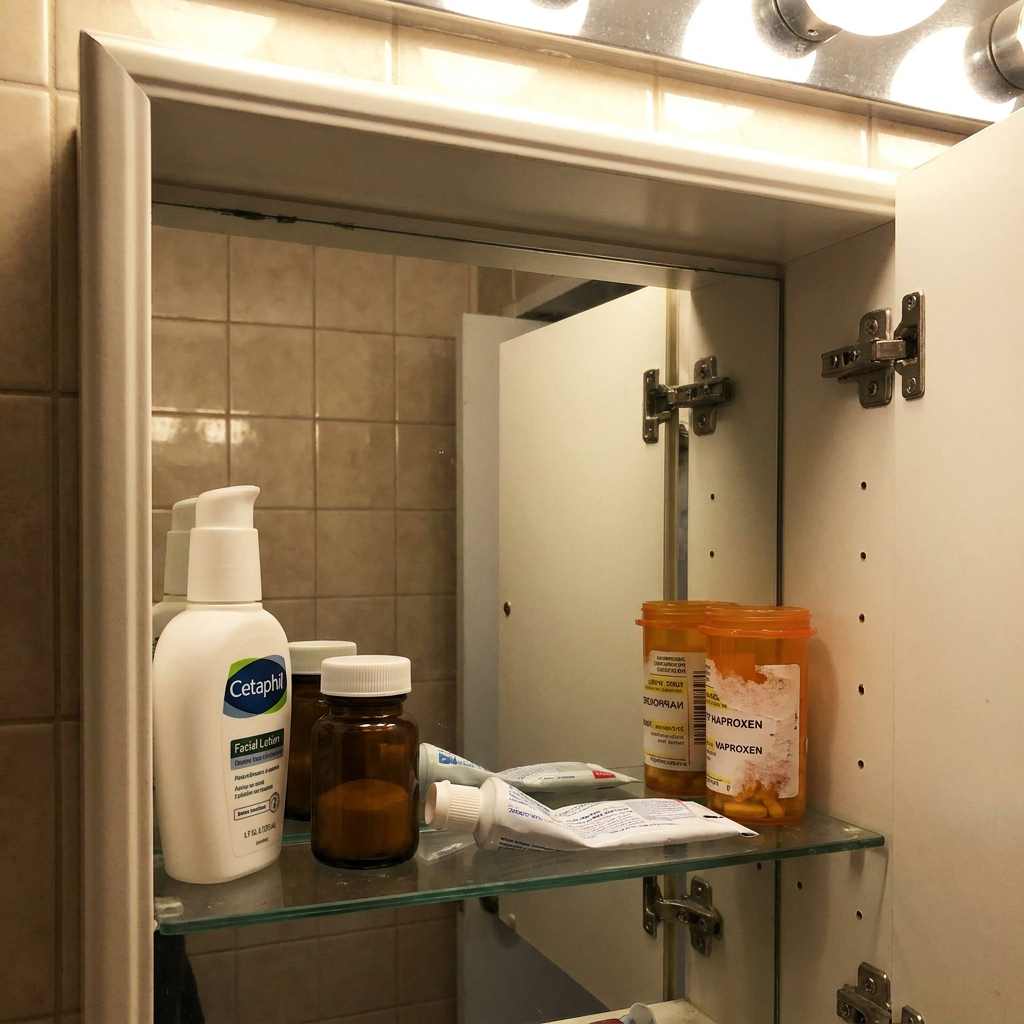
I had my hip replaced eighteen months ago. Nobody warned me the pain would come back different. The surgery worked. That is what they keep telling me. The X-rays are textbook. The implant is in the right place. The bone grew around the hardware exactly the way it was supposed to. I am, by every measure the medical system uses, a successful case. But I am still in pain. Not the same pain I had before. That pain is gone. The deep grinding when I climbed the stairs — gone. The bone-on-bone catch when I rolled over in bed at night — gone. What I have now is something nobody mentioned in any of the appointments leading up to the operation. I have a burning around the entire joint. It comes on around three in the afternoon and stays until I go to bed. The hip itself feels hot to the touch by evening. There is a stiffness every morning that feels like the whole area has set in concrete overnight. The hip is not catching anymore — but everything around it is unhappy in a way the original hip never was. Four days ago I went to see the surgeon for my eighteen-month follow-up. I sat in the same exam room I sat in two years earlier, when he told me my hip was bone-on-bone and a replacement was the only thing left. He looked the same. I did not. He examined the hip. He pulled up the most recent X-rays and turned the screen so I could see them. He said the implant was in perfect position. The X-rays were textbook. He said this is what a successful outcome looks like. I told him I was still in pain. He said that some women take longer to fully adjust to the implant. He said the pain I was describing — burning, deeper than before, worse in the afternoons, hot to the touch by evening — was not consistent with a mechanical problem with the hardware. I told him the pain had been there for over a year. I told him it was different from the pain I had before the surgery. He said he heard me, in the tone doctors use when they have not, in fact, heard you. I asked him, finally, about revision surgery. He paused. "You would not be asking for that if you knew what it involved." I sat there on the exam table in the paper gown and I felt something I did not expect to feel in a doctor's office at sixty-four years old. I felt insulted. I already went through this surgery. I spent six weeks on crutches. I did six months of physical therapy that made me cry in the parking lot. I knew exactly what a hip replacement involved — I literally just had it. I was asking because the surgery I already endured did not give me back the life I was promised. Nobody asks for a second hip replacement for fun. I want to tell you something else, because if I am going to be honest about this part of my life I have to be honest about all of it. I agreed to the surgery in a blur. I was in pain for almost two years before it. Four doctors. Four different labels. The grinding got so bad I was sleeping three hours a night and snapping at my husband and crying in the grocery store parking lot. By the time the second orthopedist told me the only thing left was replacement, I would have agreed to anything that promised to make it stop. I do not say this with anger at the people who treated me. I say it because if you have not been in that level of pain for that long, you do not know how thin the person inside you gets, and you do not know how grateful you become for someone else willing to decide for you. I let someone else decide. The surgery happened. The hip is technically fixed. And four days ago, sitting at the kitchen table at sixty-four years old, feeling insulted by a surgeon who just told me my new pain is not consistent with a mechanical problem, I finally understood what nobody had ever told me about hip replacement surgery. The hip was never the whole problem. That is when something cracked. Let me back up. I am sixty-four years old. I live in a small house outside Collingwood, Ontario, with my husband of thirty-three years. I left my job a little over two years ago. I was a registered nurse for thirty-one years. Oncology, mostly, at a hospital in Barrie. I spent three decades in scrubs, on my feet, lifting things that should not have been lifted, sleeping in shifts. I retired six months before the hip got serious. That's the version of me who signed the consent forms. The hip started giving me trouble about three years before the surgery. A tightness on the left side after long shifts. A grinding when I climbed the stairs at the hospital. Morning stiffness that took an hour to walk off. I told myself it was overuse. The hip kept getting worse. By the second year, I was calculating. How long I could stand at the medication cart before I would need to lean on it. Whether the chair in the break room had arms I could push off of. I stopped going to the Saturday morning hiking group with my friend Sarah. The Bruce Trail escarpment had a steep descent that hurt my hip so badly that I stopped letting myself get to the top in the first place. I stopped going to my niece's daughter's recitals because I could not get in and out of an auditorium chair without holding the seat in front of me. And then there was the sleep. I hadn't had a good night's sleep in something close to four years. The hip woke me at two, sometimes three. Heating pad to the couch. Standing in the dark drinking water. By the time I retired, the broken sleep had become its own injury. It hollowed me out from underneath in a way I could feel but could not describe to my husband when he asked why I had been quiet at dinner. By the time the second orthopedist told me my only option was a hip replacement, I would have done anything. I signed the forms. I picked a date. I had the surgery on a Tuesday morning in March, two years ago. The first six weeks were exactly what they had been described as in the patient information packet. Crutches. Walker. A chair in the shower. Physical therapy three times a week for four months. By the end of month six, the original pain was gone. The grinding was gone. The bone-on-bone catch was gone. I slept on my left side for the first time in nearly four years. For about three weeks, I thought it had worked. Then a new pain came. It was not the same pain. What came instead was a burning that wrapped around the entire joint, more in the soft tissue than in the bone. A swelling by the afternoon that made the hip feel warm to the touch. A stiffness every morning that did not feel like the old stiffness. This new one was a stiffness of everything around the joint, as if the whole area had been wrapped in a kind of inflammation that did not respond to anything I tried. I went back to physiotherapy. I went back to the surgeon at the six-month follow-up. I was told my recovery was on track. I went to my family doctor, who refilled the naproxen prescription she had given me two years earlier. My stomach turned on me by the second week. I stopped. I have been quietly absorbing this new pain for fourteen months. From the outside, I look fine. My husband does not always know when I am hurting. From the outside it looks like the operation worked. The naproxen bottle is in the back of the medicine cabinet. I am not going to take it. I want you to understand that I did not sit still for any of this. I am a nurse. I do not sit still. I know how to read a chart. I know what an evidence base looks like. I know the difference between a treatment that has been studied carefully and a treatment that has been marketed loudly. I went to my family doctor first. She pressed on the side of my hip with two fingers, said the word bursitis, and wrote me a prescription for naproxen. I took the pills for ten weeks. My stomach turned on me before my hip ever improved. She referred me to physiotherapy. Physiotherapy was sixteen weeks at two different clinics. I had watched enough patients work through rehabilitation on my ward to know what good physiotherapy looked like, and what I was doing did not look like it. When physiotherapy did not work, my family doctor put in a referral to an orthopedist. The wait was the better part of a year. He looked at an X-ray for less than a minute and called it wear and tear, very common in women your age. He looked up at me when he spoke and went back to the computer screen between sentences, as if I was the interruption and the screen was the appointment. The second orthopedist I saw on the recommendation of a friend. He was thorough. He sat down with me afterwards and told me, with care, that my hip was bone-on-bone and that conservative treatment was no longer realistic. The only thing that was going to give me my life back was a replacement. I cried in his office. I have not cried in front of a doctor since I was fourteen years old. I signed up. I waited eleven months for the date. The fourth doctor was the surgeon. He told me before the operation that the success rate was, in his words, "extremely high." He told me four days ago that the implant was textbook and that I should consider myself a successful case. Four doctors. The joint is now made of titanium. The pain is still there. In between the appointments, I had been trying to fix it myself. I have a running list on my phone. Glucosamine and chondroitin for almost two years. Turmeric — I am on my fourteenth bottle. Fish oil. An anti-inflammatory diet for ten months. Collagen powder. Magnesium glycinate. A copper compression sleeve I knew was nonsense. Three different topical creams from the drugstore. A Voltaren gel I knew the kidney warnings on by heart. A heating pad in a wrap that plugged into the wall. The number, by the time I signed the consent forms, was well over five thousand dollars. After the surgery, when the new pain came, I started over. CBD oil. A TENS unit. Extra-strength acetaminophen. Eight more weeks of physiotherapy with a post-surgical specialist. Two more topical creams. Infrared light. Massage I paid for out of pocket. The new pain did not lift. The hip itself, the implant, the part the medical system kept telling me was perfect — that part was fine. The pain was somewhere else. I could not find anybody in the medical system who would even agree with me that it was wrong, let alone tell me what to do about it. And every single one of those four doctors, and every single thing I bought before the surgery, and every single thing I bought after the surgery, had been focused on the joint itself. The bursitis label treated the joint. The therapy loaded the joint. The osteoarthritis diagnosis labeled the joint. The replacement replaced the joint. And then, when the joint had been technically resolved and the pain was still there, the system simply had no further idea to offer. Before the surgery, I had been treated like a difficult patient. After the surgery, I was treated like a woman who was failing to appreciate her successful outcome. The pain I was actually living with did not seem to register as a real category for any of them. What I finally realized was not that one doctor had dismissed me. It was that nobody in the medical system seemed to have a name for what was wrong with me. I had been treated, brilliantly and competently, for a problem the system understood. And whatever was wrong with me now was a problem the system did not even seem to see. I did not cry. I had done my crying three years earlier, in the second orthopedist's office, on the day I agreed to the surgery I had not really wanted. What I felt instead was a kind of cold clarity. I was done waiting for one of these rooms to explain my own body to me. I was a nurse. I had been deferring to the system I worked inside for three decades. I was not going to defer to it anymore. I was going to find out myself. I sat down at my kitchen table that night with my laptop and I did the thing I should have done before I signed the consent forms. I stopped searching for hip pain treatment. I had searched that a hundred times before the surgery and it always returned the same carousel. Stretches. Injections. Replacement. Instead I typed in the question nobody in the surgeon's office had ever wanted to engage with. Hip replacement surgery still hurts months later why. I read for most of the night. And eventually, a recorded talk by a researcher in women's joint health that I listened to twice, the second time with a notebook open beside the laptop. I am going to walk you through what she explained, because no one had explained any of it to me in five years of being a patient. The pain in a hip like mine does not actually start in the cartilage. The cartilage is the part everyone points at, because the cartilage is the part that shows up on a scan. But cartilage itself has no nerve endings. It cannot hurt. It is not where the pain lives. The pain lives in everything around the cartilage. The lining of the joint. The fluid that is supposed to keep everything gliding. The soft tissue. The small stabilizing muscles that hold the joint together under load. That whole surrounding system, she explained, is the cushion. And the cushion is what fails first. She cited a number that I wrote down twice in the notebook to make sure I had it right. Roughly 70% of women in the post-menopausal years are walking around with joint pain. Most of them walk into doctors' offices and have scans that come back unremarkable. The pain is real. The cushion is the source. And the cushion does not show up on any imaging the field currently uses. Estrogen is one of the main things that keeps the cushion maintained. It keeps the joint lining calm. It keeps the fluid the right consistency. It keeps the soft tissue resilient. It keeps the small muscles around the joint able to relax between uses instead of locking down. When estrogen falls in menopause, the cushion loses its maintenance. The lining gets irritated and stays irritated. The fluid thins out. The small muscles around the joint, sensing instability, clench down and brace and never fully release. And then comes the part that turns a bad hip into a spiral. Once the joint is irritated and the muscles are guarding, the nervous system starts paying closer and closer attention to that joint. It turns up the volume. Every signal from the hip gets amplified. The amplified signal makes the muscles guard harder. The harder guarding inflames the joint further. The further inflammation makes the nervous system turn the volume up again. It is a loop. The cushion stops being maintained. The joint gets irritated. The body braces. The bracing makes it worse. The whole thing feeds itself and tightens, month after month, while everyone keeps pointing at a scan of the cartilage and calling it wear and tear. It is not wear and tear. It is a maintenance system that lost its signal, and a protective response that turned into a trap. I sat at my kitchen table at almost two in the morning and I felt three years of pre-surgical pain and eighteen months of post-surgical pain click into place for the first time. The researcher spent about ten minutes in the middle of the talk on something I have not been able to stop thinking about since. She said that in medical school in the nineteen-eighties, there was a teaching shorthand called the Four Fs. Female, forty, fat, and fertile. It was originally a memory aid for gallbladder disease. Over time it became something larger — a shorthand for the kind of patient whose vague musculoskeletal complaints did not warrant aggressive workup. The Four Fs was the patient whose pain was, in the language of the day, "hysterical." She said the Four Fs has been retired from most medical school curricula. But the pattern it taught had not. I knew exactly what she was talking about. I was taught the Four Fs during training. I had even used it. I had stood at nursing stations in the nineteen-nineties and listened to attending physicians describe female patients with the kind of language that the Four Fs gave them permission for. I had never named what was happening because I had been on the inside. And then I had become the patient. I wasn't imagining it. I had been getting a version of a thing that had a name. And I had spent thirty-one years quietly handing the same version to other women. The researcher moved on. About 87% of orthopedists are men, and almost none of the people writing the standard-of-care guidelines for joint pain in women over fifty have ever gone through menopause. They had been trained to look at the joint. The problem was not the joint. Then she said the thing that made me sit up. She said that surgery does not solve the cushion problem. It cannot. Joint replacement puts a new mechanical surface where the old one had failed. But the rest of the cushion — the lining, the fluid, the soft tissue, the small stabilizing muscles that have been bracing for years — none of that is addressed by the operation. The body that walks out of the operating room has the same compromised cushion it walked in with. And the trauma of surgery itself almost always deepens the cushion failure rather than relieving it. That is why, she said, so many post-surgical patients describe a different pain than the one they came in with. The original bone-on-bone pain is gone. They got what they paid for. What they did not get was any address of the underlying cushion failure. The surgery solved the joint. But it left the cushion untouched. I sat there at the kitchen table and I cried for the first time in three years. Not a long cry. A short one. The kind of cry that happens when you finally have a name for the thing that has been quietly destroying you. I had spent fourteen months being told my recovery was on track. And the answer was this simple: my joint had been replaced. My cushion had not. And nobody in the chain of care that treated me ever knew about it. The naproxen had just muffled the signal but never touched the reason the joint was irritated. Physiotherapy had made it worse. You cannot strengthen your way out of a joint that is already guarding and already inflamed. The cortisone shot would have forced the inflammation down briefly. But cortisone is not free. Every shot is borrowed against a system that has nothing left to lend. The supplements had done nothing because I was sending raw material to a joint that had no working maintenance signal to use it. And the surgery had done exactly what the surgical literature said it would do. It resolved the structural problem. It did not touch the cushion. The implant was textbook. The cushion was on fire. The X-ray showed the first. There is no scan that shows the second. He was not wrong about the wear in my original joint. He was wrong about what had caused it. And being wrong about what caused it is how a sixty-four-year-old woman ends up with a piece of titanium in her hip and a fire in the tissue around it that nobody in the medical system will name. I closed the laptop at almost four in the morning and sat in the dark kitchen and felt something I had not felt in five years. I was not angry anymore. I was oriented. For the first time, I knew what was actually wrong. Once I understood the loop, the solution stopped being mysterious. You cannot cut your way out of it — I had already tried that, with a saw and a piece of titanium. You cannot strengthen your way out of it. You have to calm your way out of it. You have to break the loop where it is actually running. The researcher laid out what the joint actually needs, in the last twenty minutes of her talk, and I wrote it down in three lines on the back of an envelope. It needs the irritation in the joint lining brought down. Not muffled like the naproxen would, but genuinely settled. It needs the surrounding tissue and the small stabilizing muscles supported and unclenched, so the guarding can finally release instead of tightening. And it needs that done consistently, directly to the joint itself, every day. Because the cushion lost a daily maintenance signal, and you only replace a daily signal with a daily one. That was the whole spec. Calm the lining. Release the guarding. Daily, local, to the joint. I added a fourth line of my own underneath the three. Nothing through the stomach. Nothing through the kidneys. Not at sixty-four. I had nursed enough women through chronic kidney disease at the hospital to understand exactly what I was being asked to trade. I was not going to trade it. The naproxen went through my stomach to chase a signal everywhere in my body at once. The drugstore creams were not calming anything — they were just loud. None of them were built to support the cushion. They were built to be felt. What the loop needed was something that worked with the joint instead of shouting over it. Botanical. Applied right to the hip. Calm enough to use every single day without my stomach or my kidneys ever being part of the transaction. So I went looking for it. Methodically, with the spec next to me, rejecting whatever did not match. The first several things I looked at were just the naproxen again in a different bottle. Out. Then a wall of single-ingredient creams. One thing, one note, one job — and my hip did not have a one-job problem. Out. Then the loud ones. The burn sold as proof it was working. The joint did not need to be shouted at. Out. Then creams with eight, ten, twelve ingredients on the label, clearly assembled so the back of the package would look impressive. A pile of ingredients is not a formulation. Out. Then the wellness side of the internet, which wanted to sell me everything that was already on my running list. Every one of them through the stomach. Out. I spent three evenings on this. By the third evening I was starting to think the thing I had written down simply did not exist as a product. Somewhere in those three evenings of searching, I had also found my way into a Facebook support group for women with chronic hip pain — about sixteen thousand women, comparing notes on exactly this. The conversation I had never once been offered in an exam room. And on the third night, scrolling through a long thread of women describing different pain after their hip replacements, I found a comment buried about thirty replies deep that stopped me. A woman in the group had written a long reply about thirty comments down. She was replying to a different woman who had asked whether anyone in the group had ever found anything that addressed the burning around the joint after surgery. "My hip surgery was three years ago. The new burning pain showed up about six months out. The surgeon kept telling me the implant was fine. Most orthopedic surgeons are men and almost none of them connect what happens to a woman's joints with what happens to her hormones after menopause — they look at the joint and miss everything around it. I eventually found a cream that seems to be built around managing estrogen decline. Fourteen months in, the burning is gone." I read it again. Menopause and the joint. Check. Looking at the joint and missing everything around it. Check. New pain after surgery, around six months out, surgeon dismissing it. The exact pattern she had just described from the talk. The comment did not name the cream. I scrolled down. The first reply was another woman asking the same thing I was about to ask. "What is the cream you used?" The original commenter had replied with a link. I clicked on her name first. Her profile was real. Sixty-seven years old. Lived outside Kelowna, British Columbia. Retired high school principal. Two adult children and a chocolate Lab named Henry who appeared in most of her posts. I scrolled back through her older posts. Twenty months ago: "Eighteen months post-op and the burning around my hip is worse than ever. Saw the surgeon today. He said the implant looks perfect. He has no idea why I am still in pain. I don't either." Fifteen months ago: "Started trying something new about three weeks ago. Cautiously optimistic." Ten months ago: "Walked the full lake loop with Henry this morning. Three kilometres. No stopping." Five months ago: "Slept on my left side the entire night last week. First time in over four years." Two months ago: "Flew to Vancouver to see my granddaughter's recital. The burning is gone. Not better. Gone." "The burning is gone. Not better. Gone." I had forgotten what gone sounded like as a possibility. I went back to her reply and clicked the link. The product was called Nepimi Organics Deep Joint Calming Therapy Cream. The page loaded. A small amber glass jar with a plain white label. No spinning gold seals. No countdown timer. Just the jar. The first line on the page read: The six-active cream designed for women over 50 whose joint pain isn't being addressed by anything else. The page used the same word the researcher had used in her talk. Cushion. Estrogen maintains the tissue around your joints — including the cushion that wraps your hips. When estrogen drops at menopause, that cushion stops being maintained. The product was the work of a woman named Dr. Helena Marsh. A menopause-focused practitioner who had spent three years studying transdermal delivery and building a cream around exactly the system the researcher had described. The page included a quote from her that I read twice: "For 18 years, I watched patients describe the same hip pain I'd eventually feel myself. Their doctors dismissed them. Mine dismissed me. It wasn't until I researched what menopause does to soft tissue maintenance that I understood why every conventional treatment was failing — they were all aimed at the joint, not the cushion that was breaking down around it." Six active ingredients. Frankincense — to calm the joint lining, no kidneys, no liver. MSM — sulfur, the structural raw material the body needs to rebuild the connective tissue that makes up the cushion. Magnesium Chloride — to release the small muscles that had been bracing around my hip for the better part of five years. Arnica — for the soft tissue around the joint. Rosemary — for the circulation. Menthol — a small cooling note in the first sixty seconds. No diclofenac. No NSAIDs. No daily-use limit. Designed for fifty-plus skin specifically. Ninety days to try it. If it did not work, every penny back. Keep the jar. After five years of trying things that did not match the problem, and after three nights of trying things that did not match the spec, I was looking at the first thing that matched every line. I ordered it before I went to bed. It arrived four days later. A small amber glass jar. A plain white label that said Deep Joint Calming Therapy Cream in dark serif type, and underneath, in smaller text: Formulated for skin over 50. I had spent over five thousand dollars before the surgery and another two thousand after it on products that screamed at me from packaging. This one just sat there. The first night, I sat on the edge of the bed and rubbed a pea-sized amount of the cream into my left hip in slow circles. It absorbed in about a minute. No grease. The smell was subtle — something herbal, gone before I had buttoned my pajama top. A few minutes later, a soft cooling sensation. The burning around the joint softened a little. I told myself it was placebo. I am a nurse. I know what placebo looks like. That was day one. I kept clinical notes on the back of the same envelope I had written the spec on. Date, time of application, pain level on a 0-10 scale. The way I would have logged any drug I was administering. By the end of week one, the afternoon burning was a six out of ten instead of an eight. The morning stiffness was lasting forty minutes instead of an hour. The numbers were small. They were also not nothing. Week three, I slept on my left side for the first time since the surgery. I did not realize what was happening until I was already in the position. I was reading in bed. I had rolled onto my side without thinking. I was halfway through a paragraph when I realized I was lying on the side I had not been able to lie on for almost four years. The burning did not come on. I put the book down and turned out the light and slept the way I used to sleep before any of this started. I woke up at six in the morning. Through the night. Without the alarm. Week six, I drove to Halifax to see my younger son for the first time since the surgery. It is a long way from Georgian Bay to the East Coast. I broke it into three days. I had been afraid of the long-haul mark because it had been the distance at which the burning used to come on in the car for the past two years. Somewhere past the point where it always used to start, I noticed the burning was no longer there. My son came out to the car when I pulled into his driveway. He watched me get out. He watched me carry my own bag up the steps. He said, "Mom. You drove the whole way?" I told him I had. He gave me a hug that lasted longer than his hugs usually do. Week eight, my husband came up behind me at the kitchen counter while I was making dinner. I had been standing at the counter for an hour. Before this, I had been sitting down every twenty minutes. He said, "You are not sitting." I told him I had not been sitting all week. Week ten, I went back to the hiking group with my friend Sarah on Saturday morning. We walked four kilometres along the Bruce Trail escarpment. I took the descent without bracing on the railing. Sarah noticed at the bottom and looked at me sideways but did not say anything. The way old friends look at each other when they have been watching each other carry something for years. That was three months ago. I have used the cream twice a day, every day, since the jar arrived. I am on my fifth jar. I sleep through the night now. I drive long distances without breaking it into segments. I stand at the kitchen counter without sitting. I walked the escarpment with Sarah and her hiking group last Saturday. I did the full loop. I did not stop. The naproxen bottle is still in the back of the medicine cabinet. I used it for two weeks after the surgery before my stomach turned. I am going to throw it out one of these days. Some part of me wants to keep it for a while longer — proof of the version of me who would have kept taking it if I had been one degree more desperate. I am sixty-four years old. I waited five years for someone to take a body like mine seriously. It turned out to be a researcher in a recorded talk I almost did not click on. And a stranger in a Facebook thread who answered a question I had not yet asked. I do not know where you are in this. I do not know if you are reading this in the parking lot of a doctor's office, holding a prescription you do not want. I do not know if you are six weeks out of a surgery you were promised would fix this. I do not know if you are eighteen months out and still in pain and starting to wonder if you are the only one. You are not the only one. If you have read this far — if you have read this whole thing about a stranger's hip — you are not someone who runs out of patience easily. You are someone who has been looking for an answer for a long time, and the system you have been looking inside of has not been giving you one. Eighty-seven percent of orthopedic surgeons in this country are men. Almost none of them have ever felt their own estrogen fall. They have been trained to look at the joint. The problem was never the joint. So I am going to tell you the thing I wish a single one of the four doctors I saw, in five years of asking, had told me. Your hip is not simply wearing out. It is not simply worn out. Even if it is now made of titanium, it lost a signal it needs. Estrogen used to keep the cushion around the joint maintained. When estrogen fell, the maintenance stopped. The cushion got irritated. The muscles around it started guarding. The nervous system turned the volume up. And every month nobody interrupted the loop, the loop got louder. If you have had surgery, the cushion did not get fixed. They replaced the cartilage. They did not touch the cushion. The trauma of the operation almost certainly made the cushion worse. That is why the pain came back different. The cartilage is what shows up on the scan. The cushion around it is what hurts. Naproxen numbs it. Surgery cuts past it. Neither one is what the cushion actually needs. Nothing you tried failed because your body gave up. Your body never gave up. It was holding the joint together with the wrong tools and no instructions, for years, while you paid specialists to look at the one part that could not even feel pain. The cream I use is Nepimi Organics Deep Joint Calming Therapy Cream. Six botanical actives, every one of them with a job in the loop. You rub it into the hip itself, once or twice a day, for as long as you want to. Nothing in it runs through your stomach or your kidneys. It is the daily, local, calming signal the cushion lost. You can get it here: https://nepimi.com/pages/deep-joint-calming-therapy-cream-ca-en It comes with a ninety-day guarantee. Use the whole jar. If your mornings are no shorter, if the burning is no quieter, every penny back. Keep the jar. I am not going to tell you what to do about your surgeon, or your appointment, or the prescription on your kitchen counter. I made my own decisions. I am not you, and I do not know your hip. I am only going to tell you what I wish someone had told me eighteen months ago, before I signed a single consent form. Your hip is not finished. It lost a signal it needs. And a signal that was lost can be given back. 👉 https://nepimi.com/pages/deep-joint-calming-therapy-cream-ca-en
Like this ad? Make it yours.
Crush rebuilds this exact creative around your product — your brand, your colors, your offer — in about a minute.