Oral Care Finds
Oral Care Finds Facebook ad: “Read this if you have bad breath”
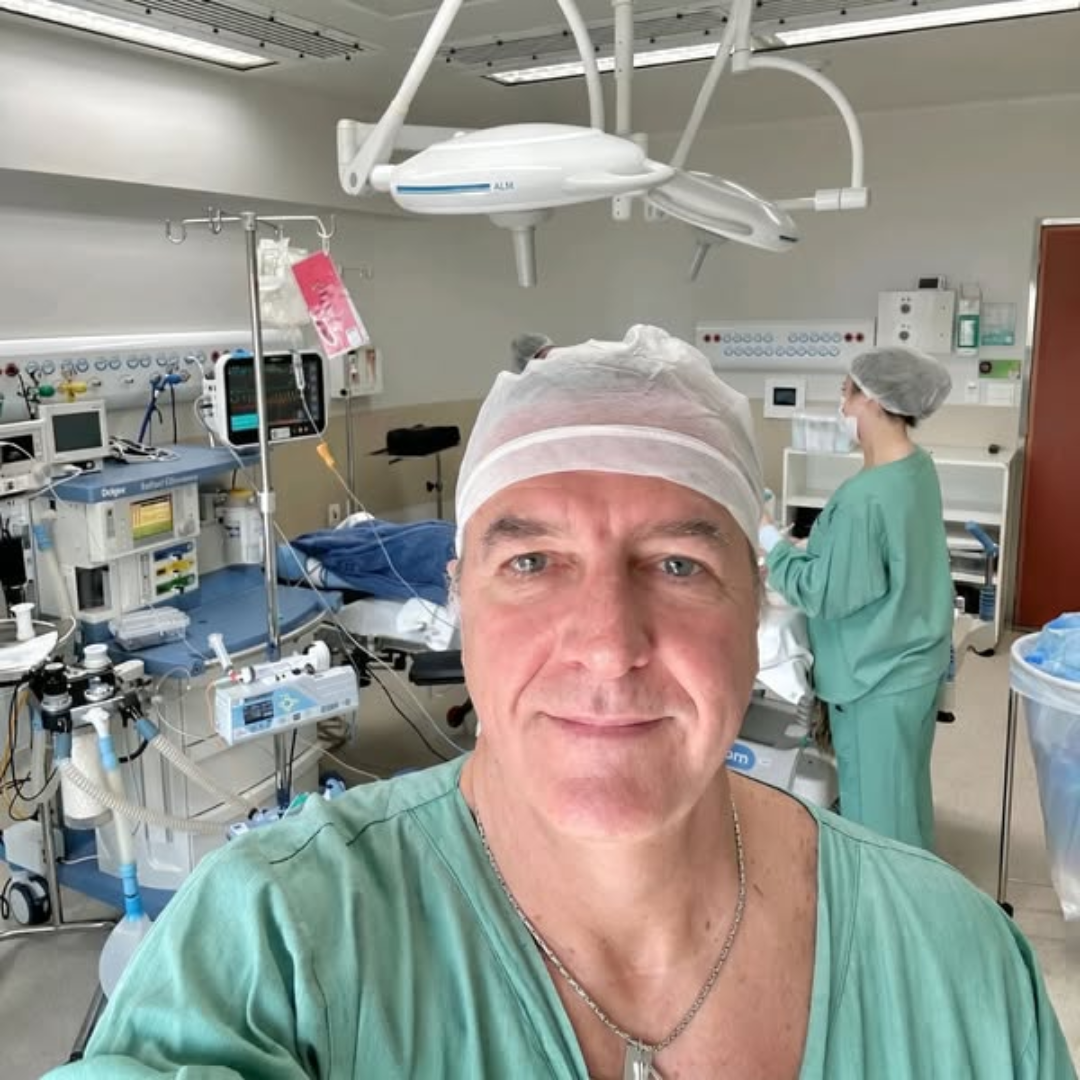
Ran for 19 days, from June 24 to July 13, 2026, the last day Crush saw it.
Run by Oral Care Finds on Facebook. Crush is not the advertiser and does not verify its claims. See this ad in Meta's Ad Library(opens in a new tab)
Want an ad like this for your product?
Crush makes new ad images for your product from this ad: your logo, your product photo, your offer.
Trials from $19.95 USD, then $79.95 USD a month. Cancel anytime.
About this ad
- Meta Ad Library ID
- 2066040510618770
- Platforms
- Facebook, Instagram, Audience Network, Messenger and Threads
- Relaunches
- 0
Ad text
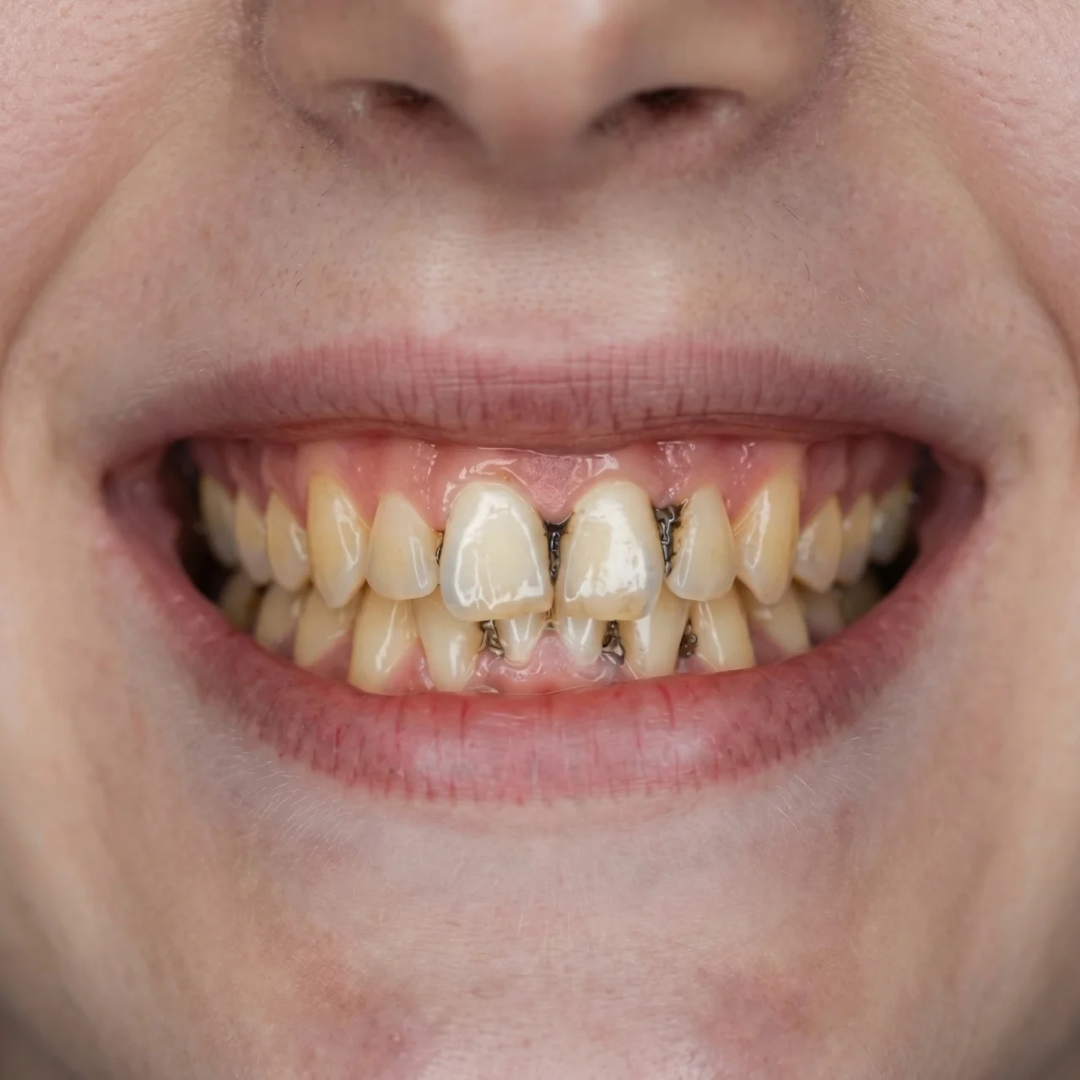
I've been an ENT for 24 years. And if your bad breath keeps coming back 20 minutes after brushing, your mouthwash stops working before you reach your first meeting, and your dentist keeps telling you your teeth are "fine"... I'm about to tell you exactly why it keeps coming back — and why the oral care industry will NEVER tell you the truth. And by the end of this, you're going to be pissed. My name is Dr. James Harmon. Board-certified otolaryngologist. Twenty-four years treating chronic bad breath, posterior tongue pathology, and persistent halitosis. Trained in both the United States and clinical centers in northern Italy. Over 11,000 patients. And I'm breaking ranks with my own profession to tell you this. Because there are three things happening right now: One — The odor coming from your mouth is not a hygiene problem. A structured colony of anaerobic bacteria is living inside a self-built biofilm fortress at the back of your tongue, actively producing sulfur gas — and every day you don't disrupt that environment from the inside, the colony matures, the coating thickens, and the decay window gets shorter. Two — The mouthwash, the tongue scraper, the oral probiotic capsule you've been cycling through were never capable of penetrating that fortress. And your dentist knows it. Three — There is a multi-billion-dollar oral care industry that profits every single month your breath comes back. So let me tell you what happened with one of my patients. Because her story is going to open your eyes to how broken this really is. Her name was Lauren. 41 years old. For YEARS — we're talking six consecutive years — she was managing this. It started with what she called "morning breath that wouldn't quit." She came to me early — month three. I told her we'd handle it. No big deal. I told her to use TheraBreath. Alcohol-free. Twice daily. Scrape the tongue every morning. "Be consistent," I said. "Give it eight weeks." She was consistent. She scraped. She rinsed. She bought a metal tongue scraper on Amazon specifically because she'd read it was more effective. She used it every single morning for five months. You know what happened? The coating didn't go away. It came back faster. The metallic taste — the one she could feel creeping back before she'd even finished her morning commute — started arriving earlier and earlier. Twenty minutes after rinsing. Then fifteen. Then she'd feel it on the elevator ride up. And then it got worse. The morning breath became severe enough that she started brushing before she did anything else. Before coffee. Before water. Before looking at her phone. She developed a pre-waking anxiety response about her own mouth before the alarm had fully sounded. She started keeping a backup toothbrush in her desk drawer at work. Then a second type of mouthwash, for when the first one "stopped working." Then a prescription-strength chlorhexidine rinse her general dentist recommended. By year three, she had a system. Mints in her coat pocket. Gum in the car console. A travel-size spray in her purse inner zip. A backup supply in her desk drawer. She'd calculated how long each product lasted and scheduled her use around meetings. This wasn't a freshness routine. It was a management system for a problem she had begun to believe would never actually end. She stopped letting dates go anywhere. She started choosing restaurant seats based on air circulation. She stopped leaning in when someone said something quiet. She'd been doing it so long she thought it had become her personality. She told me once: "I plan every social situation around the assumption that if someone gets close enough, they'll notice. And then I engineer the situation so they don't get close enough." And the fear? It wasn't just embarrassment anymore. She was terrified it would keep getting worse. She'd read enough forums to know about VSCs, tongue biofilm, anaerobic bacteria. She'd tried BLIS K12. She'd tried two different oral probiotic brands. She'd gone through every Reddit recommendation she could find. She had a notebook — a literal notebook — where she'd tracked what she'd tried, how long she'd used it, and what happened when she stopped. Every single one: temporary. Every single one: the coating came back. Every single one: the decay window had already shortened again by the following week. And here's what makes me genuinely sick: I was the clinician she trusted. Multiple visits. Year after year. Hundreds of dollars in office appointments, product cycles, prescription rinses — the whole sequence. And you know what I kept telling her? "The mouthwash needs more time." "Try switching formulas." "Some people have more active bacteria — it's manageable." "Stay consistent." STAY CONSISTENT. This woman had a notebook tracking every product she'd tried for three years, watching the decay window shrink, watching her social life quietly contract around a problem she couldn't solve — and I was telling her to stay consistent. Here's where it gets worse. And this is the part that keeps me up at night. I switched her to prescription chlorhexidine. Then added a zinc-based rinse. Then referred her to a periodontist, who found nothing structurally wrong and sent her back. Then recommended BLIS K12 lozenges. Then a two-antibiotic protocol to knock back the bacterial load. You know what happened? The chlorhexidine stained her teeth and destroyed her sense of taste for six weeks. The zinc rinse dried her mouth out so severely the bacteria came back twice as fast the moment she stopped. The antibiotics gave her a two-week window — she thought she was finally done — and then the coating rebuilt completely within three weeks of finishing the course. Every rinse, every spray, every lozenge that dissolved in her stomach before reaching her tongue: the same plateau. The same return. I watched this woman — who did everything I told her, who tracked everything in a notebook, who never missed a single product she'd promised herself she'd try — get no closer to an answer. And I didn't understand why. Until a 67-year-old oral microbiome researcher from the University of Milan told me more about chronic halitosis in 45 minutes than I had learned in two and a half decades of clinical training. September 2022. Chicago. American Academy of Otolaryngology Annual Meeting. I was in the conference hall bathroom checking my own tongue in my phone camera. Because eight months earlier, my own chronic bad breath had started. And nothing I'd been prescribing to patients for 24 years was working on me either. I knew about VSCs. I knew about anaerobic bacteria. I'd been through TheraBreath, two probiotic brands, tongue scrapers, a zinc protocol. The coating kept rebuilding. The decay window kept shortening. That's when I saw him. Dr. Marco Ferretti. 67 years old. Oral microbiome researcher. Presenting that afternoon on "biofilm architecture and therapeutic delivery failure in chronic halitosis." I sat in the front row. What he said in the next 45 minutes made me want to apologize to every patient I'd seen that month. He put up a slide showing a cross-section of the posterior tongue under electron microscopy. "This," he said, "is what you are actually treating. Not the surface. The architecture." The back of the tongue — the posterior third, where the tissue is thick and deeply folded — is not a smooth surface. It is a terrain of deep crypts and papillae, warm, low-oxygen, chronically coated. The anaerobic bacteria that produce Volatile Sulfur Compounds don't colonize the surface. They colonize the depth of that terrain. And they build a physical structure around themselves — a biofilm matrix — a self-produced, multilayered fortress made of proteins, polysaccharides, and extracellular material. It is not a film. It is architecture. He tapped the slide. "A liquid rinse, applied for 30 to 60 seconds, kills surface bacteria. The bacteria entrenched inside the biofilm matrix? Completely untouched. Within 20 minutes of rinsing, VSC production resumes. That is not a formulation failure. That is a structural impossibility. No liquid rinse can penetrate a mature posterior tongue biofilm. The physics prevent it." Now pause. Here's what makes this unconscionable: We are taught in training that chronic bad breath originates in the posterior tongue. We are taught that anaerobic bacteria produce VSCs. We know the tongue scraper only removes the surface layer of the coating — the bacteria are in the matrix beneath. We KNOW this. And we keep telling patients to rinse twice daily with products that cannot reach the target. That is not an oversight. That is a system designed to keep you buying. Because here's the thing: Here's what's actually happening underneath your tongue coating: The anaerobic bacteria in the posterior tongue biofilm don't need oxygen to survive. They metabolize sulfur-containing amino acids and produce Volatile Sulfur Compounds — hydrogen sulfide, methyl mercaptan, dimethyl sulfide — as waste. These are the compounds responsible for the odor. The same compounds used in laboratory gas detection because of how detectably potent they are, even at parts per billion. But they don't sit there waiting for your mouthwash to find them. They build a physical home — a biofilm matrix — of extracellular proteins and polysaccharides that acts as a structural shield. Your mouthwash is liquid. It hits the surface of that matrix and disperses. The bacteria inside are not exposed. They are not suppressed. They resume VSC production within minutes of you rinsing. When you tongue scrape? You remove the visible top layer. The colony beneath the surface remains entirely intact. The coating rebuilds within hours — not because you didn't scrape hard enough, but because the colony you didn't reach never stopped growing. When you use alcohol-based mouthwash? You are actively drying the oral environment. Reducing saliva flow. Creating the low-oxygen, low-moisture conditions that anaerobic bacteria specifically require to thrive. You are making their environment more hospitable every single time. When you take an oral probiotic capsule? The beneficial strains dissolve in your stomach acid before they reach your mouth. They never contact the posterior tongue environment they were supposed to recolonize. The colony has no competition. It rebuilds exactly as it was. The morning decay curve — the 20-minute window between your routine and the return of the odor — gets shorter over time. Not because your hygiene is slipping. Because the biofilm is maturing. The colony is becoming more structurally established. The fortress gets harder to disturb with surface-level contact every year you apply surface-level products. And the oral care industry KNOWS this. Dr. Ferretti put up his final slide: a chart of publication dates. Papers on biofilm architecture and therapeutic delivery failure in chronic halitosis — published, peer-reviewed, cited — going back to the early 2000s. Twenty years of research showing that liquid rinses cannot penetrate mature posterior tongue biofilm. "You know what changed in the retail market as a result?" he asked. He clicked to a blank slide. "Nothing." Because there is no financial incentive to formulate a product for the actual biology of your specific condition. There IS a financial incentive to sell you mouthwash that gives you 20 minutes of freshness and sends you back to the store next month. $17 billion. That's the size of the oral care market. Not one major product formulated to disrupt a mature biofilm from the inside. After that conference, I went back to Lauren. I told her what Dr. Ferretti had explained. I told her that every product I had recommended — and every product she had tried on her own — had been addressing the wrong layer. Surface bacteria, not the biofilm colony. The coating she could see, not the matrix beneath it that was rebuilding the coating every time. "So what do I do?" she asked. And for the first time, I had an actual answer. Dr. Ferretti had pointed me toward research on a three-component intervention designed specifically for mature biofilm environments: ✅ An enzyme complex formulated to penetrate and dissolve the structural matrix of the biofilm itself — not suppress surface bacteria, but break the physical architecture protecting the colony beneath ✅ Lactoferrin — a protein that sequesters the iron supply anaerobic bacteria require to survive and reproduce. Without iron, the colony cannot rebuild at its normal rate after disruption ✅ A probiotic recolonization complex — beneficial bacterial strains delivered in a slow-dissolving lozenge format that allows sustained contact with the posterior tongue environment — not a capsule that dissolves in the stomach — so they can occupy the territory the disrupted biofilm leaves behind, competitively crowding out the VSC-producing species long-term ✅ Strictly alcohol-free — no drying, no worsening of the oral environment, no creating better conditions for the bacteria you're trying to displace This wasn't a new mouthwash with a longer-lasting mint. This was the first formulation I had seen that was actually designed for the biological environment where the problem lives. One product matched every component of that intervention: VeroCare™ Oral Defence by VeroGlow. I recommended it to Lauren. I started using it myself. The Timeline — Lauren: Day 4 — "The taste is still coming back. But later. I made it to 11am without reaching for gum. I don't know if that's real yet." Week 1 — Tongue coating visibly thinner in the phone camera she uses to monitor it every morning. Rebuilding more slowly through the afternoon. Week 2 — Sat through back-to-back client calls — close-quarters, conference room, 90 minutes — and realized at the end she hadn't calculated her proximity to anyone once. Hadn't angled away. Hadn't reached for the backup gum. Week 4 — Went to a dinner with someone she'd been avoiding seeing one-on-one. She stayed for three hours. She leaned in when he said something quietly. She didn't plan an exit. Week 6 — He kissed her goodnight. She was present for it in a way she hadn't been in years. "I wasn't in my head. I was just there." Week 8 — Hygienist appointment. "Whatever you've been doing — your oral environment looks healthier than the last several visits. Keep going." Then I called and asked how she was doing. "I feel like someone handed me something back that I didn't realize I'd given up," she said. "I was just managing. I thought that was it. I didn't realize how much smaller my life had gotten until it started getting bigger again." My own timeline: Week 2 — Itching — that creeping metallic taste I'd stopped noticing because it had become my baseline — began arriving later. The 20-minute window extended to an hour. Then through the morning. Week 4 — Tongue coating significantly reduced under direct examination. The deep posterior coating — the region that had rebuilt within hours of scraping for eight months — was visibly thinner. The edges were clearing first. Week 8 — First morning I woke up and did not reach for the toothbrush before I was fully awake. The conditioning response — the pre-waking anxiety about my own mouth — was gone. The tongue surface was calm. The coating had not returned overnight. Week 12 — Full assessment. Morning breath within normal range. Decay curve: none. The freshness that used to last 20 minutes now held through a full morning. Then through a full day. The colony had been disrupted. The recolonization had taken hold. The fortress was gone. Then I went back to Lauren. And every other patient I'd failed. "I have to tell you something. The products I recommended to you were addressing a different problem than the one you had. I was telling you to spray water on a structural fortress made of protein and polysaccharide and then asking why the water wasn't working. I didn't understand the architecture. But I do now." Lauren, Week 6: "Six years. Six years of mints in every pocket, mouthwash that stopped working by noon, a notebook full of things that failed. Week six. The coating is thinner than it's been since this started. I went on a date and I didn't time anything. I just — went." Cost of mouthwashes, rinses, probiotics, prescriptions, and office visits that failed her: thousands of dollars across six years. Cost of what worked: a fraction of that. She laughed fully — mouth open — at something her date said across the table. First time in years she hadn't controlled that reflex. He didn't shift. Nobody shifted. She got her life back. This is the protocol they don't want you to know about. Because the second you disrupt the biofilm from the inside and recolonize the posterior tongue with competing species, the VSC production cycle breaks. You don't need their alcohol-based rinses that dry your oral environment and accelerate the problem. You don't need their probiotic capsules that dissolve in your stomach before they reach your tongue. You don't need their tongue scrapers removing the roof while the colony underneath keeps growing undisturbed. The biofilm starts breaking down. The recolonization holds. The decay curve disappears. The coating stops coming back. Now here's what I need you to understand about timing: The urgency Dr. Ferretti warned me about is real. The biofilm doesn't wait. Every week the colony matures, the structural architecture becomes more established. The coating rebuilds faster. The decay window shortens. The morning breath gets worse. A moderate biofilm at month six can become a deeply entrenched, rapidly-rebuilding colony by year two. I've watched it happen in practice. I watched it happen with Lauren. If your decay window is currently 20–30 minutes — you can still disrupt this before the colony becomes more structurally resistant. Every week matters. If you're already reaching for gum before your morning commute ends, if the coating rebuilds within hours of scraping, if you've stopped certain social behaviors and begun to think of that avoidance as your personality — the biofilm is mature. You can still disrupt it. But it takes longer, and the social cost compounds daily. If you're reading this and you've already been through TheraBreath, BLIS K12, tongue scrapers, and oral probiotics — and you're still cycling through products hoping the next one is different — stop. It's not different. Because it's addressing the same wrong layer. VeroCare addresses the layer none of those products can reach.
Where the ad sends people
getveroglow.com
Read this if you have bad breath
VeroGlow
Learn more: getveroglow.com(opens in a new tab)