Bob's Heart Health Diary
Bob's Heart Health Diary Facebook ad: “If You Have High Blood Pressure Read This”
Ran for 36 days, from January 5 to February 10, 2026, the last day Crush saw it.
Run by Bob's Heart Health Diary on Facebook. Crush is not the advertiser and does not verify its claims. See this ad in Meta's Ad Library(opens in a new tab)
Want an ad like this for your product?
Crush makes new ad images for your product from this ad: your logo, your product photo, your offer.
Trials from $19.95 USD, then $79.95 USD a month. Cancel anytime.
About this ad
- Meta Ad Library ID
- 2067682543984689
- Platforms
- Facebook, Instagram, Audience Network, Messenger and Threads
- Relaunches
- 0
Ad text
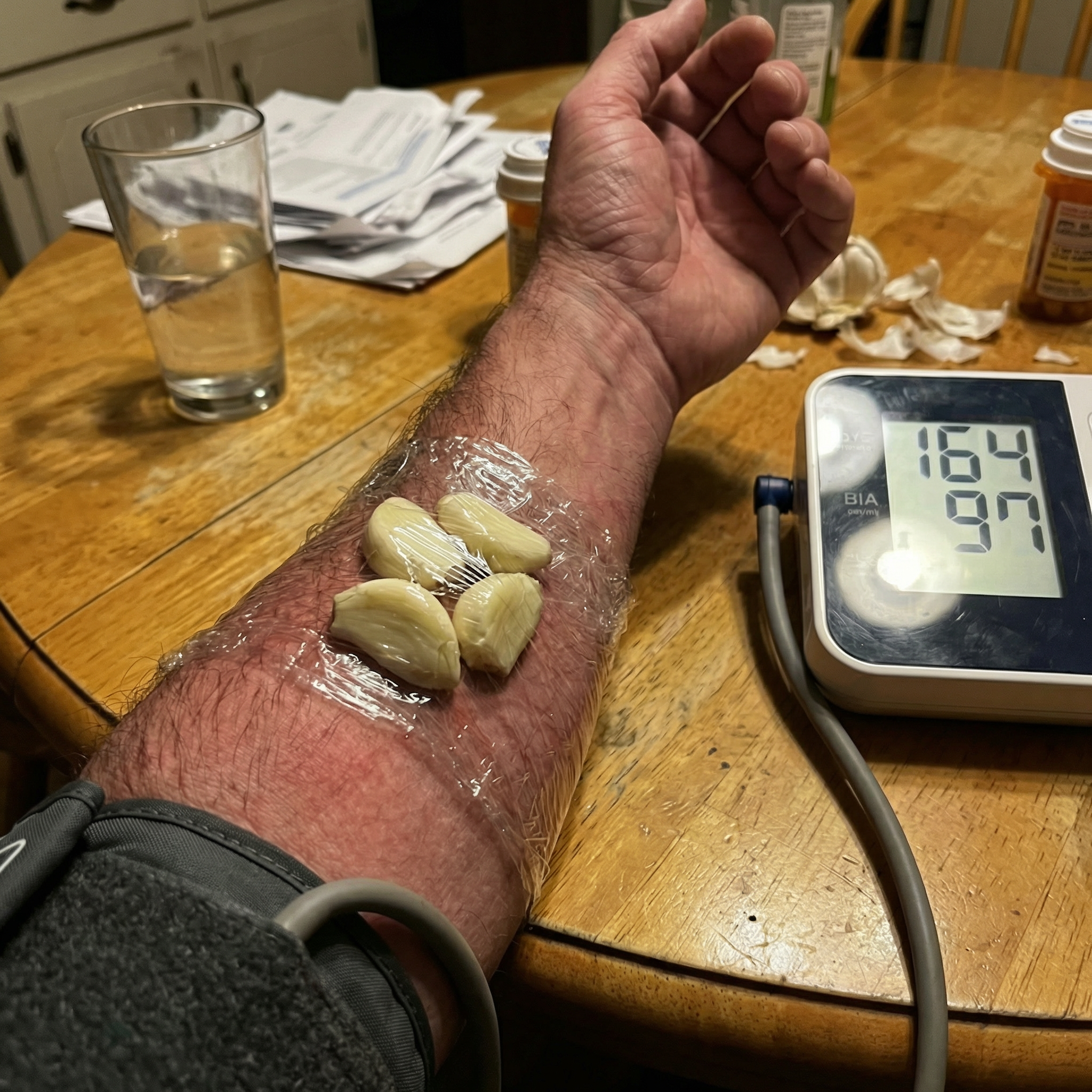
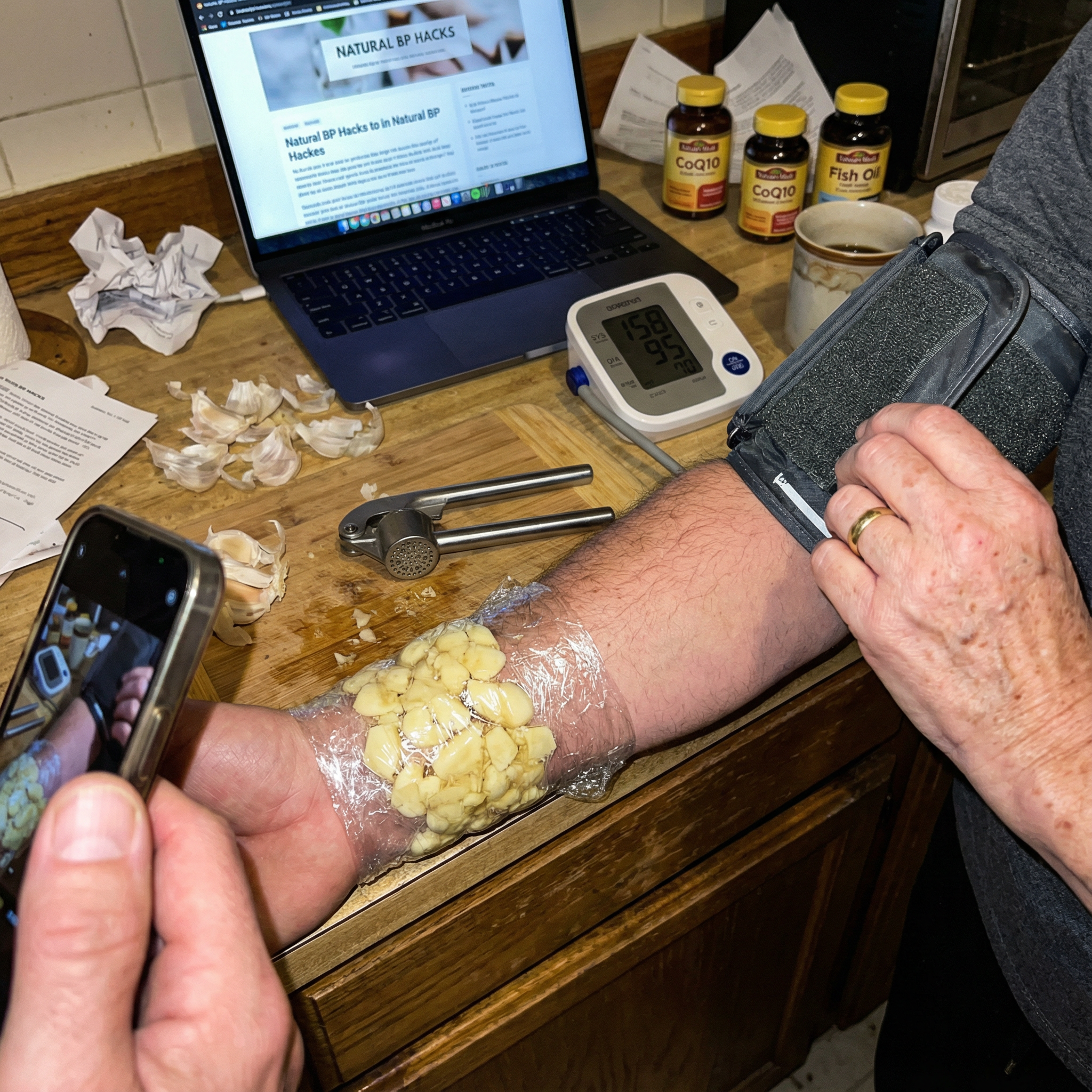
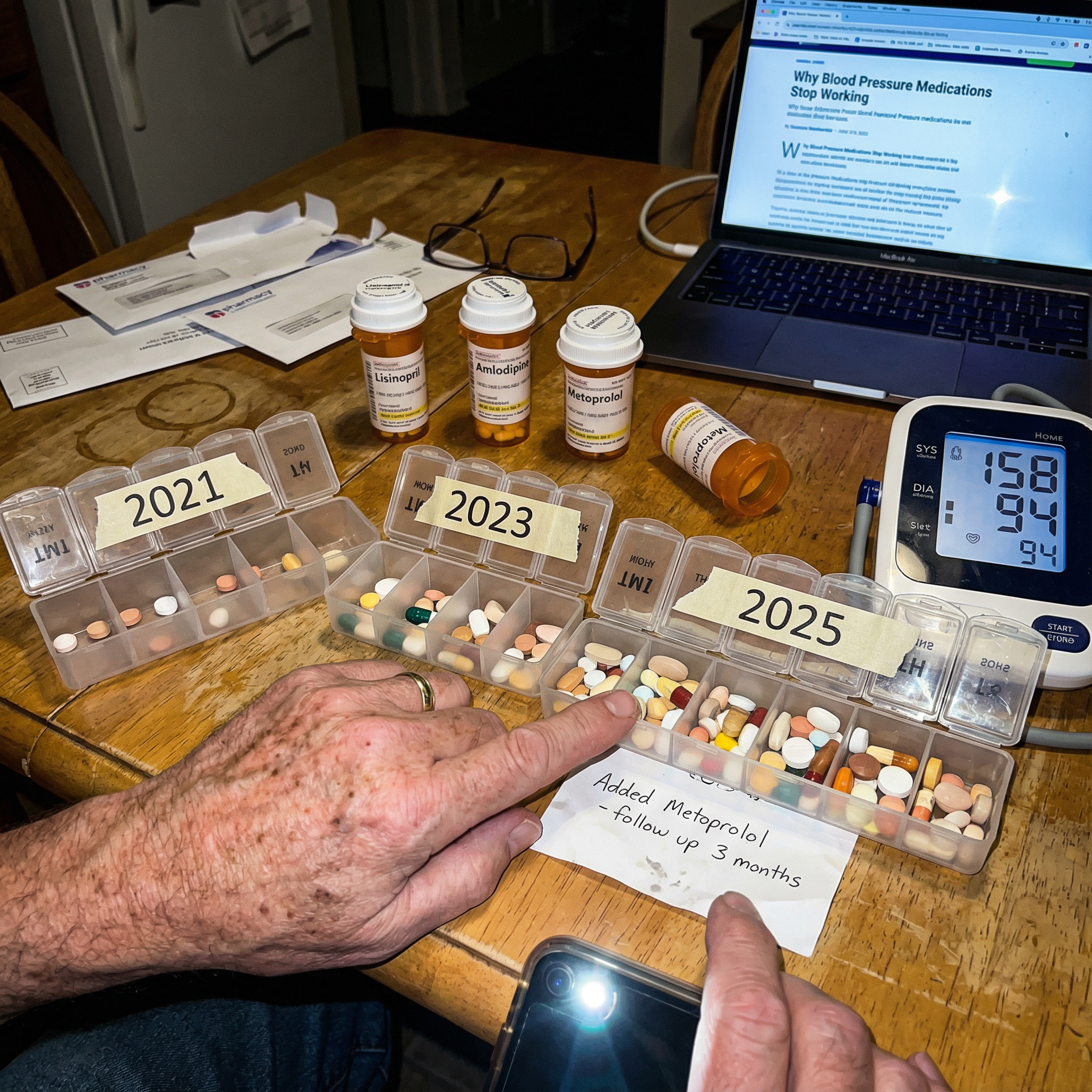
I stopped taking Metoprolol after 10 years. Two weeks later I felt 20 years younger. My doctor had no explanation. I was sitting in the exam room last month when Dr. Stevens pulled up my chart. "Your pressure's still running high. 158 over 94. We're going to add Metoprolol to your regimen." I nodded. Like I always do. He was already typing the prescription when something made me ask: "When do I get to stop taking these?" He stopped typing. Looked at me. "Stop taking them?" "Yeah. When does my blood pressure... fix itself?" The look on his face told me everything. "Mr. Mitchell, hypertension is a chronic condition. These medications manage it. You'll need to stay on them." "For how long?" Silence. Then: "Indefinitely." That word hung in the air like a death sentence. I'm 62 years old. I run four times a week. I eat oatmeal for breakfast. I haven't smoked in 30 years. Three years ago, my doctor put me on Lisinopril because my BP was 168/96. It brought my numbers down to around 155/90. A year later, he added Amlodipine because "we need to get it lower." Now Metoprolol. Three medications. And my pressure is still 158/94. Higher than when I started on one pill. That night, I couldn't sleep. Not because I was worried about my blood pressure. Because I was doing math. I pulled out all three prescription bottles and laid them on the kitchen table. Lisinopril 20mg. Started at 10mg. Amlodipine 10mg. Started at 5mg. Metoprolol 50mg. Brand new. Linda came downstairs at 2:15 AM and found me sitting there with a calculator. "What are you doing?" "Calculating how much money I'm going to spend on these for the rest of my life." Three prescriptions. $47/month after insurance. Times 12 months. Times 20 years if I'm lucky. $11,280. "And that's if they don't add more," I said. "Which they will. Because that's apparently how this works." Linda sat down across from me. "Bobby, you need those medications." "Do I? Because I've been taking them for three years and my doctor just added a third one. When does it end?" She didn't have an answer. Neither did I. I started googling at 2:30 AM. Not "how to lower blood pressure naturally." I'd tried that already. Fish oil. CoQ10. Magnesium. Beetroot powder. All useless. I searched: "why do blood pressure medications keep increasing" "do blood pressure meds stop working over time" "pharmacological dependency" That last one opened a door I didn't know existed. I found a research paper from UCLA. The title made my stomach drop: "Long-term ACE Inhibitor Use and Progressive Arterial Stiffness: A 10-Year Longitudinal Study." I'm an engineer. I understand systems. And what I read made perfect sense in the worst possible way. Blood pressure medications work by forcing your arteries to relax. They don't heal anything. They don't fix anything. They just force the pressure down chemically. But here's what nobody tells you: When you force your arteries to relax with drugs, they stop doing it on their own. The natural mechanisms shut off. Your body forgets how. It's like using a crutch for so long that your leg muscles atrophy. Eventually, you can't walk without the crutch anymore. The UCLA study tracked patients on long-term blood pressure medications. Every single one showed decreased arterial flexibility over time. Their arteries were getting stiffer. Which meant higher natural blood pressure. Which meant higher medication doses. Which meant stiffer arteries. The researcher wrote one sentence that I must have read ten times: "Current hypertension protocols may inadvertently create the progressive dependency they seek to manage." Translation: The medications were designed to trap you. I sat there at 3:47 AM with this study open on my laptop, and something inside me broke. Not panic. Rage. My buddy Jim was on blood pressure medication for fifteen years. Model patient. Never missed a dose. They kept adding medications. Adjusting dosages. He dropped dead at 59 mowing his lawn. And I thought: What if he spent fifteen years making his arteries stiffer? What if the thing that was supposed to save him was killing him slowly? I kept reading. The UCLA researcher referenced another study in his footnotes. Something about Japanese fishing villages and cardiovascular health. I clicked through. This one was from Hiroshima University. They'd been studying elderly men in remote coastal villages. Men in their 80s who had arterial flexibility comparable to American men in their 40s. No medications. No prescriptions. No hypertension. The researchers spent years trying to figure out why. It wasn't genetics. They tested that. It wasn't diet. These men ate fish and rice like everyone else in Japan. It wasn't exercise. They were fishermen, but not unusually active. It was something they'd been consuming daily for their entire lives. Something their grandfathers consumed. And their great-grandfathers. Aged garlic extract. I almost closed the tab. Garlic? I'd tried garlic pills from Costco two years ago. They gave me garlic breath so bad Linda wouldn't kiss me. And my blood pressure didn't budge. But I kept reading because I had nothing left to lose at 4:23 AM. This wasn't regular garlic. These villages had a 2,000-year tradition of aging garlic in ceramic crocks for exactly 24 months before consuming it. Not fresh. Not cooked. Fermented. The aging process transforms the molecular structure completely. Raw garlic contains allicin—harsh sulfur compounds that get destroyed by stomach acid. That's why garlic pills don't work. But 24-month fermentation converts allicin into something called S-allylcysteine. This compound has 98% bioavailability. It actually makes it into your bloodstream intact. And here's what made me sit up: It doesn't force your arteries to relax. It's like physical therapy for your cardiovascular system. Medications hold your arteries in a relaxed position 24/7—like propping a door open until the hinges rust and stop working. This compound teaches your arteries to flex naturally again—like oiling the hinges so the door opens and closes on its own. It repairs the damage that makes them stiff in the first place. I found the Stanford study at 5:11 AM. They compared aged garlic extract to Lisinopril in a controlled trial. Same blood pressure reduction. But the arterial flexibility measurements told a completely different story. The Lisinopril group showed decreased flexibility over 12 months. Their arteries were getting stiffer despite lower blood pressure readings. The aged garlic group showed IMPROVED flexibility. Their arteries were getting younger while their pressure came down. I stared at that graph for probably ten minutes. One solution forces your arteries down while making them weaker. The other repairs your arteries while restoring natural function. One creates dependency. The other creates freedom. Linda found me still at the kitchen table when she came down at 6:30. "Did you sleep at all?" "No. But I found something." I showed her the studies. The Japanese villages. The Stanford research. "Over 900 published papers on this," I said. "And not one doctor ever mentioned it." "Why?" I pulled up the Stanford researcher's conclusion. He'd written one paragraph that explained everything: "Despite compelling evidence of efficacy, aged garlic extract remains largely absent from clinical practice. The compound cannot be patented as it is traditional knowledge. The 24-month production cycle offers minimal profit margins. No pharmaceutical representative educates physicians on its use. It directly threatens a multi-billion dollar market for synthetic alternatives." Linda looked at me. "They buried it." "They buried it," I said. I found a brand that actually did the full 24-month aging process. Most companies cut corners. Six months, maybe twelve. Not enough time for the molecular transformation to complete. This brand was called Louma. Full 24 months. 7500mg per serving. I ordered three bottles that morning without telling my doctor. What was I going to tell him? That I found research at 4 AM that contradicted his entire treatment protocol? I started taking it on a Tuesday. Didn't stop my medications yet. Just added it. Week one: Nothing. BP still 158/94. Week two: 154/91. Could be normal variation. Week three: 149/87. I started paying attention. Week five: 142/84. Week seven: 136/81. Lower than it had been on three medications. That's when I did something probably stupid. I stopped taking the Metoprolol. Week eight: 138/82. Still good. Week nine: I stopped the Amlodipine. Week ten: 141/83. Week twelve: I stopped the Lisinopril. Week thirteen: 139/80. My appointment with Dr. Stevens was last week. He pulled up my chart and his eyebrows went up. "Your home readings have been excellent. The Metoprolol is working well." "I'm not taking the Metoprolol," I said. He looked at me. "I'm not taking any of them. Haven't for six weeks." His face went from confused to angry in about two seconds. "Mr. Mitchell, that's extremely dangerous. You can't just stop—" "My pressure is 136 over 79," I said. "Lower than it's been in three years. On three medications it was 158 over 94." Silence. "What are you taking instead?" I told him about the aged garlic extract. The Stanford study. The arterial flexibility research. He pulled it up on his computer. Read for maybe two minutes. Then: "I'm not familiar with this." "I know," I said. "That's exactly the problem." It's been four months now. My blood pressure this morning was 133/77. No medications. No side effects. No progressive dosing. But here's what really changed: I don't feel trapped anymore. Every morning I used to look at that pill organizer and think: This is forever. Now I wake up and think: I'm free. Linda says I'm different. "Lighter," she says. She looked at me last week and said something that hit me hard: "I feel like I got my husband back. Not the patient. You." Because I am. My arteries are literally getting younger. My last test showed arterial age reversed by 14 years. Not just managed. Not just controlled. Reversed. I'm not a doctor. I can't tell you to stop your medications. But I can tell you what I found at 2 AM when I couldn't sleep. There's a system designed to keep you dependent. Progressive dosing every 8-12 months indefinitely. Your dosages always go up, never down. Because the medications force your arteries into a fixed position while making them progressively stiffer. Which requires more medication. Which makes them stiffer. It's not a side effect. It's the business model. And there's research—over 900 published studies—showing there's another way. A way that actually repairs your arteries instead of just forcing numbers down. A way that teaches your cardiovascular system to work naturally again instead of holding it in place with drugs. A way that doesn't require you to be a customer for life. The brand is Louma. They're one of the few that does the full 24-month aging at 7500mg. Most companies cut corners. Six months instead of 24. The molecular transformation doesn't complete. You won't hear about this from your doctor. Not because it doesn't work. Because it can't be patented. Because it threatens an $18 billion medication market. Because no pharmaceutical rep is walking into clinics educating doctors about something that gets patients OFF prescriptions. They have a 30-day guarantee. I can't tell you what to do with this information. But I can tell you I asked my doctor one simple question and it changed everything. And I'm never going back.
Where the ad sends people
trylouma.com
If You Have High Blood Pressure Read This 👆
Louma makes 24-month aged garlic, using an ancient Japanese technique.
Learn more: trylouma.com(opens in a new tab)