
Inactive· since Apr 22, 2026
- 35
- days it ran
- 3
- relaunches
Ad copy
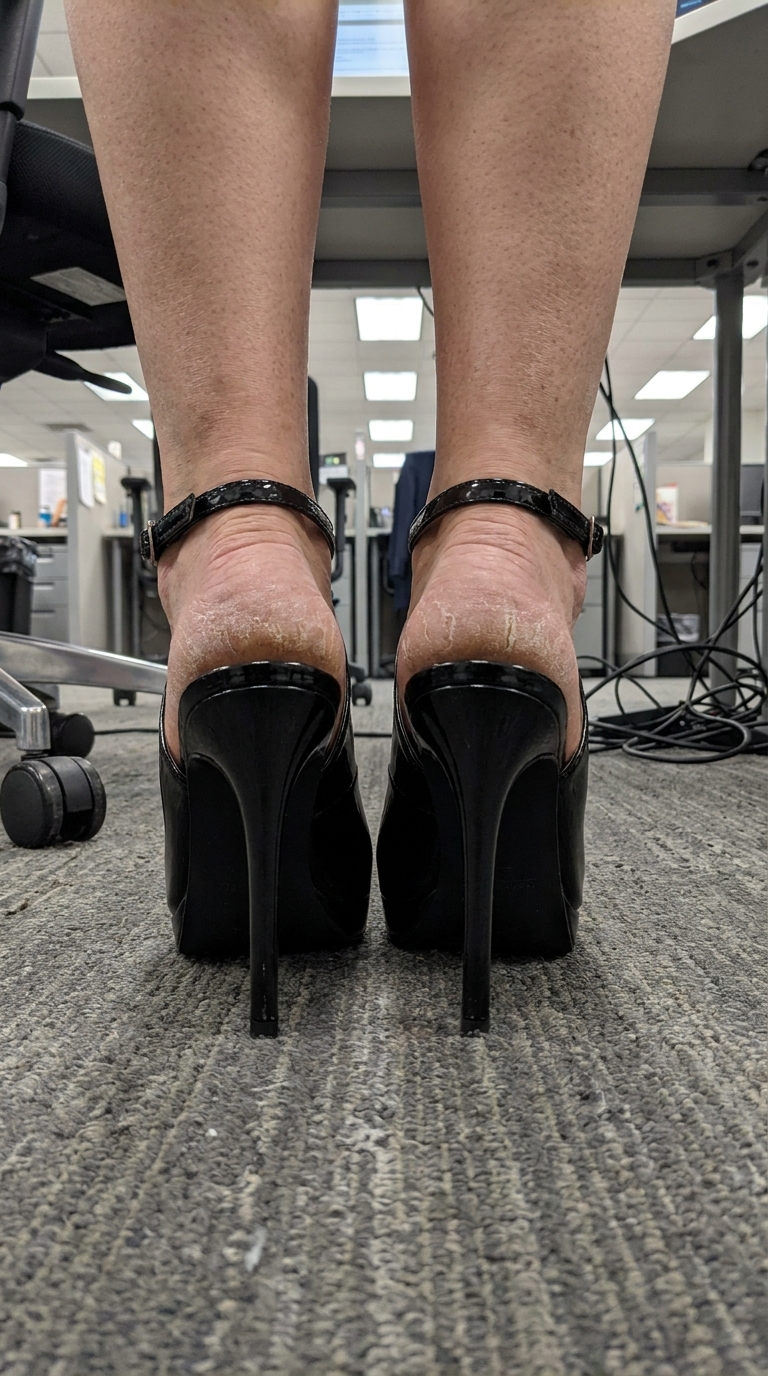
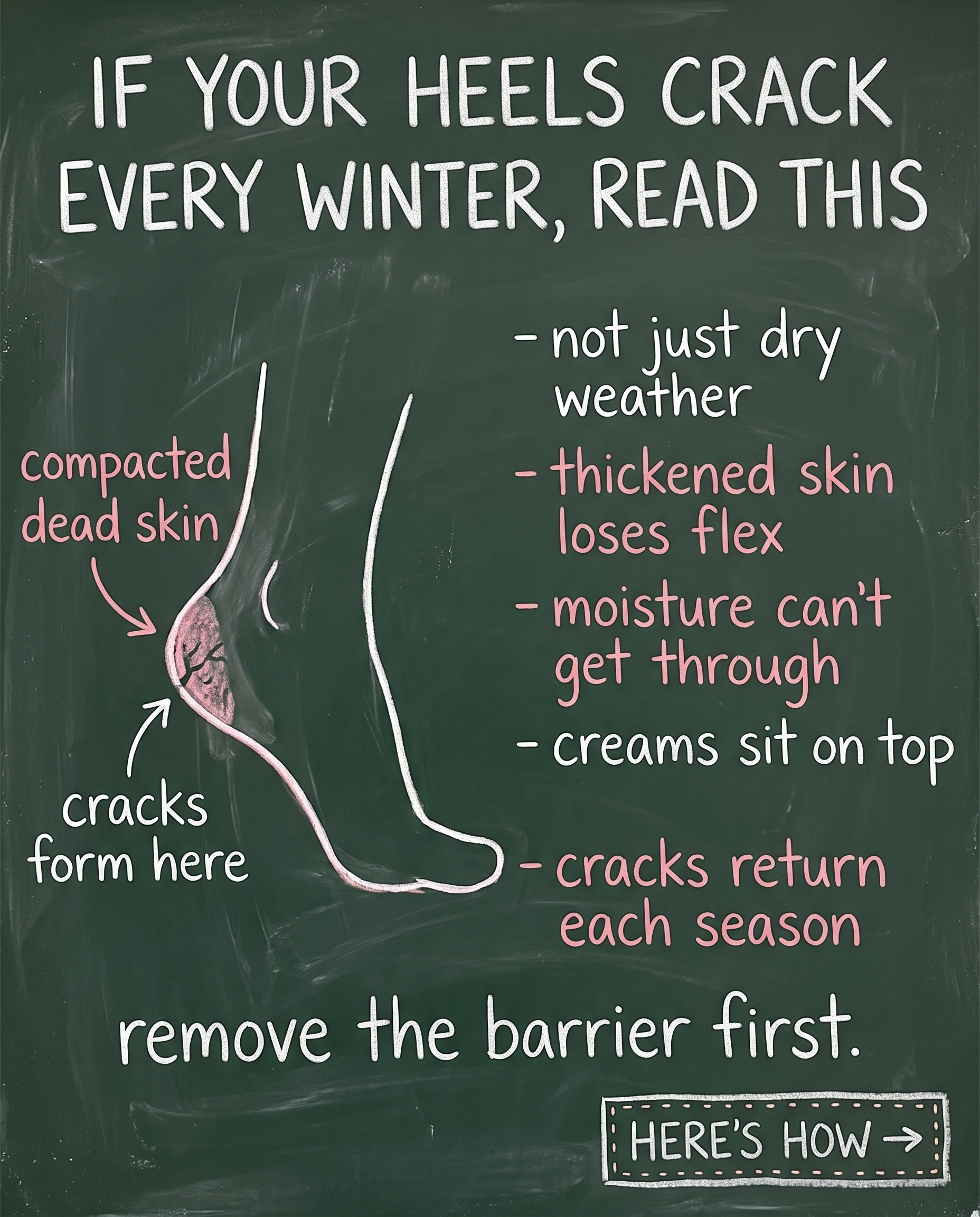
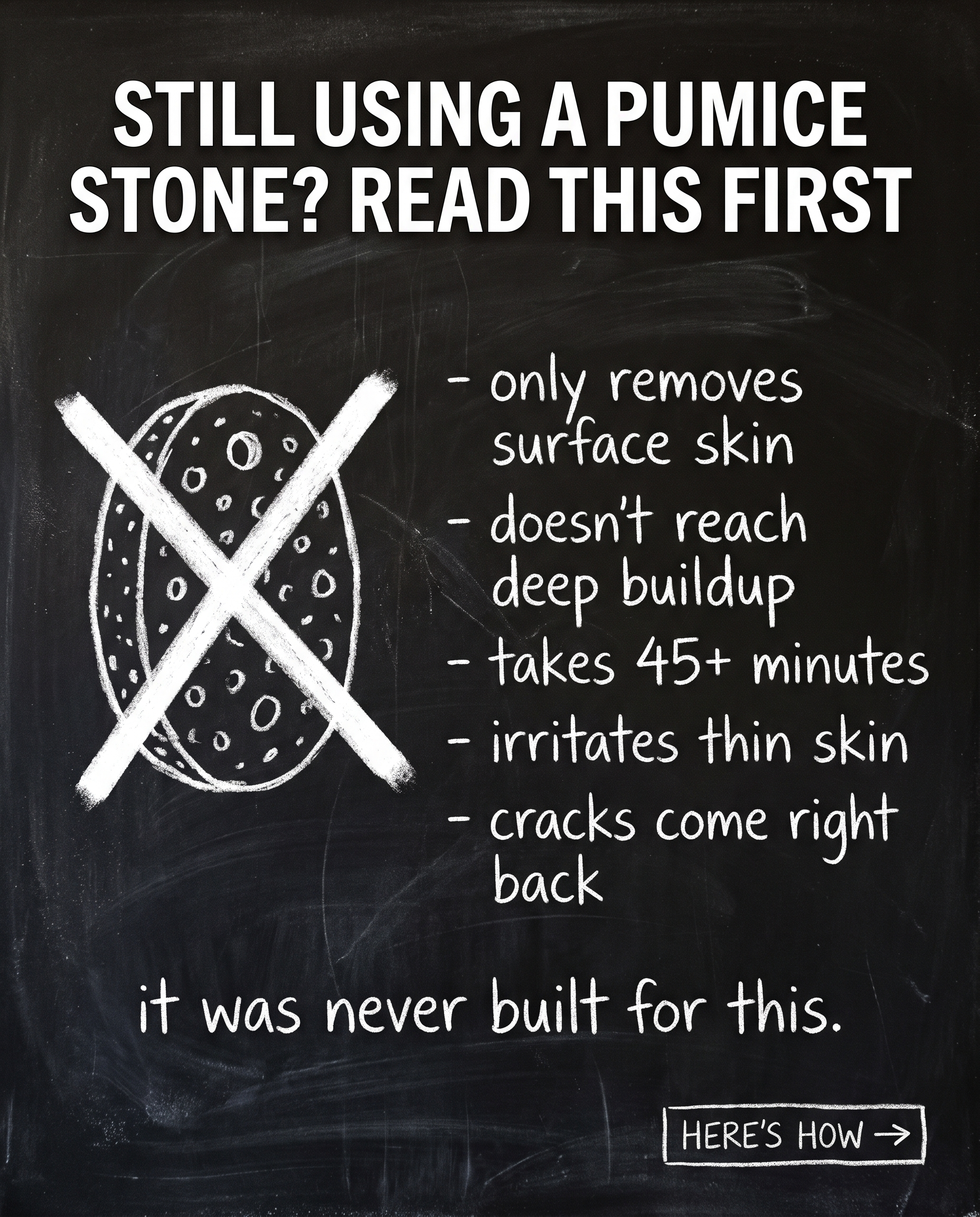
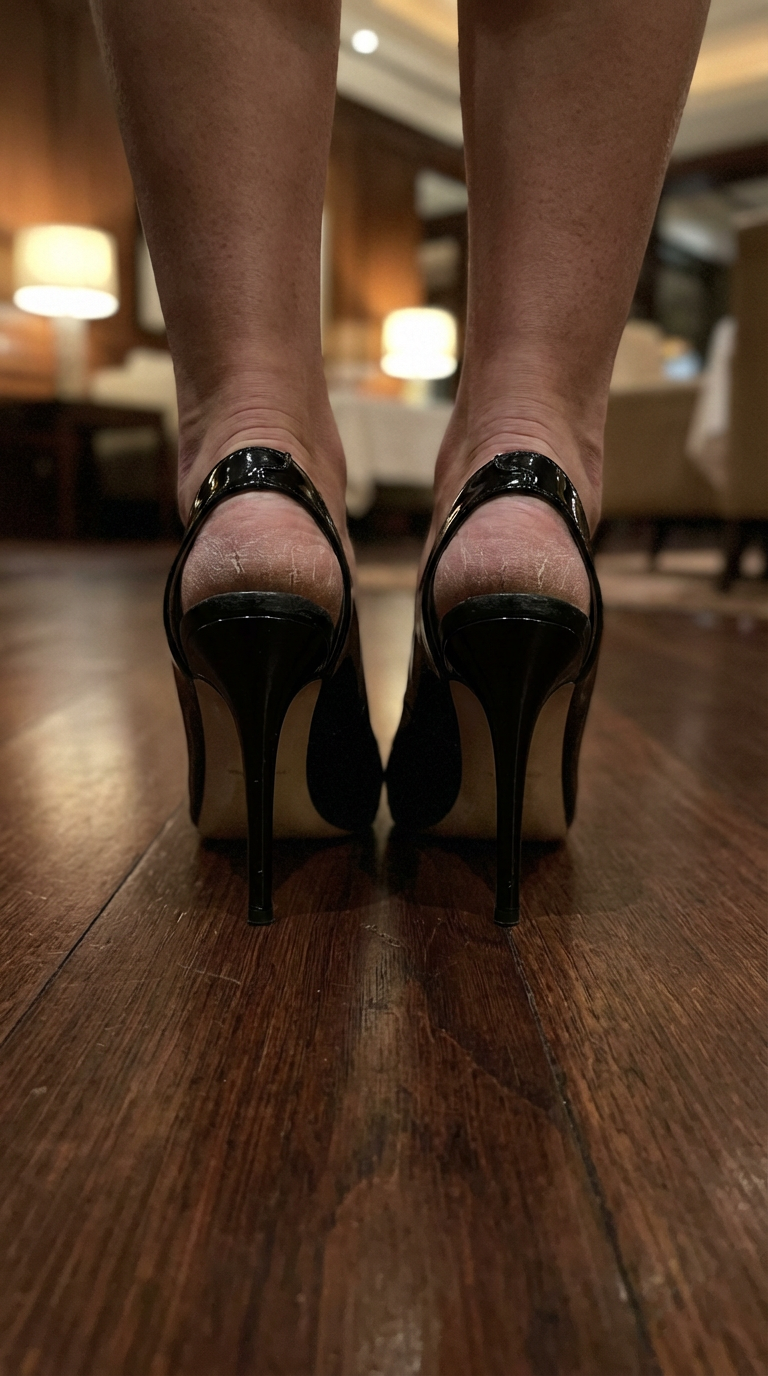
This was the last time I wear stiletto heels. Not because they didn't fit. Not because they weren't beautiful. Because every time I put on a pair of heels and walked out the door, I knew exactly what was visible from behind. And I couldn't stop thinking about it. My name is Aubrey Hayes. I'm 38. I'm a sales director in Chicago. I have been in heels four days a week for the last thirteen years — client meetings, presentations, dinners, conferences, the kind of career where how you show up physically is part of how seriously you're taken. I have cracked heels. I have had them since I was thirty-one. Not mild dryness. Not the kind you fix with a night cream and some socks. The kind that splits along the outer edge of your heel when you've been standing too long. The kind that catches on stockings and ruins them before a meeting. The kind that, in open-backed heels — the ones that go with everything, the ones every woman in my office wears — is visible to every single person standing behind you. I know because I saw it in a photo. It was from a company event. March 2021. I'm standing at the front of the room presenting quarterly numbers to the executive team. The photographer was behind me. In the photo — which ended up in the company newsletter, which I found out about three days later — you can see my heels in my slingbacks. Cracked. Dry. Yellow around the edges. I looked at that photo for a long time. I didn't say anything to anyone. I just went home that night and stood in my bathroom staring at my feet trying to understand how I had let this happen. I am meticulous about my appearance. My clothes are pressed. My nails are done. I spend forty-five minutes getting ready every morning. And my heels — the thing most visible in the shoes I wear every single day — looked like I'd been walking barefoot on gravel for a decade. I started buying things that weekend. O'Keeffe's Healthy Feet first. Everyone recommends it. I did the nightly routine for six weeks without missing a single night. Cream on, heavy socks, sleep, wake up, check. My heels felt slightly better at 7 a.m. By the time I got to the office they were dry again. The problem wasn't hydration. I didn't know that yet. Then Kerasal Intensive Foot Repair. The tube claimed overnight results. I used it for a month. Same cycle — slightly better in the morning, completely dry by afternoon, cracked edges unchanged. Then a urea-based prescription cream from my dermatologist. Forty percent concentration. Clinical grade. Sixty-two dollars for a small tube. I used it diligently for eight weeks. The surface texture improved slightly. The deep buildup — the compacted layers of dead skin that had been accumulating for years — didn't move. The pumice stone came next. I had resisted it because it felt low-tech and slow. I tried it anyway. Standing in the shower every morning, one foot propped on the edge of the tub, scrubbing until my arm tired. I could feel the stone working on the surface. I stepped out of the shower, dried off, slipped on my heels, and by midday the rough patches were back. The stone was polishing the top of the buildup. The buildup itself was untouched. I moved to a professional-grade metal foot file. Three tools in before I understood none of them were reaching the actual problem. The file shaved the surface. It went dull in two weeks. I bought a replacement. Same result. Dull in two weeks, replaced, same result. I went through four of them in eight months. I tried a Ped Egg. The little grater-style device that fills up with skin and makes you feel like you accomplished something because you can see what came off. I used it for three weeks. Satisfying. Pointless. The deep callus remained completely intact beneath whatever surface the Ped Egg could reach. I tried a Baby Foot chemical peel. Wore the plastic booties for an hour, waited, watched my skin shed for a week. My assistant asked if I was okay. The skin underneath: raw, uneven, patchy, and already rebuilding the callus within three weeks. I did it again four months later. The callus came back harder and faster than before. I went to a nail salon. Fifty-five dollars. The technician soaked my feet, used a callus scraper and metal file, worked on the rough areas for thirty-five minutes. My feet looked different walking out. Smooth. Wearable. I went to work the next day in open-back heels for the first time in months. Four days later, the calluses were back. I did the math: to maintain that result consistently, I needed to go every two weeks. That's $1,430 a year, minimum, for a result that lasted four days per visit. And every visit was another thirty-five minutes of a stranger looking at my feet and saying nothing but clearly noticing everything. I went six more times and stopped. Not because of the money. Because it wasn't fixing anything. I started choosing shoes differently. Closed-back pumps instead of slingbacks. Block heels instead of stilettos. Anything that put material between my heel and open air. My shoe budget had been spent on heels I wore twice before understanding they'd show the problem — and on replacements that hid it instead. That's where the $3,800 went. Not on beautiful shoes. On shoes that covered what I was ashamed of. My colleague Jamie noticed. We'd worked together for four years. She's the same age. She wears heels every day. I had never noticed her feet — which, I realized, was the point. I noticed mine because mine were a problem. Hers weren't. We were at a client dinner in November. She was wearing open-toed heels. Her heels looked normal. Smooth. No cracks. No rough edges. No yellowing. I waited until the client left. "Jamie. Your feet. What do you do?" She laughed. "My feet used to be horrible. Worse than yours. I promise." She told me she'd found something online. A small electric device. She'd been skeptical — she'd tried everything too — but her sister had ordered one and the results were good enough that Jamie ordered her own. "It removes the dead skin properly. Not the surface. The actual buildup. Like, years of it. In five minutes." "I've tried electric foot files," I said. "They didn't do anything." "This one's different. The motor is stronger. And there's a pressure sensor — it stops automatically if you press too hard. So you can't hurt yourself. I do it on my couch on Sunday nights. Literally five minutes. I haven't been back to a nail salon in seven months." I wrote down the name on my phone under the table. Nuvé Silk 3 Pro. I did not order it that night. I am not an impulsive buyer. I went home, looked it up, and spent forty minutes reading reviews before I touched the checkout button. What stopped me from dismissing it — what made me keep reading — was that the reviews didn't sound like marketing. They sounded like me. "I have tried many tools to get rid of the calluses and dry areas on my feet and absolutely nothing has worked until now." "My feet were in such a state that no foot file or pumice stone could sort out. One use of this and my hard cracked heels are gone." "I've tried every heel device out there. This sander works and made my heels baby soft. Miracles do happen." "My feet haven't been this soft since I was a child." "I was skeptical buying this on Instagram but this thing really works. So much smoother. Don't hesitate, just buy it." Nearly 3,000 reviews. 4.9 stars. The same arc every time: tried everything, didn't expect this to be different, shocked that it worked. I ordered it. nuvebrand.com/silk Free shipping. 100-day money-back guarantee. If it was another thing that didn't work, I'd return it and move on. It arrived in four days. Two roller heads in the box — coarse and fine, clearly labeled. USB rechargeable. Already charged when I opened it. I sat on my bathroom floor on a Tuesday night with a white towel beneath me. I attached the coarse head. I turned it on. The motor was different from anything I'd used before. Not the hollow plastic whir of a cheap battery device. Solid. Consistent. I pressed it against my heel — lightly, the way you'd test something you didn't entirely trust yet. Dead skin came off like powder. Not flakes. Not strips. Fine white dust, drifting down onto the towel in a slow, even fall. Years of compacted buildup — the layers that the pumice stone had polished and the foot file had scraped the top off and the cream had sat on top of and the salon had surface-reset for four days — lifting off evenly, without pain, without effort, without my arm doing anything at all. I pressed slightly too hard at one point. The motor stopped. The pressure sensor cut out automatically. I released. It restarted. I understood immediately why Jamie had mentioned that detail. It's the thing that makes you trust it. Five minutes on my right heel. Five minutes on my left. I put it down on the towel and ran my thumb across my heel. I sat there for a moment not saying anything. Smooth. Not salon-smooth-for-four-days. Not slightly-improved-smooth. Smooth like skin. Actual skin. The deep ridge along my outer heel, the one that had been visible in the company newsletter photo three years ago — gone. The thick callus along the ball of my left foot — the one I'd felt every time I wore pointed heels and it pushed against the seam — gone. The rough, yellowed edge that caught on stockings — gone. I put moisturizer on. It absorbed immediately. Completely. Not sitting on the surface, not doing nothing. Going in. For the first time in seven years, there was nothing on top to block it. I understood then what none of the products had ever explained to me: the creams were never going to work. Not because they were bad products. Because they were sitting on top of a layer of dead, compacted skin that couldn't absorb anything. You cannot moisturize a callus. You have to remove it first. Then moisturize. That's the order. Nobody told me that for seven years. The pumice stone polishes the outside of that layer. It cannot get through it. The foot file shaves the surface. It goes dull. It can't maintain even contact on a curved heel. The chemical peel strips the top off. The callus rebuilds in three weeks from the same pressure and friction that caused it. The salon removes it mechanically — properly, the same way the Nuvé does — but charges $55 for a result that lasts four days and requires you to do it again in two weeks forever. The Nuvé removes it in five minutes. Once a week. On your couch. And then the moisturizer you've been applying for years actually reaches the skin it was meant for. That was eight weeks ago. I use it every Sunday. Five minutes per foot while I watch something on my phone. Moisturizer after. Done before my tea gets cold. Three weeks in I wore slingbacks to a client presentation. Open back. Low heel. The kind I'd avoided since the newsletter photo. I did not think about my feet once during that meeting. I got a compliment afterward — one of those sideways compliments that women give each other that contain more information than they appear to. A colleague said, "I love those shoes on you." She was looking at my feet. I know exactly what she was actually saying. → Cracked edges that split open when you've been standing too long and sting through the afternoon → Rough skin that catches on stockings and runs them before 9 a.m. → Calluses that are visible from behind in open-backed heels → Dry, yellowing buildup that no cream has ever touched → The tight feeling in your heel at the end of a long day that you've learned to ignore → Skin that sheds after a chemical peel and rebuilds in three weeks → Salon results that dissolve in four days and bill you $55 each time → Shoes you stopped buying because you know they'll show the problem This is not a dryness problem. Dryness is a symptom. The root is buildup — compacted layers of dead skin cells that have accumulated under years of pressure and friction and lost the ability to shed naturally. Creams cannot penetrate that layer. They sit on top of it. You have been moisturizing dead skin. It's like painting a wall that hasn't been sanded. The only fix is mechanical removal. Controlled, even removal of the dead layer — all the way down to live skin — so that the moisturizer you already use can finally reach the tissue that actually needs it. That is what the Nuvé Silk 3 Pro does. Micro mineral rollers at 2,000 RPM. Not scraping. Not shaving. Buffing. The dead skin lifts off as fine powder. Live tissue underneath is untouched. The automatic pressure sensor stops the motor if you push too hard — so you cannot over-file, even by accident. Coarse head for deep buildup. Fine head for weekly maintenance. Rechargeable. No batteries. Five minutes. Once a week. The pumice stone cannot reach the depth of the problem. I used one for three years. The foot file goes dull before your heels do. I replaced mine four times in eight months. The cream cannot penetrate the layer it's sitting on top of. I have six half-used tubes in my cabinet. The salon fixes it for four days and charges $55. I spent seven months going regularly and nothing changed structurally. The Nuvé removes it. Permanently. In five minutes a week. And you have 100 days to decide. If it doesn't work, return it. Full refund. No questions. No forms. No process. But it will work. Because the problem — the actual problem, not the symptom — has finally met the right tool. nuvebrand.com/silk Nuvé Silk 3 Pro. Free shipping. 100-day money-back guarantee. Less than one salon visit. Less than the pumice stone and the foot file and the urea cream and the chemical peel and the stockings you ruined combined. And unlike all of those — this one actually removes the thing that was blocking everything else. Claudia Reeves, 38, Chicago. Three years of avoiding heels that showed my feet. Eight weeks of wearing exactly what I want. P.S. — Jamie told me last week that three other women in our office have ordered one after seeing my feet at that presentation. I didn't tell them what happened. They asked me. That's the kind of proof that doesn't come from an ad. P.P.S. — I am not paid by Nuvé to say this. I found out about it from a colleague at a client dinner and spent forty minutes reading reviews before I ordered. I paid for it myself. After $3,800 in shoes I bought to hide a problem and seven years of products that didn't fix it, I would have paid five times what they charged. You have 100 days to try it at no risk. I wish I'd had that option seven years ago.
Like this ad? Make it yours.
Crush rebuilds this exact creative around your product — your brand, your colors, your offer — in about a minute.