
Inactive· since May 19, 2026
- 40
- days it ran
- 4
- relaunches
Ad copy
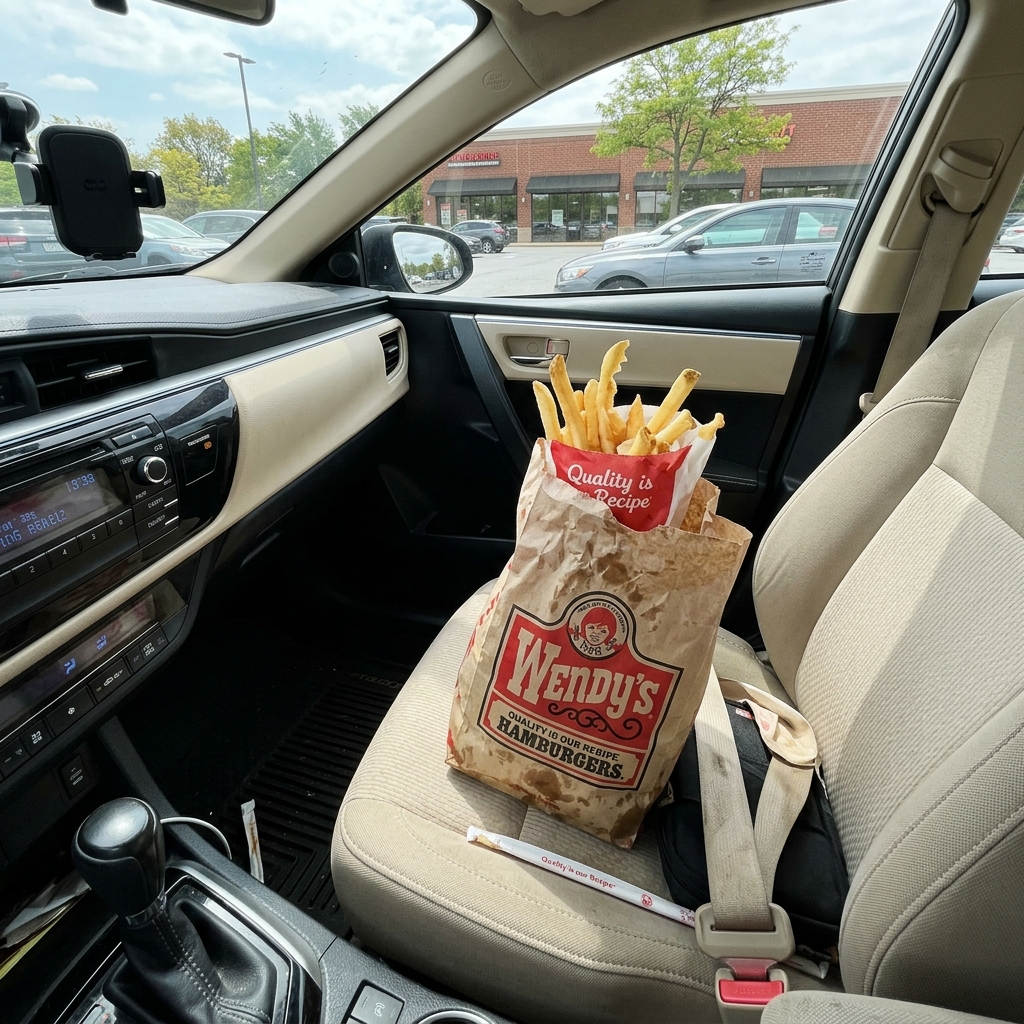
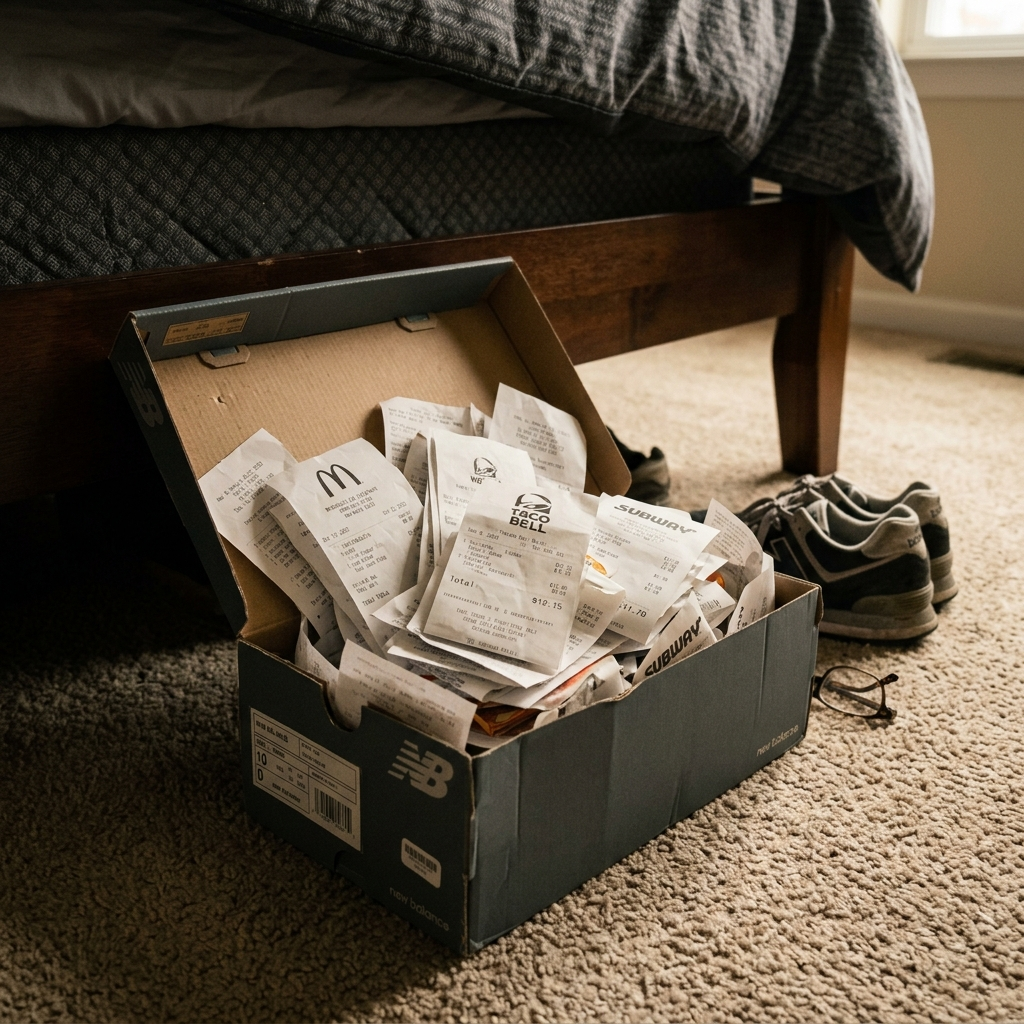
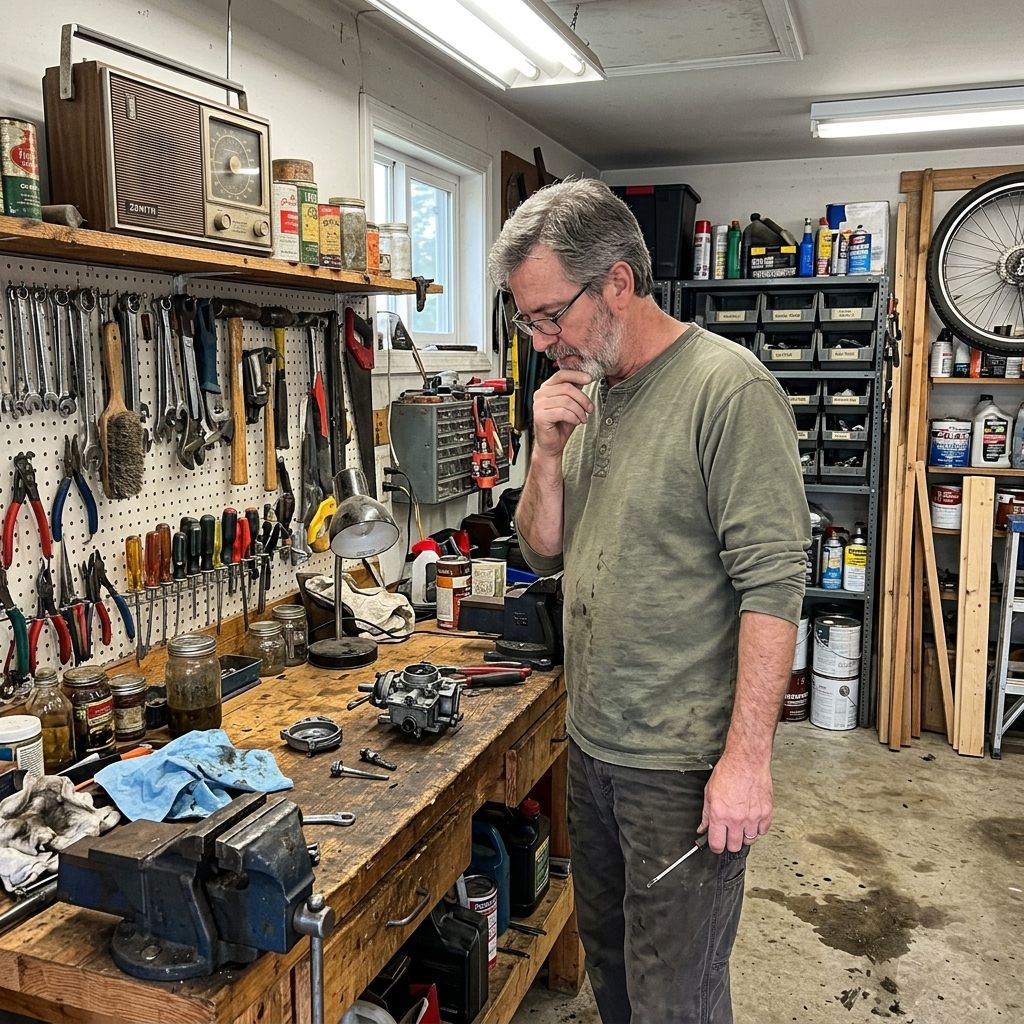
I found her receipts in a shoebox under the bed. Not love letters. Not photos from before we got married. Receipts. Wendy's, McDonald's, Arby's, that gas station fried chicken place off the interstate. 7 months of them. Folded up small and stuffed into an old New Balance box where she used to keep tax stuff. I sat on the edge of our bed and counted them. 84 receipts. Some of them had two meals on them. She'd been eating in her car. My wife. My Bev. The woman who packs me a salad every day for work and texts me when I forget my water bottle. I'm 54. I work for the city of Spokane doing road maintenance, which is a fancy way of saying I patch potholes and run a plow in the winter. Bev is 52 and she works at the public library downtown. We've been married 27 years this June. We've got two kids, both grown, both moved out, both doing fine. Our youngest, Caleb, is in Pullman doing something with computers that he's tried to explain to me four times and I still couldn't tell you what it is. We were supposed to be in our good years. The kids are out. The mortgage is almost done. We bought a little camper last spring and we've been talking about driving it down to the Oregon coast in September. And she was eating fried chicken in her car at lunchtime and hiding the receipts from me. I want to tell you why I was looking under the bed in the first place but I have to back up. About a year ago, Bev started getting these headaches. Not migraines, just dull throbbing ones that wouldn't go away. She'd come home from work and put her head down on the kitchen table and just sit there with her eyes closed. I'd rub her shoulders and she'd say she was fine, just tired. Then she started getting tired in a way that wasn't normal. She'd nap on Saturdays. Bev never napped. This is a woman who used to do a 5K every September and finish in the top 10 for her age group. She'd be asleep on the couch by 7:15 PM with a book on her chest. I asked her if she was okay. She said it was perimenopause. I didn't know what to say to that because I'm a man and I don't know anything about it, so I just kind of nodded and let it go. Then in February she had her annual physical and came home crying. I was in the garage when she pulled in. She sat in the driver's seat for a long time before she got out. When she came in she had her coat still on and her keys still in her hand and she just stood in the doorway of the garage and said, "It's bad." Her cholesterol was 287. Her LDL was way up. Her triglycerides were what the doctor called "concerning." He'd told her she needed to start a statin and probably a second medication for blood pressure and she needed to come back in 3 months for another draw. She was 52 years old and her doctor told her she was going to have a heart attack before she was 60 if something didn't change. I sat with her at the kitchen table and we cried. I'm not a crier. I cried at my dad's funeral and I cried when Caleb was born and that's about it. But I cried that night. Because Bev is the one who keeps us alive. She's the one who makes sure I take my multivitamin. She's the one who pushed me to quit chewing tobacco in 2018. She's the one who reads the labels at the grocery store and won't let me put anything with high fructose corn syrup in the cart. And her numbers were worse than mine. Mine were fine. How was that possible? She told the doctor she ate clean. She told the doctor she walked 3 times a week. She told the doctor she didn't drink, didn't smoke, didn't snack between meals. The doctor looked at her chart and looked at her and said, "Sometimes it's just genetics." So she started the statin. She started a low dose blood pressure med. She doubled down on her vegetables and her salmon and her walks. She bought a Fitbit. She set alarms to drink water. And nothing changed. In May they ran the bloodwork again. Her cholesterol was 281. Barely budged. Her LDL was almost the same. The doctor upped her statin dose and added a second medication. She started feeling worse. The statins gave her muscle aches. The blood pressure pill made her dizzy when she stood up. She'd get out of bed in the morning and have to grip the dresser for a minute before she could walk to the bathroom. She started snapping at me. Bev never snaps. She'd ask me to take out the trash and I'd say sure and she'd say, "Now, please, not in an hour." Things like that. Little things. But it wasn't her. I figured it was the medications. I figured she was just frustrated. I had no idea what was actually happening. The shoebox came on a Tuesday in August. I was looking for a power adapter Caleb had left behind and I thought it might be in one of the bins under our bed. I pulled out the New Balance box because it was light and didn't sound like it had cables in it. I opened it. I saw the receipts. I sat down. I read the first one. Wendy's, June 14th, 12:43 PM. Baconator combo with a large fry and a Coke. $11.47. I read the next one. Arby's, June 16th, 12:51 PM. Beef and cheddar combo. Curly fries. Mountain Dew. I read the next one. Then the next one. Then the next one. There was one from the previous Tuesday. She'd called me on her lunch break that Tuesday and told me she was eating leftover soup at her desk. I sat on that bed for a long time. I'm not going to pretend I knew what to do. My first thought wasn't anger. It was confusion. Bev doesn't lie. Bev is the most honest person I know. Bev returned $14 in extra change to a cashier at Yoke's last fall because the woman had given her too much back. Why would she lie about this? And then it hit me, and I felt it in my chest before I felt it in my head. She was ashamed. She wasn't lying to hurt me. She was lying because her body wasn't responding to anything she did. She'd done everything right. The numbers didn't move. And so when she'd be sitting at her desk at the library with a salad in her bag and her stomach growling and her head pounding and her energy in the toilet, she'd get in her car and drive to Wendy's and eat a Baconator and then sit in her car in the parking lot and cry. I knew it was something like that without her telling me. I've been married to this woman for 27 years. I know how she works. I put the receipts back in the box. I put the box back under the bed. I closed the bedroom door and I went out to the garage and I sat on the workbench for I don't know how long. I didn't bring it up that night. Or the next night. Or the next. I needed to think. What I started doing instead was reading. I'd come home from work, eat dinner with her like normal, watch the news, and then once she'd fall asleep on the couch at 7:30 I'd take my laptop into the garage and I'd just read. I read about cholesterol. I read about LDL particles and HDL ratios and triglycerides. I read about statins and what they actually do and why some people respond and some people don't. I read about lipid metabolism and inflammation and oxidative stress and a bunch of words I had to Google in a separate tab. What I started to understand, slowly, over about three weeks of doing this every night, was that Bev's body wasn't broken. Her body was doing exactly what bodies do when something underneath isn't right. Her cholesterol wasn't the problem. The cholesterol was a symptom of a deeper thing. And that deeper thing was something her doctor had never mentioned. Not once. In 9 months of appointments. Oxidative stress. Free radical damage. The slow rusting of your insides that happens to all of us as we age, but happens faster in some people than in others. When your body can't keep up with the damage, the liver starts producing more cholesterol to try to patch things up. Cholesterol is actually the patch. It's not the wound. She was being given drugs to lower the patches. Nobody was talking about the wounds. I'm not a doctor. I patch potholes for the city. I know my place. But I also know that when you keep filling the same pothole over and over and it keeps coming back, the problem isn't the pothole. The problem is whatever's underneath the road that keeps cracking it open. That was Bev. They kept filling her potholes. Nobody was looking under the road. I went down a rabbit hole one night about antioxidants. The good ones. Not the multivitamin aisle at Walmart. The actual research stuff. And I kept seeing the same word over and over. Amla. It's an Indian gooseberry. People have been using it for thousands of years over there. It's one of the most polyphenol-rich foods on the planet. It's loaded with vitamin C, but not in the way an orange is. The vitamin C in amla is bound up with other compounds that keep it stable, so your body actually uses it instead of just peeing it out. The thing that caught my eye was that researchers had been looking at amla specifically for what it does to lipid metabolism. Not in the "patch the pothole" way. In the way that supports how your liver actually handles cholesterol in the first place. Amla contains compounds that have been shown to support healthy cholesterol levels that are already within a normal range, and the way it does it is by helping your body manage the oxidative stress that's behind a lot of the imbalance to begin with. It's been linked to supporting healthy LDL and triglyceride levels and helping maintain that ratio of good to bad cholesterol that doctors actually care about. But that's not what got me. What got me was reading that amla works with your body, not against it. It's not a blocker. It's not a suppressant. It's not trying to override anything. It's a supporter. It feeds your liver the things it needs to do its job properly. Bev didn't need her body overridden. Bev needed her body supported. I read about this for two more weeks before I said anything. The brand I kept coming back to was called Alevia. Their version was just called Alevia Amla. The thing that sold me wasn't the marketing, because honestly their marketing is pretty quiet. It was that their amla is sourced from a specific region in India where the gooseberries are grown the traditional way, and they don't cut it with fillers or sugar or any of the junk you find in the rest of the supplement aisle. It comes in a small dark glass bottle. Two capsules a day. That's it. I ordered a bottle on a Wednesday and it showed up on Saturday. I left it on the kitchen counter next to her coffee maker. When she came down for coffee that morning she saw it. She picked it up. She turned it over. She looked at me. I was sitting at the table pretending to read the paper. I looked up and I said, "I found the box under the bed." She didn't say anything. I said, "I'm not mad. I love you. I want to help." She started crying. I got up and I held her. We stood in the kitchen for I don't know how long. The coffee maker beeped at us twice. We ignored it. When she finally pulled back she said, "I didn't know how to tell you that nothing was working." I said, "I know." She said, "I felt like I was failing." I said, "I know." She said, "What is this?" So I told her. I told her about the three weeks in the garage. I told her about oxidative stress and the patches and the road underneath. I told her about amla and the way it works with the body instead of against it. I told her I wasn't promising anything. I just wanted her to try it. And if it didn't help, we'd try something else. She started taking it that morning. I'm going to tell you what happened over the next 4 months because I want you to understand that this wasn't a lightning bolt. It was slow. Week 1, nothing. She kept eating clean. She kept walking. She kept on her medications because the doctor told her to and she wasn't going to stop without his say so. Week 2, she said her headaches were a little better. Maybe. She wasn't sure. I asked her every day and she'd say, "Maybe? I don't know." Week 3, she stopped napping on Saturday afternoon. She didn't even notice. I noticed. I came in from the garage at 3:00 PM expecting to find her on the couch and she was repotting a fiddle leaf fig at the kitchen table. Week 4, she got down on the floor to look for an earring she'd dropped and she got up without using the dresser. Week 6, she went on a walk with her friend Marlene and she came back and she said, "I didn't have to stop at the hill." I didn't know there was a hill she'd been stopping at. Week 8, the headaches were gone. Not better. Gone. She didn't realize it for a few days because you don't notice the absence of something the way you notice the presence of it. Week 10, she went to her bloodwork appointment. I was at work when she called me. I was patching a section of West 2nd Avenue when my phone rang and I saw her name and I stepped off the road. She said, "My LDL dropped 38 points." I sat down on the curb. She said, "The doctor wants to know what I'm doing different." I asked her what she told him. She said, "I told him I'm taking better care of myself." We talked for 11 more minutes while my coworker patched the rest of the section without me. I didn't help. I sat on that curb and I listened to my wife tell me her numbers were moving in the right direction for the first time in a year and a half. Her HDL was up too. Her triglycerides were down. Her blood pressure had come down enough that the doctor said she could probably lower her dose in another couple of months if it held. He told her to keep doing whatever she was doing. She didn't tell him about the amla. Not because she was hiding it. She just said it didn't feel like the doctor's business. She was doing her part. She was taking what he prescribed. She was eating right. She was walking. And she'd added one more thing that was helping. That was that. I'm telling you this because I know what it's like to watch someone you love do everything right and watch their body refuse to cooperate. I know what it's like to find a box of receipts under a bed and understand, in one second, that they've been carrying something alone that they should never have had to carry alone. Bev wasn't a closet eater. Bev was a woman whose body was screaming at her and whose doctor couldn't hear it. The fried chicken wasn't the problem. The fried chicken was the symptom of a body that was so exhausted and so dysregulated that the only thing that brought her any relief was sitting in her car in a parking lot eating something warm and salty and not being judged for it. When the underneath started getting handled, the surface stuff handled itself. She doesn't sneak food anymore. She doesn't have to. She's not white knuckling her way through the day. She eats her salad at her desk and she's not starving by 3 PM. She comes home and she's not exhausted. She's reading again. She picked up watercolor in October. She's signed us up for a 5K in April with Marlene. The shoebox is still under the bed, by the way. I asked her once if I should throw the receipts away and she said no. She said she wanted to keep them. As a reminder of where she was. As a reminder of what it felt like to be alone in a parking lot with a Baconator. She said, "I'm never going back there." If you're reading this and any part of it sounds familiar, if you've been doing everything right and your numbers won't budge, if your spouse has been hiding something and you can feel it but you can't name it, if you've been told it's "just genetics" and given another pill and sent home, I want you to look into Alevia Amla. It's not a miracle. I'm not going to insult you. It's a small dark bottle that supports your body the way your body was supposed to be supported all along. It works with the medication you're already on. It doesn't replace anything. It just fills in the thing that nobody else has been filling in. They've got a 90 day money back guarantee. If you take it for 90 days and you don't feel a difference, you send it back and they refund you. No phone call. No begging. No sales pitch. Bev took 10 weeks to get her bloodwork back, so 90 days is a reasonable amount of time to actually know. I almost lost my wife to a problem nobody was looking at. I'm not the type to write something like this. I patch potholes. But if there's one other husband out there who can find his version of the shoebox and do something about it, then I'll feel like I did something useful with my Tuesday night. She's asleep in the next room as I'm writing this. Not on the couch at 7:30. In our bed. At 10:45. Reading a book before she drifts off. The way she used to. That's what I got back. P.S. The bottle is small. Don't let that throw you. Two capsules a day is all it is. The good stuff doesn't need to be giant. The first time Bev held it she said, "This is it?" and I laughed and said yeah, that's it. P.P.S. The 90 day guarantee is the only reason I tried it in the first place. I'm a cheap man. I patch potholes for the city of Spokane, I don't waste money. Knowing I could send it back if it didn't work made it a no risk thing to try. They mean it. I read the reviews of people who'd actually sent stuff back and they all got their money back fast. P.P.P.S. If you order it and you're the one with the cholesterol thing, sit down with whoever you love and tell them what's going on. Don't let them find a shoebox. I would have helped her so much sooner if I'd known. The hardest part of this whole thing wasn't the receipts. It was knowing she'd been alone with it. 👉 alevia.com/amla/33
Like this ad? Make it yours.
Crush rebuilds this exact creative around your product — your brand, your colors, your offer — in about a minute.