
Stopped· since Jul 29, 2026
- 60
- days it ran
- 0
- relaunches
Ad copy
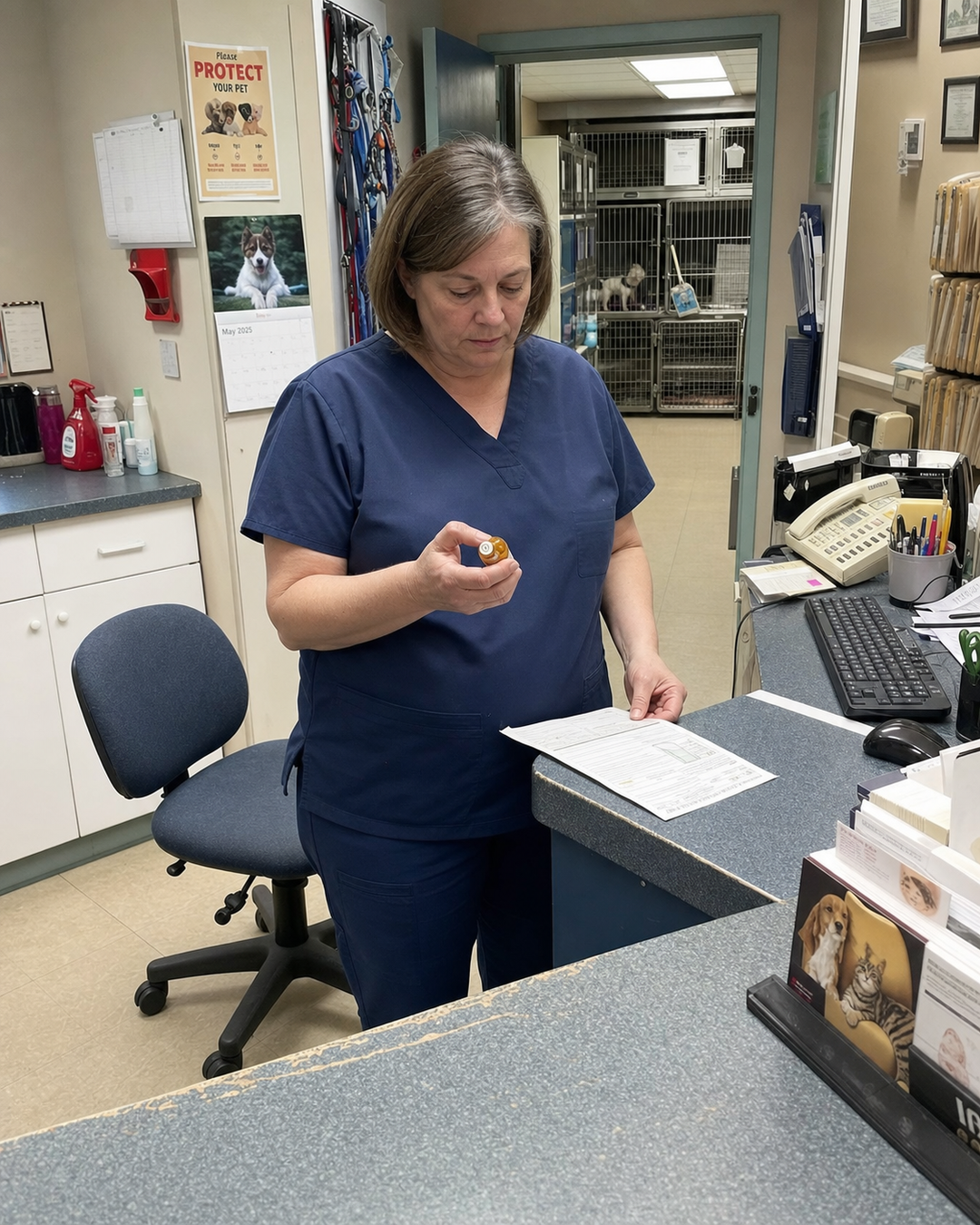
I'm a veterinary nurse and I've been telling dog owners the wrong thing about their dogs' allergies for 24 years. I didn't realize it until 12 weeks ago, when I stood at our front desk filling an Apoquel prescription for my own dog. My name is Deborah. Same clinic, 24 years. I've held more dogs through their final injection than I can count. I've stood in the room on a Saturday morning while a family's ten year old said goodbye to the dog he grew up with. I've watched owners who did everything right end up putting their dog down at just 7 years old. And for most of those 24 years, I believed what I was taught. Allergies are just something dogs have these days. The medication controls the itching. A dog that isn't scratching is a dog that's doing fine. Simple. That's what I told owners. Hundreds of them. I said it with a clear conscience, because it's what the training manuals say. It's what the drug reps who bring us lunch say. It's what everyone I've ever worked for was taught too. And for 24 years, I watched the same pattern play out on dogs whose owners did everything they were told. Dogs like Cooper. Cooper was a golden retriever who came through our clinic for years. His chart said his allergies had been "well controlled" since he was 2. Apoquel every day. Cytopoint on schedule. His family never missed an appointment. On paper he looked perfect. But I saw him at every visit. The ear infections that kept coming back. A little less spark every year. His family said he was slowing down. We all called it age. He was 7 when they brought him in for the last time. Their ten year old son asked me why we couldn't just fix whatever kept making him sick. I told him we had tried everything. I believed it when I said it. His medication had been controlling the itching for five years. It had not been fixing what was actually wrong. It started four months ago, when my own dog flopped next to me on the couch and I smelled it. That corn chip smell, coming off her paws. Scout is a yellow Lab. She's 6. I bathed her twice in one week and the smell came back by morning. Two weeks later I was lying awake at 3 AM listening to it. Slurp. Slurp. Slurp. I drew her blood myself between appointments and sent out an allergy panel. It came back on a Tuesday. She reacted to 41 of the 55 things on the test. Scout eats the expensive grain-free food. Oatmeal baths. Flea and tick on schedule. Bloodwork every year. On paper I'm doing everything I'm supposed to be doing. 41 out of 55. I stood at the front desk holding a printout I've handed across that counter a hundred times, and I felt sick. Not because I didn't know what came next. Because I knew exactly what came next. Apoquel that afternoon. A higher dose next year when it stops holding. Cytopoint every four weeks after that. Ear cleaner. Antibiotics. A chart that looks perfect on paper while the spark goes out of her, the way I watched it go out of Cooper. Then she would become one of my own patients. The doctor I work for offered to start her that day. I got as far as sticking the label on the bottle. Then I put it down and said I wanted to think about it. I drove home from that shift in a daze. Scout met me at the door with her tail going and her paws rust red. I sat down on the kitchen floor with her and cried. Not because of the test. Because of what I knew was coming. The refills that never stop. The injection appointments every four weeks. The infections that come anyway. The dull eyes. The personality changes owners had described to me for years that I never really listened to. The thought of watching the spark go out of my own dog. The thought of being the one who holds her on that table one day. I wasn't going to do it. So I did what I should have done years ago. I stopped following protocol and I started following the research. For two weeks I read everything I could find. PubMed. Veterinary dermatology journals our clinic has access to that I had never once opened. What I found made 24 years of appointments suddenly make sense. And it made me furious. Because the research wasn't hidden. It wasn't locked away. It was sitting right there in peer reviewed journals, and not a single protocol at our clinic reflected any of it. Here's what they don't teach in veterinary school. Everything your dog eats, licks, and swallows ends up in her gut. And the only thing standing between all of it and her bloodstream is a living wall one layer of cells thick. The inner wall. That wall has one job that runs your dog's entire immune system. It decides what gets in. Nutrients pass through. Everything else stays out. Pollen proteins. Food particles. Bacteria. Waste. When the wall is healthy, your dog can eat grass, roll in pollen, and lick every surface in the house, and none of it matters. Nothing gets through that shouldn't. You don't think about it, the same way you don't think about breathing. There's no pill involved. Her body has been doing it her entire life. But that inner wall is directly exposed to everything your dog eats and everything her world throws at her. Every processed meal. Every lawn chemical. Every course of antibiotics. Every year of inflammation. It all drags right across that wall, scraping against it, meal after meal, day after day, year after year. And the wall is built out of collagen. After age 2, a dog's body makes less of it every year. By 5 or 6, about a third is gone. Wild dogs replaced it constantly, because they ate the whole animal. Hide, tendon, cartilage, bone. There is essentially none of that in a bag of kibble. So the wall wears down, and nothing rebuilds it. Over time it wears through. Like the inside of an old pipe that's been corroding for years. The lining that used to be smooth and sealed becomes thin, raw, and full of micro holes. That is what is happening inside your dog right now. Once the wall is damaged, it can't do its one job. Things that were supposed to stay in the gut start seeping through those holes into the bloodstream. Pollen proteins. Food particles. Waste on its way out. The immune system finds them where they should never be, and it attacks. In a dog, that attack shows up in the skin. That is the itching. That is the paw licking. That is the red skin, the ears that never stay clear, the paws that smell like corn chips. That is what we've all been calling "allergies." It's not a mystery. It's not bad genes. It's not the grass or the chicken or the pollen. It's a damaged inner wall letting all of it through at once. Which is why Scout's test lit up 41 times. She isn't allergic to 41 things. She has a wall letting 41 things through. And now read this part slowly, because this is the part nobody told me in 24 years of veterinary medicine. The medication doesn't fix the wall. Apoquel blocks the chemical signal that makes her itch. Cytopoint catches that signal in the bloodstream. Steroids shut the whole immune response off. All of it forces the scratching to stop by overriding the system from the outside. The wall keeps wearing down underneath. That's why the medication "stops working." That's why the dose keeps going up. That's why the shot that used to last eight weeks starts lasting four. That's why the yearly checkup turns into a standing monthly appointment. Because the wall keeps opening up year after year, and the medication is doing what medication does. Quieting the reaction from the outside. Not reaching the wall underneath. Cooper's chart said well controlled for five years. His wall was opening up for five years. If you've tried the allergy chews, you already had the right instinct. The gut. I know why they didn't work now. Those chews are compressed starch and binders. An inflamed gut can't break them down. Maybe a tenth of what's on the label ever reaches the wall. Benadryl calms the reaction to what already got in. It doesn't touch the wall. Probiotics seed good bacteria into the gut. They don't rebuild the wall the bacteria live on. Prescription food takes one trigger out of the bowl. The wall keeps letting everything else through. Medicated shampoos wash the outside of a problem that lives on the inside. Salmon oil calms inflammation in the bloodstream generally. It doesn't repair the wall. Elimination diets, air purifiers, paw wipes after every walk. All worth doing. None of them repair the wall. Nothing was reaching the wall. And that's why the itching never stays gone. That's why she's worse this year than last year. That's why you can do everything right and still be awake at 3 AM listening to that sound. I sat with this for a few days. I checked it against every chronic allergy case I could remember. The same pattern every time. Relief, then regression, then a stronger prescription. Then I asked Dr. Baker. He's been at our clinic longer than I have, and he's one of the few vets I've ever met who reads outside the protocol. I told him what I had found. I asked him what he tells his clients. He was quiet for a second. Then he said something I will not forget. He said most vets know the wall matters. They just don't have anything in the pharmacy that rebuilds it. So they prescribe what they have and hope the dog outlives the damage. Then he told me what he'd been quietly adding to his own dogs' dinner for two years. Bovine collagen peptides. I almost laughed. I told him I didn't have time for the miracle supplement aisle. I've watched owners waste hundreds of dollars on that shelf. I needed something with real data behind it. He told me to go look. Collagen. When scientists measure what a dog's body is actually built from, one protein outweighs all the rest. Not muscle proteins. Not enzymes. Not antibodies. Collagen. Nearly a third of every protein in her body. And it isn't close. It's the raw material behind cartilage, tendon, skin, and that gut wall. The exact thing wild dogs replaced every time they ate. The word itself comes from the Greek word for glue. It is literally named for holding bodies together. That detail stopped me. I had just spent two weeks reading about a wall falling apart. But a nice story wasn't going to move me. I needed studies. So I went back to PubMed. Collagen peptides are collagen already broken down small enough to absorb. Here's what happens when they reach a damaged gut. The collagen is the raw material. It goes into the lining itself, handing the wall back the one thing it's made of. The vitamin C is what makes it absorb. Without it, most of the collagen passes straight through without ever being used. With it, the wall actually takes it in and closes. The hyaluronic acid holds moisture in the lining and calms the irritation while it heals. The biotin rebuilds the outside you can see. The skin. The coat. Not floating loosely in the bloodstream like salmon oil. Not feeding bacteria like a probiotic. In the wall itself. Where the damage is actually happening. When the seeping slows, the wall finally gets the chance to do what it was built to do. The same way a cut on your skin heals once you stop picking at it. And when the wall closes, something happens that no allergy medication has ever been able to do. The allergens stop getting in. You never needed to shut down her immune system. You needed to close the wall that was letting everything set it off. When the wall closes, the immune system calms down on its own. Not because a drug is blocking the signal. Not because an injection is catching it in the bloodstream. Because nothing is getting through to set it off. The itching fades. Because the body is doing what it always knew how to do. You just had to fix the wall first. Then I found the study that made me close my laptop and order a bottle. Researchers took dogs with chronic itching and ran a daily four-part collagen protocol head to head against a daily immunosuppressant. Twelve weeks. The collagen group's allergy symptoms dropped into the same range as the medicated group. Skin healed. Coats came back. Without the infections. Without the lethargy. Without the personality changes. Without the lifetime prescription. Other clinical research has shown measurable skin and coat changes over 8 to 12 weeks of consistent use. The kind of changes most owners only ever see from a prescription pad. A food protocol going head to head with a pharmaceutical in a controlled clinical setting. One catch. In the research, form mattered. Liquid, not compressed chews. Pre-dissolved collagen absorbs through the gut lining. A starch brick mostly doesn't. I sat at my kitchen table thinking about every dog that came through our clinic on allergy medication that quieted the itching while the wall kept opening underneath. There was something that calmed the itching AND fixed the wall this entire time. And nobody told them. Dr. Baker told me the specific one he uses with his own dogs. Nature's Paw. Before I ordered, I looked into it the way I look into any drug going into my own dog. Most collagen for dogs comes as a chew. Compressed starch and binders, heat processed, with barely enough active collagen to move the needle on anything. Nature's Paw checked every box. Liquid, not a chew. All four ingredients. Grass-fed bovine collagen, vitamin C, hyaluronic acid, biotin. Zero starch. Zero grains. Zero fillers. Third party lab tested for purity and potency. Small batches with no heat processing, so the collagen stays intact. They sell out regularly because they refuse to scale past what they can verify. I ordered it that night, sitting on the floor next to Scout. One dropper over her food every morning before my shift. Bacon flavored. She licked the bowl clean and looked up for more. After 24 years of watching owners perform pill surgery on a slice of cheese, that part almost felt unfair. I want to be honest about what the first two weeks felt like, because this is where people give up. Nothing visible happens. There's no jolt. Collagen doesn't work like that, and once I understood the mechanism, I knew why. The first two weeks, the collagen is doing something you can't see from the outside. The wall is closing its smallest holes first. The seeping slows. The immune system is still on edge from years of invasion. The first change I noticed wasn't the scratching. It was the smell. Somewhere in week two, her paws just smelled like paws again. It was subtle at first. This is not an overnight miracle, and anyone who promises you one is selling something. It's a wall closing, one gap at a time. Week three, the 3 AM licking got quieter. Then some nights it didn't happen at all. Week four, she slept through the night. So did I. I stood in the kitchen at 6 AM watching her sleep with her paws tucked under her chest instead of in her mouth, and I cried over a dog for the second time in four months. Different tears. By week six, the skin between her toes was pink instead of angry red, and the fur was growing back white instead of rust. She's ten weeks in now. The corn chip smell is gone. She gets the zoomies after dinner like a puppy. The spark is all the way back. No side effects. No groggy afternoons. No immunosuppressants. No prescription. She never started the medication. My boss, the vet who offered to write the script, is the one who's confused. Not managed. Not suppressed. Fixed. The panel printout is still on my fridge. 41 out of 55. I keep it there because of what it means now instead of what it meant that Tuesday. I'm writing this because I think you might be where I was 12 weeks ago. If your dog is on Apoquel or Cytopoint right now and you're wondering whether there's something more you could be doing for the wall underneath the itching, I hear you. If the itching is getting worse and your vet is reaching for the prescription pad at your next appointment, I hear you. I was standing at that front desk 12 weeks ago sticking the label on the bottle. If you've tried the chews and the diets and the shampoos and the oils and nothing is moving, I hear you. Because nothing you tried was fixing the wall. Nature's Paw liquid collagen. One dropper on her food every morning. It rebuilds the wall the medication was never designed to reach. And lets your dog's body do what it already knows how to do. When the wall seals, the "allergies" go with it. I'm a veterinary nurse. I don't sell supplements. I don't get paid for this. I'm writing this because after 24 years of watching the same blind spot hurt the same dogs, I can't stay quiet anymore. Nature's Paw has a 60 day money back guarantee. If you don't see a difference, they'll make it right. In 24 years of veterinary medicine, I have never seen a drug company offer to give your money back when the medication doesn't work. Think about that for a second. Nature's Paw is a small company and they sell out regularly. If your dog has a vet appointment in the next 30 to 60 days and you want to give her body a real shot at calming down before that visit, check availability now. Don't wait. Every day the wall stays open is another day the cycle keeps running. Another day closer to the prescription your vet is already planning to write. Or the dose increase they're already considering. 👉 https://trynaturespaw.com/products/premium-collagen You still have time. Don't wait until you're the one in a quiet room, saying goodbye to a 7 year old dog you did everything right for. — Deborah K. Williams, LVT, 24 years in small animal practice P.S. I want to say one thing about working with your vet. Do not stop your dog's medication on your own. Start rebuilding the wall now, and bring this to the next appointment. Ask them to recheck her skin in 8 weeks. Most owners work with their vet to taper down as the itching fades on its own. The point is not to fight your vet. The point is to give your dog the one thing the prescription pad can't. P.P.S. The 60 day guarantee covers the full rebuild window. Most dogs show visible changes between week 3 and week 8. If yours doesn't, you send the bottles back and they'll make it right. The only thing you risk is the cost of a couple of bags of kibble. P.P.P.S. If the page is sold out when you click, get on the waitlist. The next batch always goes faster than the last. I wish I had started six months earlier than I did. 👉 https://trynaturespaw.com/products/premium-collagen
I've been a veterinary nurse for 24 years. Read this if your dog itches.
Dogs lose collagen every day after age 2 — and it shows in the skin first. As the gut barrier weakens, allergens slip through, triggering the itching, hot spots, and scratching that won't stop. It also shows in stiff joints and dull, thinning coats. One daily pour rebuilds the barrier from the ins...
LEARN MORELike this ad? Make it yours.
Crush rebuilds this exact creative around your product — your brand, your colors, your offer — in about a minute.