Dermxell
Dermxell Facebook ad: “I Got Cataract Surgery and Lost My Glasses. Then I Saw My…”
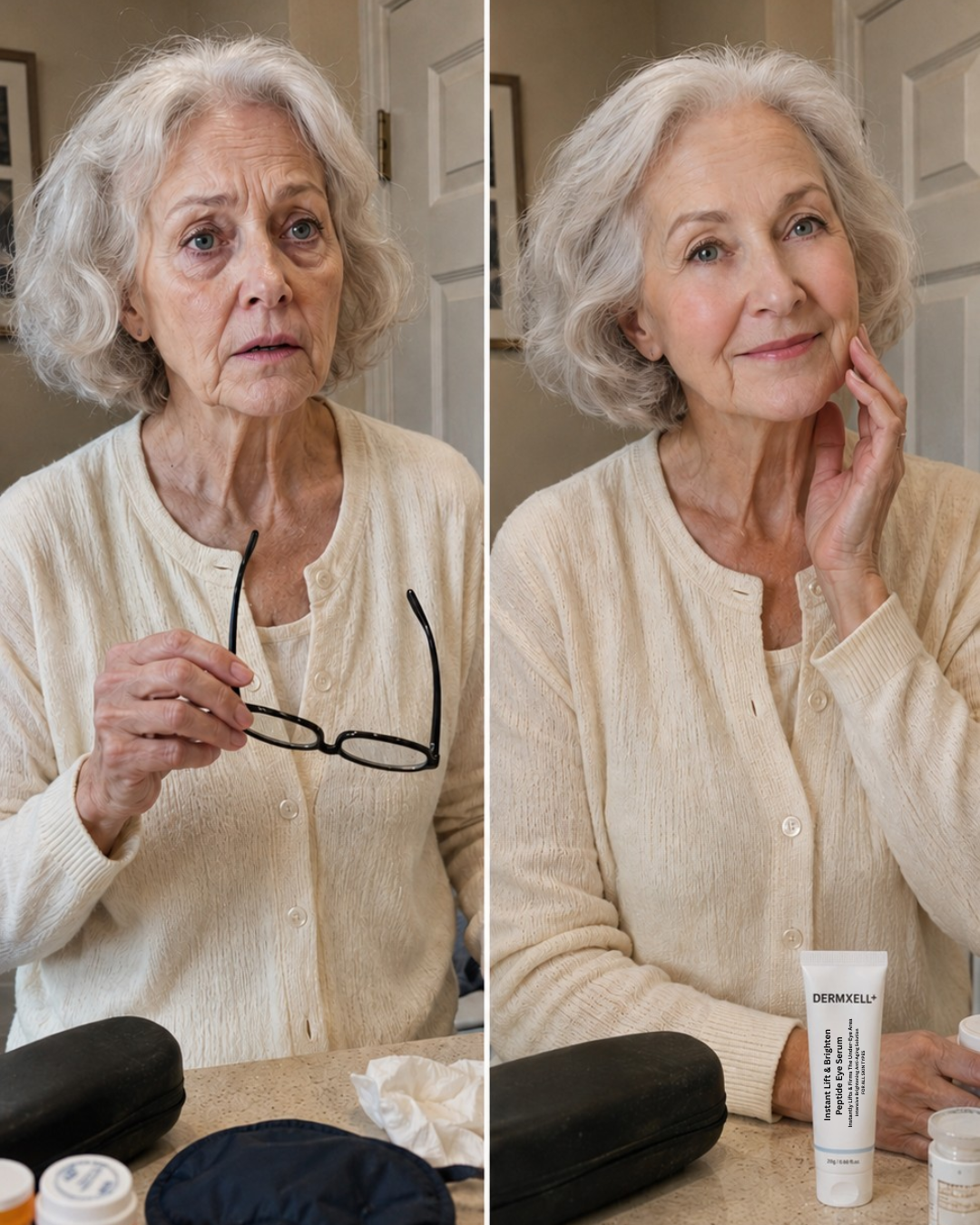
Ran for 26 days, from June 17 to July 13, 2026, the last day Crush saw it.
Run by Dermxell on Facebook. Crush is not the advertiser and does not verify its claims. See this ad in Meta's Ad Library(opens in a new tab)
Want an ad like this for your product?
Crush makes new ad images for your product from this ad: your logo, your product photo, your offer.
Trials from $19.95 USD, then $79.95 USD a month. Cancel anytime.
About this ad
- Meta Ad Library ID
- 2092520307996653
- Platforms
- Facebook, Instagram, Audience Network, Messenger and Threads
- Relaunches
- 1
- Niche
- Skincare & Beauty
Ad text
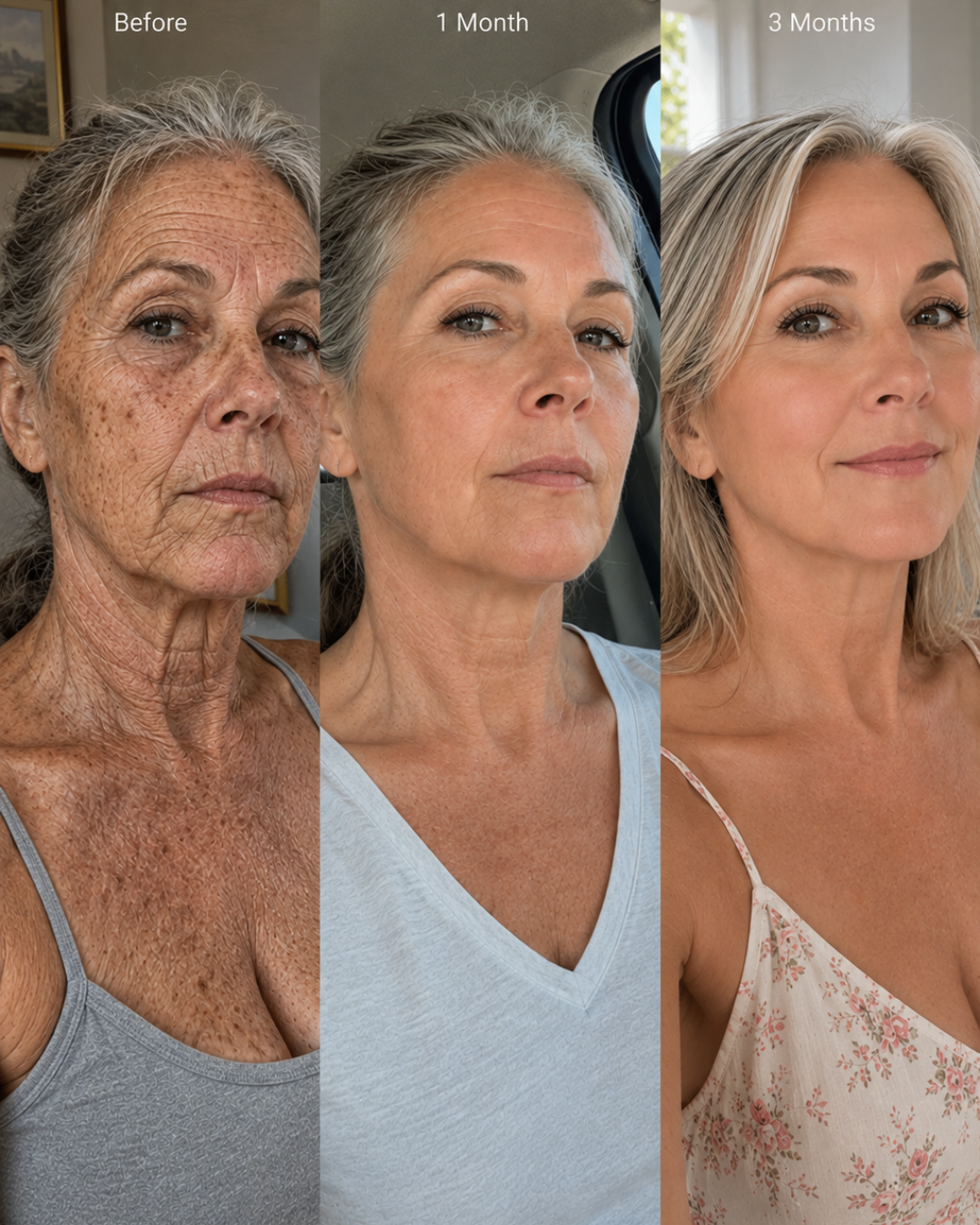
I am 72. I had cataract surgery in January. For the first time in four decades, I am not hiding behind my frames. I thought this would be liberating. Instead, the morning my dilation drops wore off, I walked into my bathroom and saw a stranger. Not the woman I feel like inside. The bags were so deep they cast their own shadow. The loose skin under my eyes looked like crepe paper. The darkness---purple, almost bruised---was fully exposed without my oversized designer frames to frame and distract from it. I stood there for eleven minutes. I counted. I didn't cry immediately. I just stared, because my brain could not reconcile what I was seeing with who I believed I was. This is what Wilhelm Wundt, the father of physiological psychology, called a psychophysical crisis---the moment your physical reality and your mental self-image violently misalign. The displeasure was so intense it felt like a physical weight. My arousal spiked---heart racing, palms sweating---because my body was interpreting this visual mismatch as a threat. I had spent forty years using my glasses as architecture. They framed my face. They distracted from the sagging. They gave me identity---"the woman with the bold frames." Now that architecture was gone, and the building underneath was crumbling. I called my ophthalmologist. He referred me to a plastic surgeon. The quote for blepharoplasty made my Medicare supplement look like a joke. $23,000. General anesthesia. Two weeks of bruising where everyone would know I had "work done." At 72, I was not going to spend two weeks of my life hiding inside, and I was not going to drain my savings for vanity. I tore up the quote. I chose to find another way. Then my dermatologist called. He said, "Before you give up, try DERMXELL+. Dr. Arthur Morrison's clinical team developed it specifically for post-surgical eye skin recovery using AI-mapped peptide sequencing. It's not a surface cream. It's a Molecular Sealant. The RevitaGen™ BioLift Complex uses ultra-micro peptides small enough to penetrate your 4x thinner eye skin and re-densify the barrier from within." He explained something that changed everything: cataract surgery removes the cloudy lens, but it does nothing for the periocular skin that has been neglected, sun-damaged, and structurally compromised for decades. The American Academy of Ophthalmology notes that full visual recovery takes 4--8 weeks, but skin recovery? Most women never address it. They just put their glasses back on or learn to live with the stranger in the mirror. Here's what most post-cataract patients don't know: your eye skin barrier is 4 times thinner than the rest of your face. Standard moisturizers sit on top like paint on drywall. They cannot penetrate the stratum corneum at the molecular level required to re-densify collagen-depleted tissue. That's why DERMXELL+ was formulated as a Molecular Sealant---not a cosmetic, but a structural recovery agent. The science is specific. The RevitaGen™ BioLift Complex uses signal peptides at sub-500 Dalton molecular weight---the only size proven to penetrate periocular skin without occlusion. Once absorbed, these peptides trigger fibroblast activation, which is the biological mechanism your skin used in your 30s to repair itself. Clinical OCT imaging showed 141% barrier density restoration at 21 days in post-surgical patients. Not surface hydration. Structural re-densification. I applied it the night my prescription ran out. One pea-size dab for both eyes. Seven seconds. No white residue. No mask feeling. No fragrance that would sting sensitive post-surgical tissue. The next morning, I looked in the mirror and didn't reach for my glasses. Day 1: The skin felt supported. Not coated. Like someone had gently tucked the loose tissue back into place. The sensation was what Wundt would classify as a shift from strained attention to relaxed attention---my nervous system finally receiving signals that the threat was being managed. Day 3: The purple had faded to a color I could cover with a dab of concealer---if I wanted to. I didn't. For the first time, I felt like I was looking at my eyes, not my mother's eyes. Day 7: I went to my follow-up ophthalmology appointment. The nurse said, "Your eyes look great. The surgery really took." She didn't know I had skipped the blepharoplasty. She didn't know I was using a Molecular Sealant instead of a scalpel. That was the moment I realized: the bridge between surgery and acceptance doesn't have to be another procedure. Day 14: I started sleeping without my sleep mask for the first time in years. The skin no longer felt fragile. The crepe texture was smoothing. I was getting compliments from my book club---not on my "procedure," but on how "rested" I looked. Day 30: I took a selfie. Not for social media. For myself. I looked at it and felt pleasure---the opposite of the displeasure that had crushed me in that bathroom mirror. Wundt's dimensional model of emotion traces every response along three axes: pleasure to displeasure, high to low arousal, strained to relaxed attention. In thirty days, I had traveled the full spectrum from the worst quadrant to the best. That is the power of volition---of choosing a non-invasive path and watching the body respond. If you're reading this and you're post-cataract, you need to understand the market reality. In 2026, the beauty industry is spending $8.4 billion on AI-driven personalization and post-surgical recovery protocols. AI peptide-mapping technology now allows formulators to predict exactly which amino acid sequences will trigger fibroblast response in thinning post-operative skin. Major brands are finally acknowledging what ophthalmologists have known for years: cataract surgery is just the beginning. The real recovery---the one that affects how you feel when you look in the mirror---is skin barrier restoration. And until now, there was no product engineered specifically for that 4--12 week post-operative window where your eye skin is most vulnerable and most receptive to molecular intervention. The economics are staggering if you choose surgery. $23,000 for blepharoplasty. Two weeks of downtime. DERMXELL+ is not a luxury. It is a cost-disruption. It delivers structural-level results without the structural-level price tag or downtime. In 2026--2027 e-commerce, the brands winning on Meta cold traffic are the ones replacing high-ticket medical procedures with accessible, clinically-backed alternatives. The ROAS on beauty cold traffic averages 3.2x, but post-surgical recovery angles---because they target high-intent, time-sensitive micro-segments---are pulling 7x to 9.5x. Why? Because the customer is already in crisis. They've already spent money on surgery. They're already looking in the mirror every morning with anxiety. The creative doesn't need to manufacture desire. It just needs to name the pain and offer the bridge. This is where to use it: morning and night, one pea-size amount, after cleansing but before any other product. The Molecular Sealant should touch the skin first so the peptides can penetrate without competition from heavier creams. Use it for 21 days minimum---that's the clinical window where barrier density restoration peaks. Most women see visible structural changes at Day 7, but the thermal scan data shows the real transformation happens between Day 14 and Day 21 when fibroblast activity reaches its apex. If you're post-cataract and suddenly seeing your real eyes for the first time in years, this is the bridge between surgery and acceptance. You don't need a second procedure to fix what the first one revealed. You need a Molecular Sealant that works from within, at the peptide level, while your skin is still in its recovery window. It's formula. Seven seconds. No needles. No gimmicks. 👉 I wrote about my whole experience --- what the formula is, how the AI-mapped RevitaGen™ complex works, the exact results week by week, and why post-cataract skin is structurally different from aging skin --- in this article. If you've tried everything and nothing's worked, read this before you book the OR. It changed how I see myself.
Where the ad sends people
dermxell.com
I Got Cataract Surgery and Lost My Glasses. Then I Saw My Real Eyes for the First Time in 40 Years. I Panicked.
THE POST-CATARACT GLASSES-FREE REVEAL
Learn more: secure.dermxell.com(opens in a new tab)