
Inactive· since May 13, 2026
- 2
- days it ran
- 0
- relaunches
- 23
- EU reach
Ad copy
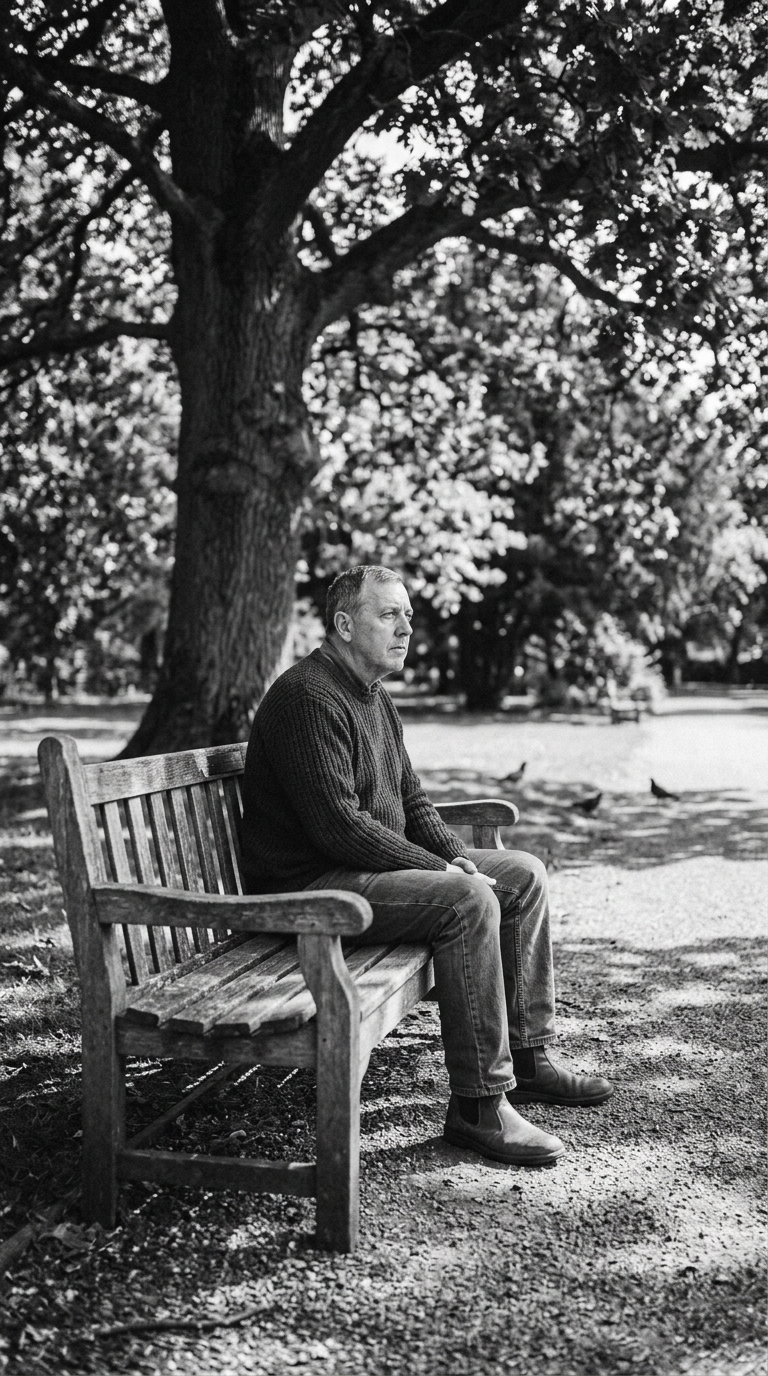
I watched my husband disappear into his body for 4 years. He was the same man. The same diet. The same life. The doctor said "it's just age." He spent four years believing that. 4 years and 40 pounds. It wasn't age. Let me tell you what I watched. Because watching was its own kind of helplessness. At 38, my husband was lean. Not gym-lean — just the natural lean of a man who moved through the world without thinking about it. He ate whatever he wanted. He wasn't disciplined. He just didn't have to be. His body handled itself. At 40, I noticed his pants were fitting differently. He didn't say anything. He's not the kind of man who says anything. He just bought new pants, one size up, and kept going. At 41, he stopped tucking in his shirts. A small thing. I noticed. He'd always tucked his shirts in. It was a thing about him — a small vanity I found endearing. Then one day he stopped and he never started again, and I understood without asking that he was hiding something he didn't want to talk about. At 42, the doctor said: "This is pretty normal for your age. Metabolism slows. Testosterone drops. It happens to men in their forties." I watched that sentence land on my husband like a verdict. "It happens to men in their forties." He came home from that appointment and didn't talk for the rest of the evening. Sat in his chair. Watched something on his phone. Went to bed early. In the morning he was fine — performing fine — but something had closed. Then he did what he always does when something closes. He tried harder. I watched him cut carbs. He'd been eating bread his whole life. He stopped, jaw set, like a man making a decision. One month. Two months. He gained weight. I watched him stop drinking beer. He loved beer. Not a lot — two, three on weekends, a cold one after mowing the lawn in summer. He stopped entirely. Three months. He gained weight. I watched him start running. He hadn't run since his twenties. He bought shoes, set an alarm for 6 AM, went out in the cold four mornings a week without complaining. He'd come back sweating, unlock the door quietly so the kids stayed asleep, shower and get ready for work. Every week. For five months. He gained weight. I want you to understand what it looks like to watch someone do everything right and get punished for it. Every Monday he had a new plan. Every Friday I could see the plan failing in the way he moved through the kitchen — slower, quieter, reaching for his phone instead of talking. Every month the jeans he'd bought one size up were too tight. He never said: "I don't understand." He said: "I must not be trying hard enough." That's the sentence I couldn't fix. Not because it wasn't wrong — it was completely wrong — but because I didn't know what the right sentence was. I just knew it wasn't that. I want to be honest about something. There's a thing wives say that we think is helping. "I love you exactly as you are." I said it. Multiple times. I meant every word. But here's what I didn't understand until later: saying "I love you exactly as you are" to a man who is trying with everything he has to change the way he is sounds like "I've given up on you too." That's not what I meant. That's what he heard. He'd look in the mirror with that look — the look of a man who doesn't recognize the body he's in — and I'd say "you look fine" and he'd nod and go quiet and I'd feel the distance grow. I was trying to love him through it. I was accidentally telling him that his fight didn't matter. At 43, he stopped fighting. Quietly. No announcement. He just — stopped. Cancelled the running shoes app he'd been tracking his mileage on. Started tucking his shirts in again, which sounds like the wrong detail but to me meant something: he'd stopped caring about hiding it. He'd accepted it. This was his body now. The man he used to be was gone and he'd decided to stop chasing him. I watched my husband quit on himself. I've never said that sentence out loud before. He didn't quit on us. He didn't quit on the kids. He quit on him. He stopped believing he could get back something he'd lost. And I didn't know how to tell him he was wrong because I didn't know what was actually happening. The night everything changed: A Sunday. He was asleep. I couldn't sleep — one of those nights when your brain won't stop — and I was scrolling in the dark. I found a post in a men's health group I'd never heard of. A man around my husband's age had written: "I gained 35 pounds in my early forties. Every doctor said it was testosterone. Turns out it wasn't hormones. It was my nervous system." I sat up in bed and read the whole thing. He wrote about what happens when a body runs on stress for years. Not the kind of stress that feels like crisis — the kind that's just life. Work. Responsibility. The low hum of never quite being off. When a nervous system stays in that state long enough, it shifts into survival mode. And in survival mode, the body does something specific: it holds on. Stores fat. Refuses to release it. Because a body that thinks it's under threat doesn't burn its reserves. It protects them. No matter what you eat. No matter how far you run. The symptoms look exactly like "just getting older." The weight that won't move. The exhaustion that sleep doesn't fix. The brain fog. The flatness. Doctors see a man in his forties and say "testosterone" or "metabolism" without asking one question about the state his nervous system has been stuck in. I put my hand on my husband's shoulder and woke him up. At 1 AM on a Sunday. He turned over. "What's wrong?" "Nothing's wrong. I found something. Will you read it?" He looked at my phone in the dark. Then he took it from me and read it. I watched his face. I know his face. I've been reading it for fourteen years. And I watched something move in it — something I hadn't seen in a long time. Not hope exactly. More like recognition. "This is me," he said. "I know." "The tired that doesn't go away. The weight that doesn't move no matter what. The feeling like the body is doing something against me." "I know." "It's not the food?" "It might not be the food." The post mentioned an app called Liven. Micro-Cycle Method. Five minutes a day. Not a diet. Not a fitness program. Something that works with the nervous system — to help it come out of survival mode so the body stops hoarding everything it's been protecting. He found the quiz on their site. It didn't ask about his diet or his exercise routine. It asked about the state he'd been running in. About the tiredness. The flatness. The feeling of pushing through every day until something gives. He said yes to almost everything. Quietly. In the dark. He downloaded Liven at 1:15 AM. "I have nothing to lose," he said. "Everything else has failed." Here's what I watched happen. From the outside. From the wife's seat. Week one: He slept differently. I noticed before he did. He'd been a light sleeper for years — the kind who wakes at every small sound and lies there running. He started going under deeper. I could feel it from my side of the bed. Week two: He came home from work on a Thursday and made a joke at dinner. Not a performed joke — a real one, the kind that comes from actually being present rather than going through the motions of being present. My daughter laughed. He laughed. I watched him sitting at that dinner table actually in the room for the first time in I don't know how long. Week three: He stood in the kitchen on a Saturday morning and said, unprompted: "I feel less heavy." He meant it two ways. I could tell. The number on the scale had started to move. But more than that — the other heaviness. The one that had nothing to do with weight. Week four: He went for a run. Not because it was part of a plan. Because he wanted to. He came back differently than he used to come back — not depleted, not checking a box. Just back from a run, face clear, moving easily. "I didn't have to push through it," he said. "It just happened." Week six: He tucked his shirt in. I didn't say anything. He didn't say anything. But I saw it and I had to look away for a second. Week eight: He came out of the bathroom and said a number. Down fourteen pounds. Without changing what he ate. Without a plan. Without white-knuckling through anything. I hugged him. He was surprised — I'd ambushed him with it. He hugged me back, and I felt his shoulders, and they were down. Soft. The shoulders I married. It's been four months. He's down over twenty pounds. He talks about his body the way he used to — not with resignation or warfare, but neutrally, like someone reporting on something that belongs to him. But here's what matters more than the number: He came back. That's the only way I can describe it. The man who had gone somewhere — somewhere inside himself where I couldn't reach — he came back. He's in the room. He's at the dinner table. He hears things when people say them. Last week he came to find me in the kitchen to tell me something that had happened at work — not because it was important, but just because he wanted to tell me. He just wanted to share a thing. We talked for twenty minutes about nothing. The way we used to. I thought: that's what was missing. Not the weight. Not any of it. This. Him, walking into a room, wanting to say something, because he has something left to give. Three years I watched my husband try. Three years of running in the dark and refusing bread and doing everything the doctors said. Three years because no one thought to ask one question about the state his body had been stuck in. It wasn't age. It was a nervous system in survival mode. And once he addressed that — five minutes a day, not a diet, not a gym — his body finally let go. If your husband has been gaining weight no matter what he does. If he's tried every plan, every diet, every discipline, and his body keeps fighting him. If his doctor keeps saying "testosterone" or "just get more sleep" or "eat less, move more." If he's started to go quiet about it — stopped trying, stopped mentioning it, tucked it away somewhere you're not allowed to go. It might not be what they're telling him. His body might be stuck somewhere nobody has thought to look. Liven has a quiz. A few minutes. Doesn't cost anything. It doesn't ask about food. It asks about the state he's been running in. Leave it open on your phone. You don't have to say anything. He'll read it. I wish I'd found it at 40. Would've saved him three years of trying harder at the wrong thing. Would've saved me three years of watching the man I love fight a body that wasn't fighting fair. Link is below. 💙 P.S. — He tucked his shirt in for the first time in two years last week. I know I already said that. I'm saying it again because I didn't expect that one to hit me as hard as it did. Not the scale number. Not the run. The shirt. The small, private vanity of a man who has found his way back into a body he recognizes. That's what came back. 💙
THIS IS what you need to do
LEARN MORELike this ad? Make it yours.
Crush rebuilds this exact creative around your product — your brand, your colors, your offer — in about a minute.