Porchlight Days
 Facebook ad: “Fix what actually matters”
Running for 1 day since November 24, 2026. Crush last saw it on November 25, 2026.
Run by Porchlight Days on Facebook. Crush is not the advertiser and does not verify its claims. See this ad in Meta's Ad Library(opens in a new tab)
Make your own version of this ad
Crush makes it, launches it in your own Meta ad account, scales the winners and pauses the losers.
About this ad
- Meta Ad Library ID
- 2113575452600996
- Platforms
- Facebook, Instagram, Audience Network, WhatsApp and Threads
- Relaunches
- 0
- Niche
- Parenting & Kids
Ad text
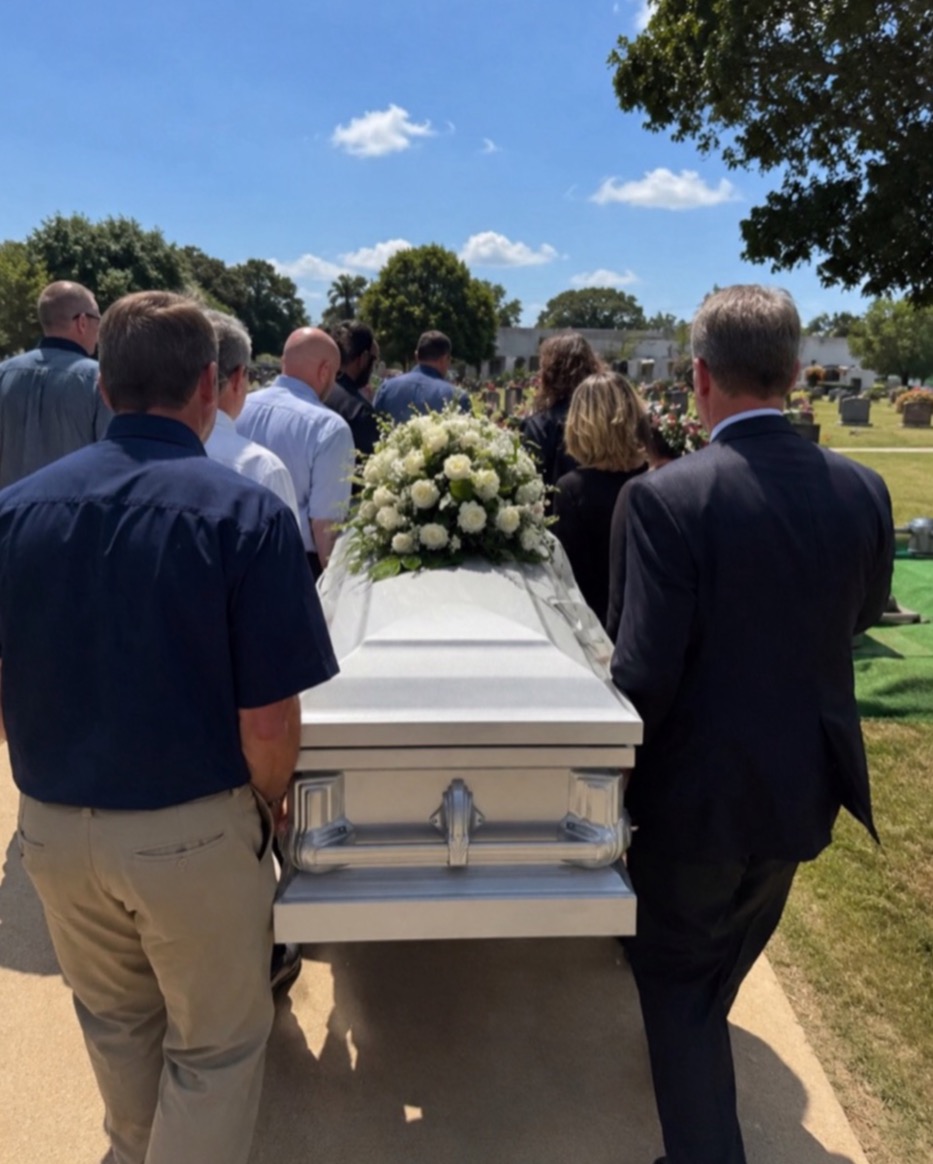
Please stop throwing away your fruit, your coffee, and your olive oil. When my doctor told me I had fatty liver two years ago, he gave me exactly three words of advice: "Cut the carbs." That evening I walked into the grocery store, stood in the produce aisle, and had a full-blown panic attack. Was an apple too much sugar? Was oatmeal too many carbs? Was a tablespoon of olive oil going to scar my liver? For six months, I lived scared of food. Boiled chicken, dry rice, raw celery. I lost fourteen pounds. And when I went back for my follow-up ultrasound, my liver fat hadn't moved an inch. Because eating less only slows down the fat coming into your liver. It does nothing for the fat already stuck inside it. I've taught high school math for twenty-eight years. I live in Ohio. I don't drink, I've never smoked, and I've run three 5Ks with my daughter. My father died of alcoholic cirrhosis when I was nineteen. I watched his skin turn yellow. I watched his stomach swell until he looked nine months pregnant while his arms wasted away. I sat by his hospital bed for the last three months of his life, watching a brilliant man lose his mind because his liver couldn't filter the toxins out of his blood anymore. On the day of his funeral, I promised myself I would never touch alcohol. And I kept that promise. When I baked birthday cakes for my kids, I bought imitation vanilla because real vanilla extract has alcohol in it. So when I was lying on an emergency room gurney two years ago, listening to a doctor ask my husband in the hallway whether I was a secret drinker, my heart just about stopped. I'd gone in because of a heavy ache under my right ribs. The weekend before, I'd helped my youngest move into a second-floor apartment. By Tuesday there was a dull soreness right below my ribcage. I figured I'd pulled a muscle carrying boxes. By Friday it felt like someone had shoved a softball behind my ribs, and every time I leaned forward to grade papers, it pushed back. My husband David drove me to the ER. The doctor thought it was gallstones and ordered an ultrasound. The technician pressed the probe deep into my right side and asked me to hold my breath. Then the room went completely silent. She clicked button after button. Her face didn't move. She never turned the screen toward me. When she finished, she handed me a few paper towels and left without a word. Twenty minutes later, a young doctor pulled back the curtain, looked at my chart, and looked at David. "Mr. Carolyn, could you step into the hallway with me for a moment?" The curtain didn't close all the way. I heard every word. "Does your wife drink alone at home, or mostly in social settings?" David laughed. "Doctor, my wife doesn't drink. Ever. Her father died of liver failure." A long pause. "Are you sure? People hide it from their families. Her ultrasound shows an enlarged liver packed with fat. That's usually what we see with heavy drinking." I pulled the thin hospital blanket up to my chin and the tears came. I felt dirty. I felt like that doctor was looking at me and seeing a woman who hid vodka in water bottles in the pantry. He came back in and looked at his iPad, not at me. "Good news, no gallstones. Bad news, you have grade 2 fatty liver. Cut carbohydrates, avoid fats, lose fifteen pounds, and follow up with your doctor in six months." He closed the curtain and walked away. Fifteen pounds. Cut the carbs. Six months. When we got home, I sat at the kitchen counter and pulled up seven years of bloodwork from my patient portal. I'm a math teacher. I believe in data. 2018: ALT 33. 2020: ALT 36. 2022: ALT 38. Every single one marked "NORMAL" in green, because the lab's normal range went up to 45. My doctor had patted my shoulder at my last physical and told me I had the liver of an athlete. So how could my liver be drowning in fat while seven years of bloodwork called it normal? I spent the next two weeks reading everything I could find. And here's what I learned. That normal range on your lab sheet was set decades ago, using a population where a lot of people already had fatty liver nobody knew about. The American College of Gastroenterology puts a healthy ALT for a woman at about 25 or under. Mine had been climbing for seven years. Printed in green the entire time. And ALT doesn't measure the fat in your liver at all. It only goes up when liver cells are so stressed they start leaking. It's a smoke alarm. Fat can build up quietly for ten or fifteen years before the alarm gets loud enough for anyone to notice. And the advice I was given made it worse. That Monday after school I walked into Kroger with a cart. I picked up a bag of apples and put it back, because I'd read that fruit sugar turns into liver fat. White bread was forbidden. Yogurt had sugar. Olive oil was pure fat. Butter was worse. I stood in the middle of aisle four holding a bag of celery, and I started crying. I didn't know what on God's green earth I was allowed to eat anymore. For six months, I lived on boiled chicken, steamed cauliflower, raw celery, and black coffee. No food after six. I watched David and the kids eat Sunday roast chicken with potatoes and gravy while I pushed four ounces of dry chicken around my plate. I lost fourteen pounds. And I felt worse than I had in my entire life. The heavy pressure under my right ribs never left. By 2:15 every afternoon, in the middle of seventh-period calculus, my brain would go blank at the whiteboard. And every night at 3:15, I'd jolt awake with my heart pounding and lie there wondering if my liver was turning into my father's. At six months, I went back for my follow-up ultrasound. Fourteen pounds lighter. I was sure the scan would show something. The report came into my portal two days later. "Moderate to severe hepatic steatosis, unchanged from prior study." Unchanged. Six months of boiled chicken and celery, and the fat in my liver hadn't moved a millimeter. I sat down on my kitchen floor and cried. The woman who finally helped me was a retired biochemist named Dr. Evelyn Vance. She was sixty-four and had spent thirty years studying how the liver handles fat. A friend from church introduced us over tea after she gave a talk in Columbus. I brought my whole folder. Seven years of "normal" bloodwork. The ER ultrasound. My food diary. The second ultrasound, unchanged. "I don't drink," I told her. "I starved myself for six months. Why is my liver still full of fat?" She read through all of it, took off her glasses, and said, "Jeanie, you believed the two biggest myths about your liver. The first is that this only happens to people who drink. The second is that you can starve the fat out." She pulled a notepad out of her purse. "Your liver doesn't burn the fat that's stuck inside its cells. It has to pack it up and ship it out into your blood, so your body can burn it. Cutting food slows down the fat coming in. It does nothing for the fat that's already stuck inside. That's a completely different job, and your liver can't do it without three things." She wrote them down. "NAC breaks up the fat clogging the liver. It's what your liver uses to make glutathione, its own cleaning fluid. Choline is the truck that carries the fat out. Most women get less than half the choline they need, and when you went on that boiled chicken diet, you cut out the eggs and meat it comes from. And silymarin, the part of milk thistle that actually works, protects the liver cells so they stop leaking ALT while the fat clears." "People buy a cheap bottle of milk thistle at the drugstore and wonder why nothing changes," she said. "Milk thistle on its own only protects the cell. Protecting a warehouse that's packed to the ceiling doesn't empty it. You need the trucks too. All three, at the same time, at the doses the research used." I asked if I could just buy the three at a health food store. She shook her head. "Look at the back of any milk thistle bottle at the pharmacy. The front says 1,000mg. The back says 'milk thistle seed powder.' That's ground-up seed. About two to four percent of it is silymarin. The research uses silymarin at eighty percent purity. You'd need twenty or thirty of those capsules a day to get close. It's sold as a food supplement here, so nobody checks what's in the bottle." She wrote one more thing on the back of my notepad: Happy Liver, from Ritual Labs. "That's the one I tell my own family to take," she said. "It's a European brand, made at German pharmaceutical grade, and it ships fast here in the US now. Silymarin at eighty percent purity, with NAC and choline in the same capsule, at the doses the research used." I ordered from their official website that afternoon. When it arrived, I went to the pantry, found the drugstore milk thistle I'd been taking, and flipped it over next to the Happy Liver bottle. One said "seed powder" with no percentage anywhere. The other had the eighty percent printed right on the label, with NAC and choline next to it. The drugstore bottle went in the trash. The first thing I did, on Dr. Vance's instructions, was stop starving myself. I went back to Kroger and bought eggs with deep orange yolks, salmon, olive oil, avocados, and blueberries. That Sunday, I made a roast chicken dinner for David and the kids, and I ate it with them. Skin on. Potatoes. Green beans in real butter. No guilt. And every morning, I took two capsules of Happy Liver before breakfast. The first couple of weeks, the softball under my ribs started to shrink. I leaned forward to tie my running shoes one morning and nothing pushed back. Around week three, I made it through seventh-period calculus without my brain going blank. I walked out to my car at four feeling the same as when I walked in at seven. By week four, I was sleeping through 3:15. My alarm went off at 6:15 and I hadn't moved all night. At week eight, I went back to the lab. My ALT was 19. Seven years in the high thirties, printed in green. And for the first time, it was actually where a healthy woman's liver is supposed to be. A few weeks after that, I had my repeat ultrasound. The report said the fatty liver had improved from moderate-to-severe down to mild. I took both to my follow-up with my primary doctor. He read the lab slip. He read the ultrasound report. He looked at me. "Did you double down on the diet? Cut all the fat?" "No," I said. "I stopped starving myself. I eat eggs, salmon, and olive oil every day. I cook Sunday dinner for my family." "Then what happened?" "I gave my liver what the diet took away. Choline to carry the fat out. NAC to break it up. And silymarin at eighty percent to protect the cells while it cleared." He was quiet for a full minute. Then he asked me the name of the brand and wrote it down. "Well," he said, "whatever you're doing, keep doing it." I'm not one to put my business out there, but I'm sharing my story because so many people, especially women who don't drink, are walking around with the same false comfort I had. You don't drink. Your bloodwork says normal. And then a scan shows your liver is full of fat. You're told to starve yourself, and you do, and your liver doesn't move. Waiting isn't safe. Trapped fat inflames the liver, and over the years, that inflammation turns into scar tissue. The fat can leave your liver. The scar tissue doesn't. That's why another six months of "let's monitor it" costs you something you can't get back. One warning before you look for it: don't buy this on Amazon. It's full of cheap seed powder and lookalike bottles with two percent silymarin and no choline. Happy Liver is made by Ritual Labs, a European brand, at German pharmaceutical grade, and it ships fast here in the US now. Order it from their official site. Every order comes with a 60-day money-back guarantee. Here's what I tell everyone who reaches out to me: Don't take my word for it. Pull your last few years of bloodwork from your patient portal and look at the actual ALT number, not the green "normal" next to it. If you're a woman and it's above 25, get it rechecked this week. Then take two capsules of Happy Liver every morning before breakfast. Give it eight weeks. Notice the pressure under your ribs. Notice your afternoons. Notice whether you still wake up at 3:15. Then retest. Let the number decide, not me. If your ALT hasn't come down, send the bottles back, even if they're empty, and Ritual Labs refunds every dollar. You don't have to be scared of food to fix your liver. They're running a buy 2 get 1 free package on the official site right now, which covers the full eight weeks. 👉 Check availability here: https://rituallabsofficial.com/p1 One thing, because I am a teacher and I care about responsibility: do not stop taking any prescribed medication on your own. Tell your doctor you are adding this protocol, and ask them to retest your liver panel in eight weeks so you have the proof in black and white. Stop starving an organ that's begging for the tools to clear itself. ~ Jeanie Carolyn P.S. Sunday dinner is back on our table. I haven't eaten a stalk of dry celery in eight months. I eat with my husband and kids every night, and my ALT is finally a number I don't have to explain. That's what happens when you stop starving your liver and give it what it needs to clear the fat. 👉 https://rituallabsofficial.com/p1
Where the ad sends people
rituallabsofficial.com
Fix what actually matters
Powered by pharmaceutical grade silymarin, NAC, and Choline, all at clinically studied doses. No pixie dusting. No underdosed ingredients. Just what works.
Learn more: rituallabsofficial.com(opens in a new tab)