
Inactive· since Mar 4, 2026
- 69
- days it ran
- 0
- relaunches
Ad copy
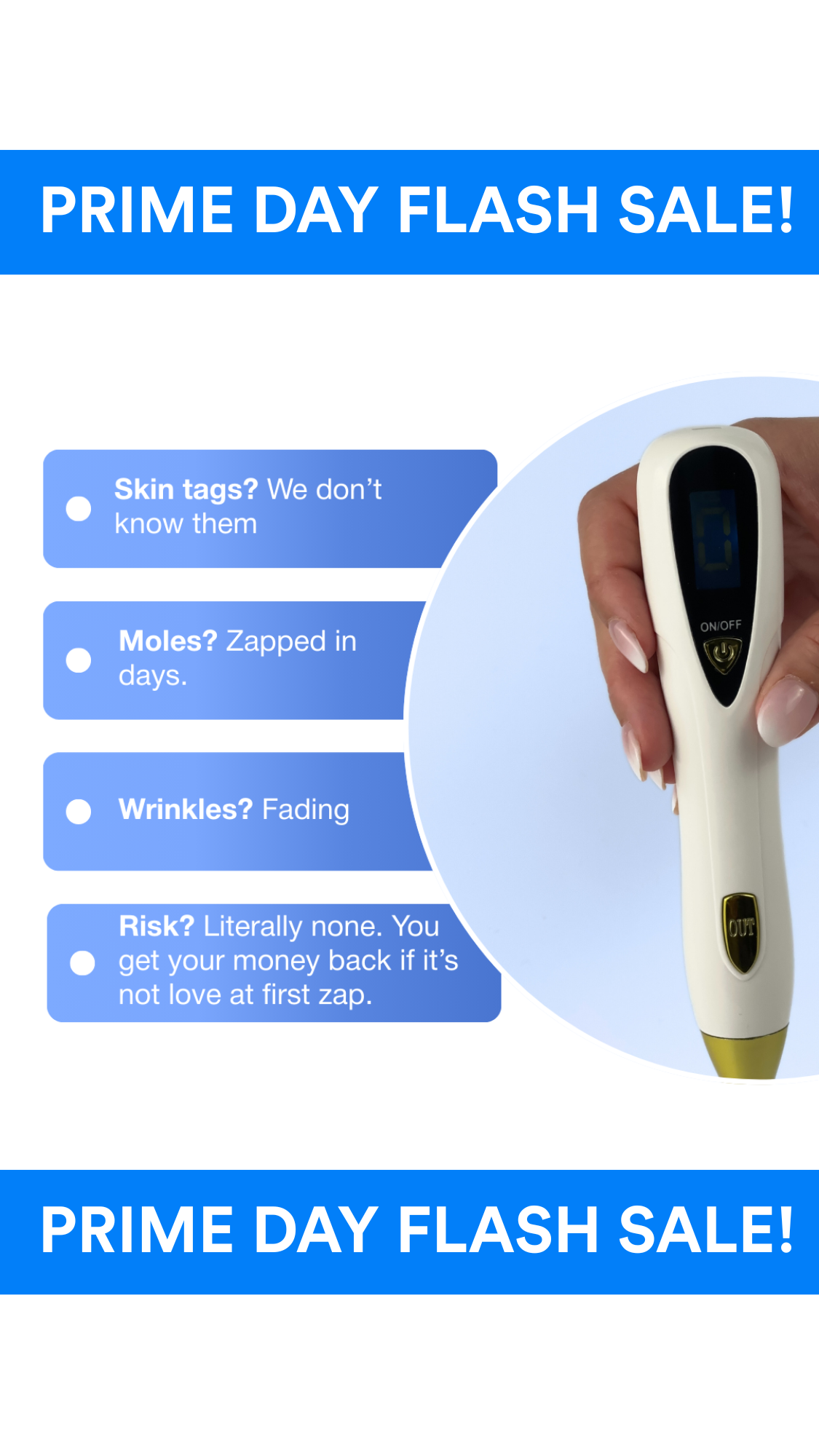
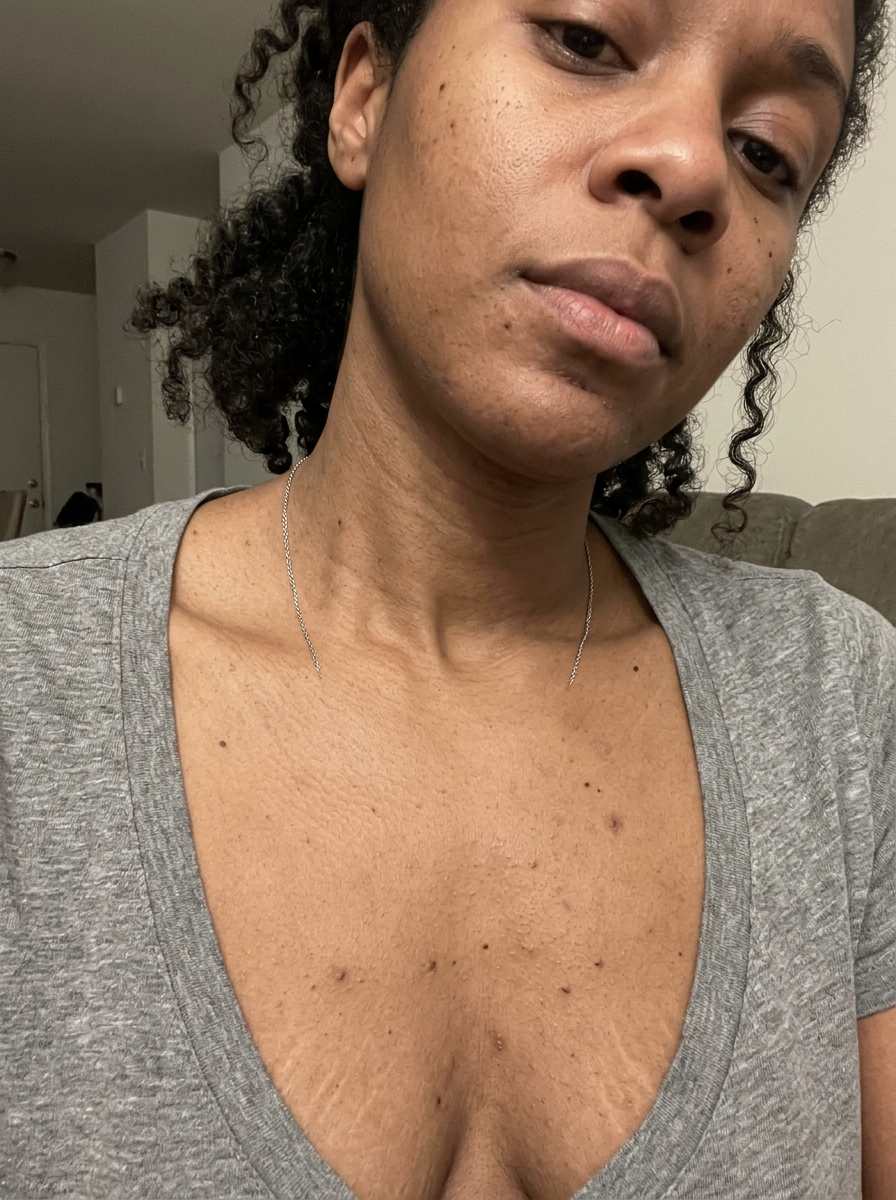
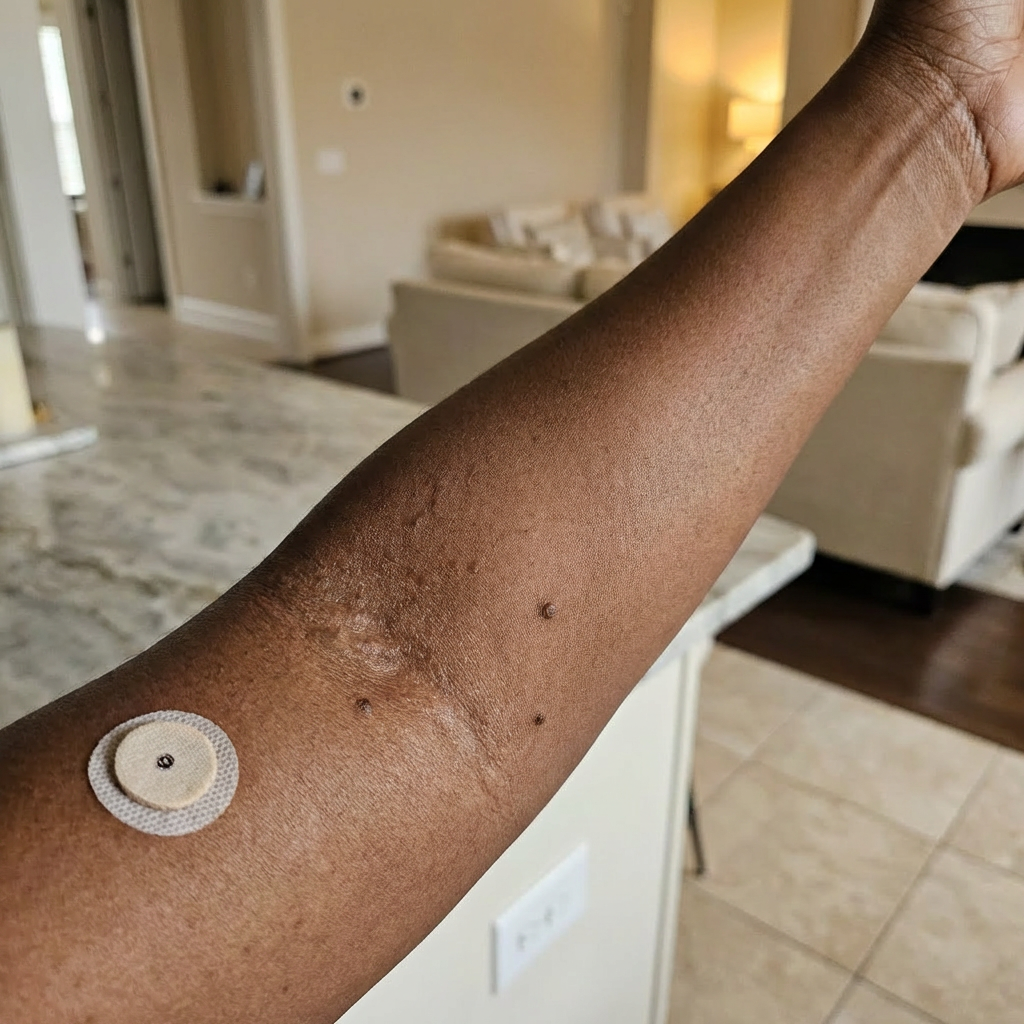
Look at my arm. That little circle is my CGM sensor. I've worn one for going on eight years now. It tells me what my blood sugar is doing every five minutes. It has genuinely kept me out of the hospital more than once. I would never complain about it. But look at what's around it. Those bumps. Those skin tags. The little raised spots clustered right there next to the sensor, and more of them further up my arm, and more on my neck, and more in places I've just stopped looking at because it was making me feel worse to keep track. My doctor told me this was coming before it even started. She said skin tags and blemishes are extremely common in people with type 2 diabetes. Something about the way chronically elevated insulin affects skin cell growth. She explained it clearly and professionally and then moved on to the next thing on her list. I sat there thinking, so this is just my life now. I'm 58. I have done everything right. I test my levels four times a day. I walk 45 minutes every morning even when it's cold and I don't want to. I gave up bread, pasta, most fruit, the glass of wine I used to have on Friday nights. I take my medications. I show up to every appointment. I do the work. And my skin still looks like this. I know how that sounds. I know there are people dealing with far worse. But when you've already surrendered so much to manage this disease, when your body already feels like a negotiation you're constantly losing, the last thing you want is to look down at your arms and feel like a stranger in your own skin. I started covering up around four years ago. Long cardigans in August. Sleeves pushed down at restaurants when I reached for the bread basket I wasn't eating anyway. I stopped wearing the sleeveless tops I used to love. I bought a swimsuit coverup I never took off at the pool. My husband never said a word about it. He's not that kind of man. But I noticed him noticing. The way his eyes would go to my arm when I forgot to cover it. He wasn't disgusted. I know that. But I noticed, and once I noticed I couldn't stop noticing, and that was somehow worse than if he'd just said something out loud. I tried to fix it for a long time before I found what actually worked. The creams first. Every brightening, clarifying, blemish-fading cream I could find at the drugstore and online. I have a drawer in my bathroom that is basically a graveyard of half-used bottles. I spent probably $200 in that drawer over two years. Not one of them touched the skin tags. Not one. Then the freezing kit from Amazon. I used it twice. The second time I held it on too long and it hurt for three days and left a mark that took weeks to fade. I threw it away after that. I tried the dermatologist route. She was wonderful. She walked me through every option, explained each procedure, answered every question I had. Then she handed me the pricing sheet. Electrocautery to remove skin tags. Per tag. I counted the visible ones on my arms while I was sitting in her office. I got to fourteen before I stopped because the number was making me feel sick. That's just my arms. That's not my neck. That's not anywhere else. I thanked her for her time and told her I'd think about it. I drove home and I did not think about it. I thought about the money I didn't have and the disease I was already spending a small fortune managing every month and the cardigan I was going to put back on when I got home. About six months ago my neighbor came over for coffee and she had this little device sitting on her kitchen counter. I asked her what it was. She said it was a plasma pen. I had never heard of those words put together in that context. She showed me a photo on her phone. A skin tag she'd had on her collarbone for years. Gone. Smooth skin where it used to be. She said it took about forty seconds. I went home and ordered the OcuraLife kit before I even finished my coffee. Here is what comes in it, because I want to be specific. The plasma pen itself, which is the device that does the actual work. A numbing cream that you apply to the area about twenty minutes before so you feel almost nothing. Healing patches that go over each treated spot to protect it while it scabs and heals. A high SPF to protect the new skin from sun exposure during recovery. And an aftercare cream that keeps everything calm and helps the skin heal without irritation or scarring. It is a complete system. Not just a device you figure out on your own. The first time I used it I watched the tutorial video four times. I'm not exaggerating. I was nervous. I picked the smallest skin tag I could find, one on my forearm about an inch from where I place my sensor. The numbing cream did its job. I felt a tiny warmth, barely anything. A small dark spot formed over the next 24 hours. I put the healing patch over it and left it alone. By day four the scab was already starting to lift at the edges. By day nine it was gone. The skin underneath was smooth and even and looked like it had never had anything on it at all. I sat on the edge of my bathtub and I cried for about five minutes. Eight years of managing this disease. Four years of covering up. Two years of trying things that didn't work. And it took nine days. Over the following three weeks I worked through the rest of them. I was methodical about it. A few at a time, following the protocol, using the patches, applying the aftercare cream every night. My husband watched me do it one evening and asked if it hurt. I told him it felt like almost nothing. He said "why didn't you do this years ago." I didn't have a good answer for him. Last month I went to my granddaughter's fifth birthday party. Backyard party, middle of the afternoon, warm enough that everyone was in short sleeves. I wore a sleeveless top. The first one I'd worn outside my own house in four years. My husband took a photo of me holding my granddaughter. I looked at it later that night and I didn't look at my arms once. I just looked at her face and mine and thought about how happy we both looked. That's what this gave me back. Not perfect skin. Just my arms back. Just the ability to get dressed in the morning without doing the calculation. Just the feeling of being in my own body without apologizing for it. If you have diabetes and you've been watching your skin change for years and you've been told the only real options cost more than you can justify, I want you to know that's not true anymore. You've already done the hardest work every single day for years. You deserve to feel good in your own skin too. The kit I used is linked below. Everything I described, the pen, the numbing cream, the patches, the aftercare, all of it comes together in one kit. I just wish I hadn't waited so long to find it.
Diabetes did this to my skin.
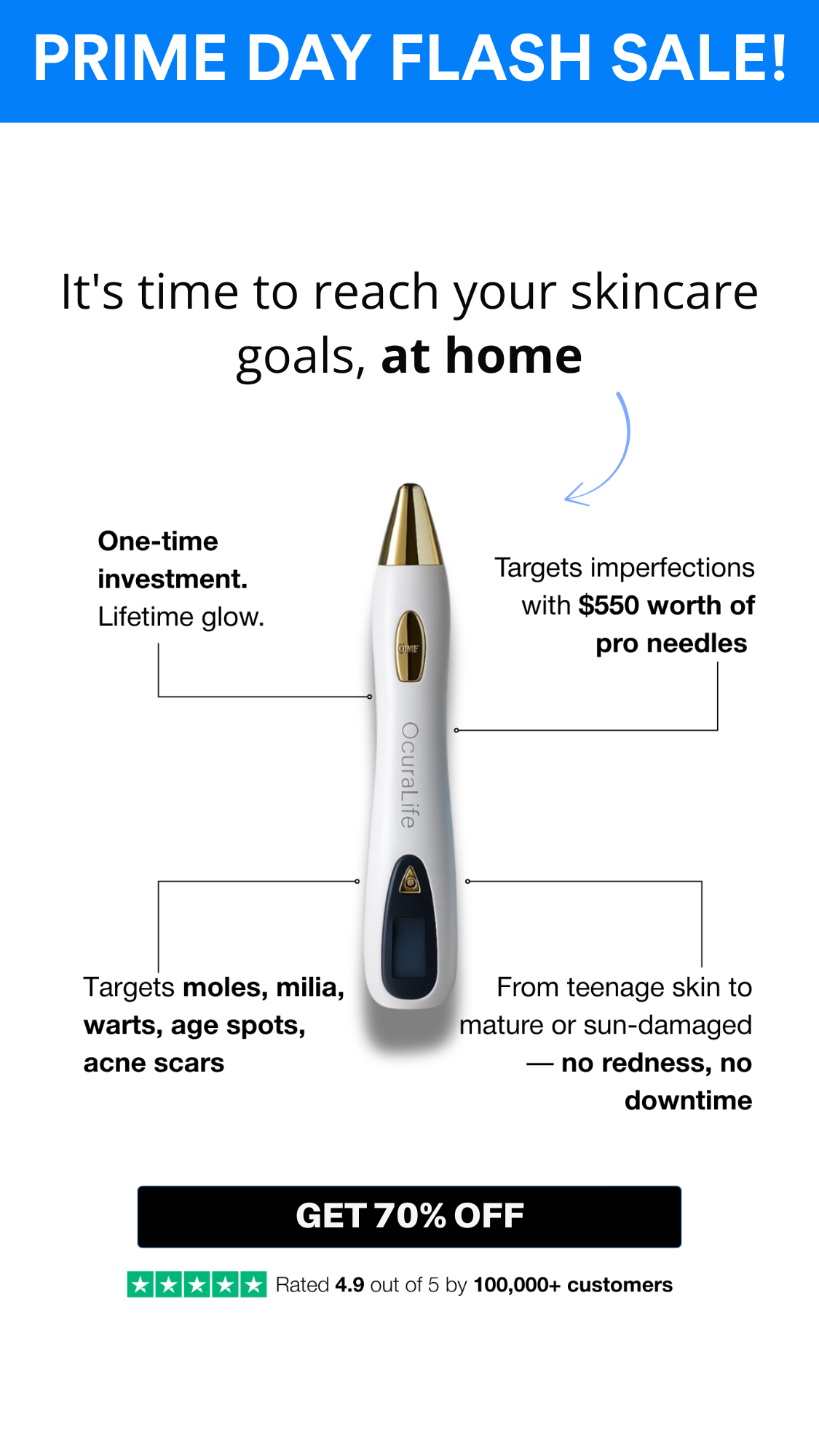
Professional skincare, made simple. The Ocura Plasma Pen treats skin tags, moles, milia, cherry angiomas, age spots, warts, and many more. Gently, safely, in minutes No harsh treatments. No appointments. Just precise, non-invasive care at home. Each kit includes $550 worth of premium tips for m...
LEARN MORELike this ad? Make it yours.
Crush rebuilds this exact creative around your product — your brand, your colors, your offer — in about a minute.