
Inactive· since Aug 8, 2026
- 28
- days it ran
- 0
- relaunches
Ad copy
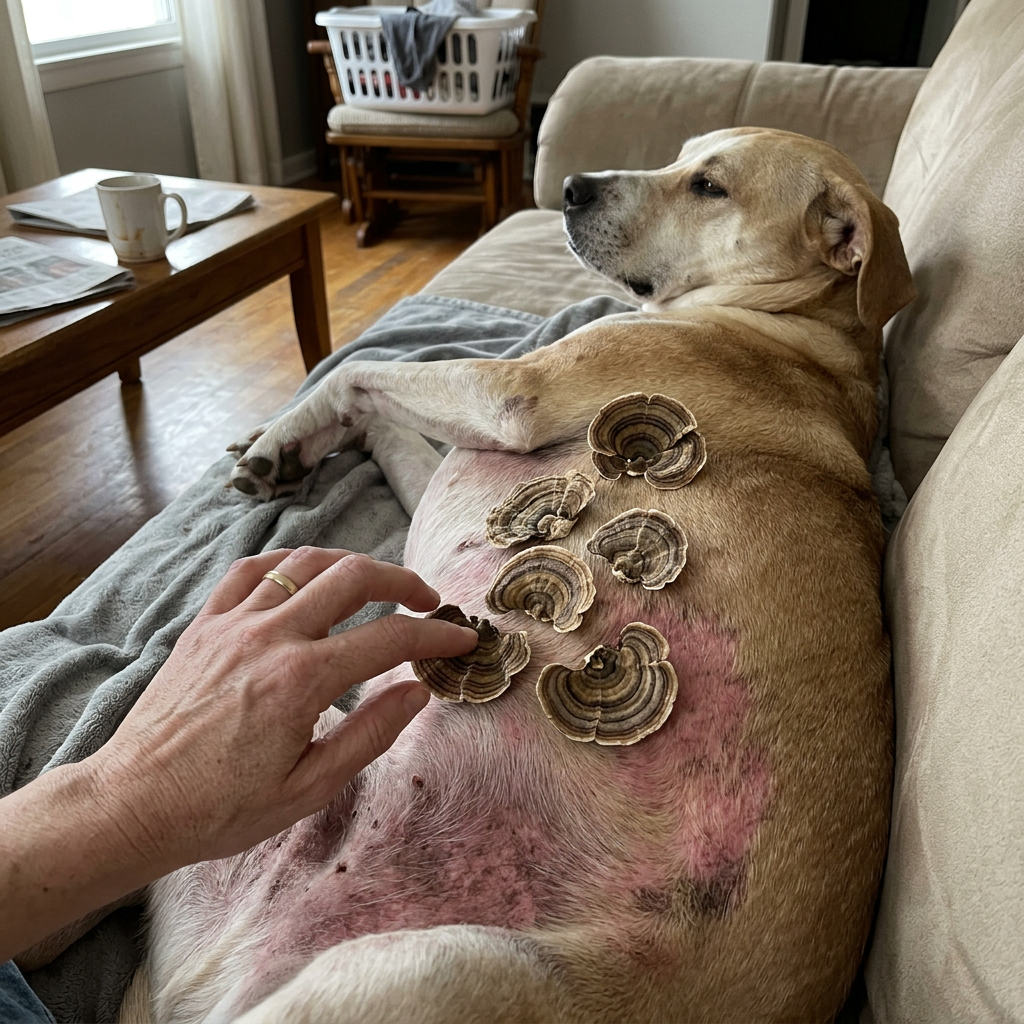
I run a rescue. Seven dogs died at my shelter last year. Every single one had been surrendered for allergies that couldn't be managed. Every single one had been on Apoquel or Cytopoint for over a year. Not one of them actually had allergies. I did not know that yet. Not when I took them in. Not when I watched them scratch themselves raw in the kennels at night. Not when I signed the paperwork that said humane euthanasia. I learned it seven dogs too late. And I am going to tell you what I found out, because your dog probably has the same history mine did. Here is what all seven files had in common. The medication worked at first. Three weeks in, sometimes four, the itching slowed down. The owners thought it was fixed. The vets thought the diagnosis was confirmed. Then somewhere between month three and month six, the itching broke through again. A little paw licking at night. An ear flap that started smelling. A hot spot that opened back up in the same place it had closed. The vet increased the dose. Or added Cytopoint on top of Apoquel. Or added antibiotics. It helped for a few weeks. Then it stopped helping. By month eight, the owners were spending three hundred, four hundred dollars a month and the dogs were scratching just as bad as before the medication started. Then came the dermatologist referral, the elimination diet, twelve weeks of hydrolyzed protein, medicated baths twice a week. Nothing held. The itching always came back. If you are reading this and thinking, "That is exactly what happened with my dog," keep reading. Because what I am about to explain is why. And it is not what your vet told you. Every single one of those dogs had been allergy tested. The panels came back positive for everything. Grasses. Pollens. Dust mites. Molds. Dander. Some dogs tested positive for eight allergens. Some tested positive for fourteen. The vets looked at those panels and said: severe environmental allergies. Prescribed Apoquel. Here is what I need you to understand. The panel was not wrong. Your dog's immune system IS reacting to those things. The findings were real. Your vet read them honestly. But the panel cannot tell you WHY the immune system is reacting to all of it. It cannot tell you why a dog that lived in the same house for four years suddenly became allergic to everything at age five. It cannot see what is happening underneath. Think about it. If your dog truly had environmental allergies, the medication that suppresses the immune response should work. That is literally what it was designed to do. So why does it stop working? If the immune system is being suppressed and the dog is still itching, something ELSE is driving the response. Something the panel cannot see. Something the medication cannot touch. I asked four different vets. None had a good answer. The best I got was, "Some dogs have treatment-resistant allergies," and, "Every dog responds differently." Those are not answers. Those are ways of saying, "I don't know," without saying it. I called a veterinary microbiologist named Marguerite Hollis. She spent fifteen years studying gut bacterial ecosystems in companion animals before she retired from research. I told her the pattern: medication works then fails, panel finds everything, higher doses stop helping, nothing holds. She said: "What you're describing is not allergies. It's bacterial biofilm in the gut." Then she explained something that made all seven files make sense for the first time. Bad bacteria in the gut build protective protein shields around themselves. These shields are called biofilm. Once they are in place, almost nothing gets through. Not antibiotics. Not the immune system. Not probiotics. Behind the shields, bacteria release toxins. The toxins leak through the gut wall into the bloodstream. The immune system responds. The skin reacts. The paws itch. The ears inflame. The hot spots open. The corn chip smell bakes into the coat. The allergy panel picks up the immune activation and says: environmental allergies. But the dog is not allergic to fourteen things. The immune system is so inflamed from the internal toxic load that it has become hyper-reactive to everything in the environment. That is why nothing works long-term. The medication, the elimination diets, the probiotics... none of them can get through the biofilm shield. They suppress the symptom while the bacteria keep growing underneath. The seven dogs who died had all been on immunosuppressants for over a year. They did not die from allergies. They died from what happens when you suppress immunity while biofilm runs unchecked. Your vet is not wrong for prescribing it. Biofilm research in companion animals is less than ten years old. The system was never designed to find this. This is what breaks the cycle. Marguerite told me about a formula called Pet Organica. Six compounds, each one handling a different stage of the biofilm problem. She said nothing single-purpose can touch it because biofilm creates a multi-stage problem that requires a multi-stage solution. Reishi mushroom breaks down the protective shield so the bacteria underneath are finally exposed. Without this step, nothing else can reach the gut wall. This is why probiotics fail. Why gut reset protocols fail. Why elimination diets fail. If the shield is intact, nothing gets through. Turkey Tail helps the gut restore bacterial balance once the shield is broken. This one is backed by canine research out of Purdue University. L-Glutamine gives the gut wall the building block it needs to regrow. The intestinal lining replaces itself every three to five days, but only if the right material is available. Lion's Mane calms the nerve signals between gut and brain. This is what stops the 2am paw-licking. The obsessive scratching is partly a nerve loop, not just an itch response. Bioflavonoids dampen the histamine response during repair. When biofilm first breaks, exposed bacteria can temporarily spike the immune response before they clear. The bioflavonoids keep the dog comfortable through that transition. It is tasteless and odorless. One scoop mixed into food once a day. The dog does not know it is there. I started with a dog named Rosie. She was a pit bull mix, five years old, fourteen months on Apoquel when her owner surrendered her. Raw belly, ears that smelled like death, paws chewed bloody every night. I did not tell anyone I was trying it. Too tired of the hope-and-disappointment cycle. Week one, nothing obvious. Week two, the scratching decreased. Not gone, but less. She slept longer without waking to chew. Week three, a hot spot that had been open for two months started to close. Actual pink skin appearing underneath. Week four, first full night without scratching sounds on the kennel camera. I watched the footage three times. Week six, the corn chip smell was gone. Ears clear for the first time since intake. I stopped the Apoquel. Held my breath. The itching did not come back. Week eight, fur growing back thick over every raw spot. Week ten, a woman named Clara adopted her. She crouched in front of Rosie at an event and Rosie put her head on Clara's knee. Clara looked up and said: "What did you do with her? She seems completely at peace." That was eight months ago. No medication. One scoop of powder every morning. Still itch-free. Then I did it again and again. A seven-year-old beagle named Hank who had been on Cytopoint injections every three weeks for two years. Four hundred and twenty dollars a month. By week three on Pet Organica the injections went to every five weeks. By week seven he didn't need them. A three-year-old golden named Sunny who had been on Apoquel since she was fourteen months old. Eleven allergens on the panel. Elimination diet for twelve weeks, no change. Within four weeks her belly went from raw red to pink. By week eight her owner sent me a photo of her sleeping on her back with her belly exposed for the first time in two years. A nine-year-old lab mix named Duke who had been through Apoquel, Cytopoint, two rounds of antibiotics, a dermatologist referral, and a prescription diet. Over twelve thousand dollars in eighteen months. Day nine his owner messaged me: "I haven't heard him scratching in three nights. First time in over a year." Same pattern every time. Breed doesn't matter. Age doesn't matter. Medication history doesn't matter. How many thousands already spent doesn't matter. Break the biofilm. Let the gut rebuild. The itching stops. Forty-two dogs from this rescue are on it now. None are on Apoquel. Of those forty-two, thirty-eight showed visible improvement by day seven. Thirty-six were completely itch-free by day ninety. The vast majority never went back on medication. Because once the biofilm is broken and the gut wall rebuilds, there is nothing driving the itch cycle anymore. I want to tell you something about the week after Rosie got adopted. I sat down and calculated what her surrendering owner had spent. Fourteen months of Apoquel. Three rounds of antibiotics. Two dermatologist visits. The elimination diet. The medicated shampoos. Just under nine thousand dollars. Pet Organica costs about a dollar a day. That is what fixed her. Not nine thousand dollars of immune suppression that made the problem worse every month. One scoop of powder in her food every morning for ten weeks. I have since recommended it to every adopter who takes a dog from my rescue with an itch history. I have recommended it to friends. To strangers in dog park parking lots. To people who message me on Facebook at midnight asking why their dog won't stop scratching. I tell them all the same thing: You can start it tonight. It is not a drug. It is a mushroom-based gut repair formula. You do not need vet approval. You do not need to stop whatever medication your dog is on. Most dogs wean off gradually as itching decreases over weeks three through six. One scoop. Mixed into food. The dog does not know it is there. The only problem I have run into is supply. Pet Organica has sold out twelve times in the past year. They source from high-altitude farms and the batches run tight. Two months ago I tried to order for a new intake and it was out of stock for three weeks. By the time it came back, that dog had scratched a hot spot down to the muscle. Three weeks. That is what waiting cost. I am not telling you this to rush you. I am telling you because I know what waiting looks like. I waited through seven dogs. The ones I caught early healed in weeks. The ones who had been on immunosuppressants for two years were the ones I lost. Every week the biofilm runs is a week the shield gets thicker and the gut wall gets thinner. If it is in stock right now, get it tonight. https://petorganicaco.com/products/vet-recommended-allergy-support They do a 180-day money-back guarantee. Empty bags. Full refund. No forms. If your dog is not visibly better, you lose nothing. If your dog IS better, you just ended the cycle that would have cost you thousands more and put your dog through years more suffering. Order the two-pack or higher and they include a Natural Anti-Itch Spray for topical relief while the gut repairs from the inside. Every order ships free with their Itch Relief Guide. Clara sent me a photo of Rosie last week. She was asleep on her back on the couch with her belly exposed. Pink skin. Full coat. No scratching. A year ago that belly was raw and bleeding and I was filling out euthanasia paperwork for dogs just like her. Your dog has the same history Rosie did. The only difference is you found this before I had to find it for you. https://petorganicaco.com/products/vet-recommended-allergy-support
Like this ad? Make it yours.
Crush rebuilds this exact creative around your product — your brand, your colors, your offer — in about a minute.