Augustus Holloway
Augustus Holloway Facebook ad: “Support your liver today”
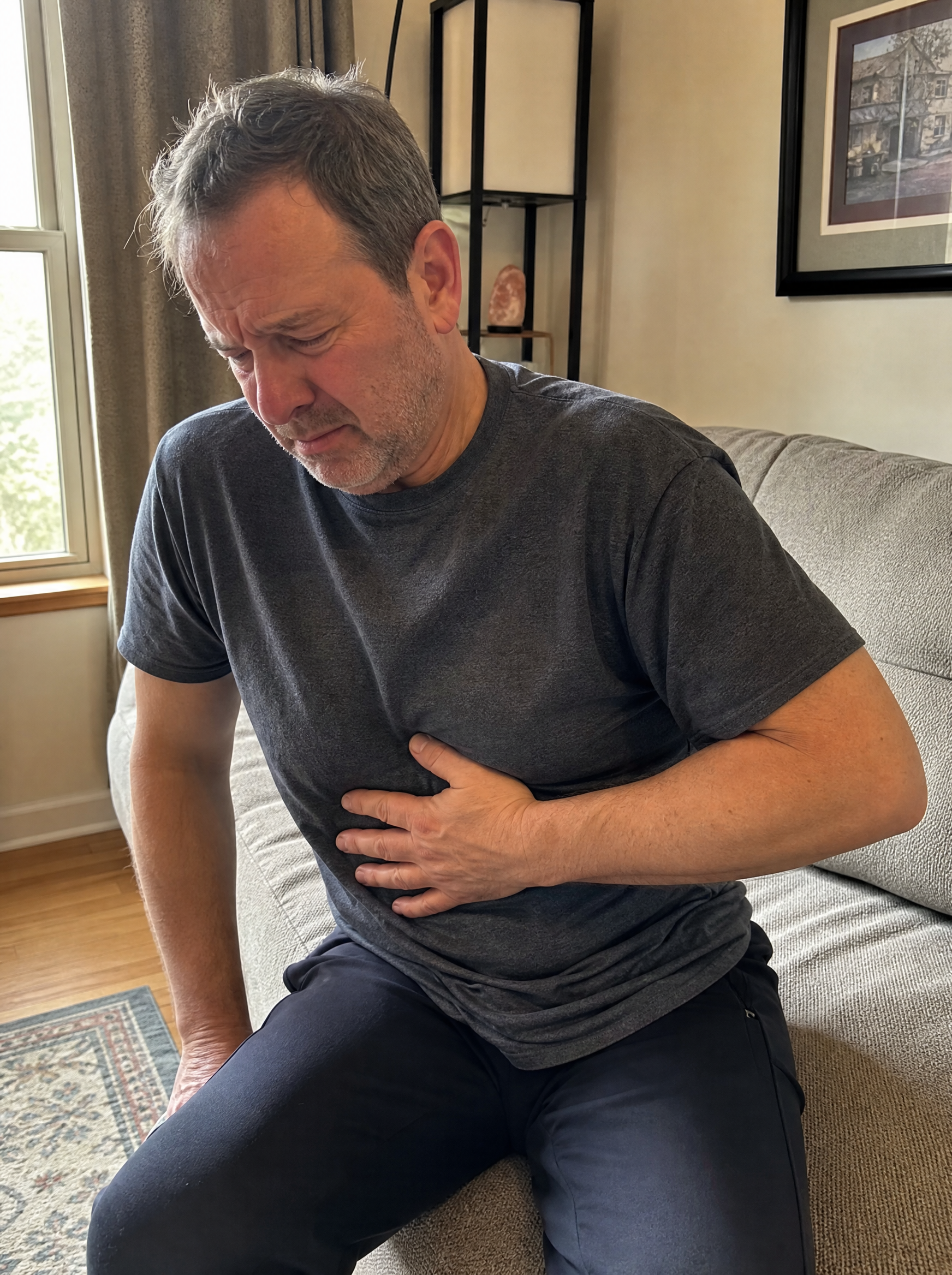
Ran for 16 days, from September 11 to September 27, 2026, the last day Crush saw it.
Run by Augustus Holloway on Facebook. Crush is not the advertiser and does not verify its claims. See this ad in Meta's Ad Library(opens in a new tab)
Make your own version of this ad
Crush makes it, launches it in your own Meta ad account, scales the winners and pauses the losers.
About this ad
- Meta Ad Library ID
- 2146786706245993
- Platforms
- Facebook, Instagram, Audience Network, WhatsApp and Threads
- Relaunches
- 0
Ad text
The most dangerous sign of fatty liver is not what shows up on your ultrasound. It is not what your ALT panel says. Fatty liver is called a silent disease for a reason. By the time your bloodwork catches it, you have already been carrying it for years, and the standard of care your doctor is about to hand you is designed to watch that damage progress, not stop it. I have spent 18 years watching people find out too late. I'm Dr. James Ellison. I've been a hepatologist for 18 years. I've watched fatty liver progress into cirrhosis in patients who did everything their doctor told them to do. I've watched ALT levels drift upward for a decade while everyone at the annual physical agreed the numbers were still borderline. I've sat across from patients and explained what liver transplant evaluation means. I've watched a grown woman grip the armrests of her chair and stare at the floor when I told her the ultrasound had shown advanced fibrosis and she was no longer a candidate for reversal. Every single one of them had missed the real warning. Not because they were not paying attention. Because nobody had told them what was actually happening inside their liver. And by the time their labs caught up to the damage that had been silently building for years, there was very little left to save. Here are the signs most people dismiss until it is too late. Constant fatigue that sleep cannot fix. You wake up after eight hours feeling like you slept two. Your liver has been silently overwhelmed for years, and the hormones and toxins it is supposed to clear from your bloodstream are backing up. Every cell in your body is being asked to run on dirty fuel and it can't. A dull ache under the right ribs that comes and goes. Everyone keeps calling it reflux. Everyone keeps prescribing Pepcid or Prilosec for it. It is not reflux. It is your liver cells swollen with fat that has been trapped inside them for years, pushing against the liver capsule from the inside. That ache is the physical pressure of an organ that is holding more than it was designed to hold. A belly that will not shift no matter what you cut. Not because you are undisciplined. Because your liver has slowed down the metabolic processing of everything you eat, and until the organ that runs your metabolism starts working again, no amount of dietary restriction will move the number on the scale. Brain fog. Losing words mid-sentence. Forgetting the movie you watched last week. Your liver is supposed to filter the compounds that would otherwise reach your brain, and when it can no longer keep up, those compounds start crossing the blood-brain barrier. You blame it on age. You blame it on stress. It is your liver. Any one of these is your liver asking for help. Most people blame age. They blame stress. They tell their doctor they will keep an eye on it. And their doctor agrees. Follow-up in six months. Repeat the labs. See where the numbers are then. I know what keeping an eye on it looks like from the other end. It looks like quarterly labs documenting the ALT drifting upward in neat little rows while the liver quietly builds up fat between appointments. It looks like an ultrasound at 45 showing mild steatosis and another at 52 showing moderate steatosis and everyone agreeing to keep monitoring. It looks like the conversation I have had eight hundred times over 18 years that starts with "I wish we had caught this before it progressed." We did catch it. We just were not looking at the right thing. I said those exact words to eight hundred patients over 18 years. "We caught it early. We'll monitor it. Come back in six months." Then I said them to my brother. David is three years older than me. Started with a slightly elevated ALT in his mid-forties. His primary care doctor said borderline, work on losing ten pounds. He lost twelve. The number stayed elevated. The next year it was elevated again, still called borderline. By 51 an ultrasound showed mild hepatic steatosis, and by 54 it had progressed to moderate. By then he had cut out wine entirely, cut back on sugar, walked three miles every morning. The number would not budge. David is the kind of man who restores old cars in his garage on weekends. Been at a 1969 Ford Mustang for four years, sanding, machining, hunting down original parts. He was going to give it to his daughter on her graduation from vet school. She graduates in eight months. Precise work. The kind that requires standing over an engine bay for four hours at a time and keeping your hands steady. He followed every instruction his doctor gave him because he was doing everything he was supposed to do, and because his little brother is a liver specialist and he trusted me completely. I reviewed his labs personally. Every six months. Pulled up his chart, looked at the ALT drift, checked the ultrasound reports, and told him what I told every patient. Keep at it. We're on top of it. His ALT at the first draw I reviewed was 44. Mildly elevated but nothing to move on. Consistent with mild steatosis. Standard monitoring. A year later, 51. I told him to lose a few more pounds and cut the wine entirely. Two years in, 58. His ultrasound had progressed from mild to moderate. I told him we were watching it carefully. David called me on a Saturday afternoon about two years in. "I tried to get back out to the garage today." His voice was flat. "Got the hood up on the Mustang. Pulled the parts off the bench. Stood over the engine bay for about forty minutes and had to sit down on the concrete because my back was just done and my hands were shaking." He paused. "I'm not going back out there until I can stand for four hours like I used to. It's not safe with the tools." His ALT the following month was 64. His ultrasound showed the fatty infiltration had gotten worse. His FibroScan showed early stage 1 fibrosis. I told him what I told every patient. We are monitoring it. We caught it before the fibrosis progressed. Let's cut back on the wine entirely, work on losing five more pounds, and recheck in 90 days. At the three-year mark, I pulled up his chart and his ALT was 72. His FibroScan had progressed from stage 1 to early stage 2. His ultrasound showed advanced steatosis with early inflammatory markers starting to appear. Stage 2 fibrosis. The threshold where the conversation changes. Where "monitoring" becomes "we need to think about pharmaceutical intervention." I stared at the screen. I had watched that ALT climb from 44 to 72 in three years. Every point documented. Every appointment noted. Every recommendation given according to the standard-of-care guidelines I had followed my entire career. And he was sitting across from me in the exam room I had reserved for him. My brother. Waiting for me to tell him what to do next. The way he had trusted me to do for three years. The way eight hundred patients before him had trusted me to do. I could not say "we'll keep monitoring it" again. Not to him. Not with 72 on the screen and a man sitting on a garage floor in the middle of his daughter's unfinished graduation present. That night I did something I had not done since residency. I sat at my kitchen table with my laptop and I went looking for what I had missed. Not what the guidelines said. Not what the AASLD recommendations were. What I had missed. I typed: "fatty liver progression despite dietary intervention and weight loss, underlying mechanism." What came back changed everything I thought I understood about fatty liver. A paper in a European hepatology journal I subscribe to. Cited eleven other studies I had never opened. Eleven. In a journal that arrives at my office every month. The paper was about why every single-target treatment for fatty liver plateaus, and why the standard-of-care monitoring approach documents the decline without ever addressing what is actually causing it. I called Dr. Petra Sonderberg the next morning. She runs a hepatology research lab in Munich and I had consulted with her once on a rare presentation four years earlier. I told her what I was seeing. The steady ALT progression despite managed weight, despite abstinence from alcohol, despite perfect protocol compliance. I told her about David. She was quiet for a moment. Then she said something I have never forgotten. "James, your brother's liver has three problems happening at the same time, and every recommendation you gave him addressed at most one of them." "What do you mean, three problems?" "Fatty liver is not one thing. It is three things running in a loop, and each one makes the other two worse. That is why single-target treatment plateaus every time. You address one part of the loop, the other two keep it compounding, and the patient goes right back to where they started within a few months." "Walk me through it." "First, the liver cells themselves are damaged. Years of processed food, medications, alcohol, hormonal shifts, everything the liver has been filtering, has left the cells struggling. Damaged cells cannot process incoming fat properly, and damaged cells cannot ship out the fat that is already inside them. That is problem one." "Second, the internal cleaning system the liver runs on has been depleted. Your liver uses an antioxidant called glutathione to break down the toxic buildup inside the cells at the cellular level. When glutathione runs down, that toxic buildup accumulates and the cells end up drowning in the very waste they were supposed to clear. That is problem two." "Third, the fat itself. When damaged cells cannot process fat and the internal cleaning system cannot break down the buildup, fat that would normally leave the cells has nowhere to go. It stays trapped inside them. Layer after layer, year after year. That is problem three." "And here is the loop. Damaged cells cannot clear the toxic buildup, so the buildup accumulates. Accumulating buildup damages more cells. Damaged cells trap more fat. Trapped fat stresses the cells further, causing more damage. More damage means less capacity to clear the buildup. Every quarter you have been documenting on David's chart, all three of these have been compounding at the same time. That is not disease progression. That is a cycle nobody addressed." I thought about every fatty liver patient I had ever recommended lifestyle changes for. Every chart where I had written "continue current management, recheck in six months." Weight loss addresses incoming fat. It does nothing about damaged cells, the depleted cleaning system, or the fat already trapped inside those cells. Cutting alcohol removes one source of damage. It does nothing about the accumulated damage, the depleted cleaning system, or the trapped fat. Rezdiffra forces more fat metabolism. It does not restore the cells or the cleaning system, and the moment you stop, the loop resumes. Every single-target intervention addresses one part of the loop while the other two keep it running. Because I had never been trained to see it as a loop. Nobody had told me to. I asked her what actually breaks the cycle. "Three compounds, working together. Not one, not two. Three. Each one addresses one part of the loop, and all three have to be active at the same time or the loop keeps compounding." "Silymarin, the active compound in milk thistle, at pharmaceutical grade standardized to 80 percent, rebuilds the damaged liver cells. That is what addresses problem one." "NAC, the same NAC American hospitals use in acute liver failure, refills the glutathione your liver runs on. When glutathione is refilled, the internal cleaning system comes back online and starts breaking down the toxic buildup the cells have been drowning in. That is what addresses problem two." "Choline is the raw material your liver uses to package the trapped fat and physically ship it out through the bile. Over 80 percent of American adults are deficient in it, and most American multivitamins do not include it at all. When choline is available, the fat that has been trapped inside the cells finally has a way to leave. That is what addresses problem three." "Miss any one of the three and the loop keeps running. That is why single-ingredient milk thistle protocols consistently fail. Silymarin rebuilds the cells, but if you have not refilled the glutathione and you have not provided the choline, the cells are being protected while the toxic buildup accumulates and the fat stays trapped. You are protecting an organ that is still packed with fat and drowning in waste. Nothing changes." Three compounds. Three specific jobs. And every fatty liver protocol I had ever prescribed had addressed exactly zero of them, because I had been trained to look only at the incoming load. "Is there anything on fatty liver specifically? Real numbers?" "There is. A twelve-week clinical trial comparing the three-compound protocol against dietary intervention alone in fatty liver patients. The three-compound group showed CAP score reductions three times greater than the diet-only group. ALT dropped significantly in the three-compound group. It barely moved in the diet-only group. It was not a cure. Nobody is claiming reversal in every case. But the loop that was driving the progression was finally being addressed at all three points at the same time, and the numbers moved." Published. Peer-reviewed. The kind of study that should have been on my desk years ago. I ordered a milk thistle supplement that week. Highly rated on Amazon. Thousands of reviews. Four and a half stars. I gave it to David myself, along with separate bottles of NAC and choline I had also ordered. He took them every day for six weeks. Did not miss a dose. He told me the first couple of weeks he thought he felt a little more energy in the afternoons. Then it faded. By week five he was back to sitting down after 40 minutes at the workbench and the Mustang was still under the tarp. I ordered labs. ALT: 71. Essentially unchanged from where it had been three months earlier. His ultrasound was scheduled for the following month. I already knew what it was going to show. I called David with the results. Long pause. "So it didn't work." Not a question. I told him I was going to figure out why. He said "okay" the way people say okay when they have stopped expecting anything. I recognized that tone. I had heard it from patients who were starting to make peace with a chronic disease diagnosis they thought was untreatable. I closed the laptop. Opened it. Stared at the wall above the screen for a long time. The research was clear. The three-compound protocol addressed all three parts of the loop in a peer-reviewed clinical trial. So why had my brother's labs not moved? I asked the question I should have asked before I ever gave him the first bottle. Not "does this protocol work?" The research had already answered that. "Why isn't THIS bottle working?" I took the milk thistle capsule I had bought on Amazon to the kitchen counter and twisted it open over a white saucer. A coarse, gray-brown powder spilled out. Ground seed. Not extract. Not a standardized concentration of active compound. Just the whole seed of the milk thistle plant, dried and ground and stuffed into a capsule, and labeled as 1000 milligrams as if that meant anything. I stopped. Real pharmaceutical-grade silymarin extract is a fine, golden powder with visible flakes of standardized active compound. It has a specific color and a specific texture. What I had in front of me was seed dust. Then I read the label. It said, simply, "milk thistle 1000mg." There was no standardization percentage listed anywhere. The certificate of analysis link on their website led to a 404 page. Nowhere was there any independent third-party testing. Nowhere was the actual silymarin content declared. I checked the NAC bottle I had bought in bulk. It was USP grade at least, but the dose I had told David to take was too low compared to what the research used. And I checked the choline bottle. It was choline bitartrate at 250 milligrams per capsule when the research uses 400. And the timing was wrong. The three compounds needed to be taken together at the correct doses so all three parts of the loop were being addressed at the same time. I had given my brother three separate bottles at three separate wrong doses and told him to guess. I had given my brother nothing. The equivalent of writing a prescription for a third of the dose in a different drug class and wondering why the labs would not move. And that small lift he felt those first two weeks? That part was real. Even underdosed silymarin does something for the cells. That is the fastest, easiest part of the loop to touch, and it is exactly how single-ingredient milk thistle fools you. You feel a little something and you decide it is working, while the other two parts of the loop keep the whole cycle compounding. The cells were getting a little support. The toxic buildup was still accumulating. The trapped fat was still trapped. The feeling was never the proof. The lab sheet is the proof. And the lab sheet had not moved. I spent three days researching every liver supplement on the American market. I stopped grading them on stars and reviews and started grading them on four things. Silymarin content. Real 80 percent pharmaceutical grade with a specific milligram declaration, or unstandardized ground seed dressed up on a label. NAC and choline inclusion at clinical dose. All three compounds together in a single capsule at the doses the research uses, so all three parts of the loop are being addressed at the same time. Or milk thistle alone with the two most important compounds missing entirely. Third-party laboratory verification. An independent certificate of analysis, published, testing an actual batch. Or nothing, which means they are hiding what is not in the capsule. Sourcing standard. European pharmaceutical grade sourcing that meets Kommission E and Ph. Eur. monograph standards, or generic bulk supplement grade that meets essentially no standard at all. I eliminated them one by one. Wrong silymarin grade. Right grade but no NAC. Right compounds but hidden inside a proprietary blend. Right idea but no lab report anywhere. One brand met every criterion. Happy Liver, by a company called Ritual Labs. European pharmaceutical grade silymarin standardized to 80 percent, HPLC verified. NAC at 600 milligrams, the same purity American hospitals use in acute liver failure. Choline at 400 milligrams, the dose the research uses. All three in one capsule. No proprietary blend. Every milligram declared on the label. Third-party lab tested every batch with a published certificate of analysis anyone can read. The milk thistle they use is grown by Amish farming families in Lancaster County, Pennsylvania, from an old European seed line that traces back to Kommission E monograph specifications. Small batch. Once a year. Hand harvested. Processed at low temperature to preserve the active compound. I ordered it for David that night. But before I gave it to him, I did the one thing I should have done with the first bottle. I twisted a Happy Liver capsule open over the same white saucer. The powder that fell out was a fine, warm golden color with visible flakes of standardized extract that caught the light. It looked nothing like the coarse gray-brown seed dust I had bought the first time. I put a drop of water on it and the powder dissolved cleanly into a golden liquid. That was what standardized silymarin actually looks like. That was what I had never once given my brother. He took the first three capsules with a glass of water on a Monday morning. I told him this time might be different. I did not tell him about the color test. I just told him to take three capsules every morning and to track everything. Week one, nothing dramatic. A little more energy toward the end of the afternoon. Week two, the dull ache under his right ribs started easing. He noticed one morning while doing dishes. The pressure that had been there for two years was quieter. He rubbed the spot and there was nothing to rub. Week three, he slept through the night for the first time in probably a year. He called me the next morning almost embarrassed. "James, I don't remember the last time I slept until 6 without waking up." Week four, I ran mid-protocol bloodwork out of curiosity. His ALT was already at 58. Down 14 points in four weeks. That number had never moved in three years of quarterly labs. It moved in a month. Week five, David called me at 11 AM on a Saturday. "I went out to the garage today." Almost casual. Like he was mentioning the weather. "Didn't do anything. Just stood there for a while. Looked at the Mustang." He paused. "I stood for an hour and forty minutes. I didn't have to sit down." I ordered labs at 90 days. I pulled up his chart at my kitchen table that evening. Same screen I had watched his ALT climb on for three years. I closed the laptop. Same kitchen table. Same screen. Same brother. I opened it again. Different number. First time in three years, a different number. ALT: 42. Forty-two. Down from 72. Almost back to his baseline from before the whole progression started. Three years of watching the line slope upward, adjusting recommendations, writing "recheck in 90 days." And for the first time, the line moved the other direction. His AST was down from 58 to 34. His gamma-GT was normal for the first time in five years. And his repeat FibroScan the following week showed his CAP score had dropped out of the advanced steatosis range for the first time since I had started tracking it. The loop had finally been broken at all three points. The cells were rebuilding. The cleaning system was refilled. The trapped fat was leaving. All three at the same time, for the first time in a decade. I called David. "Your ALT is 42." Silence. "It went down?" "It went down almost 30 points. Your FibroScan improved. You dropped a full stage." I heard him exhale. A long, slow breath. The kind of breath you let out when you have been holding something for three years and you did not realize how heavy it was until it started to lift. "I'm going to finish that Mustang," he said. I called Petra Sonderberg that evening. Told her about David's numbers. She was quiet for a moment. "Now imagine if American hepatology had known this 18 years ago." I have imagined it. Every day since. Since David, I have recommended Happy Liver to nineteen patients whose charts I would have previously handed to a monitoring schedule. Every single one has come back with the same two words I had not heard in 18 years of quarterly liver reviews. "It's improving." Not managed. Improving. If you have noticed any of the signs I listed at the beginning of this letter, if you have an elevated ALT that has been drifting up for years, if you have been told your fatty liver is mild and you should just keep an eye on it, do not wait for the next follow-up to confirm what is already happening. Your liver is warning you. The loop is compounding right now. Every day the cells stay damaged, the cleaning system stays depleted, and the trapped fat has no way to leave is another day the whole cycle accelerates. Your current plan, no matter how carefully your doctor is monitoring it, is not designed to address all three at the same time. Try Happy Liver risk-free. 60-day money-back guarantee. If your ALT does not move, if your bloodwork does not improve, if you feel no difference in 60 days, you pay nothing. Every penny back. Most patients who see real movement in their labs commit to at least three months. That is how long it takes to rebuild the cells, refill the cleaning system, and clear the trapped fat all at the same time. The 60-day guarantee covers most of that window at no risk to you. Here is what happens when the numbers do move. Sleep improves within the first week. The fog lifts. The ache under the right ribs eases. Somewhere in the first month, the thing you gave up because you did not have the stamina to do it starts calling you back. And at your next lab draw, the one where your doctor has been writing "borderline, recheck in six months" for the past two years, they pull up the chart. Stare at the screen. Look at you. Back at the screen. "These numbers are improving. What did you change?" Three capsules. One glass of water. Once a day. That is the whole protocol. David finished the Mustang last month. Cherry red 1969 fastback. First one he completed in two years. His daughter's graduation is in eight weeks and it's sitting in the garage with a ribbon on it waiting for her. He sent me a photo. I have it on my phone. Your liver has been warning you. Now you know what it has been saying. And you know what to do about it. https://rituallabs.shop/products/happy-liver ~ Dr. James Ellison, MD, Hepatology, 18 years P.S. I want to be clear about something. I am not telling anyone to stop their medications. If your primary care physician has you on metformin, on a statin, on an ACE inhibitor, keep taking them. They are managing the metabolic strain your liver is under. That is real and necessary. What I am telling you is that nobody has been addressing all three parts of the fatty liver loop at the same time. Happy Liver does not replace your prescriptions. It addresses the part of the problem your prescriptions were never designed to reach. I gave it to my own brother before I recommended it to a single patient. I gave him the wrong version first, coarse brown seed powder in a bottle labeled milk thistle, and watched it fail. I found the right one and watched his ALT drop 30 points and his FibroScan improve a full stage. David is the reason I trust it. Talk to your doctor. Show them your labs at 60 days. Let the numbers do the talking. P.P.S. The color test on your current supplement is worth doing tonight. Twist open a capsule of whatever milk thistle you currently take and shake the powder onto a white plate. If it is a fine golden powder with visible flakes of standardized extract, you have the real thing. If it is a coarse gray-brown dust that looks like ground seed, it is ground seed. That is the milk thistle plant, not the active compound the research uses. You have been swallowing seed powder and expecting the results of a pharmaceutical extract. That is why nothing has moved. P.P.P.S. This works the same way for women. The loop that drives fatty liver does not care about your gender. If your own ALT has been drifting up for years, if you have been told it is menopause or aging or just borderline, if your doctor has been writing "recheck in six months" while you watch yourself getting more tired every appointment, this is for you too. In my practice the women I have recommended Happy Liver to have shown the same pattern of improvement as the men. P.P.P.P.S. Ritual Labs is a small company. They produce in small batches to preserve the standardization of the silymarin, and Happy Liver sells out constantly. The milk thistle grown by their Amish partner farms in Lancaster County is harvested once a year, hand-picked, and shade-dried at low temperature. You cannot scale that kind of sourcing the way you scale commercial supplement production. When a batch is gone, it is gone until the next harvest. David had to wait five days for a restock on his second bottle. They have a buy 2 get 1 free offer running now. Three months' supply for the price of two. The cost of 90 days is less than what most people spend on a single co-pay for a specialist appointment. And unlike your co-pay, this one comes with a full money-back guarantee. If your next lab draw is in 30 to 60 days and you want to walk in with real numbers instead of another quarter of managed progression, check availability now. David waited three years under my care before I found the right answer. Do not wait because your doctor has not found it yet either. P.P.P.P.P.S. Do not forget about the 60-day money-back guarantee. If the numbers do not move, every dollar comes back to your card. No questions asked. https://rituallabs.shop/products/happy-liver
Where the ad sends people
rituallabs.shop
Support your liver today
Ritual Labs
Learn more: rituallabs.shop(opens in a new tab)