
Inactive· since May 5, 2026
- 3
- days it ran
- 3
- relaunches
- 17
- EU reach
Ad copy
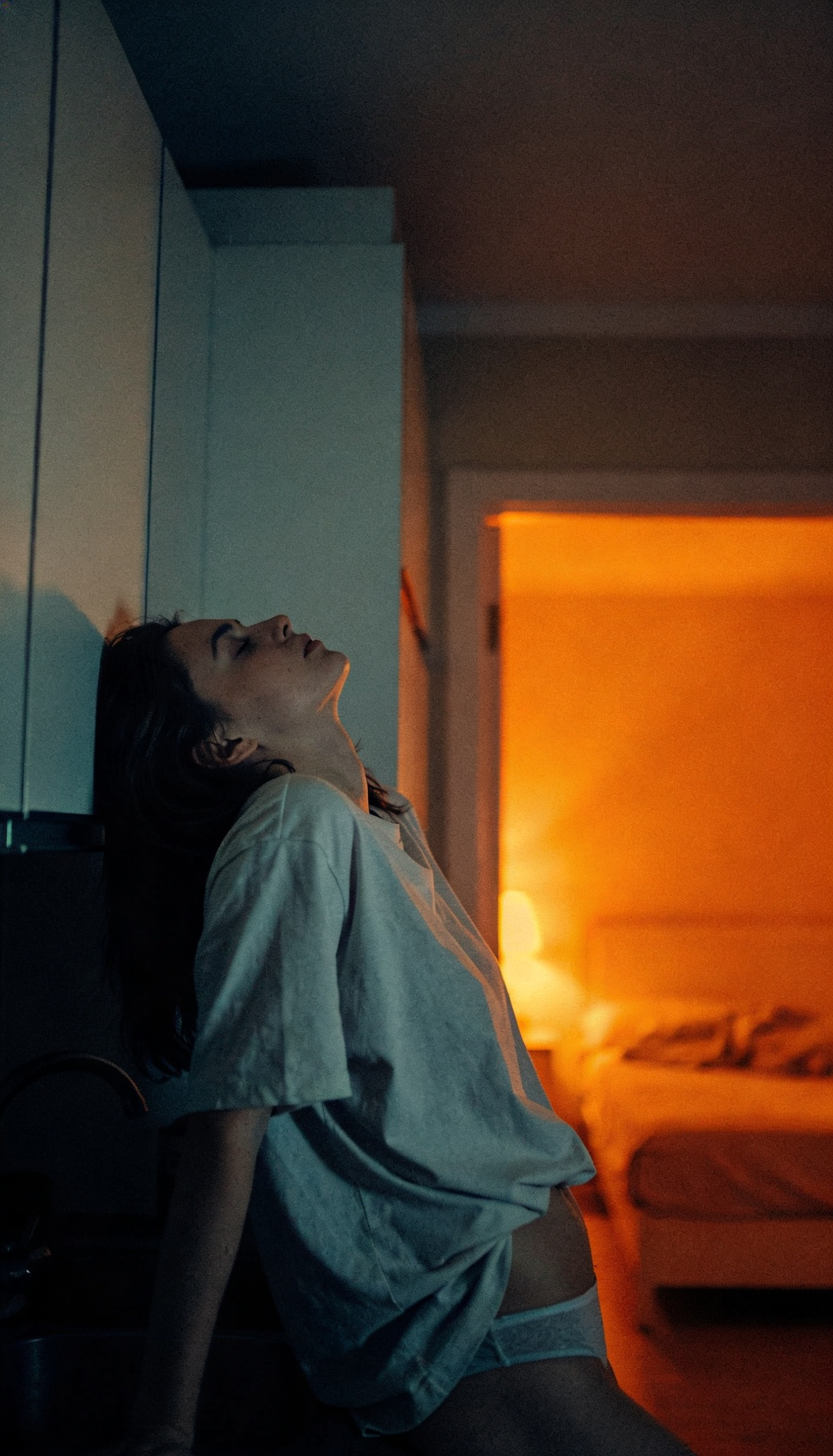
My mother's breath smelled like mouthwash and wine before noon and I learned to read the bottle on the counter before I read her face. I became the kid who noticed everything and said nothing. I'm 38 now and I just realized I've been doing the same thing with everyone I love. I can tell you the exact moment a room shifts. The air pressure changes. Someone's jaw tightens. Someone reaches for a glass a half second too fast. Someone's laugh goes a little too bright. I've been reading rooms since I was six years old. It kept me safe. It kept the peace. It made me the easiest kid in the house to forget about because I never needed anything — not out loud, not in a way that added to the pile. That's what I told myself anyway. My dad drank. Not the fall-down kind, not the kind that made it into a story with a beginning and an end. The slow kind. The functional kind. The kind where he showed up to my games, helped with my homework, coached my Little League team, and also where I spent every car ride home calculating his mood from the set of his shoulders before he even opened his mouth. He wasn't a monster. That's the part that took me the longest to say out loud. He was a good man who drank too much and whose moods ran the whole household like weather patterns. You didn't plan for Tuesday. You read Tuesday when it came. My mother managed him. Quietly, constantly, the way you manage a fire — not to put it out, just to keep it from spreading to the curtains. I watched her do it. I learned. By the time I was in middle school I was the most emotionally fluent kid I knew. Not because I had feelings — I barely knew I had feelings. But because I knew everyone else's. I could walk into a room and within thirty seconds tell you who was angry, who was scared, who was pretending, and what was probably going to happen next. I thought that was a skill. I didn't understand it was a survival strategy masquerading as a personality. — Here's what my adult life looked like before I understood any of this. I got into every relationship I was in because someone needed something and I could feel exactly what it was. I don't mean I chose broken people consciously. I mean I was drawn toward emotional complexity the way other people are drawn toward warmth, because complexity was familiar. Complexity was home. Calm felt like the calm before something. I helped. I managed. I anticipated. I made myself useful before anyone had to ask. And then I resented it. Then I resented myself for resenting it, because these were people I loved, and wasn't this just what love was? I've had three serious relationships. In each one there was a point — usually around year two — where the other person would say some version of the same thing. "I don't know what you actually want." "You're never upset about anything." "I feel like I'm talking to a wall sometimes." They weren't wrong. I didn't know what I wanted either. I was so busy reading the room that I never had to figure out what I'd want if the room wasn't on fire. The fights we did have — when I finally cracked — were bad. Not because I yelled. I didn't yell. I went cold. I went somewhere that scared people. Not a rage, a disappearance. One minute I was there, the next minute the lights were off and I was managing the exit from somewhere very far away inside myself. My last girlfriend used to say: "You went away again." She meant it literally. — I drank some in my twenties. Not the way my father did — I watched for that, I was terrified of that — but enough to take the edge off, which is a phrase that makes complete sense if you've been on high alert for thirty years and the edge is always right there and some things help it go away for a few hours. I stopped when I started noticing the pattern. That part I caught. I told myself I was handling it. I didn't understand that I'd just found other edges to go to. Work became one. Overcommitting became one. Staying so busy that my inner life never had a quiet moment to speak up — that became one. I didn't have a drinking problem. I had a version of the same problem, using different materials. My sister drinks now. The way my dad drank. Functional. Present. Just — tilted slightly. I see it and I don't say anything. That's the loop too. Keep the peace. Read the room. Manage the fire. Don't add to the pile. I've done it so long I don't know how to stop. I've done it so long that when someone asks what I need, I laugh a little, deflect, redirect the conversation back to them, and later wonder why I feel invisible. I make myself invisible. That's the part I had to sit with. Not because I'm a pushover. Not because I have no self-esteem. I'm actually pretty good at my job, people listen when I talk, I can hold a room. But holding a room and being in a room are different things. And I learned before I learned to read that being in a room — really in it, wanting things, taking up space, having needs that complicated the situation — was dangerous. So I opted out. Thirty years ago. And never quite opted back in. — I found an article at something like 1:45 in the morning. I was doing what I do when things get loud inside — filling the silence with anything, scrolling, reading things I'd never remember, waiting for my brain to let me sleep. It was something about adult children of alcoholics and the nervous system. I almost kept scrolling. I knew about ACOAs. I'd read the lists. "You're a people pleaser." "You're afraid of losing control." "You have trouble with intimacy." I'd nodded through all of them. I'd filed them away. I hadn't changed. But this was something different. It wasn't about psychology exactly. It was about physiology. About what happens to a nervous system that spends years — childhood years, developmental years, the years when a system is still learning what's normal — on constant, low-grade alert. Not trauma the way I'd thought of trauma. Not one terrible moment. Just the chronic, low-frequency hum of an environment where the emotional weather was unpredictable and you needed to be ready. Your nervous system learns that. It encodes it. And then it keeps running the program. Long after the house. Long after your father. Long after anyone is actually threatening anything. The hypervigilance — reading rooms, scanning faces, tracking moods — that's not a personality trait. That's a nervous system that never got the signal that it was safe to stand down. The emotional shutdown, the going away, the lights-off disappearing act — that's not coldness. It's the same nervous system doing the only other thing it knows: if you can't fight and you can't run, you go somewhere else until it's over. The compulsive helping. The invisibility. The not knowing what you want. The feeling that being truly known by someone is one of the most terrifying things you can imagine. All of it. The same system. The same encoding. Still running. I didn't have a character problem. I had a nervous system that had been shaped by years of loving someone whose nervous system was dysregulated, and mine learned to organize itself around that. I sat with that for a long time. — There was a quiz linked in the article. From an app called Liven. I almost didn't do it. I've done enough assessments. I know what they say about me. I did it anyway. Three minutes. Genuinely three minutes. What it showed me wasn't a diagnosis or a list of symptoms. It showed me the specific pattern of how my nervous system had learned to respond — what it was doing when I scanned rooms, what it was doing when I went cold, what it was doing in the silence after someone reached for me and I didn't reach back. It gave me language for something I had been living inside for decades without having a word for it. And then it showed me what that system actually needs. Not in an abstract, eat-well-sleep-well kind of way. Specifically. In a way I could actually do something with. I didn't fix anything overnight. That's not how any of this works. But about two weeks in, I noticed I let a conversation with a friend stay uncomfortable instead of managing it away. I noticed the discomfort. I stayed in it. Nobody died. A week after that I told someone I was frustrated with them. Out loud. In the moment. Not from somewhere very far away inside myself. That sounds small. It wasn't small. It was the first time in maybe ever that I let someone see me when I wasn't already managing the exit. — If you grew up in a house where someone else's emotional state was the weather and you learned to read it before you learned to speak up for yourself — If you're the person everyone comes to and somehow no one really knows — If you're good at being there for people and almost completely unreachable when someone tries to really be there for you — If you've been told you're closed off, shut down, too controlled, never angry, never anything, a wall — If you notice you're most comfortable when you're useful and most terrified when someone just wants to sit with you — Your nervous system isn't broken. It learned. It learned from a very difficult teacher, in a very formative time, and it learned the only lessons it had available. Liven has a quiz. Three minutes. It shows you what your nervous system has been running this whole time and what it's actually asking for. I spent thirty-some years being the kid who read every room except the one inside myself. I'm done with that. If you're done with it too. Link is below. 💙
I read the bottle before I read her face
LEARN MORELike this ad? Make it yours.
Crush rebuilds this exact creative around your product — your brand, your colors, your offer — in about a minute.