The Tech Report PH
 Facebook ad: “The Real Science Behind Armor Aluminum”
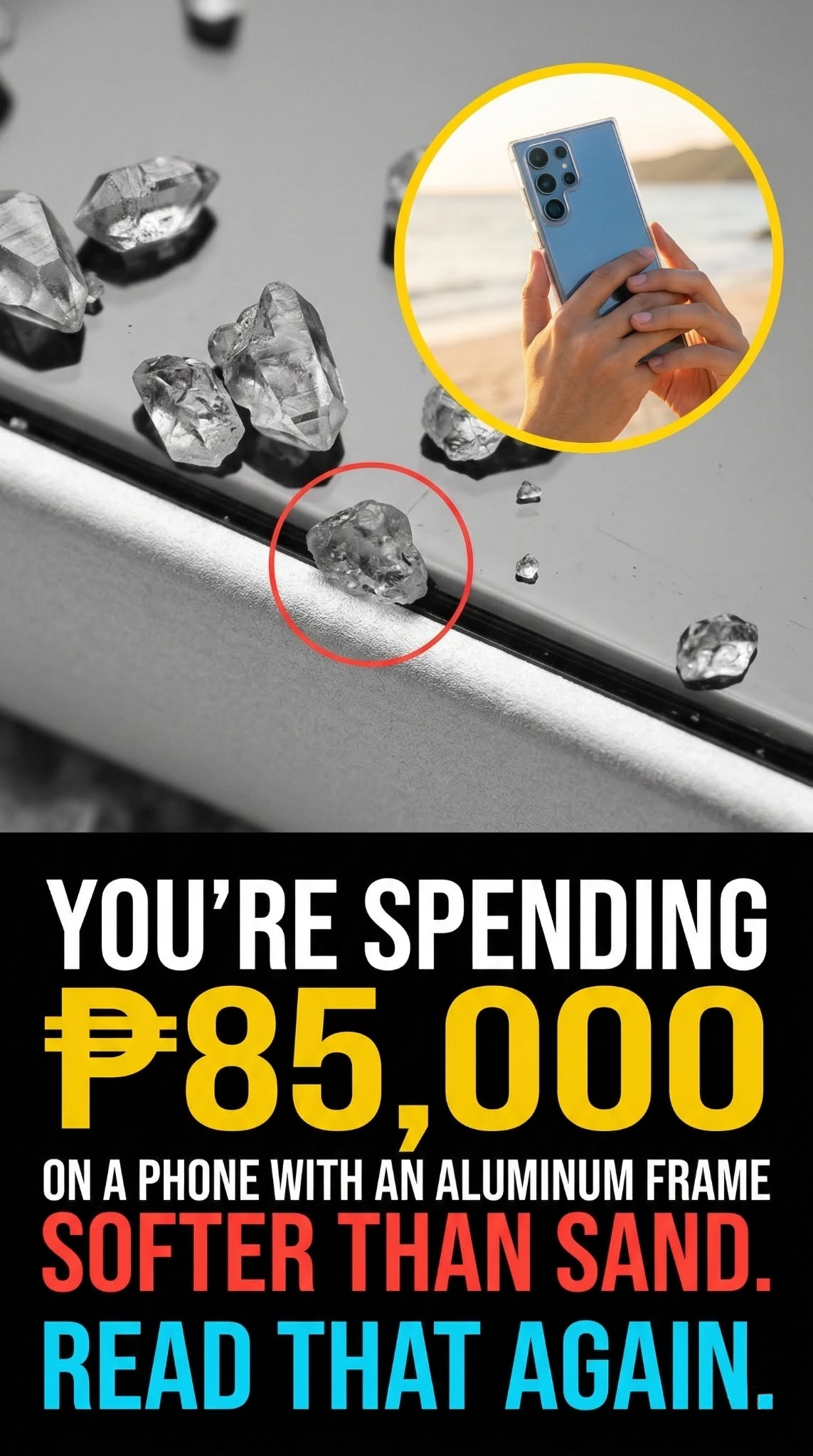
Ran for 119 days, from March 16 to July 13, 2026, the last day Crush saw it.
Run by The Tech Report PH on Facebook. Crush is not the advertiser and does not verify its claims. See this ad in Meta's Ad Library(opens in a new tab)
Make your own version of this ad
Crush makes it, launches it in your own Meta ad account, scales the winners and pauses the losers.
About this ad
- Meta Ad Library ID
- 2162603437833834
- Platforms
- Facebook, Instagram, Audience Network and Threads
- Relaunches
- 0
- Niche
- Jewelry & Watches
Ad text
Samsung's Galaxy S26 Ultra is a serious piece of engineering. The move back to aluminum this year was deliberate. The Snapdragon 8 Elite Gen 5 generates significant thermal load — and aluminum dissipates heat roughly 3× better than Grade 4 titanium. Samsung chose thermal performance over frame hardness. That's a defensible engineering call. Understanding what that trade-off means for a ₱85,000 device over two years is worth five minutes. Here's the physics: "Armor Aluminum" anodized aluminum sits at Mohs hardness 2.5 to 3. The S25 Ultra's Grade 4 titanium frame was Mohs 6. The quartz particles in ordinary pocket dust: Mohs 7. The frame material changed for a reason. But the gap between your frame's hardness and everyday abrasives is now wider than the previous generation. What makes this relevant for long-term ownership is the nature of anodization itself. Anodization isn't a coating applied on top of the aluminum — it's an electrochemical conversion of the surface layer, 5–25 microns thick. Once that layer is compromised, there is no repair pathway. The raw aluminum beneath is exposed permanently. Oxidation begins within days. On the colored variants — Cobalt Violet, Sky Blue — the underlying silver aluminum becomes visible against the tinted anodization. This isn't a defect. It's a material property. It applies to every anodized aluminum frame on the market, including every iPhone Pro that uses the same alloy class. The question most owners don't think through before day one: what's protecting the anodization? We ran a full material science breakdown — covering the corrosion timeline by color variant, the specific vulnerability points unique to the S26 Ultra chassis (including the S Pen slot channel most reviews miss), and what frame protection actually needs to do at the material interface level to work. Full research article linked below.
Where the ad sends people
fb.com
The Real Science Behind Armor Aluminum
Learn more: fb.com(opens in a new tab)