US Health
US Health Facebook ad: “Stop Migraines In 15 Minutes”
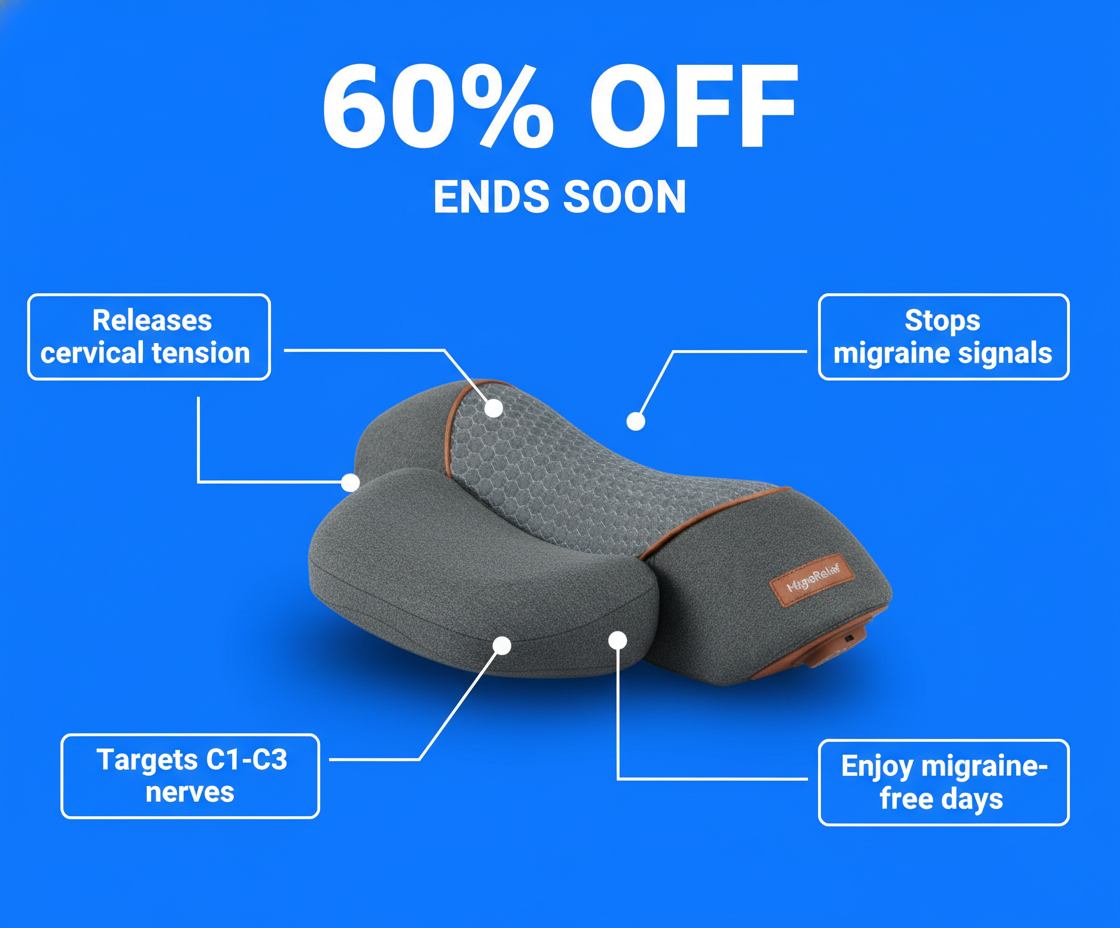
Ran for 19 days, from February 6 to February 25, 2026, the last day Crush saw it.
Run by US Health on Facebook. Crush is not the advertiser and does not verify its claims. See this ad in Meta's Ad Library(opens in a new tab)
Want an ad like this for your product?
Crush makes new ad images for your product from this ad: your logo, your product photo, your offer.
Trials from $19.95 USD, then $79.95 USD a month. Cancel anytime.
About this ad
- Meta Ad Library ID
- 2167465643992658
- Platforms
- Facebook, Instagram, Audience Network, Messenger and Threads
- Relaunches
- 0
Ad text
For decades, doctors have treated migraines as a "head problem." That's why treatments focused on pills to prevent attacks medications to stop them once they start and avoiding triggers. But in 2019, researchers studied 8,847 people with chronic migraines and found something shocking. The migraines weren't starting in their heads at all. This discovery is changing how doctors understand and treat chronic headaches. —------------------------------------------- In 2019, researchers discovered something important: In 89% of people with chronic migraines, the same pattern showed up 4-72 hours before every attack: tight muscles in the neck were sending constant "alert signals" through nerves that go straight to the brain's pain center. This was published in medical journals and confirmed by pain doctors at over 40 clinics. Here's what's actually happening in your body: When your neck and shoulder muscles stay tight (from stress, sitting at a computer, bad sleep, or poor posture), they squeeze the nerves running through that area → Those specific nerves (called C1- C3) connect directly to the same part of your brain that controls head and face pain → Your brain can't tell where the signal came from, so it reads the overload as a migraine. Think of it like an overloaded circuit breaker. Your neck muscles are like wires constantly sending static electricity into your brain's control room. Eventually, even something small—bright lights, skipping lunch, one stressful email—flips the switch. That's your migraine. Now, you might be thinking: "But my neck doesn't even feel that tense." Here's what most people don't realize: you don't need rock-hard, concrete-tight muscles to trigger a migraine. For someone with a sensitive nervous system—which most chronic migraine sufferers have —even subtle, barely noticeable tension is enough. That slight stiffness you wake up with? The mild tightness after a long day at your desk? To your hypersensitive nerve pathways, that's more than enough input to start flooding your brain's pain center with signals. You might not consciously feel "tension," but your C1-C3 nerves are still sending the alert—and your brain is still interpreting it as a migraine trigger. —------------------------------------------- This explains why you notice: Your neck feels stiff or tight before migraines start (the signal is building up) You get "morning headaches" after bad sleep or grinding your teeth at night (muscles stayed tight all night) Migraines hit in the afternoon "like clockwork" (tension built up all day at work) Small things trigger migraines when they shouldn't (your system was already maxed out) This isn't a "brain chemistry" problem that needs daily pills. It's a "signal overload" problem—you need to stop the signal at its source, not just deal with the alarm going off in your head. —------------------------------------------- This new research explains why regular migraine treatments don't work long-term. Daily preventive pills calm your brain but don't stop neck nerves from sending constant pain signals. 68% of people get migraines back within 90 days. Same for Triptans. Relief lasts hours, then signals return. Pain pills make your body numb but taking pain pills daily can bring even more side effects over time. The pattern is clear: get temporary relief at best. A 2023 review of 10,429 migraine studies confirmed it: treatments that don't fix neck muscle tension fail 82% of the time within 60 days. —------------------------------------------- Based on this discovery, pain doctors and brain specialists spent 18 months studying the small group of people who actually got lasting relief. The answer was clear: you need three specific treatments working together at the same time. Studies at 12 migraine clinics showed real results within 14 days. 91% had less intense attacks, and 87% had fewer migraine days per month after just two weeks. —------------------------------------------- Treatment 1: Deep Heat (107°F steady warmth) Goes deep into tight neck muscles to make them relax. Heat at exactly 107°F increases blood flow by 340% and makes tight muscle fibers let go—which reduces the pressure on nerves. Treatment 2: Pressure on Trigger Points Presses on the specific "knots" in neck muscles that constantly send pain signals. Focused pressure stops the pain-tightness cycle by forcing blood into oxygen-starved muscle tissue. Treatment 3: Gentle Vibration (3,200 pulses per minute) Uses a specific vibration speed that calms overactive nerves in your neck. This vibration at 3,200 pulses per minute activates certain nerve fibers that block pain signals—basically "closing the door" on signals traveling from neck to brain. After 14 days of regular use, your nervous system starts staying calmer even between treatments. Why doing them in order matters: Heat prepares your muscles, pressure releases the problem spots, and vibration retrains your nervous system. This creates a calming effect that doesn't just treat current tension—it actually makes your system less reactive over time. How to use it: 15 minutes once a day (best before bed). Use it 14 days straight at first. Then use it 4-5 times per week to maintain results. —------------------------------------------- Here's the problem: Getting all three of these therapies consistently is nearly impossible for most people. Clinical heat therapy requires specialized equipment. Myofascial trigger point therapy demands a trained professional who knows exactly where to apply pressure. And nerve desensitization? That's typically only available in advanced pain management clinics. Even if you could access all three, you'd be looking at 2-3 appointments per week, driving across town, working around clinic schedules, and paying $180-240 per session. Most people simply can't sustain that—financially or logistically. That's exactly why a team of leading U.S. neurologists and biomedical engineers spent over two years developing a solution. Their mission was ambitious: combine all three therapeutic mechanisms into a single, clinically-effective system that patients could use at home—without appointments, without ongoing costs, without depending on anyone else's schedule. The result was a breakthrough in at-home migraine management. A medical-grade device that delivers the same three-therapy protocol used in top headache clinics—precisely calibrated heat therapy, targeted myofascial release, and rhythmic nerve desensitization— all synchronized in one 15-minute session. Designed to be used in the comfort of your own home. Before bed. After work. Whenever that familiar neck tension starts building and you need to stop it before it reaches your head. No appointments to schedule. No commute. No waiting rooms. Just 15 minutes of therapeutic relief that addresses the actual source of the problem. —------------------------------------------- Why Your Doctor Will Never Tell You About This Here's something the pharmaceutical industry doesn't want you to know: Chronic migraine patients are worth approximately $4,800 per year in recurring revenue. Monthly preventive prescriptions. Emergency triptans. Specialist appointments. Botox every 12 weeks. CGRP inhibitors at $700 per month. The system is designed to keep you coming back—not because doctors don't care, but because the entire healthcare model is built around ongoing treatment, not lasting solutions. A solution that works at home and requires no prescriptions? That eliminates the recurring revenue stream. Here's what that means for you: When this three-therapy protocol was only available in clinical settings, it cost $180-240 per session, 2-3 times per week. That's $1,500-3,000 per month. Clinics loved it. Insurance barely covered it. Patients couldn't sustain it. So you stayed trapped in the prescription cycle—spending $200-400 monthly on medications that provided partial relief with side effects that sometimes felt worse than the migraines. But now there's a different option. The same protocol that was only accessible in expensive clinical settings—now available at home, whenever you need it, for less than two specialist appointments. No monthly refills. No ongoing costs. No dependence on anyone's schedule. Just consistent, research-backed relief that puts you back in control. —------------------------------------------- That's why we offer a 60-day "Feel The Difference" guarantee: You've tried preventive pills that made your brain foggy. You've spent money on appointments that helped for days then stopped. You're tired of hoping—and honestly, you don't believe anything will work anymore. That's exactly why we removed all the risk. Use it 15 minutes every evening for 60 days. If you don't have fewer migraine days, less intense attacks, or you're simply not satisfied—we'll refund every penny. You don't even return the device. —------------------------------------------- But here's what you should know: This has sold out 4 times in the past 7 months. Right now, inventory is available—but based on past restocks, it typically sells out within 8-12 days. Don't wait while your nervous system gets worse. Every day with chronic tension makes those nerve pathways more sensitive. Occasional migraines become chronic daily headaches. Over 12,000 people with chronic migraines already use this approach. They're having 60-80% fewer migraine days. Making plans without fear. Not spending $200/month on prescriptions anymore. Just 15 minutes a day gives your neck the deep heat, trigger point release, and nerve calming it needs to stop flooding your brain with pain signals. Click below to see how this research-backed technology works for chronic migraines. Get your 60-day risk-free trial before current inventory sells out. Your neck—and your future self—will thank you.
Where the ad sends people
us-brainhealth.com
Stop Migraines In 15 Minutes
If you've ever struggled with chronic migraines or tension headaches then you'll understand how awful it is to feel like you can't make plans because you're in fear of the next attack.
Order now: us-brainhealth.com(opens in a new tab)