
Inactive· since Mar 21, 2026
- 42
- days it ran
- 0
- relaunches
Ad copy
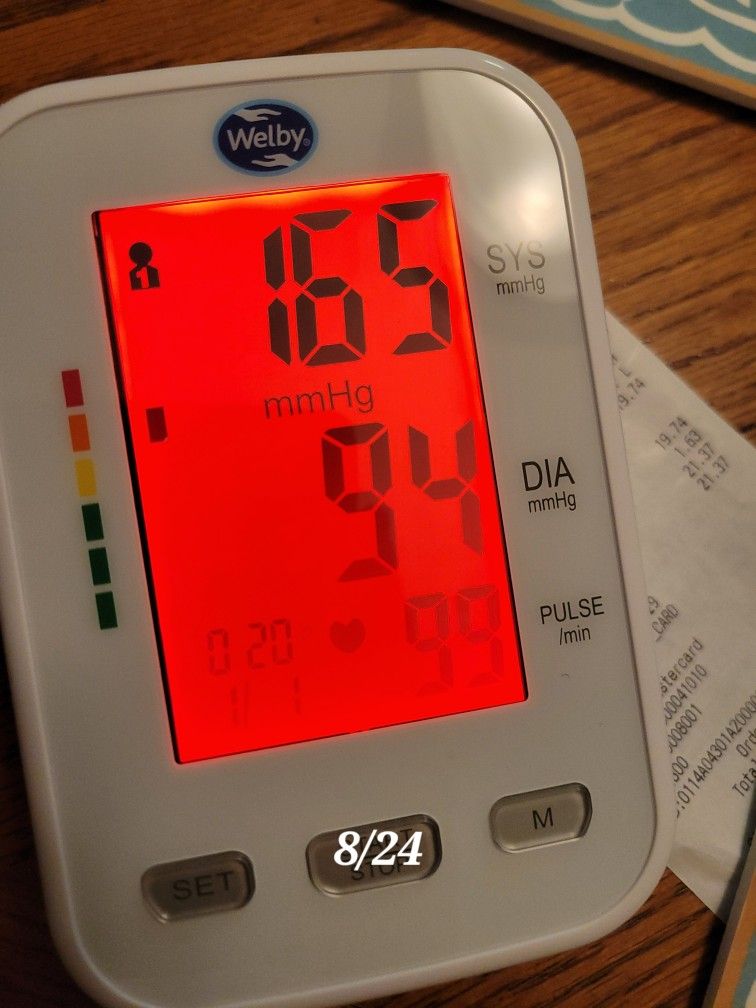
My blood pressure was 149/97. My new doctor called my old doctor "negligent." My old doctor had been the only one who listened to me for eleven years. Now I had a prescription I didn't want, a doctor I didn't trust, and a medical record that said "non-compliant" next to my name. Linda Marsh is 54 years old. For eleven years, Dr. Abrams was my doctor. He knew my mother's stroke history. Knew I'd lost her at 63. Knew I couldn't even hear the word "medication" without my hands going cold. He'd been watching my numbers creep. 136/88 in 2018. 141/90 in 2020. 145/93 by 2022. Every visit, same conversation. "Linda, we're keeping an eye on it. Diet, exercise, manage the stress. You're doing the right things. We have time." I believed him. I needed to believe him. Then Dr. Abrams moved his practice to another state. His replacement was Dr. Kessler. My first appointment was supposed to be a formality. Transfer records. Shake hands. Nothing more. I sat on the exam table in a paper gown. Same office. Same anatomy poster. Different doctor. Dr. Kessler walked in. Late thirties. Wire-rimmed glasses. Didn't smile. "Mrs. Marsh." She opened my chart on her laptop. Scrolled. Stopped scrolling. Scrolled again. Then she turned the screen toward me. "Your blood pressure trend over five years. Steady climb. No intervention. No medication prescribed. Can you explain this?" "Dr. Abrams was monitoring it. We were trying lifestyle changes." "Lifestyle changes." She said it like it tasted bad. "Your blood pressure is 149/97. You've been in Stage 2 hypertension for at least two years. Whoever told you lifestyle changes were sufficient at these numbers was being reckless with your life." The room tilted. "He wasn't reckless. He knew my history. My mother died of a stroke at sixty-three and her blood pressure medication caused—" "I've read your family history. That's precisely why you should have been on medication years ago. Not in spite of your mother's stroke. Because of it." She pulled up a prescription form. "We're starting Lisinopril. 10 milligrams. Today." "I don't want Lisinopril." "Mrs. Marsh, if I let you walk out of this office unmedicated, I'm repeating the exact negligence your previous doctor committed. I won't do that." Negligence. The word hit my chest like a fist. Dr. Abrams. The man who held my hand when my mother died. Who called to check on me after her funeral. Who spent forty-five minutes with me when I panicked about my first elevated reading. Negligent? "Your refusal will be documented as non-compliance against medical advice." The printer spit out the prescription. She placed it on the counter. I drove home with it on the passenger seat. Couldn't touch it. That night my husband David found me at the kitchen table at midnight. Laptop open. "What are you doing?" "Trying to figure out who's right." "About what?" "Dr. Abrams said we had time. Dr. Kessler says he nearly killed me. Same chart. Same numbers. One says patience. The other says malpractice." He sat down. Quiet for a long time. "What if they're both wrong?" I stared at him. "What if Dr. Abrams was too slow and Dr. Kessler's too fast? What if neither of them is giving you what you actually need?" I didn't sleep. At 3 AM I was on my laptop. is 149/97 blood pressure dangerous without medication lisinopril side effects long term kidney The articles confirmed what I feared. Stage 2 hypertension increases stroke risk. Organ damage accumulates silently. But Lisinopril? Dizziness. Chronic cough. Kidney strain. Fatigue that compounds over years. My mother's face surfaced. She'd been on Amlodipine for nine years. The swelling in her ankles that never went down. The fatigue that turned a woman who gardened every morning into someone who couldn't climb the porch steps. The afternoon she fell in the bathroom. Broke her hip. She had a stroke eight months later. At sixty-three. On medication. The medication managed her blood pressure. Didn't prevent the stroke. Didn't save her life. I closed the laptop. The prescription sat on the counter in the kitchen. I could see it from where I was sitting. I didn't fill it. Dr. Kessler's office called four days later. Then again the following week. "Mrs. Marsh, the doctor wants to confirm you've started the Lisinopril." "Tell her I'm exploring other options." "She strongly advises against delaying treatment." I hung up. That weekend I spent twelve hours researching natural compounds shown to reduce blood pressure. Three names kept appearing in the clinical literature. Beetroot extract — dietary nitrates that convert to nitric oxide and dilate vessels. Aged garlic — shown to reduce arterial stiffness over consistent use. Magnesium glycinate — a vasodilator that helps regulate vascular tone. I tried all three. Some combination or another for nearly four months. My numbers barely moved. 148/96 after six weeks of beetroot. 147/95 after seven weeks of garlic. Still Stage 2. Still the same prescription sitting on my counter. Three supplements. Eighteen weeks. Over $200. My appointment with Dr. Kessler was in nine days. I pictured walking in with the same numbers. Watching her pull up my chart. Hearing the word "non-compliance" again. Then I found the research on capsaicin. Not cayenne pepper as a spice. Capsaicin as a therapeutic compound — the active molecule extracted from cayenne at clinical doses. What the research showed stopped me cold. Capsaicin activates TRPV1 receptors in the vascular endothelium — the lining inside every blood vessel in your body. This directly triggers nitric oxide production at the source. Not through a dietary conversion like beetroot. Not through a precursor pathway. At the vessel wall itself, where the damage actually is. It clears inflammatory debris from arterial surfaces. It stimulates regeneration of healthy endothelial cells. It rebuilds the flexibility that years of elevated pressure have stripped away. Beetroot and garlic feed a damaged system. Capsaicin repairs it. That distinction is why four months of the right supplements had done almost nothing. I was feeding an engine that needed rebuilding, not refuelling. The problem is dose. Therapeutic levels of capsaicin require the equivalent of 20 to 25 cayenne peppers daily — impossible through diet, and most supplements on the market are underdosed or cause gastric irritation that stops you within weeks. I tried two capsaicin supplements before I found Aurivita Capsaicin Power. The first caused stomach burning I couldn't tolerate. The second was so underdosed it may as well have been nothing. Aurivita was different. Three softgels once daily delivers a clinical 3mg dose of pure capsaicin in a format that eliminates pepper burn completely. BioPerine is included to dramatically increase absorption. Beetroot Extract covers the secondary nitric oxide pathway. Vitamin K2 pulls calcium deposits out of arterial walls and returns them to bone where they belong. And unlike the thirty-day bottles that stop you right before the biology begins to shift, Aurivita ships 60 servings — because real vascular repair takes eight to twelve weeks. I ordered it that night. I took my first dose with breakfast the next morning. Three softgels. No burn. No aftertaste. Week two, my reading was 143/91. I checked three times. Same arm. Same chair. Same time of morning. 143/91. Down six points systolic. Down six points diastolic. In two weeks. After four months of nothing moving. David noticed I was suggesting evening walks again. That the heaviness behind my eyes had lifted. "Something's different," he said. "Something's actually working," I said. Week three: 137/87. Week four: 133/84. Below 140/90. Out of Stage 2. I checked four times that morning. 133/84. 134/85. 132/83. 133/84. All below the threshold. At the office, the nurse wrapped the cuff. Pumped. Read the screen. Paused. Did it again. 133/84. She wrote it down and left the room without saying anything. Dr. Kessler walked in. Opened my chart. Looked at the screen. Looked at me. Back at the screen. "133 over 84." "Yes." "You started the Lisinopril?" "No." Her jaw tightened. "Mrs. Marsh—" "I found a capsaicin supplement. Clinical dose. Softgel delivery with BioPerine for absorption. My blood pressure dropped 16 points systolic in four weeks." She stared at me. Then typed something. Read. Read again. Long silence. "Continue what you're doing. We'll check your numbers every eight weeks. If this holds, no medication." If this holds, no medication. I sat in my car. Called David. "133 over 84. No medication." I heard him exhale. Long and slow. "Linda. You did it." "Nobody did it for me. Not Dr. Abrams. Not Dr. Kessler. I had to find this myself." That was twelve weeks ago. My blood pressure this morning? 127/81. Normal range. Stable. No Lisinopril. No "negligence." No "non-compliance." No choosing between a doctor who waited too long and one who pushed too fast. Last weekend David and I took our grandchildren to the zoo. Six hours on our feet. Carrying the two-year-old on my hip when she got tired. Didn't feel winded. Didn't need to sit down. My granddaughter pointed at the flamingos and said "Grandma, they're PINK like your cheeks!" David laughed. "That's called circulation, sweetheart." I laughed too. Because he was right. If you're reading this, you know what it feels like to be caught between two doctors who can't agree. One says wait. The other says waiting was reckless. You can't go backward. You don't want to go forward with medication that didn't save your mother or your father or whoever you watched decline on pills that managed numbers but didn't save their life. Here's what I want you to know. I tried beetroot. I tried garlic. I tried the supplements that appear in every search result and every Facebook group about natural blood pressure support. They didn't work because they were feeding a damaged system instead of repairing it. Capsaicin repairs it. The endothelium — the lining of your blood vessels — regenerates when given the right stimulus. Blood pressure comes down not because it's being suppressed but because the vessels producing it have recovered their natural flexibility. That's not a marketing claim. That's the mechanism the research describes. Aurivita Capsaicin Power is the only formulation I found that delivers the clinical dose in a format you can actually sustain. Three softgels once daily. 60 servings per bottle because the biology takes time. 120-day money-back guarantee because the company knows what the timeline looks like. I felt something shift in week two. Was out of Stage 2 by week four. At 127/81 by week twelve. My doctor monitors me every eight weeks now. No medication. No threats. No lectures about compliance. Just numbers on a screen that proved I made the right call. If you're stuck between two opinions and neither one feels right, there is a third path. One that doesn't ask you to choose between waiting too long and medicating too fast. It just asks you to fix the circulation. The numbers follow. — Linda Marsh
Cayenne Pepper for Blood Pressure?
At Aurivita we offer Aurivita Capsaicin Power - Cayenne Pepper Softgels at the lowest price. Check it out now!
LEARN MORELike this ad? Make it yours.
Crush rebuilds this exact creative around your product — your brand, your colors, your offer — in about a minute.