
Inactive· since May 26, 2026
- 18
- days it ran
- 4
- relaunches
Ad copy
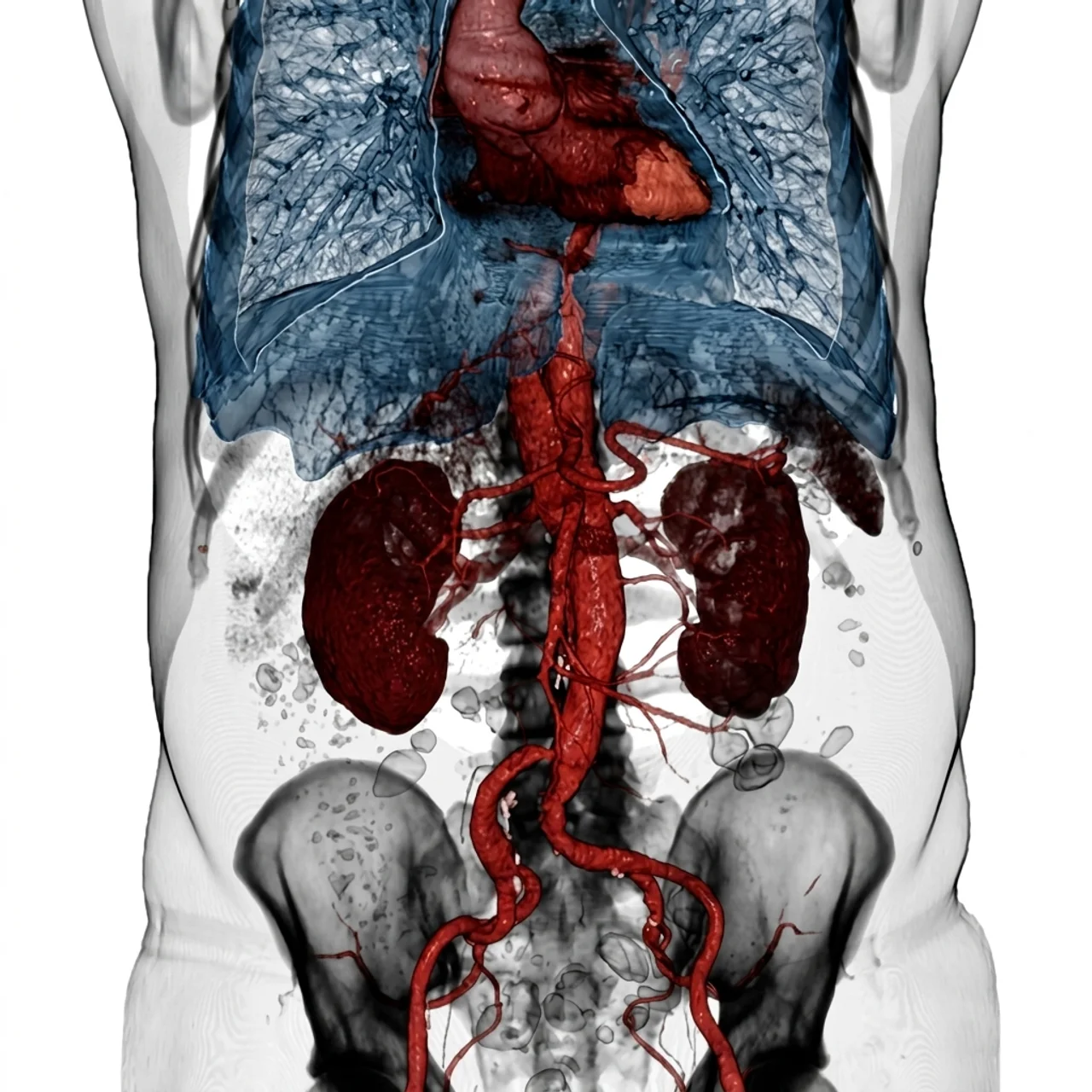
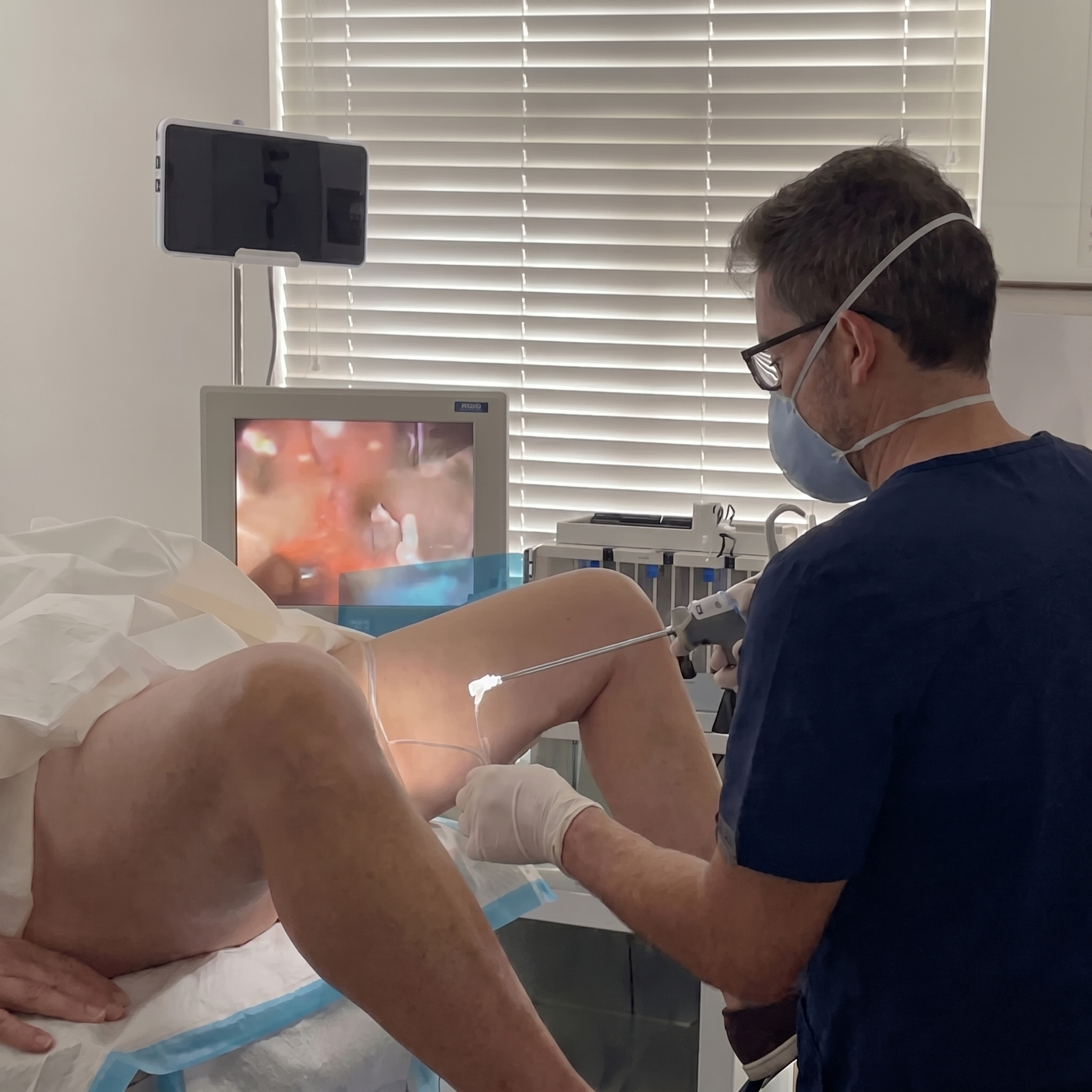
64% of men prescribed tamsulosin for an enlarged prostate will lose the ability to ejaculate normally within six months. Almost none of them are warned before the prescription is written. I am a urologist with 19 years of clinical practice. I was part of that silence for the first 15 years of my career. I am writing this to break it. I've written 8,400+ tamsulosin prescriptions in 19 years as a urologist. And when a man walks into my office complaining of slower urination or waking up four times a night, I know exactly what's going to happen to his sex life within six months — and what's going to happen to his heart within six years — before he ever notices either one. Retrograde ejaculation. Within six months. In 64% of the men I prescribe to. The same vascular failure causing his urinary symptoms is building plaque in his coronary arteries right now. I'm Dr. Daniel Westbrook. I'm a board-certified urologist who spent fifteen years writing prescriptions in eight-minute appointments without telling my patients what was about to happen to them. When my own urinary symptoms started at 51, I knew something I never told my patients. The prostate isn't the disease. The erection isn't the disease. The disease is the slow vascular degradation happening system-wide — and almost every standard urological treatment masks the symptom while the underlying disease compounds. I've been writing prostate prescriptions for 19 years. I've seen thousands of men come in with urinary urgency. Thousands who got prescribed tamsulosin or finasteride in an eight-minute appointment and thought their problem was solved. And I've seen the follow-up consultations that almost no urologist documents properly. Because urologists see you for eight minutes. Write a prescription. Send you home. They don't see you six months later when you call the office quietly asking why nothing comes out anymore. They don't see you three years later when you come back confused about why your erections have stopped working. They don't see you six years later when you're in a cardiologist's cath lab getting an emergency stent. But I do. Because I see what happens to the men who masked their vascular warning with a prescription. The 58-year-old who started tamsulosin four years ago. Masked his urinary symptoms perfectly. Then came in last month asking why his ejaculate had disappeared. The retrograde ejaculation had been there for two years. He'd stopped trying because the lack of result had become its own quiet humiliation. Then I asked him about his blood pressure. 148 over 92. His cholesterol panel. LDL of 167. His body had been warning him for six years across three different systems. The medication chemically silenced one warning. The other two kept getting louder. The 54-year-old. "Just a prostate thing, Doc. Nothing serious." Started on tamsulosin 0.4mg. Added finasteride six months later. Then his erections stopped. He came back asking for Viagra. I wrote the prescription. Three years later he was in his cardiologist's office with chest pain. Coronary calcium score of 287. His urinary symptoms were the five-year warning. The retrograde ejaculation was the four-year warning. The erectile dysfunction was the two-year warning. He had been given three medications for three symptoms and zero conversations about the underlying disease. I see these men in follow-up appointments. They don't complain. They are grateful I am "managing" their condition. But I know what they lost. They had years to reverse the endothelial damage. Years to fix their circulation. Years to save themselves from the cascade. Their symptoms were screaming the warning. The prescriptions just turned down the volume one at a time. My own labs showed me what my patients' labs had been showing me for years. Urinary symptoms getting worse. Waking up three times a night. The stream slower than it had been five years ago. The urologist colleague I asked to look at my numbers said what I said to every patient. "Standard protocol. Start with tamsulosin 0.4mg. Should give you relief within a week." He was right that it would work. That was not the point. I am a urologist. I knew what tamsulosin was about to do to me. I knew about the 64 percent retrograde ejaculation rate. I knew about the cascade that would follow if the tamsulosin alone wasn't enough. And I knew what almost no urologist ever explains to a patient sitting in front of him. The urinary symptoms weren't a prostate problem. They were a vascular problem. The smooth muscle in my prostate, the spongy tissue of my penis, and the lining of every blood vessel in my body were all running on the same fuel — nitric oxide. My nitric oxide production was declining. The smooth muscle around my prostate was constricting because of it. My erections had been getting softer because of it. My blood pressure had been creeping up because of it. And tamsulosin would have addressed exactly one of those four problems while letting the other three continue to compound. Here's what almost no urologist explains because the appointment is too short. Your prostate, your erection, and your cardiovascular system depend on the same biochemical signal to function correctly. That signal is nitric oxide. When your body's nitric oxide production declines — which it does, predictably, in every man past 45 — the smooth muscle in your prostate constricts, the spongy tissue of your penis loses its ability to fill, and the lining of your arteries begins to stiffen. You feel the prostate first because the symptoms are unavoidable. The erectile dysfunction shows up next, and most men try to ignore it for as long as possible. The cardiovascular event — the heart attack, the stroke — comes three to five years later, after the small vessels in your penis have failed and the larger vessels in your heart have begun to fail too. A 2006 study in European Urology documented this timeline. Erectile dysfunction precedes coronary artery disease in the same patient by an average of three to five years. The retrograde ejaculation you started experiencing six months after starting tamsulosin is not the warning. The erectile dysfunction that started two years before that was the warning. The urinary symptoms that started two years before that were the warning before the warning. Your body has been sending you the same message in increasingly urgent forms for the last decade. The medical system has been answering each individual symptom with a different prescription instead of treating the underlying disease. Right now. Men with ED have up to a 50-fold higher incidence of cardiovascular events than men without ED. Men with both urinary symptoms and ED carry an even higher risk because they have documented vascular dysfunction in two organ systems simultaneously. Your prostate symptoms are not embarrassing. They are life-saving. They are your 10-year early warning system. And the standard urological cascade — tamsulosin to finasteride to Viagra — silences each individual alarm while your underlying vascular disease deteriorates. But urologists do not order cardiac imaging. We do not connect prostate symptoms to cardiovascular futures. We write the prescription and send you home. My next step was clear. I was not going to start the cascade I'd written for thousands of other men. I tried what my patients had been trying for years. Lifestyle changes. Mediterranean diet. Exercise. Helped marginally but the urinary symptoms persisted. Saw palmetto. Pumpkin seed oil. Beta-sitosterol. The standard supplement aisle approach. Didn't move the needle. My PSA was stable but my symptoms were not improving. My nitric oxide markers, when I tested them, were still low. Nothing was reversing the endothelial dysfunction that was causing all of it. But I kept thinking about something that made no sense in standard urological practice. Endothelial dysfunction can reverse. Nitric oxide production can be restored. The cardiology research had been showing this for fifteen years. Almost no one in my specialty was applying it. So why wasn't I applying it to myself? November 14th. 10:23 PM. I was reviewing journals after a long clinic day. Couldn't sleep. The urinary symptoms were worse. The morning erections were almost completely gone. I was scrolling through research on endothelial dysfunction interventions. Not looking for anything specific. Just exhausted. I found a paper on capsaicin and TRPV1 receptor activation in vascular endothelium. Capsaicin from chili peppers activates TRPV1 receptors in the lining of every blood vessel in the body. These receptors trigger sustained nitric oxide release. Nitric oxide causes the smooth muscle in arteries — and in the prostate, and in the corpora cavernosa — to relax. The exact biochemical pathway that tadalafil was FDA-approved to support, simultaneously, for both erectile dysfunction and benign prostatic hyperplasia. But here is what stopped me cold. The mechanism didn't just support symptom relief. It supported endothelial repair. Sustained capsaicin exposure had been shown in multiple studies to reverse early endothelial dysfunction and reduce arterial inflammation in patients with metabolic syndrome. Not masked. Reversed. I sat there at 10:23 PM staring at the mechanism diagram. Tamsulosin forces smooth muscle relaxation by blocking alpha-1 adrenoceptors. The relaxation lasts as long as the medication is in your bloodstream. Your underlying vascular dysfunction doesn't improve. The retrograde ejaculation is the price you pay for the symptom relief. Capsaicin activates your body's natural TRPV1 receptors. Continuous nitric oxide release. Natural sustained smooth muscle relaxation. Your endothelium heals instead of being chemically suppressed. The vascular dysfunction that's causing your urinary symptoms, your erectile dysfunction, and your rising blood pressure simultaneously — actually improves. I have been a urologist for 19 years. I have studied prostate disease for my entire career. And I had never connected therapeutic capsaicin to BPH symptom reversal. Because urologists don't study vascular mechanisms. We study the prostate as an isolated organ. The shared mechanism — the underlying vascular root that explains why prostate symptoms, erectile dysfunction, and cardiovascular disease cluster in the same men — was never part of my training. At 11:11 PM, I went looking for a properly formulated capsaicin supplement. What I learned during that search is something every man who tries capsaicin needs to know. Capsaicin is fat-soluble. When you swallow a powdered cayenne capsule, your stomach acid destroys most of the active compound before it reaches your bloodstream. You feel the heat. You don't get the arterial effect. For capsaicin to actually reach the endothelial cells where TRPV1 lives, it has to be dissolved in an oleic-acid-rich oil before it enters your body. Cold-pressed avocado oil. Absorption rates go from 10 percent to nearly 90 percent. Almost no supplement on the market does this. Most use the cheapest possible carrier oils — soybean oil, safflower oil, sunflower oil. The same family of seed oils that are documented to drive arterial inflammation. The capsaicin gets carried in an oil that is actively working against the capsaicin's effect. I found one brand that was different. Aurivita Capsaicin Power. 3mg of pharmaceutical-grade capsaicin per softgel — the dose used in the clinical research. Suspended in cold-pressed avocado oil rather than soybean or safflower. BioPerine added to slow the liver's breakdown of the compound. Hawthorn, beetroot, Korean ginseng, vitamins D3 and K2 stacked alongside for additional vascular support. I ordered a bag that night. Three softgels in the morning with breakfast. I didn't expect miracles. But the mechanism was sound. I started November 15th. November 22nd — one week in. Morning erections returning. Not consistent yet. But present. November 29th — two weeks in. I noticed I had not woken up to urinate the previous night. First time in two years. December 13th — four weeks in. Morning erections every day. Full stream returning during the day. My wife asked me what I had changed. I had not told her I was taking anything. I wanted to see if the physiology would prove the mechanism before I said anything. "Different approach," I said. "Whatever it is, keep doing it." January 10th — eight weeks in. Repeat bloodwork. PSA stable. Blood pressure had dropped from 144 over 88 to 126 over 78 at the same medication dose. My primary care doctor reduced one of my BP medications. Inflammatory markers had come down across the panel. But more importantly, I went back to my urologist colleague for a flow study and a digital exam. He looked at my flow rate. Looked at my prostate. Looked at his notes from six months ago. "Dan, what did you do? Your flow rate is back to where it was when you were 45." I explained the TRPV1 receptor activation. The continuous nitric oxide pathway. The capsaicin mechanism. The oil suspension. He studied his notes for a long moment. "Your prostate is the same size it was. Maybe slightly smaller. But the smooth muscle tone has clearly changed. And your blood pressure improvement... is that connected?" "Same pathway. Same mechanism. Same fuel." He was quiet for a moment. "I need to stop writing tamsulosin as my first prescription." I had been a urologist for 19 years. I had spent 15 of them prescribing the cascade I had just successfully avoided in my own body. I started telling my patients something I had never told them before. I am not writing this letter because I am against tamsulosin or finasteride or any of the standard urological treatments. These medications work. They relieve the symptom they were designed to relieve. They have helped millions of men sleep through the night. But they do not fix your underlying vascular dysfunction. They do not address the endothelial damage. They do not lower your cardiovascular risk. They do not reverse the disease. They temporarily force one symptom into remission while the other symptoms compound. And I see what happens six years later when the men who masked their urinary symptoms with tamsulosin walk into a cardiologist's office with chest pain, an LDL of 180, and a coronary calcium score that nobody was tracking. Your prostate symptoms are not failing you. They are warning you. The same endothelial dysfunction causing your urinary symptoms is causing your erectile dysfunction is building plaque in your coronary arteries — all of it happening at the same time. And you have two choices. Mask the warnings one at a time with separate prescriptions while your underlying disease compounds. Or address the vascular root that is causing all of them simultaneously. I think about what I almost did. I almost started tamsulosin myself. I almost accepted retrograde ejaculation as the cost of treating my urinary symptoms. I almost masked a cardiovascular warning with a prostate prescription. I almost became the patient I had been making for fifteen years — the man in his late fifties on three medications for three symptoms with no doctor connecting them to the underlying disease. Because once you are deep in the cascade, you are on medications for life. Once you have a cardiac event, the damage is permanent. Once you need bypass surgery, your life changes forever. You do not get a second warning. Your prostate symptoms are your first warning. Your only warning you can still act on without surgery. I am sharing this because if you are about to start tamsulosin — or you are already on it and you have noticed nothing comes out anymore — you deserve to know what I know. Not from a textbook. From 19 years of writing the prescription I am now writing this letter to warn you about. Your prostate is not the problem. It is the symptom. Your endothelium is failing. Your nitric oxide production has collapsed. Your arteries are stiffening. System-wide. And every month you mask one symptom with a prescription is another month the underlying disease advances toward your heart. The penile arteries fail first because they are smallest. Your coronary arteries are bigger. They will show symptoms later. By then, you are not looking at retrograde ejaculation. You are looking at cardiac catheterization. Stents. Bypass. Lifelong medications. Or worse. Eight weeks. That is how long it took my blood pressure to drop, my urinary symptoms to ease, my morning erections to return, and my flow rate to recover to where it had been at 45. Eight weeks of letting my endothelium do what it was designed to do. Heal. I am not saying don't take medications. I am saying understand what you are masking. Your prostate symptoms are your check engine light. Tamsulosin is electrical tape over the warning indicator. The engine is still failing. You just can't see the light anymore. But I see it every day in the men who come back to me three years later asking why their erections have stopped working — and six years later when their cardiologist calls me to ask what I prescribed. Every single one of them says the same thing. "I wish someone had told me my prostate symptoms were connected to my heart." I am telling you now. Your prostate symptoms are connected to your cardiovascular health. The same circulation failure is causing all of it. Fix the circulation, and you potentially save your prostate function, your erections, and your heart. Or mask the circulation, and risk everything. I am a urologist. I understand the cascade I have been writing for nineteen years. And I chose to heal my endothelium before it progressed to the cascade I had written for thousands of other men. That is all I am asking you to consider. Give your circulation a chance to heal before you accept the standard cascade or risk cardiac intervention. Because once retrograde ejaculation sets in, once erectile dysfunction follows, once cardiac damage occurs — every one of those becomes harder to reverse. Your prostate symptoms are giving you years of advance warning. Use them. Eight weeks. That is all it took to restore my flow rate, return my morning erections, and drop my blood pressure 18 points. Eight weeks of fixing circulation instead of masking symptoms. — Dr. Daniel Westbrook, MD Board-Certified Urologist, 19 years Practicing physician P.S. — The pharmaceutical-grade capsaicin softgel I used is called Aurivita Capsaicin Power. 3mg of capsaicin per serving, suspended in cold-pressed avocado oil specifically formulated to activate TRPV1 receptors for sustained nitric oxide release. BioPerine for enhanced absorption. Hawthorn, beetroot, Korean ginseng, and vitamins D3 and K2 stacked alongside for additional vascular support. If you are taking tamsulosin or finasteride and you have noticed retrograde ejaculation, weaker erections, or rising blood pressure, consider this. Get baseline bloodwork. Try therapeutic capsaicin for 8 to 12 weeks under your doctor's supervision. Get follow-up bloodwork. Let your body show you what it can do when you fix the circulation instead of masking the symptoms. You can always go back to the prescriptions if it doesn't work. But you cannot undo cardiac damage if your early warning system tried to save you and you silenced it with three different pills. Individual experiences vary. These statements have not been evaluated by the FDA. This product is not intended to diagnose, treat, cure, or prevent any disease. Do not discontinue any prescription medication without consulting your prescribing physician. Tamsulosin in particular requires medical supervision to taper safely. If you take any prescription medication — particularly alpha-blockers, blood pressure medication, blood thinners, antiplatelet drugs (including aspirin), or statins — you must consult your prescribing physician before adding any supplement to your regimen.
The Towel Hasn't Moved in Six Months
Support strong circulation today with our powerful cayenne pepper formula to support cholesterol. 180 softgels and 60 servings per bag.
LEARN MORELike this ad? Make it yours.
Crush rebuilds this exact creative around your product — your brand, your colors, your offer — in about a minute.