
Active· since May 29, 2026
- 109
- days running
- 1
- relaunches
Ad copy
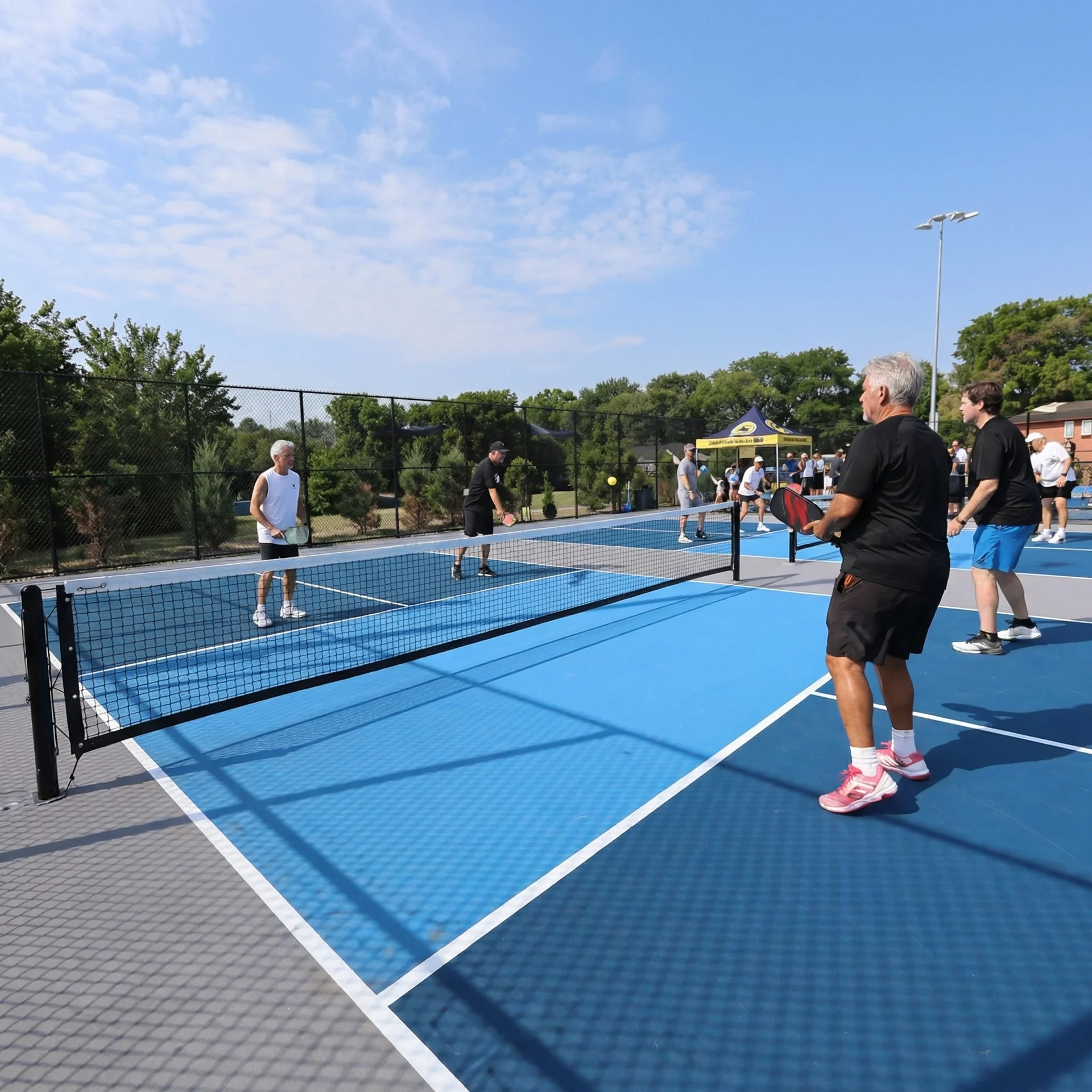
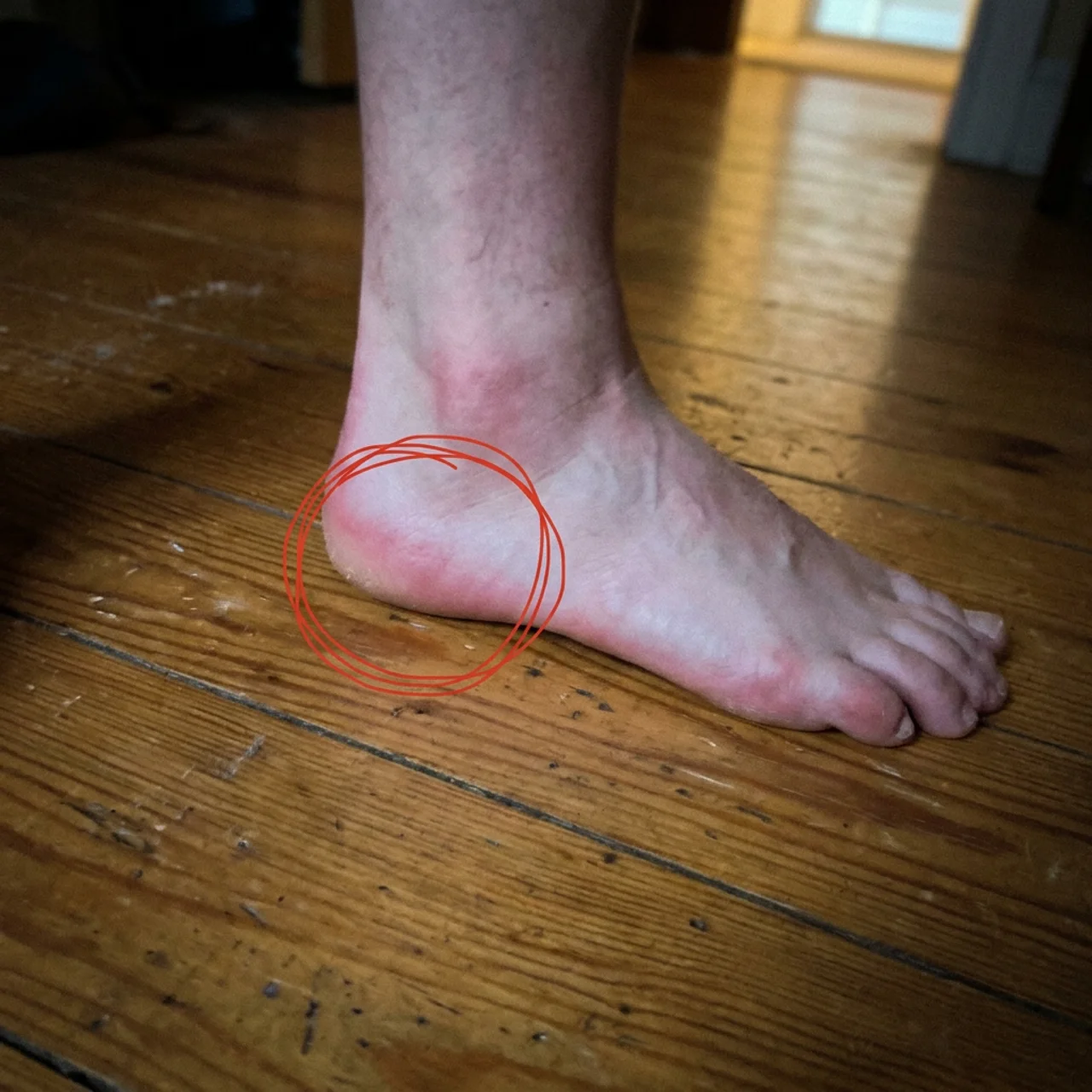
My doctor told me to stop playing tennis. The same words that took my best friend off the court before he was even 55. "Your plantar fascia is inflamed. If you keep playing at your age, you're going to make this permanent." At your age. I'm 52. Been playing 4 times a week for over 20 years. Dave and I started hitting together in our early 30s. Every Tuesday. Every Thursday. Every Saturday morning. That's not a hobby. That's a life. I took the referral slip. Walked to my car. Sat there with the engine off, holding that piece of paper. Dave heard those same words 3 years ago. I watched what happened next. Month 1. Dave got diagnosed at 51. Plantar fasciitis. Right heel. Doctor said rest, anti-inflammatories, orthotics. He did everything they said. Still playing 4 times a week. Popping Ibuprofen before and after. Rolling his foot on a frozen water bottle in the parking lot after matches. I'd see him between sets. Sitting on the bench. Pressing his thumb into his heel. Wincing. "It's fine. Just a bit sore." Month 3. He cancelled his first singles match. Said his heel was "acting up." Then another. And another. Within weeks he'd dropped all singles. Only doubles. And even then he'd let balls go he used to chase down. A wide forehand he would have sprinted for a year earlier. Just watched it bounce. Didn't even move. "No point blowing up my heel for one point." Dave never let a ball go. Never. This was the guy who dove for volleys on hard court and got up grinning with gravel in his knee. Month 5. Custom orthotics. $580 from a podiatrist who said they were the best available. Hard plastic. Molded while he was standing still. Wore them 6 weeks. Pain got worse. We were sitting in the locker room after a Saturday match. He had the insole in his hand, pressing it with his thumb, trying to understand what he'd paid for. "They're too rigid. Make my shoes tighter. Every time I stop hard they press straight into my arch. Feels like rocks in my shoes." He tossed them into his locker. $580 in a gym bag. Never worn again. Month 7. Cortisone injection. Doctor said it would knock out the inflammation. It did. For about 10 days. Dave was ecstatic. Played 3 sessions that week. Called me after Thursday's match. "I'm back, man. It's gone." By the following Tuesday the pain was worse than it had ever been. He could barely walk from the car to the court. I watched him cross the parking lot that morning. Slow. Careful. Every step calculated. The way you walk when you're trying not to let anyone see how much it hurts. That wasn't just pain on his face. That was hope dying. Month 9. KT tape before every match. Thick bands of bright blue across his arch and around his heel. 15 minutes in the locker room. The guys started calling him "the mummy." He laughed it off. But he stopped going to the clubhouse after matches. He used to be the last one at the bar. Buying rounds. Talking about every point. Now he'd change his shoes in silence and slip out through the side door. I asked him why. "I don't want people to see me limp." This injury is not only physical. It's also hard from a mental aspect. Dave was the most competitive guy I knew. Fastest feet on the court. Now he was hiding in the parking lot so nobody would watch him hobble to his car. Month 12. Once a week. Only doubles. One set and done. I asked if he wanted to hit on Saturday. Just the two of us. Like we used to. He looked at me for a long time. "I can't, man. I play once and I'm done for a week. The morning after is brutal. That first step out of bed. It's like someone shoved a knife straight into my heel. Just standing up. Just putting my foot on the floor." Knife in the heel. I'll never forget him saying that. Because I'm saying the exact same words now. Month 15. Dave stopped coming to the club entirely. Didn't tell anyone. Just stopped showing up. I texted him. Called. Nothing for 2 weeks. Finally ran into him at the grocery store. He'd gained weight. Maybe 20 pounds. His face looked different. Softer. Older. Like something behind his eyes had gone quiet. "I just can't do it anymore. Every time I try, I pay for it for a week." He'd been playing since college. Over 30 years. "Doctor said I should try swimming. Or cycling." He almost laughed. "I hate swimming." He plays golf now. Hates it. Told me once over the phone, his voice flat: "It's not the same. There's no cardio high. There's no running someone down. There's no outsmarting another guy with your feet and your hands at the same time." Dave was the best doubles partner I ever had. 20 years. Tuesday, Thursday, Saturday. And now he's just gone. That was 2 years ago. Now it's my turn. Started in my right heel about 6 months ago. Dull ache after matches. Didn't think much of it. Just sore feet. Then sharper. That deep throb after 2 hours on hard court. Ice pack in the car on the way home. Ibuprofen before bed. Then the mornings. I swung my legs over the side of the bed. Put my right foot on the floor. And felt it shoot straight through my heel into my spine. Stood there holding the nightstand with both hands. Unable to move. My stomach dropped. Because I knew exactly what it was. I'd watched Dave describe it for 2 years. Knife in the heel. Like stepping on a nail that's been heated with a blowtorch. Every single morning. After matches even worse the next day. Balls of my feet swelling. Heel and sole killing me when I'd try to stand. Couldn't push my workouts anymore. Missed the cardio high. That feeling after a hard session that makes the whole day better. Gone. I was frustrated. Annoyed. Growing sad. Knowing exactly where this road ends. Month 1. Month 3. Month 5. Month 12. Month 15. Gone. I was on month 3. Did everything. Same playbook as Dave. Custom orthotics. $600. Hard plastic. Molded standing still. 8 weeks. Pain got worse. Too rigid. Heel too high. Shoe volume decreased. Unstable on court. Every lateral stop the hard plastic jammed into my arch. Cortisone injection. Worked 11 days. Came back worse. Sat on the edge of the bed that morning staring at the floor. Wife asked what was wrong. "It came back." She didn't ask what. Night splint. Couldn't sleep. Woke up 3, 4 times a night. Threw it in a drawer after 2 weeks. Frozen water bottle after every match. Rolled my foot on it in the car with the seat reclined. Reduced pain maybe an hour. Then right back. Stretching 20 minutes every morning before I stood up. Calves, hamstrings, plantar stretches. Felt okay for a bit. First push-off on court and the knife came right back. Changed shoes 3 times. Asics. Hoka. New Balance. $540 in 4 months. Nothing changed on court. I never in my life dreamed I would have to learn so much about feet. Never. Over $1,200 and 5 months. Nothing held. Couldn't sleep. Kitchen table. Laptop. 2 AM. I'd been googling heel pain for weeks at this point. Every night the same rabbit hole. Stretches. Shoes. Supplements. Night splints. The same recycled advice over and over. Rest. Ice. Ibuprofen. Orthotics. Stuff I'd already tried. Stuff that already failed. But that night I typed something different. "Why plantar fasciitis doesn't heal even after months of treatment." Most results were the same useless garbage. But one article buried on the second page said something I'd never seen before. Plantar fasciitis is inflammation. That's what happens in the first few weeks after injury. Ice works during this phase. Cortisone works. Rest works. Because there's active inflammation to treat. But after about 8 weeks, something changes. The inflammation stops. Not because the tissue healed. Because the tissue gave up trying to heal and started degenerating instead. It's called fasciosis. Not fasciitis. Not inflammation. Degeneration. The collagen fibers that make up your fascia start disorganizing. Weakening. Thinning at the attachment point on your heel bone. The tissue isn't fighting to repair anymore. It's breaking down. I stared at the screen. I'd been past 8 weeks for months. Dave had been past 8 weeks for years. Every treatment we'd tried was designed for inflammation. For a condition that stopped existing after week 8. That's why the cortisone stopped holding. No inflammation left to suppress. That's why stretching helped for an hour. I was loosening damaged tissue that got re-damaged the second I moved. Kept reading. The degeneration isn't just sitting still. It's an active cycle. Every step. Full body weight into the heel. Micro-tear. Next step, another micro-tear. 10,000 times a day. Your body tries to repair overnight. Your first step every morning tears the fresh repair apart. That's why the mornings are so brutal. The tissue that spent all night rebuilding gets ripped open in one step. Heal. Tear. Heal. Tear. Every day. And every day the degeneration gets a little harder to reverse. I thought about Dave. 3 years of this. Not inflammation for 3 years. Degeneration. Tissue breaking down faster than it could rebuild. Match after match. Until there was nothing left to save. Came back the next night. Found something that hit even harder. Biomechanics study on court sports. Everything I'd read treated plantar fasciitis like a walking injury. Like a running injury. Forward motion. But tennis isn't forward motion. Tennis is stops. Explosive lateral cuts. Split steps. Direction changes at full speed on hard court. The force doesn't hit straight down like walking. It hits sideways. Laterally. And not just your body weight. 4 to 5 times your body weight. Every single stop. I can walk 3 miles. Nothing. Bike 10 miles. Nothing. Play tennis 2 hours. Can barely get to the bathroom after. That's not a coincidence. That's the difference between linear force and lateral force. Walking sends a predictable, straight-down load through your heel. Tennis sends an explosive, sideways load. Your arch collapses inward. The fascia gets violently stretched at the attachment point. The exact point where the collagen is already degenerating. Hundreds of times per match. Nobody ever told Dave that tennis destroys the fascia differently than walking. Nobody told me either. And the orthotics. Rigid plastic pushing up while your body weight slams down on every lateral stop. Fascia trapped between 2 hard surfaces. Crushed. Every direction change. We weren't just wasting money. We were accelerating the degeneration with every match. I closed the laptop at 4 AM. Hands shaking. Not from fear. From anger. 2 weeks later. Tennis store downtown. Needed new overgrip. Guy behind the counter noticed my limp. We got talking. He'd worked as a physio on the ATP Tour for 6 years before opening the shop. "How long have you had it?" "6 months. Tried everything." He nodded. Like he'd heard it a hundred times. "Can I see your insoles?" I pulled them out. He held one up. Pressed his thumb into the center. Flat. Completely flat. Zero resistance. No bounce. Just dead, compressed foam. "This is what's been inside your shoe every time you played?" "Yeah." He put it on the counter. "Let me explain what's happening. Because your doctor probably didn't." "When you walk, force goes straight down. Linear. Predictable. These insoles handle that. Orthotics handle that. They're designed for it. "Tennis isn't walking. Every direction change, 4 to 5 times your body weight hits your foot sideways. Your arch collapses inward. Your fascia gets violently stretched at the attachment point. Hundreds of times per match. "And if you've had this more than a couple months..." "It's not inflammation anymore," I said. "It's degeneration." He stopped. Looked at me. "You've done your homework." "2 AM. 2 weeks straight." "Then you know. After 8 weeks the collagen degenerates. Every treatment for inflammation becomes useless. And here's what nobody tells tennis players specifically. "The lateral force doesn't just continue the degeneration. It accelerates it. Walking is 1x body weight. Running maybe 2 to 3x. A hard lateral stop on a tennis court? 4 to 5 times. Sideways. Into already degenerating tissue. "Every match with the wrong support, you're destroying the fascia faster than your body can rebuild it." "So what do I do? I can't stop playing. My best friend already quit because of this. I refuse to be next." "You don't have to stop. You have to stop the mechanical damage at the moment it happens. Not with cushioning. Cushioning absorbs and holds. You need redistribution. Something that takes the lateral impact at the heel and returns it before it reaches the damaged tissue." He reached behind the counter. Pulled out an insole. Orange and green. "Press your thumb into it." I pressed. It compressed. Firm. Supportive. Then sprang back. Immediately. Not soft like foam that collapses. Not rigid like plastic that just presses. It compressed under the pressure and bounced right back. Every time. "Now do yours." Flat. Dead. Stayed down. "Feel the difference? Your insole passes every impact straight through. The orthotics are worse. Rigid plastic. Second hard surface. Fascia crushed between floor and plastic on every stop. "This compresses on the lateral stop and springs back for the next movement. Absorbs the sideways force before it reaches damaged tissue. Stabilizes the arch laterally. Works with your foot muscles instead of locking them down." "What are these?" "OnAce Pro. Tennis-specific. Recommended them to ATP players for years. Most are pain-free within 3 to 4 weeks." "How much?" "Around $50. 60-day money-back guarantee." $50. I'd spent $600 on orthotics that made it worse. $1,200 total on treatments for a condition I didn't have. I bought them before I left the store. Slipped them in right there in the parking lot. Stood up. Took a few steps. My foot felt held. Not restricted. Not squeezed. Not pushed up like the orthotics. Just held. Like something underneath was actually working with my foot. Like walking on something that carries you instead of something you carry. Still hurt. But the impact was different. Softer. Distributed. For the first time in 6 months, something was actually different. Week 1. Saturday. Doubles at the club. First match in 2 weeks. Played 2 full sets. The impact felt different on every lateral stop. Not the jarring shock. More distributed. The insole doing something at the exact point of contact. Drove home. Evening. Waited for the pain. It didn't come. Next morning. Feet on the floor. Stood up. No knife. Not pain-free. But maybe 60% better. After 1 week. I stood in the bedroom not moving. Just standing. Because I couldn't believe what wasn't happening. Week 2. Played twice. Ran down a wide forehand during a hit-around. Full sprint. Planted on my right foot. Changed direction. Didn't think about my heel. That's what nobody tells you about chronic pain. You don't realize how much mental space it eats until it stops. Every step there's a background calculator. Can I do this? Will this hurt? How much will I pay tomorrow? Then suddenly it's quiet. And you're just playing tennis. Wife saw me walk through the door. "You're not limping." I wasn't. Week 3. 3 sessions. Full 3-set singles match Saturday. Competitive. Ran everything down. Split steps. Drop shots. Wide serves. The insoles compressed and bounced on every stop. Firm. Responsive. Like energy coming back instead of disappearing into dead foam. Next morning. First step. Nothing. Not reduced pain. Nothing. The morning knife was gone. Completely. For the first time in 6 months I got out of bed and walked like a normal person. Week 4. Match at the club. My doctor on the other side of the net. Won 6-4, 4-6, 7-5. He came to the net afterward. "I thought I told you to stop playing." I told him everything. Fasciosis. Lateral biomechanics. Why every treatment he'd prescribed targeted a condition that stopped existing after month 2. He listened. Quiet for a moment. "We're trained to treat it as inflammatory. We don't differentiate fasciitis from fasciosis. And we don't think about sport-specific biomechanics for insoles." He paused. "But your feet are telling a different story than your chart. Whatever you're doing, keep going." Called Dave that night. Told him everything. The research. The ATP physio. The thumb test. The 4 weeks. Silence on the other end. "So for 3 years every treatment I tried was for a condition I didn't have." "Yeah." "And the $580 orthotics..." "Made it worse. Rigid plastic against lateral force." More silence. "Are these still available?" "Around $50. 60-day guarantee." "$50." He almost whispered it. "I spent thousands. And quit the thing I love. For 3 years." He ordered them that night. 2 months later. Saturday morning. 8 AM. Hard court. Sun coming up over the back fence. Dave was on the other side of the net. First time in 3 years. He wasn't 100%. Rusty. Footwork off. Half his backhands into the net. Gassed by the middle of the second set. But he was there. On the court. Moving. Hitting. Playing. End of the second set. Bench. Breathing hard. Sweating through his shirt. Looked at me. "I forgot what this feels like. Not the tennis. This. Being out here. With you. Doing the thing." 20 years we played together. Every week. Then 3 years of nothing. Golf he hated. Weight he gained. That look at the grocery store. And now he was back. That's what got me. Not my own recovery. Not beating my doctor. Not the morning pain disappearing. My best friend. Back on the court. Drenched in sweat. Grinning like an idiot. That's what I almost lost. If you're reading this and you've been fighting heel pain for months. If that first step out of bed feels like a knife in your heel. If you've done the orthotics. The cortisone. The frozen water bottles. The stretching. The night splint that ruined your sleep. If your doctor told you to stop playing and you're thinking: Tennis is my main outlet. I can't just quit. If you've started dropping sessions. 4 times a week to 3. Then 2. Then only doubles. If you've stopped going to the clubhouse because you don't want people to see you limp. It's probably not because you're not trying hard enough. It's because after 8 weeks, fasciitis becomes fasciosis. Degeneration, not inflammation. Everything designed for inflammation does nothing for degeneration. Tennis accelerates it with lateral forces no other sport puts on your foot. And every week with the wrong support, the tissue gets harder to save. Your fascia doesn't need more pills. More ice. Another $600 pair of orthotics molded while you were standing still. It needs to stop being destroyed every time you step on court. The insoles are called OnAce Pro. Tennis-specific. Built for lateral movement. Pull your current insole out right now. Press your thumb into it. Flat? Dead? That's what's been passing every impact straight through to your heel. Most players are pain-free within 3 to 4 weeks. 60-day money-back guarantee. I think they have some kind of discount running right now. I risked nothing. And got my life back. And my best friend back on the court. → onace.store Dave texted me this morning. 5 words. "Saturday 8 AM. You in?" Yeah, Dave. I'm in. Like always. — Mike → onace.store
Why Tennis Players Struggle to Get Rid of Plantar Fasciitis
OnAce Pro Insoles — Tennis-engineered insoles that eliminate plantar fasciitis in 2-6 weeks by strengthening your feet, not weakening them. Features PORON® medical-grade material that absorbs up to 1,000 kg of impact, protecting your inflamed fascia from repeated trauma during explosive tennis mo...
SEE DETAILSLike this ad? Make it yours.
Crush rebuilds this exact creative around your product — your brand, your colors, your offer — in about a minute.