
Inactive· since Jun 25, 2026
- 34
- days it ran
- 0
- relaunches
Ad copy
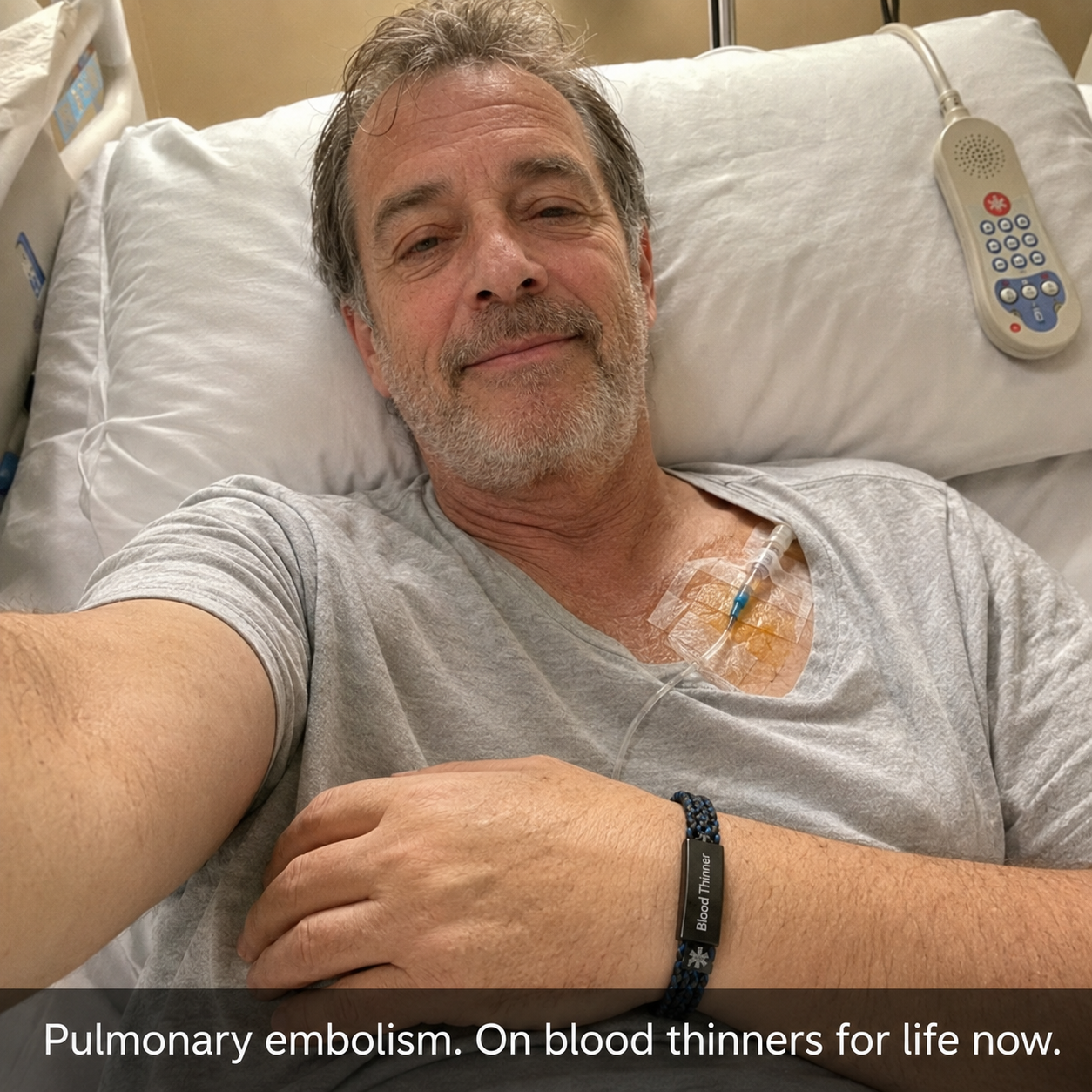
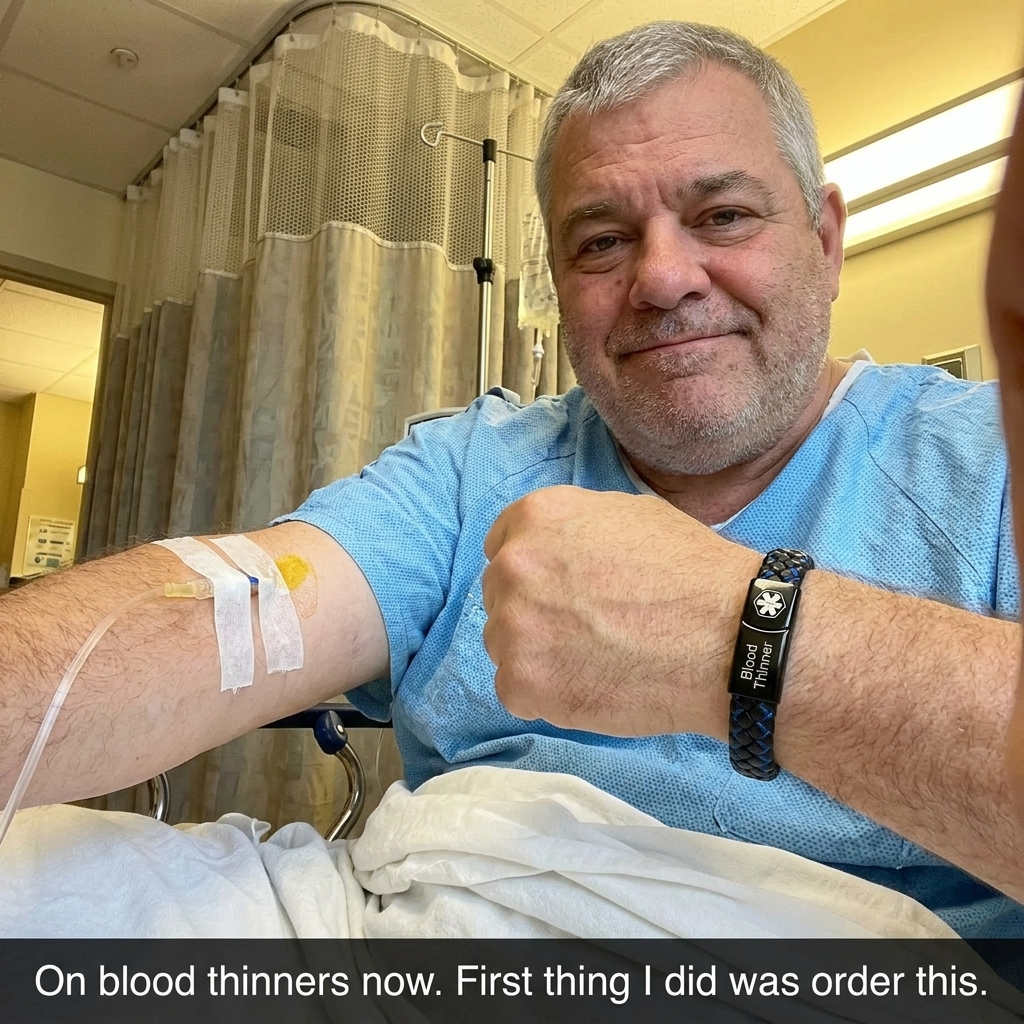
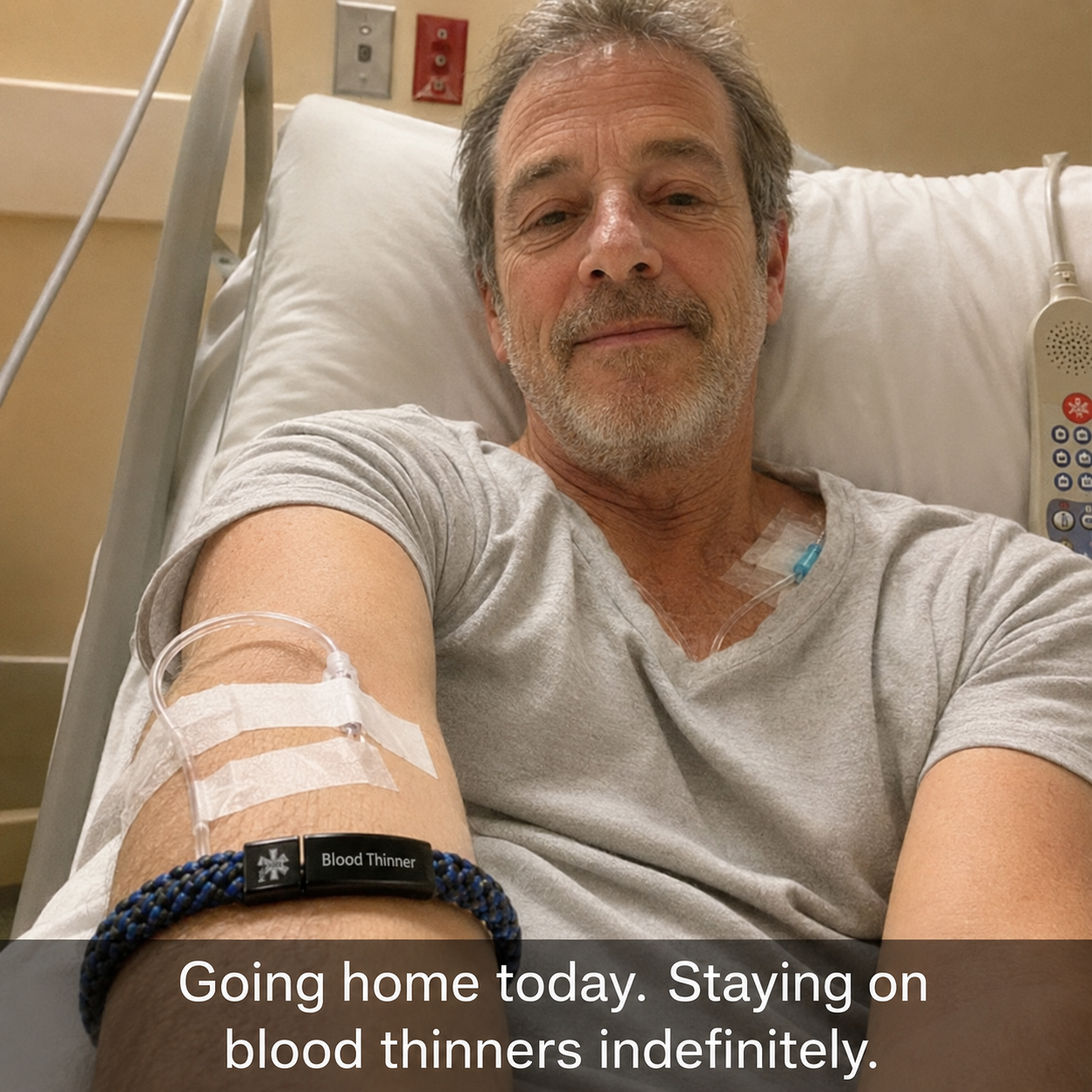
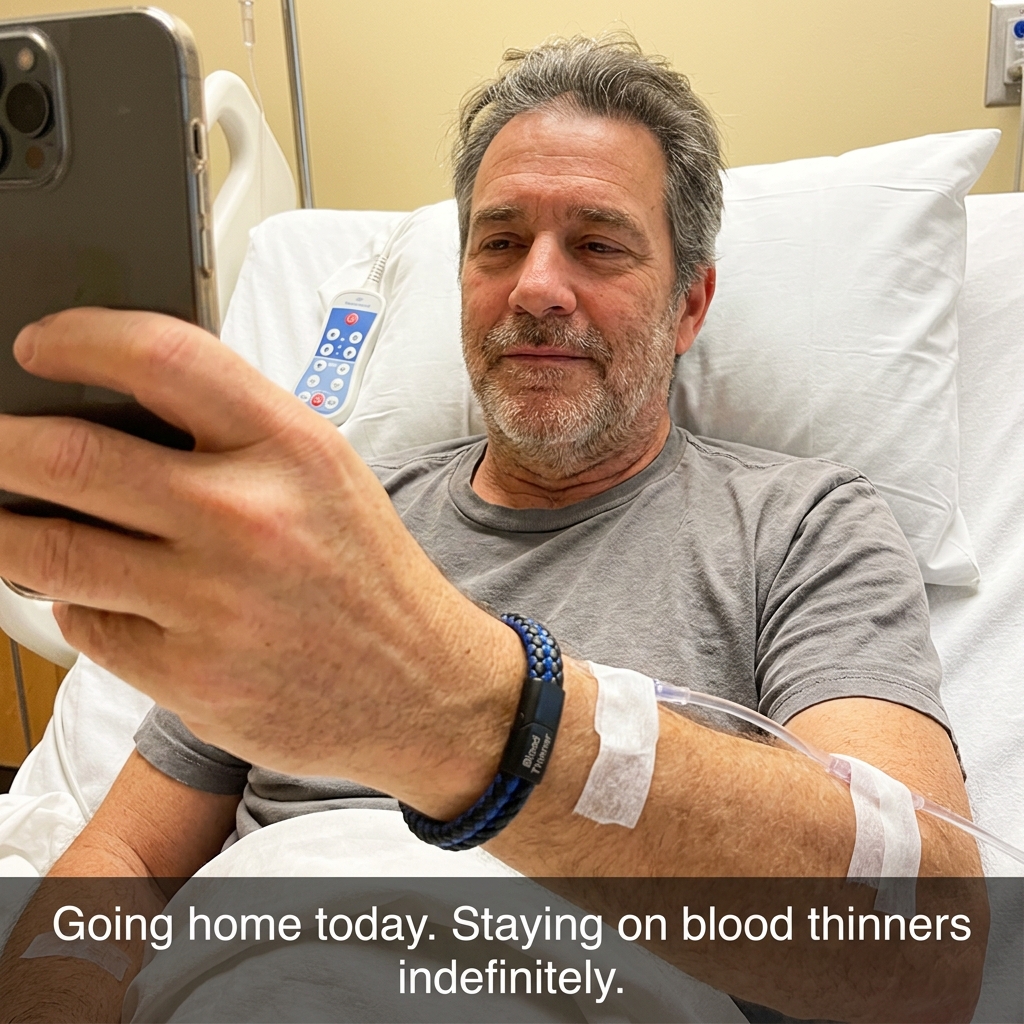
The paramedic had a syringe ready before anyone checked my wrist. What was in that syringe would have made everything significantly worse. I was on Eliquis. Nobody in that room knew it. And I couldn't tell them. My name is Mike Callahan. I'm 58. I've managed a regional sales team for a flooring company out of Phoenix for fourteen years. I drive a lot — customer visits, site checks, showroom runs. I'm on the road most days by 7:30am. Four months ago I was diagnosed with atrial fibrillation following what my cardiologist described as a "minor cardiac event" — language that sounds reassuring until you understand it means your heart did something it wasn't supposed to do and the damage assessment is still ongoing. The AFib diagnosis came with a prescription for Eliquis — a blood thinner — that my cardiologist made very clear was not optional and not temporary. "This medication is doing a specific job," she told me at our first appointment after the diagnosis. "It's preventing clot formation. That job does not stop being important just because you feel fine." I take it every morning. I do not miss doses. I have set a phone alarm that goes off at 7:15am regardless of where I am or what I'm doing, and I have not silenced it without taking the medication first since the day I started. I am careful. I am compliant. I do everything my cardiologist tells me. And none of that mattered on a Tuesday morning in a Home Depot parking lot when I went down hard on asphalt and couldn't tell the paramedics what they needed to know. What blood thinners actually mean in an emergency Before I tell you what happened in that parking lot, I want to explain something my cardiologist told me in our third appointment — something I wish she had told me in the first one. When a person on anticoagulant therapy — blood thinners like Eliquis, Xarelto, Warfarin, Coumadin — is involved in any kind of trauma event, the clinical picture is fundamentally different from a standard patient. The blood thinner is doing exactly what it's supposed to do: preventing clot formation. But in a trauma situation, clot formation is part of how the body controls bleeding. A head injury that causes internal bleeding in a standard patient will — to some extent — be controlled by the body's own clotting mechanisms. In an anticoagulated patient, those mechanisms are suppressed by design. This means that a head injury that would be survivable and manageable in most people can be life-threatening in a blood thinner patient. Internal bleeding that would slow and stop may not slow and stop. A procedure or medication that is routine in trauma care may interact with the anticoagulant in ways that worsen the situation. The emergency team needs to know. Not eventually. Not when the labs come back. Not when a family member answers a phone call. In the first sixty seconds, before treatment decisions are made. If they don't know, they respond to what they see — and what they see doesn't include the medication you took with breakfast. The Home Depot parking lot It was a Tuesday morning, about 8:45. I'd stopped to pick up some materials for a customer site visit. I was walking from the parking lot toward the entrance — had my phone in one hand, keys in the other. I don't remember tripping. I remember the ground coming up very fast and I remember the impact on my right knee and both palms and then my shoulder hitting and then the side of my head connecting with the asphalt in a way that made a sound I'd rather not describe. I was conscious. Barely. I could see the parking lot surface at close range and I could hear someone running toward me. I could not get up. I could not speak clearly. I tried to say "Eliquis" — that was the word I was reaching for, the one that mattered — and what came out was not that. A man named Dennis, who told me later he was a retired fire captain and was in the parking lot returning a drill, was the first person to reach me. He called 911. He kept me still. He talked to me — I couldn't respond well but I could hear him. The paramedics arrived in six minutes. What they found: 58-year-old male, head impact, altered mental status, right knee laceration bleeding, both palms abraded. The standard rapid trauma assessment began. I was conscious enough to see the syringe. I was not coherent enough to communicate why it was the wrong call. Dennis — retired fire captain, thank God — said "wait" before it was administered. He told them he thought he'd heard me trying to say a medication name. He told them to check my wallet. My wallet had my insurance card, my driver's license, and a Costco membership. "Check his phone," someone said. Locked. Dennis said, "Check his wrist." My wrist had a watch. Nothing else. They held the syringe. They did the blood draw instead. The blood panel came back in eighteen minutes and told them what my wrist should have told them in the first thirty seconds. Eliquis. Anticoagulated patient. Different protocol. Different decisions. Dennis saved my life in that parking lot. Not with any medical intervention — with the words "wait" and "check his wrist." Those two words bought eighteen minutes. My wrist gave them nothing. He bought that time on instinct and experience and the luck that a retired fire captain was returning a drill to Home Depot at 8:45 on a Tuesday. What the hospital told me afterward I spent two nights at Banner University Medical Center. The head impact caused a subdural hematoma — bleeding between the skull and brain — that was, in the words of the neurosurgeon, "manageable but required careful monitoring due to anticoagulation status." Manageable. That word again. The neurosurgeon was direct in a way I appreciated. She told me that if the syringe had been administered before the blood work came back, the hematoma management would have been significantly complicated. She did not use the word "fatal." She used the phrase "significantly complicated outcome" and held eye contact when she said it. She also told me something I have thought about every day since. "Every patient on anticoagulation therapy should have that information on their body. Not in their wallet. Not in their phone. On their wrist. It is the first place we look and the last place most patients think to put anything." On their wrist. She said it the way someone says something they have said many times before and cannot understand why it hasn't been resolved yet. I understood why. I hadn't done it either. My cardiologist had mentioned a medical ID in our second appointment. I had nodded. I had not done it. What I wore home from the hospital My wife Sandra found the bracelet. She spent the second night I was in the hospital researching options on her phone from the waiting room — she told me later she couldn't sleep and needed something to do with her hands. She found the My Medi Friend bracelet. Black and blue braided leather. Stainless steel magnetic clasp. "Blood Thinner" engraved on the face in clean, clear lettering. The medical caduceus on the side of the clasp. She ordered it from the waiting room. It arrived while I was still in the recovery phase at home. I have worn it every day since. It snaps on with the magnetic clasp in about three seconds. I forget it's there by the time I finish breakfast. It goes on after my shower, before my Eliquis, every morning without exception. The engraving is deep and clear — I tested it from the angle a paramedic would read it, wrist turned slightly, clasp facing up. Blood Thinner. Two words. Immediate. No ambiguity. $24.99. Sandra had been skeptical of the price for the same reason I would have been — cheaper usually means flimsier, less readable, less durable. It isn't. The steel hasn't rusted. The leather hasn't cracked. The magnetic clasp holds reliably through showers and gym sessions and everything in between. The price is what it is because they ship direct. No retail chain markup. The cost goes into what's on your wrist, not into a distribution system. That's the structural explanation. Not cheap. Efficient. They include a free Emergency ID wallet card — same information as a second layer — and a one-year full money-back guarantee. Twelve months. No questions. Who needs to read this If you are on Eliquis, Xarelto, Warfarin, Coumadin, or any other anticoagulant — for AFib, for DVT, for a pulmonary embolism, for any reason — please understand what I am telling you. Your cardiologist or your hematologist or your internist prescribed that medication because your body needs it. It is doing a specific and important job. That job does not stop when you walk out of the appointment and start your car. It also does not announce itself. It is invisible. It is a chemical fact about your body that exists in your bloodstream, that changes how emergency medicine must approach you, that is completely inaccessible to anyone who finds you on the ground in a parking lot with a locked phone and a wallet full of cards that say nothing useful. The bracelet is two words on your wrist. That's it. Blood Thinner. Readable in thirty seconds. Communicates everything the emergency team needs to know before they make a single decision. I had a retired fire captain in the right place at the right time who said "wait" and "check his wrist." My wrist gave him nothing. He improvised. It worked. You should not rely on a retired fire captain being in the right place at the right time. I'm not your cardiologist. I'm a sales manager from Phoenix who learned the hard way what the absence of two words on a wrist can cost. I'm telling you what I found, what I wear every day, and why I never leave the house without it. The bracelet is at mymedifriend.com. $24.99. Free worldwide shipping. Arrives in approximately ten days. One-year money-back guarantee. Your cardiologist probably mentioned this. You probably nodded. Stop nodding. Order it today. P.S. — The neurosurgeon used the phrase "significantly complicated outcome." She held eye contact when she said it. I understood what she meant. The difference between that outcome and the one I actually had was eighteen minutes of blood work, one retired fire captain's instinct, and a syringe that didn't get administered. Two words on my wrist would have replaced all three. For $24.99, I will never again need a Dennis in the right place at the right time. P.P.S. — Sandra found and ordered this bracelet. I have no financial relationship with My Medi Friend and neither does she. She ordered it from a hospital waiting room at 2am because she needed something to do with her hands and she wanted me to come home wearing it. I did. I still am.
They almost gave me the wrong treatment.
Men’s medical ID bracelet designed to display blood thinner information clearly in an easy-to-notice format. Made for everyday wear with a strong, practical style and easy visibility.
SHOP NOWLike this ad? Make it yours.
Crush rebuilds this exact creative around your product — your brand, your colors, your offer — in about a minute.