
Inactive· since Jul 1, 2026
- 13
- days it ran
- 0
- relaunches
- 43
- EU reach
Ad copy
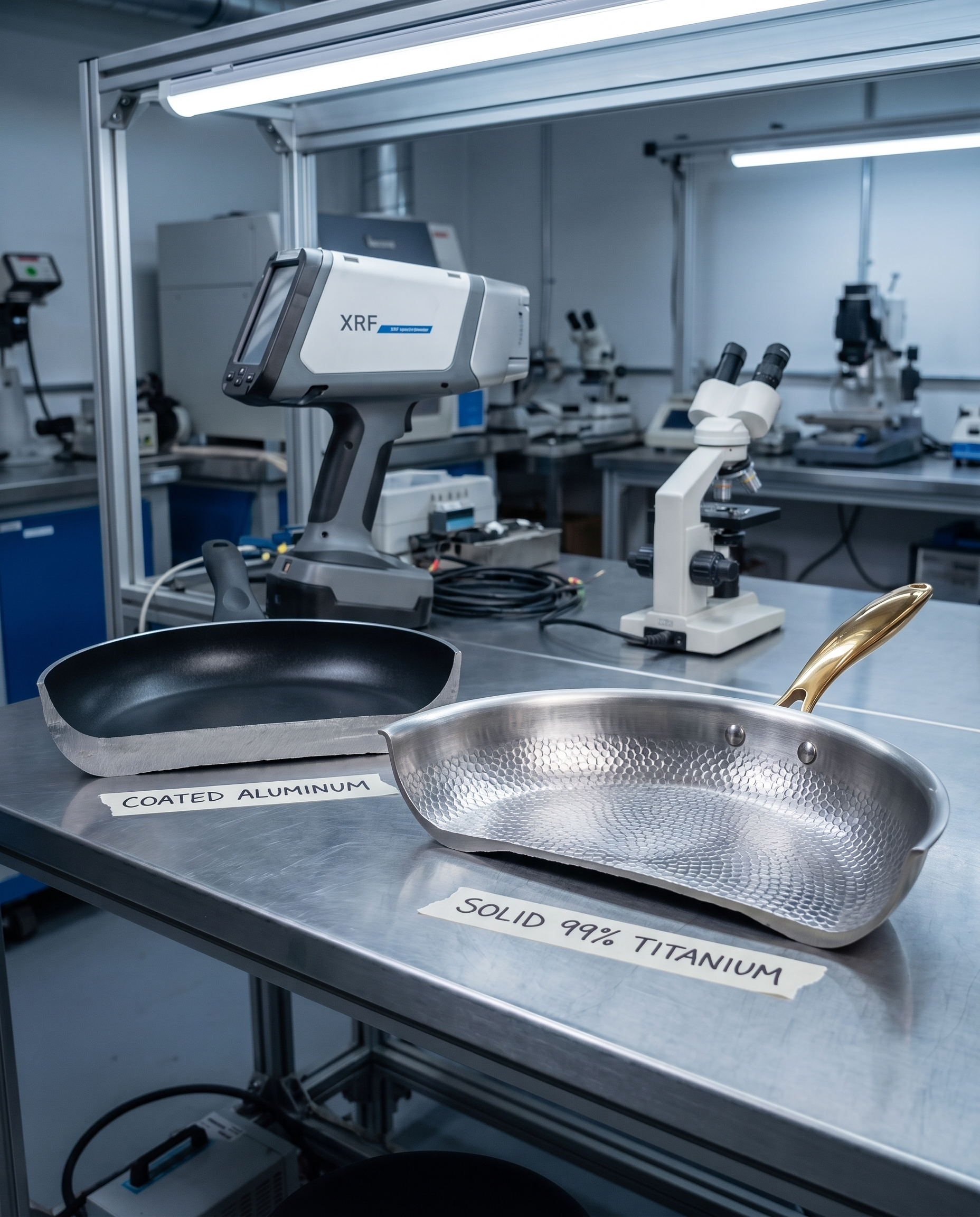
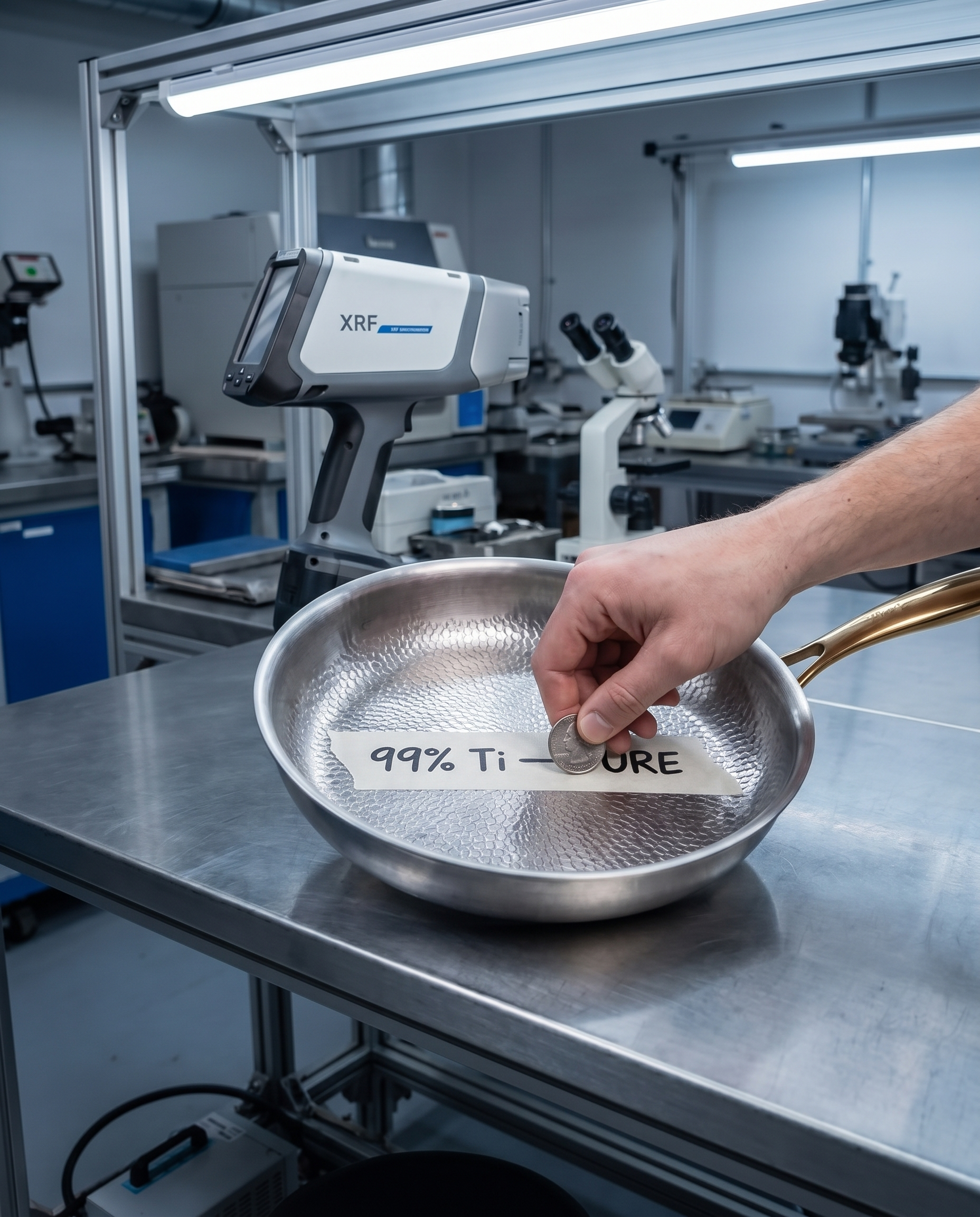
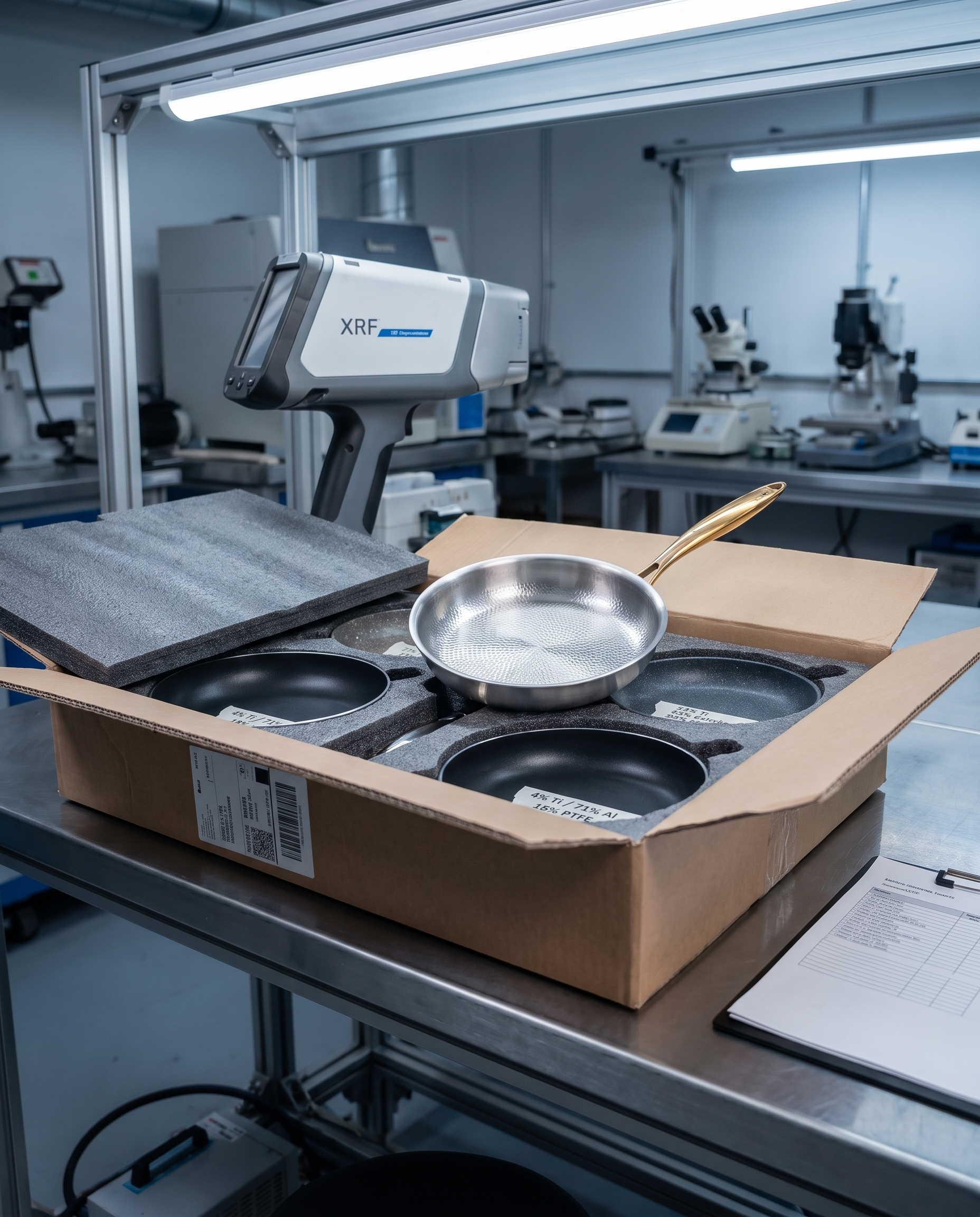
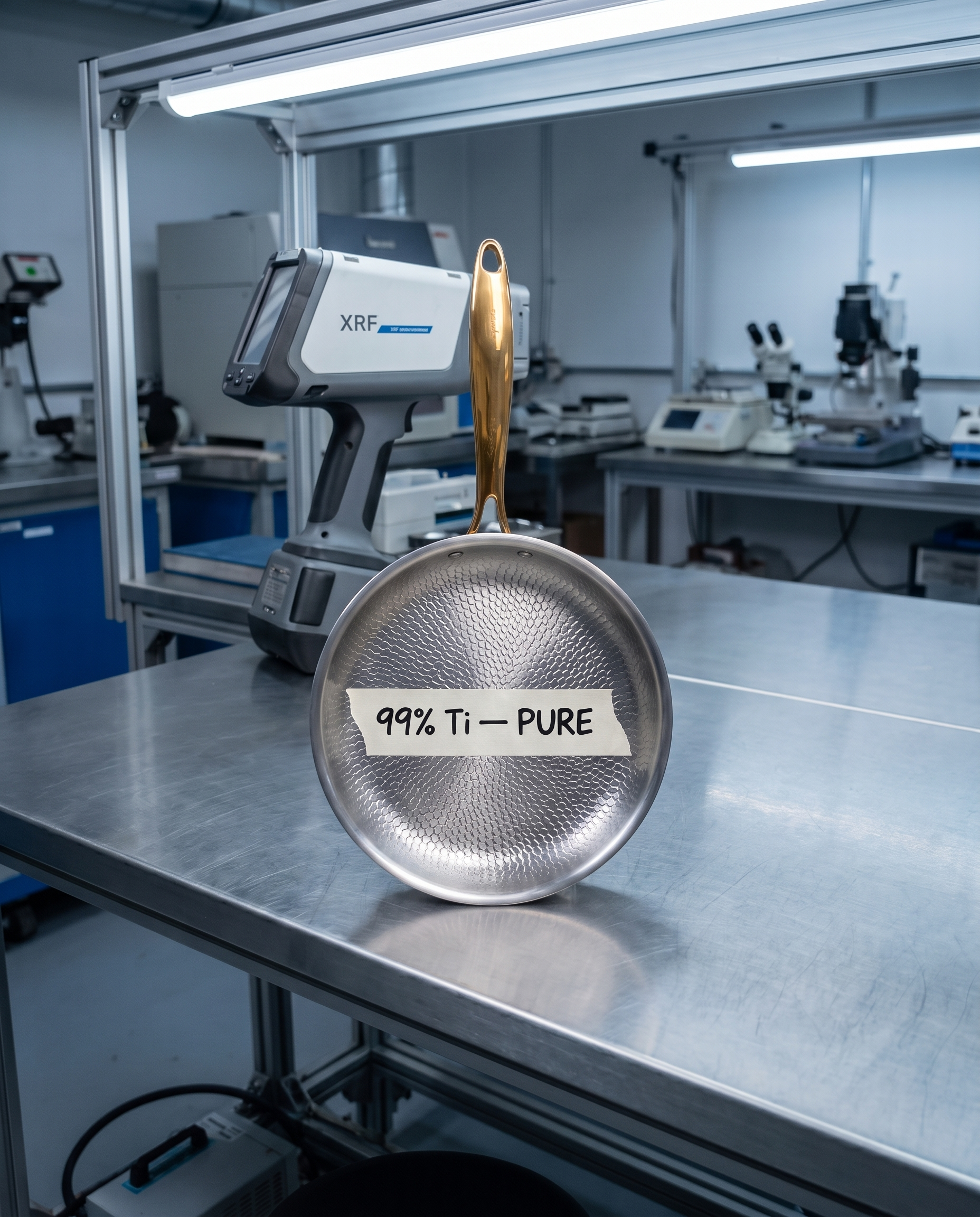
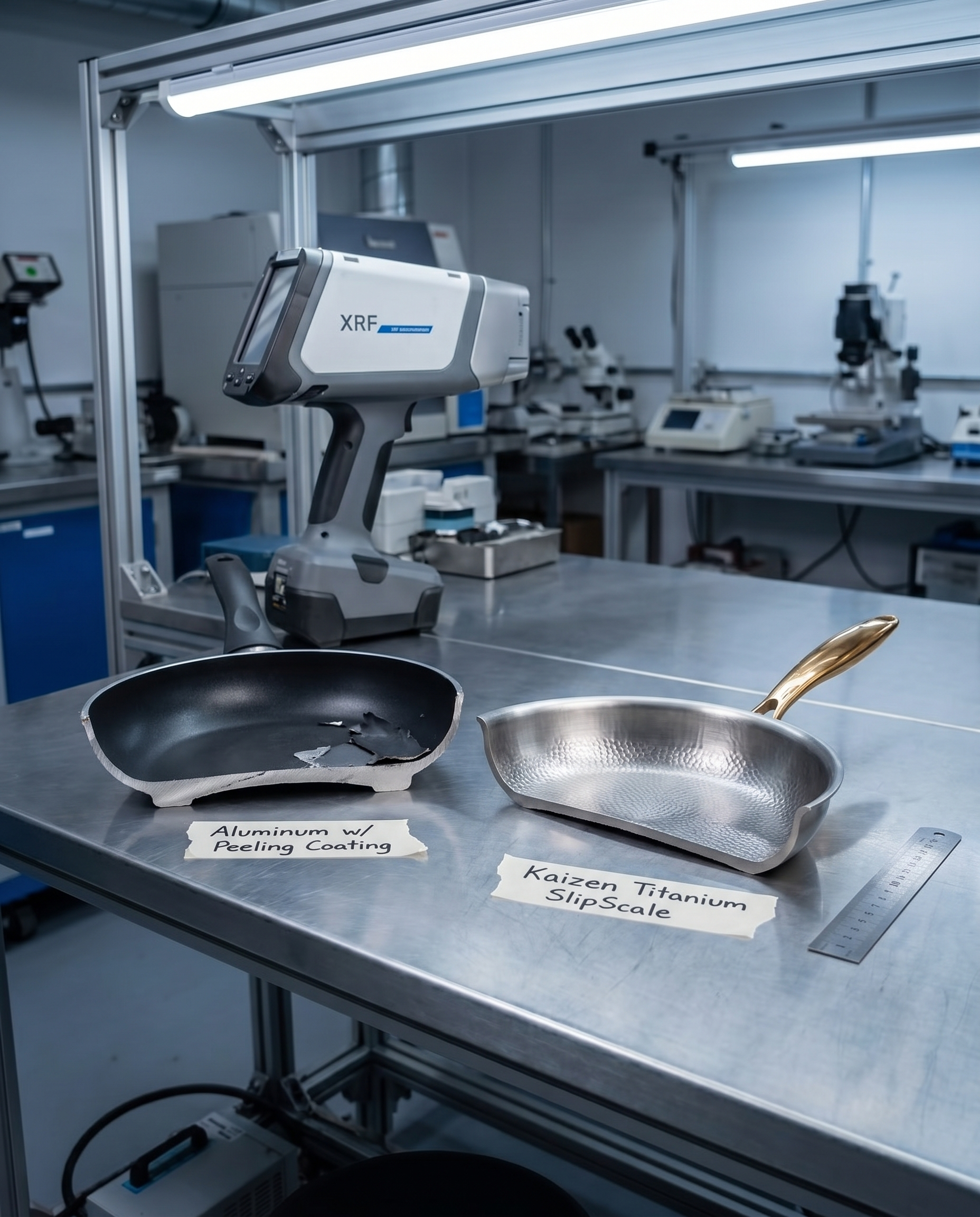
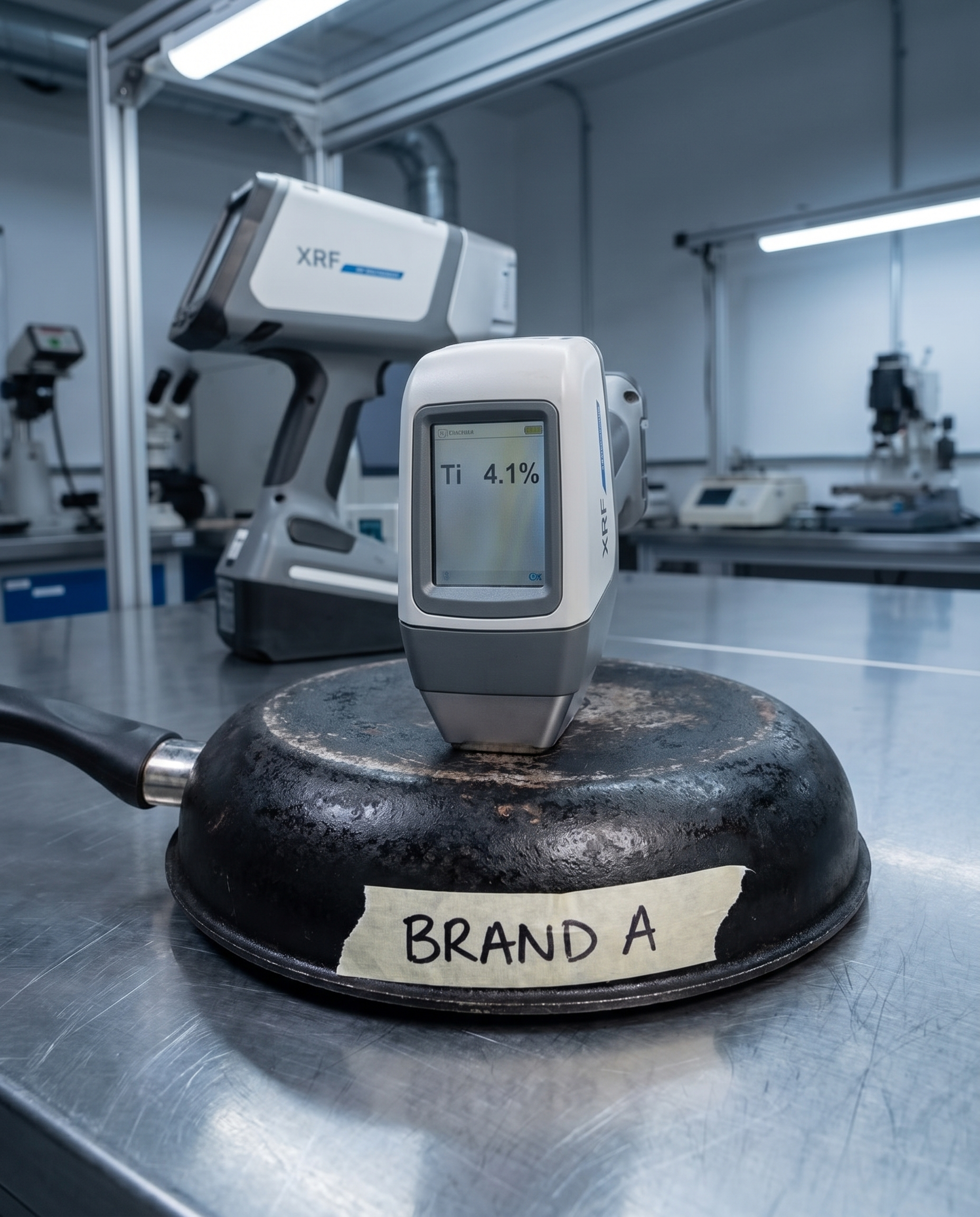
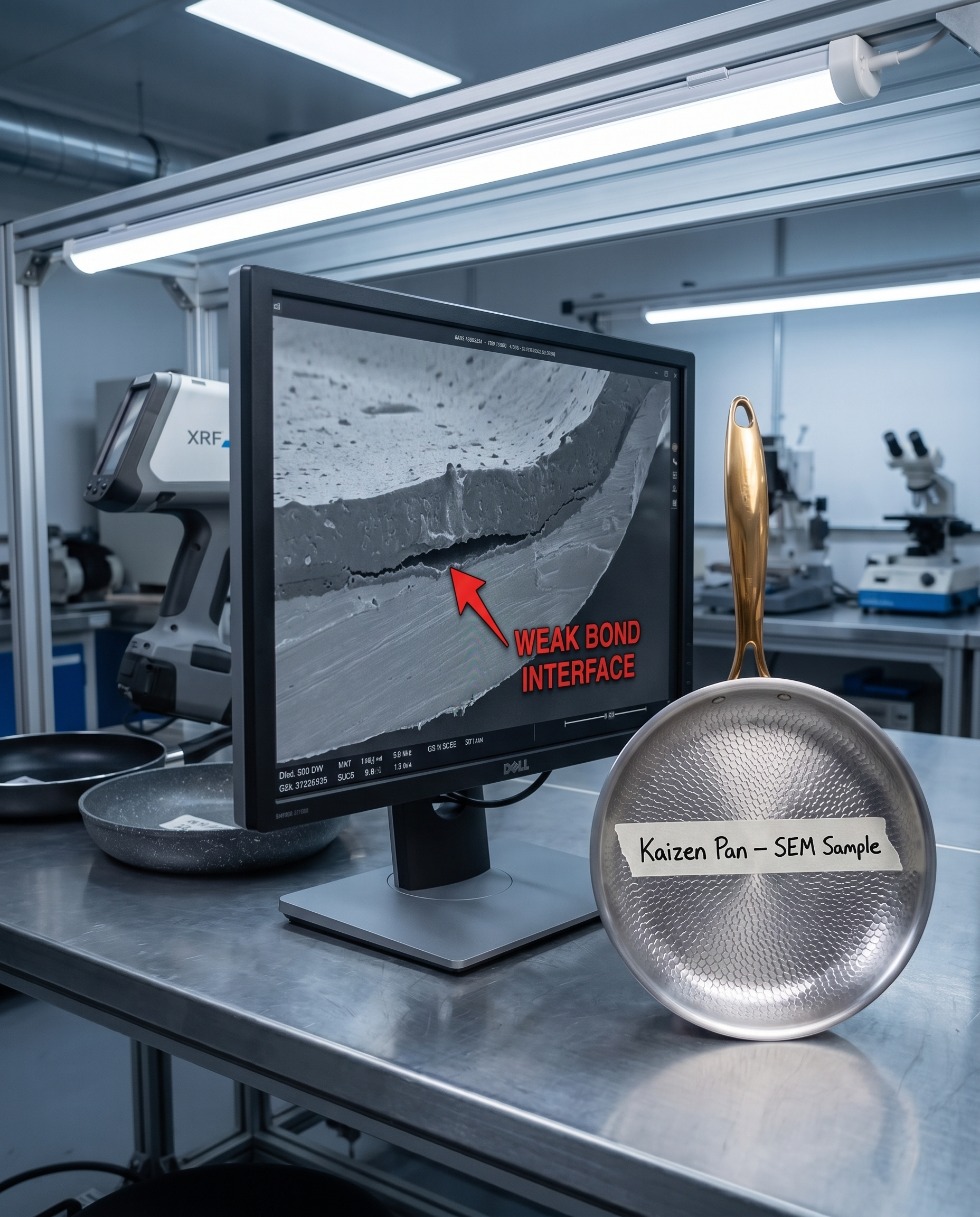
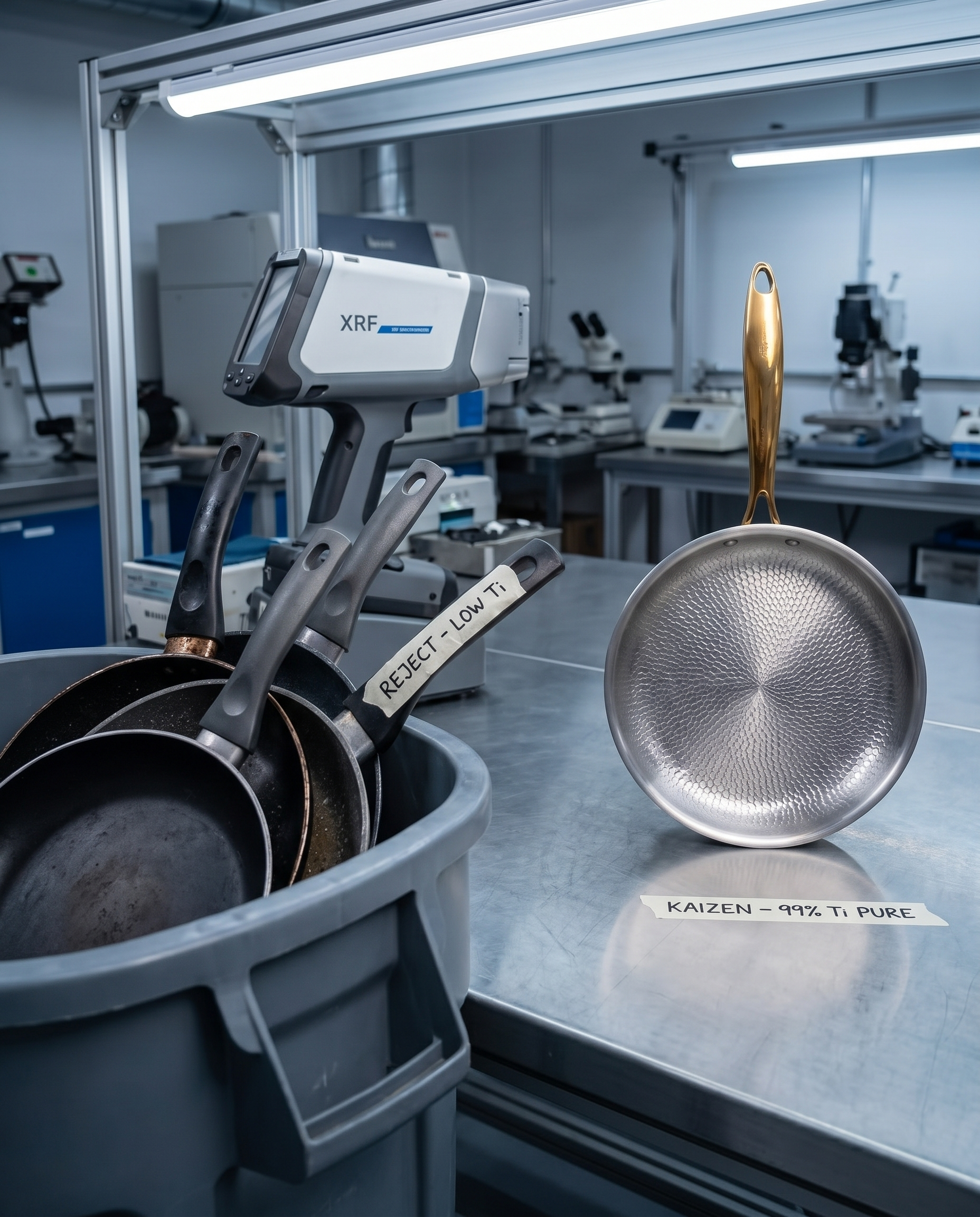
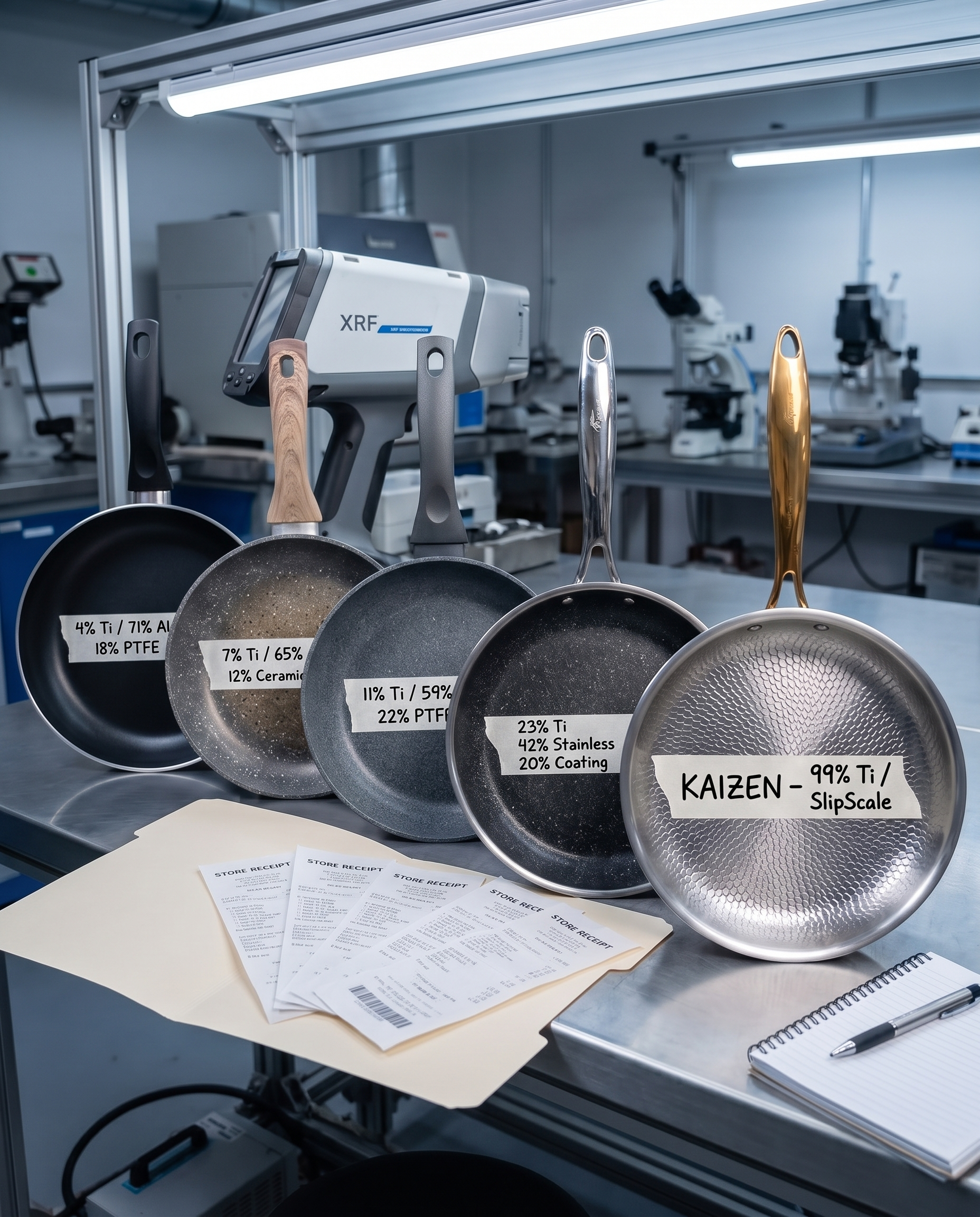
I work in semiconductor quality control at a fab in Portland. I spend my days looking at materials analysis reports for silicon wafers and the metals that we deposit on top of them in nanometer-thin layers. I know what an XRF spectrometry report looks like. I know what cross-section electron microscopy looks like. I know how to read a metallurgy data sheet and tell the difference between a pure metal and a composite material with trace presence of the metal in question. I had been on the fence about replacing my cookware for almost a year, and I had been skeptical of every consumer brand that used the word titanium in the marketing because I knew, from twenty years in materials testing, that the word means almost nothing in consumer goods without a spectrometry report attached to verify it. So I ran a test. I treated it the way I would treat a materials qualification at work. I bought five frying pans across the autumn of 2024, each one marketed as 'titanium cookware' by a different consumer brand at a different price point. Brand A: a $89 pan from a discount kitchen-store chain, marketed as 'titanium-infused nonstick.' Brand B: a $129 pan from a DTC brand that ran heavy Instagram ads, marketed as 'titanium-strengthened.' Brand C: a $199 pan from a department-store premium line, marketed as 'titanium-reinforced ceramic.' Brand D: a $279 pan from a viral TikTok cookware brand, marketed as 'titanium hybrid.' Brand E: a $179 pan from a small DTC brand I had not heard of before but had found in a Reddit thread about metallurgy in cookware, marketed as 'pure 99% titanium.' Total spend at retail: $878. The receipts went into a manila folder in my desk at the fab. I packed all five pans in a single freight box, padded with foam from a previous wafer shipment, and shipped them to a metallurgy lab in Sugar Land, Texas, that my company has used for third-party verification on several supplier audits. I requested XRF spectrometry across the cooking surface, the substrate, and the handle assembly, plus cross-section electron microscopy on a sample core taken from the center of each pan. The lab manager called me a week later to confirm the scope of the work. He asked why I was running consumer pans through their industrial-grade testing. I told him the truth. He laughed and said he had been waiting for someone to ask. The lab invoice came in at $470 against a quote of $510, which was the only piece of good news in the entire process. Three weeks later the report landed in my inbox as a 47-page PDF. I opened it on my back porch with a beer on a Friday evening and read each page slowly. The composition breakdowns were not subtle. Brand A came back at 4.1% titanium by mass across the cooking surface. The remaining 95.9% was aluminum substrate (71.2%) and a polytetrafluoroethylene-based coating (18.4%) with trace ceramic compounds. The 'titanium' in the marketing name was titanium dust mixed into the coating slurry at the factory at a concentration below 5% by mass. Brand B came back at 7.0% titanium with similar aluminum and fluoropolymer composition. Brand C came back at 11.3% titanium with anodized aluminum substrate and a ceramic-fluoropolymer hybrid topcoat. Brand D came back at 22.7% titanium with stainless steel substrate and a ceramic-titanium hybrid coating that included additional fluoropolymer compounds the lab flagged as 'undocumented in the product literature.' Brand E came back at 99.1% titanium with no coating layer detected. Four of the five 'titanium' pans on the consumer market were aluminum or stainless pans with thin titanium-something coatings fused to the cooking surface. They were sold legally as titanium cookware because there is no FTC threshold for what percentage of titanium a pan must contain to be marketed as a titanium pan. I confirmed this with two FTC enforcement attorneys through a contact at the consumer protection bar in Washington. The agency is aware. The agency is under-resourced. The current enforcement standard for the word 'titanium' in cookware is, in practice, 'detectable presence.' One atom of titanium is enough to use the word in the marketing copy on the box. The FTC has more pressing categories to enforce against and cookware sits at the bottom of the priority list for the consumer protection division. Brand E, the only pan in my test that came back as actually pure 99% titanium, was also the cheapest of the five at retail. The brand had the smallest marketing budget of the lot. No celebrity endorsement. No Costco roadshow staffing. No paid TikTok creator integrations. The brand spends its margin on the metal and on publishing the lab certificate openly with every order. I had found the brand in a Reddit thread where a chemistry PhD had posted his own XRF data on a pan he had bought and tested. His numbers matched mine within rounding error. Brand E was Kaizen. The pan in the lab's lineup labeled '99% Ti PURE' on the masking tape, in handwritten Sharpie by the lab tech who had run the test, is the only pan I now cook on. The cooking surface uses a permanent SlipScale micro-pattern pressed directly into the titanium itself, with no separate coating layer to fail under thermal cycling. The pattern is a pressed-in physical geometry rather than a chemical applied on top, which means it cannot peel, cannot shed, and cannot be worn off by abrasive cleaning. The lab's cross-section microscopy confirmed the SlipScale pattern is continuous with the underlying titanium with no detectable bond interface that could fail. The pan, by materials science definition, has no engineered failure mode. The only ways to destroy it are to melt it (titanium's melting point is 3,034 degrees Fahrenheit, well above any consumer cooking scenario), to physically deform it (which requires industrial-grade hydraulic force), or to physically remove it from existence. The implication of my $1,348 investigation, when I added up the retail cost of the five pans and the lab invoice, was uncomfortable for the cookware industry. Four out of five 'titanium' pans on the consumer market are coated aluminum or stainless products sold under a regulatory loophole. The brands know what is in their pans. The internal lab certificates exist within the brands' quality assurance departments. The certificates are simply not published externally because the publication would tank the marketing. The brands that do publish their lab data openly are the brands where the marketing matches the metal. There are roughly three such brands in the entire global consumer cookware market that I have personally verified. Two of them are small DTC operations with no scale. Kaizen is the third. Kaizen ships an XRF metallurgy lab certificate in every box, identical to the one my lab in Sugar Land produced, signed and stamped by an independent third-party laboratory in Indiana that the brand has used for verification since 2019. The certificate confirms 99% titanium content with the spectrometry curve attached on the back page. The warranty is one page of plain English with two exclusions. The chef's full lab report breakdown, with the raw spectrometry data and the cross-section microscopy images and the FTC regulatory analysis, is linked below. Read it before you trust the next 'titanium' label on a consumer cookware box.
Like this ad? Make it yours.
Crush rebuilds this exact creative around your product — your brand, your colors, your offer — in about a minute.