Hushlab
Hushlab Facebook ad: “They Said He Needed Surgery. They Were WRONG”
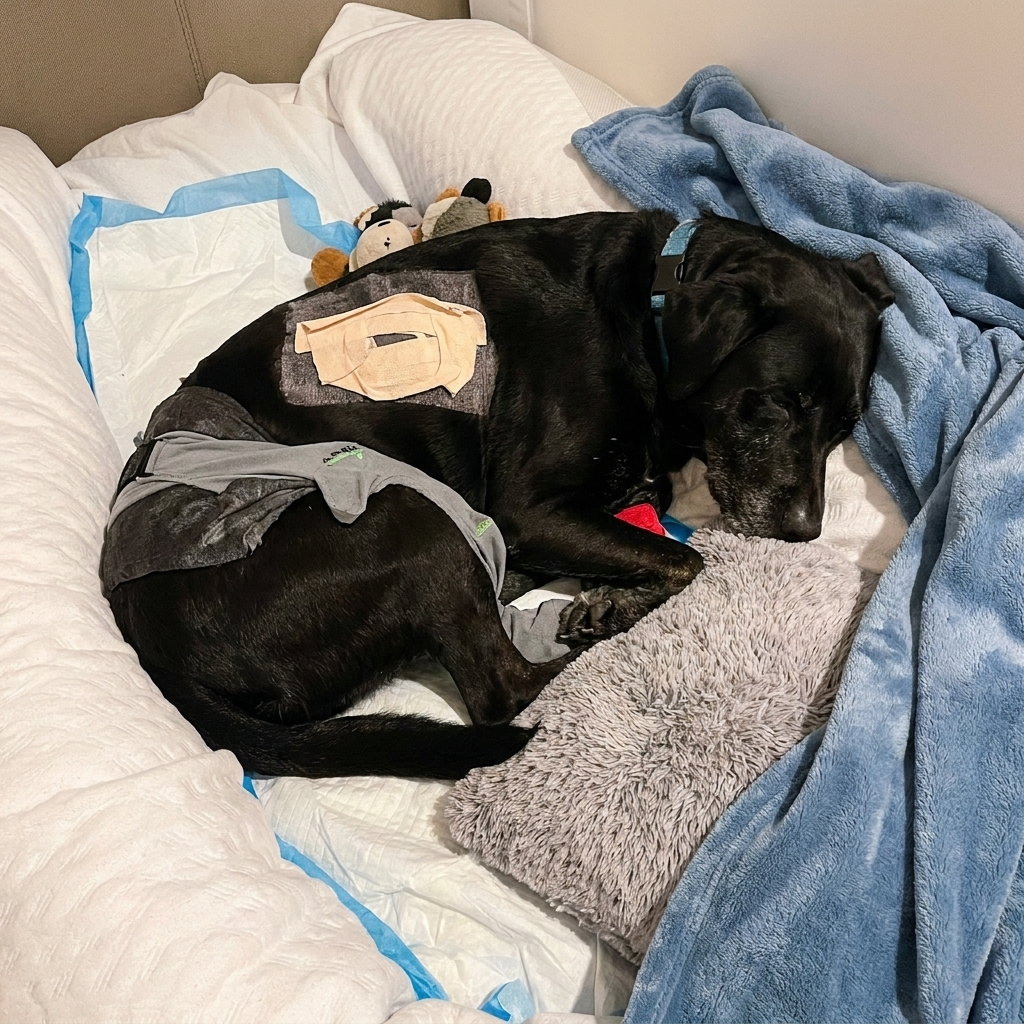
Ran for 50 days, from July 22 to September 10, 2026, the last day Crush saw it.
Run by Hushlab on Facebook. Crush is not the advertiser and does not verify its claims. See this ad in Meta's Ad Library(opens in a new tab)
Want an ad like this for your product?
Crush makes new ad images for your product from this ad: your logo, your product photo, your offer.
Trials from $19.95 USD, then $79.95 USD a month. Cancel anytime.
About this ad
- Meta Ad Library ID
- 2196873087550727
- Platforms
- Facebook, Instagram, Audience Network, Messenger and Threads
- Relaunches
- 0
Ad text
Cooper’s torn CCL cost $4,500. The vet gave me six weeks to decide. Then my neighbor asked me one question that made me realize he didn’t need surgery. He needed something his body was missing. Cooper tore his CCL at 8. It happened in a second. He jumped off the deck to chase a squirrel, landed wrong, and let out a yelp that made my stomach drop. After that he wouldn't put weight on his back leg. He hopped on three legs and just looked at me like I could fix it. The vet said torn CCL. Then he said the number. $4,500 a leg for the TPLO surgery. I barely had enough to cover the $600 X-ray. I told him I wanted to try conservative management first. He nodded and said he'd give me six weeks to decide. The longer you wait, the higher the chance the other leg gets injured. More than half of these dogs tear the other CCL too. I just sat in my car after that. I couldn't afford $4,500. Let alone $9,000 if the other one tore. It felt like the price of Cooper walking again was a number I would never have. So I went home and researched. Followed everything the vet and the forums said to do. Crate rest. No running. No jumping. No stairs. Six weeks of whining. Six weeks of keeping him prisoner. Gabapentin and trazodone to calm him down. Painkillers for relief. I was drugging my own dog. Started him on joint chews. Cosequin first. Then Dasuquin because it was the "advanced" one. $40 a bottle. I even ordered an $800 custom brace. Cooper wore it for two weeks and still looked miserable. It was a Tuesday afternoon when I got the call. Six weeks after the visit. It was the vet. "Is Cooper responding? Are you ready for the TPLO consultation?" "He isn't improving," I said. "I want to try more conservative treatment before I commit to the surgery. I can't afford it right now." "Mrs. Johnson, the longer you wait, the more dangerous this gets for him. Surgery is your best option." I told him I just needed more time. Then I hung up. I looked over at Cooper. He was in the corner, hobbling on three legs. His joints popped every time he moved. The same dog that used to hit the back door like a freight train when he heard the leash. And he was looking at me with those tired, confused eyes. That's when it hit me. I was failing him. The vet's voice was still in my head. More than half of these dogs tear the other leg too. I heard a clock ticking every time he hopped on that one good leg. I kept thinking about the deck. How I let him jump off like that. How he yelped when he landed. What if I did this to him. What if it was already too late. What if he has to live like this for the rest of his life. I sat with that for a long time. A week later I was in my front yard when I saw Mrs. Patterson in her garden, pulling weeds. Mrs. Patterson was my 74-year-old neighbor. She was a vet before she retired. Spent thirty years rehabbing injured dogs at the county shelter. She saw me and waved. "How's Cooper? I haven't seen him in a while." "Not the best. He tore his CCL. He hasn't been getting better." She raised an eyebrow. "CCL tears are serious. What have you been doing for it?" "The usual. Crate rest. Painkillers. Glucosamine chews. I bought him a brace a few weeks ago but that hasn't done anything." I paused. I thought about Cooper hobbling and looking at me with those confused eyes. Like he was waiting for me to help him. Mrs. Patterson just looked at me. I don't know what came over me. I usually keep things to myself. But I told her everything. The limp. The yelp. The $4,500 surgery. The feeling that I was failing him. Mrs. Patterson sighed. "Can I come inside and see him?" I nodded and let her in. She got on the floor with him. Ran her hands down both back legs. Watched him try to stand. Watched him hop. Then she sat back and asked me one question. "Do you know what the surgery actually does?" I told her it fixes the ligament. The tear. She shook her head. "A torn CCL only gets stable when the body builds new support tissue around the joint. That support tissue is made of collagen. That's what surgery is really for. It doesn't repair the ligament. It reshapes the bone so the body can build that support tissue and hold the knee steady. That's the entire fix. Stability." "Surgery works. It's the gold standard. But it's a $4,500 procedure that puts your dog under anesthesia and through months of recovery to trigger a rebuild his body can do on its own. And while one knee recovers, the good leg carries all the weight with no help." I asked her the obvious thing. Then why didn't it heal on its own? "Rest only gives the body time. It doesn't give it material. You told his body to rebuild the tissue and handed him nothing to build with." She kept going. "The drugs only sedate him. They don't rebuild anything. Joint chews have glucosamine. But glucosamine only supports the fluid around the joint. It's a helper, not the building material. And the form is wrong. Chews get cooked at high heat, and heat destroys the protein inside. His body barely absorbs any of it." "And the knee brace? It tries to hold the joint steady from the outside. That's the whole idea. And that's exactly why it fails. It does nothing for the inside of the joint. The only brace that works is the one the body builds inside." I just sat there. "I can't believe nobody told me this before." "Surgery is the easy answer. It works. And it pays. A $4,500 procedure fills pockets. Even with the long recovery. Even with the anesthesia risk. Even though it does nothing for his other leg — the one carrying all the weight, fraying a little more every day." "So what do I do?" "The support tissue is made of collagen. So you give him collagen. You're giving him the same stability surgery aims for, just without the knife. But there are three things to look for, and almost everything on the shelf misses at least one." "One. All three collagen types. Types I and III build the connective tissue and scar tissue that hold the knee stable. Type II is what the cartilage cushion is made of. Most products give you only one." "Two. Cold-pressed liquid. Not a chew. Not a pill. Not a powder. Cold-pressed means it never touches the heat that destroys the protein. Liquid means it's already dissolved. The body absorbs almost all of it." "Three. It has to feed the good leg too. Every day he hops on that one knee, the ligament is fraying under double the weight. The same collagen that rebuilds the torn side reinforces the good one. Surgery can't do that. It only fixes one knee." She wrote all three on a card and handed it to me. "This is what I use. It's the only one I've found that does all three. Hushlab Premium Liquid Collagen." I looked it up that night and read the label. 900 mg of collagen, types I and III. The building material, at a real dose. UC-II. The type II collagen the cartilage cushion is made of. Hyaluronic acid to carry it in. The delivery vehicle. Cold-pressed liquid. 98% absorption. Glucosamine sitting at the bottom. Doing the small job it was always meant to do. Joint support and maintenance. Everything matched the card. I ordered it that night. Cooper was asleep on the floor next to me. Week 1: I put a pump in Cooper's food every night. I watched. He was still hopping on three legs. I called Mrs. Patterson, crying. She told me to give it a few more weeks. Week 2: Cooper started putting weight on his back leg. Not fully. Just enough to limp on it. The same leg that made him yelp when the vet barely touched it. Week 4: He started walking. Not running. Not jumping. Not climbing stairs. But walking on all four legs. I didn't believe what I was seeing. I took him out of the crate for good. Week 8: I weaned him off the gabapentin and trazodone. Threw the $800 brace in the closet. We started going on walks again. Real walks. Thirty minutes. Week 12: Cooper saw a rabbit in the backyard and took off sprinting. My heart dropped when he jumped off the deck. Nothing happened. I called him and he came running back, tail wagging. Last Tuesday I brought him in for a checkup. They examined him. Touched the back leg. The one that couldn't move twelve weeks ago. They didn't believe what they saw. "Did you get the procedure somewhere else? His legs are extremely stable." I shook my head and told them about the support tissue. The collagen. The stability. I could tell they had no idea what I was talking about. "Well, whatever works. The other leg is incredibly stable too. No sign of damage to the second CCL." I left that day with a dog I fixed. No surgery. No $4,500 bill. No twelve-week recovery. On the drive home he hung his head out the window, tongue flapping in the wind. Looking out with the same carefree eyes he had when he was three. I wish someone had told me what the surgery actually does. That it wasn't necessary. That Cooper's body was just missing the material. That's why I'm telling you now. Your dog has a torn CCL. Holding their back leg up. Hopping on the other three. Looking at you with those eyes, asking you to help them. Your vet quoted you thousands for TPLO surgery. You tried the crate. Gabapentin and trazodone. Painkillers. Joint chews. Maybe the $800 knee brace that did nothing. Your dog is still limping. Still whining. Still can't run or play. And that same voice is in your head. The other leg has more than a 50% chance of tearing too. A clock is ticking every time they hop on that one good leg. That was me. Watching my dog suffer. Believing the price of him walking again was a number I couldn't afford. And all I could think about was how I was failing him. Until I found Hushlab Premium Liquid Collagen. Twelve weeks. Weight back on his leg. Off the drugs. Back to running. Back to the dog I recognized. A torn knee only gets stable when the body builds new support tissue around it. That's what the $4,500 surgery is for. Hushlab gives their body the material to build it — without the knife, the anesthesia, or the cost. It wasn't the procedure. It was the three things on the label. All three collagen types. Cold-pressed liquid. Support for the good leg. $30 a bottle. The multi-pack brings it to about $18 a bottle. That's what I bought, because the support tissue rebuilds over weeks — and the good leg needs it just as much as the bad one. 60-day money-back guarantee. That's the reason I finally bought it. If Cooper hadn't changed, I would have sent it back for a full refund. Very different math from a $4,500 surgery you can't take back. And I want to be clear before I finish. I don't work for Hushlab. Nobody paid me for this. I'm just someone who blamed herself for her dog's suffering, and found out the answer was one missing material the entire time. I'll leave the link below. https://tryhushlab.com/products/hushlab-liquid-collagen-dogs Tonight, watch your dog hobble on three legs. Watch them look at you with those tired, confused eyes, asking you to help them before the clock runs out. They're waiting for the one material their body is missing. Don't make them wait.
Where the ad sends people
tryhushlab.com
They Said He Needed Surgery. They Were WRONG
Liquid collagen for dogs. Calms the scratching, paw-chewing, and hot spots at the source by rebuilding the skin barrier that lets allergens in.
Shop now: tryhushlab.com(opens in a new tab)