The Daily Health Digest
The Daily Health Digest Facebook ad: “what nobody tells you about hearing aids”
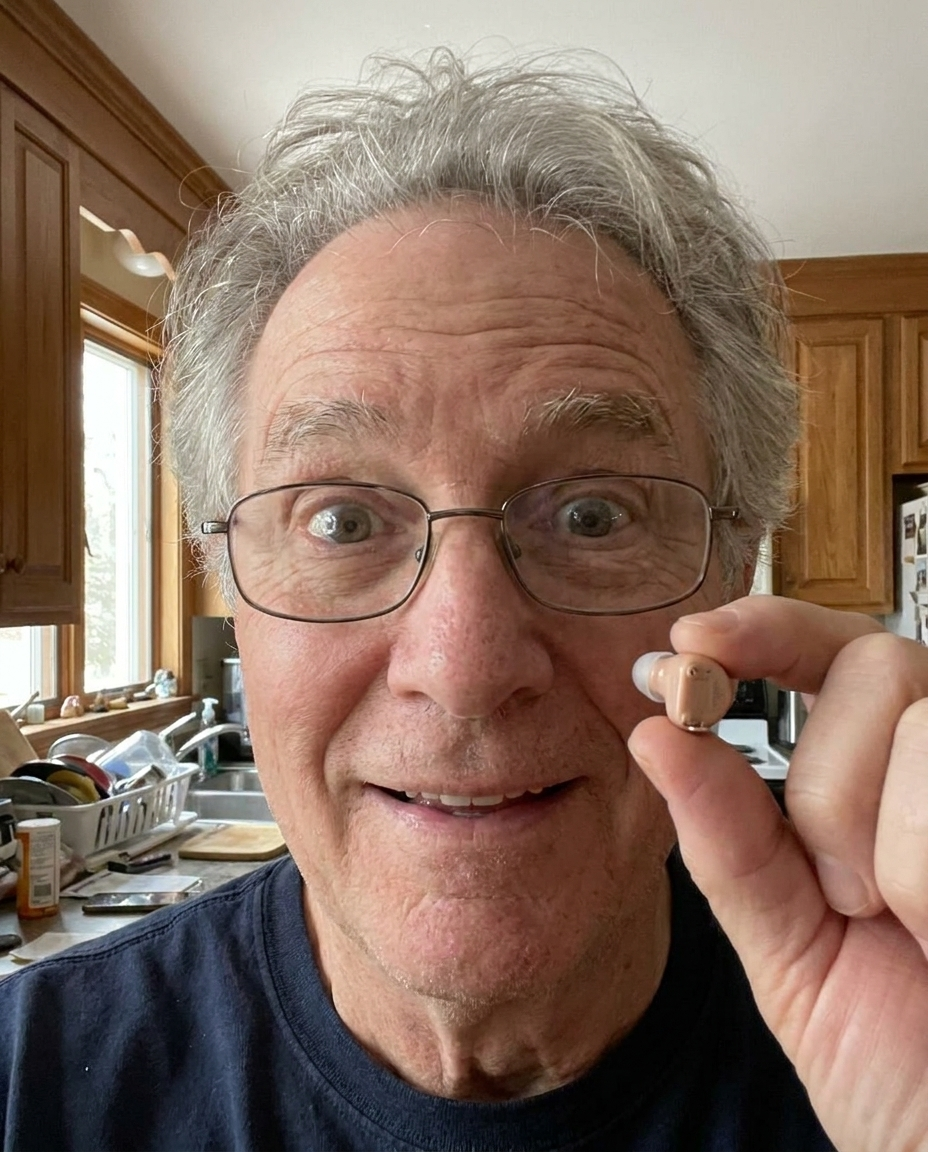
Ran for 61 days, from June 15 to August 15, 2026, the last day Crush saw it.
Run by The Daily Health Digest on Facebook. Crush is not the advertiser and does not verify its claims. See this ad in Meta's Ad Library(opens in a new tab)
Want an ad like this for your product?
Crush makes new ad images for your product from this ad: your logo, your product photo, your offer.
Trials from $19.95 USD, then $79.95 USD a month. Cancel anytime.
About this ad
- Meta Ad Library ID
- 2198604720978020
- Platforms
- Facebook, Instagram, Audience Network, Messenger and Threads
- Relaunches
- 1
- Niche
- Parenting & Kids
Ad text
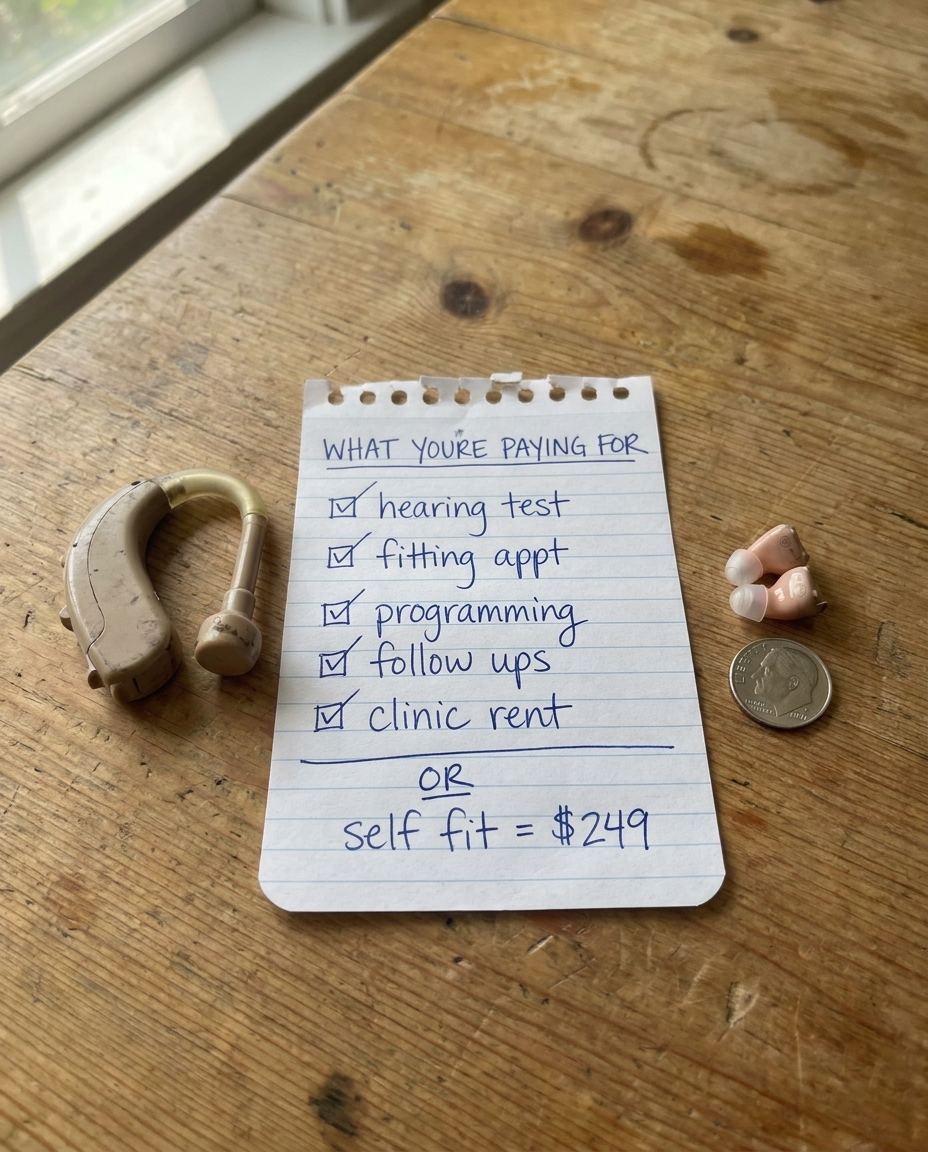
For two years I didn't buy hearing aids because I was sure I needed an audiologist first. Turns out you don't. Let me explain what nobody told me. I want to start there, because that one wrong belief cost me two years of half-hearing my own grandchildren. What I had in my head was simple, and it was wrong: that you couldn't just get hearing aids the way you get reading glasses. That a professional had to test you, program them to your exact ears, and that the whole thing would run into thousands of dollars before you heard anything better. So I kept finding reasons to wait. The appointment, the cost, the fuss. Every time it came up I'd say "after the holidays," or "in the spring." Two years of after-the-holidays. Then I learned the part nobody had bothered to tell me, and I was honestly a little angry at how long I'd waited. Let me back up and explain. I'm Joan. 71. I taught third grade for thirty-one years before I retired. A classroom full of seven-year-olds will teach you to listen closely — you learn to hear the one quiet child in all that noise. So losing my hearing felt like losing something that had been mine my whole life. It went gradually, the way they say it does. First I was missing the soft-spoken ones. Then I was reading lips a little without realizing it. Then, in any room with more than two conversations going, I'd just lose the thread entirely and sit there smiling, hoping nobody asked me a direct question. The hardest place was church. I've sung in the choir most of my adult life, and I started missing what the women beside me were saying between hymns. I'd laugh when they laughed, a half-second late, hoping it fit. But the moment that did it was my granddaughter, Emily. She's six. She'd made me a card and was reading it out loud to me, so proud, and I caught maybe half. I did the smile and the nod. And she looked up and asked her mother, "Does Grandma not like it?" I liked it more than I could say. I just hadn't heard it. But to a six-year-old, there's no difference between not hearing and not caring. That was the evening I finally booked the hearing test. Mild-to-moderate, both ears. The young man said it was very common for my age and easily helped. Then he told me the price. $4,995. Now, I ran a household and a classroom budget for decades. I know the difference between something being expensive because it's worth it, and something being expensive because someone decided it could be. And five thousand dollars for two small things that rest in your ears — that was the second kind. So for once I didn't just sigh and go home. I sat down and actually looked into it, the way I'd research anything that mattered. And the first thing I found turned the whole story upside down. That hearing aid they wanted $4,995 for? The parts inside — the little speaker, the microphone, the chip, the shell — cost around $200 to make. Two hundred dollars. And I'll be fair, because I don't care for exaggeration: the parts aren't cheap rubbish. The good ones use a receiver made by a company called Knowles, who supply many of the big brand names too. It's genuine, well-made technology. But $200 to build, and nearly $5,000 to sell. I have never in my life seen a markup like that. That extra $4,795 isn't the device. It's the clinic rent. It's the salesperson on commission, who is never going to point a customer toward the inexpensive pair. It's the managers, the advertising, the shareholders. You're paying for all of it. And I'll be honest — I don't even blame them for it. That's simply how a business runs. The more overhead you carry, the more you must charge to make a profit. There's nothing dishonest in that. But their overhead is not mine to pay. Not a dollar of that rent and commission goes toward helping me hear Emily. It only rides along on the price. Fair enough for them. Just not in my favor. Now here is where my own mistaken belief finally got put right — the audiologist. I had always assumed the law required it. That you were legally obliged to go through a clinic and have a professional program them, and that this was why they cost what they did. That changed in 2022. The FDA created an entirely new category — over-the-counter hearing aids — for people with mild-to-moderate loss, like mine. You're permitted to buy them directly. No medical exam. No prescription. No fitting appointment. And the FDA stated plainly why they did it: to bring the price down. In their own words, it's less expensive because there's no professional fee attached. You fit them yourself. So the appointment I had been dreading for two years, the one I believed I had no choice about — it was never what made the aids work. It was what kept the price high. That stopped me in my tracks. The very thing that had kept me waiting — believing I needed an audiologist — was a door the law had already opened, and I simply hadn't known. But I'm not one to take things on faith, so my next question was the sensible one: if no one programs them to my ears, how do they work for me and not for someone else? That was the part that surprised me most. The good ones do it themselves now. The chip inside listens to the sound around you and adjusts on its own — a quiet living room, a busy restaurant, the television — moment to moment. There is nothing for you to set. No dials, no settings. The work that a person in a booth used to do is now done by the chip, automatically. That isn't a lesser, cheaper version. It's the same job, simply without the booth and the bill. It was about then that I found there was another way to buy them altogether. A company selling that same kind of technology — the same Knowles receivers — directly from a warehouse. None of the clinic, the commission, the shareholders stacked on top. $249. So I sat at my kitchen table and finally did the small piece of arithmetic I should have done two years earlier. $249 — and that is the most you will ever pay, because they guarantee them for two years and send a free replacement if anything fails in that time. 730 days. $249 divided by 730 comes to 34 cents a day. One honest note: the last time I looked, it was $249 with a discount applied. That may have ended by the time you read this. If it has, I believe it is around $500 — which is still only about 78 cents a day. Even then, the math wins easily. But 34 is better than 78, so it's worth checking the price yourself rather than putting it off the way I did. Thirty-four cents a day. To hear Emily read me her card. To stop nodding at things I hadn't caught. To sit in the choir and not be a half-second behind the laugh. Then I thought about the coffee I buy after church without a second thought. More than a dollar, every Sunday. I spend more on one cup of coffee than a whole day of hearing my own grandchildren would cost me. Two years. I lost two years to a five-thousand-dollar price tag and an appointment I never actually needed. The high price was never protecting me from anything. The high price was the trick. The honest number was 34 cents the whole time — I had simply been taught, my whole life, that the expensive choice must be the proper one. Now, I know what you're thinking, because I thought it too. "$249 — that's too cheap, surely something is wrong with them." That is exactly backwards, and it took me too long to see it. The $200 build cost is the real story. The $4,795 piled on top of the expensive ones is the building and the salesperson and the markup — not better hearing. The low price isn't the catch. The high one was. And the Bluetooth question, since someone always asks — no, these do not connect to your phone or an app, and honestly I didn't want that. No apps, no pairing, no tiny batteries to drop in the sink. They charge overnight in a little case, you put them in, and they work. For me, that simplicity is the whole point. If you're uneasy about ordering something you can't return — and that's only sensible — they come with a 45-day trial at home. You try them in your own life, at your own table, before you commit to anything at all. Let me tell you about the first evening I had mine in. Emily was over, and she started reading me a story she'd written at school — a long one, going on and on the way children do. And I caught all of it. Every word. When she finished, I answered the actual thing she'd written. Not a guess. She looked at me for a moment, then simply carried on, the way children do. She didn't know anything had changed. But I did. That was the whole five thousand dollars, undone for the price of a coffee. The grandma who didn't seem to care turned out to be a grandma who simply couldn't hear — and now she could. Now, I'm not going to sit here and ask you to take the word of a retired schoolteacher who got annoyed and did some arithmetic at her kitchen table. You shouldn't. But here is what actually settled it for me, and it's worth your time more than anything I can tell you. The people who run this article had a senior audiologist — thirty years in real clinics, with no company paying her a cent — actually test and price out the five most popular hearing aids in the country. What they're built from, what they genuinely cost, and how the inexpensive direct-to-you ones held up against the $4,995 names. I read the whole thing before I made up my mind, and it's the reason I stopped trusting the price tag and started trusting the test. She tested all five so you don't have to guess. Do have a read — it will tell you far more than I can about which of these is worth your money and which is simply an expensive name: https://healthylivingdigest.news/pages/healthy-living-digest-we-tested-the-actual-cost-of-5-top-hearing-aids-us And if you'd like to look at the ones I ended up with directly, they're here: https://trymodernhearing.com/products/modern-hearing-comfort Then decide for yourself. — Joan
Where the ad sends people
healthylivingdigest.news
what nobody tells you about hearing aids
Healthy Living Digest
Learn more: healthylivingdigest.news(opens in a new tab)