
Inactive· since Jun 23, 2026
- 69
- days it ran
- 0
- relaunches
Ad copy
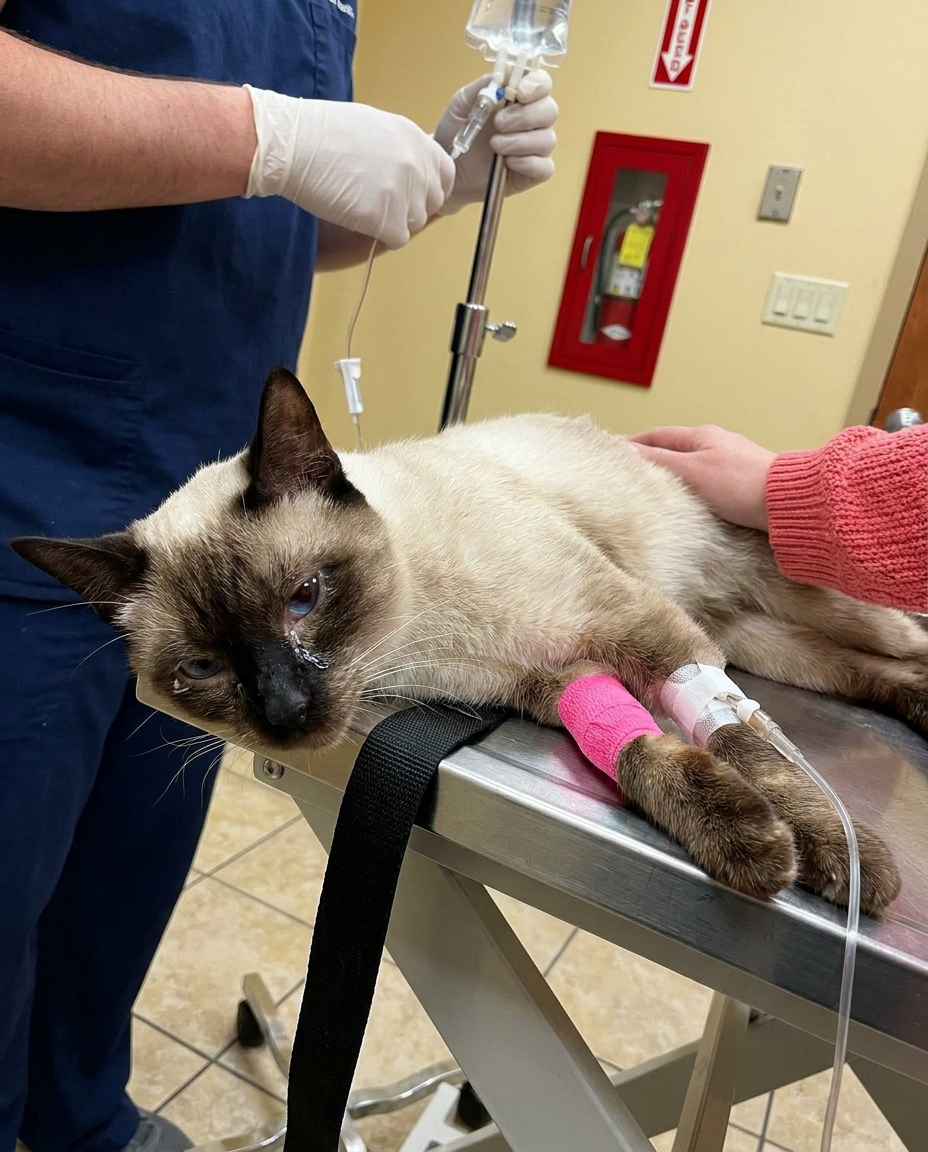
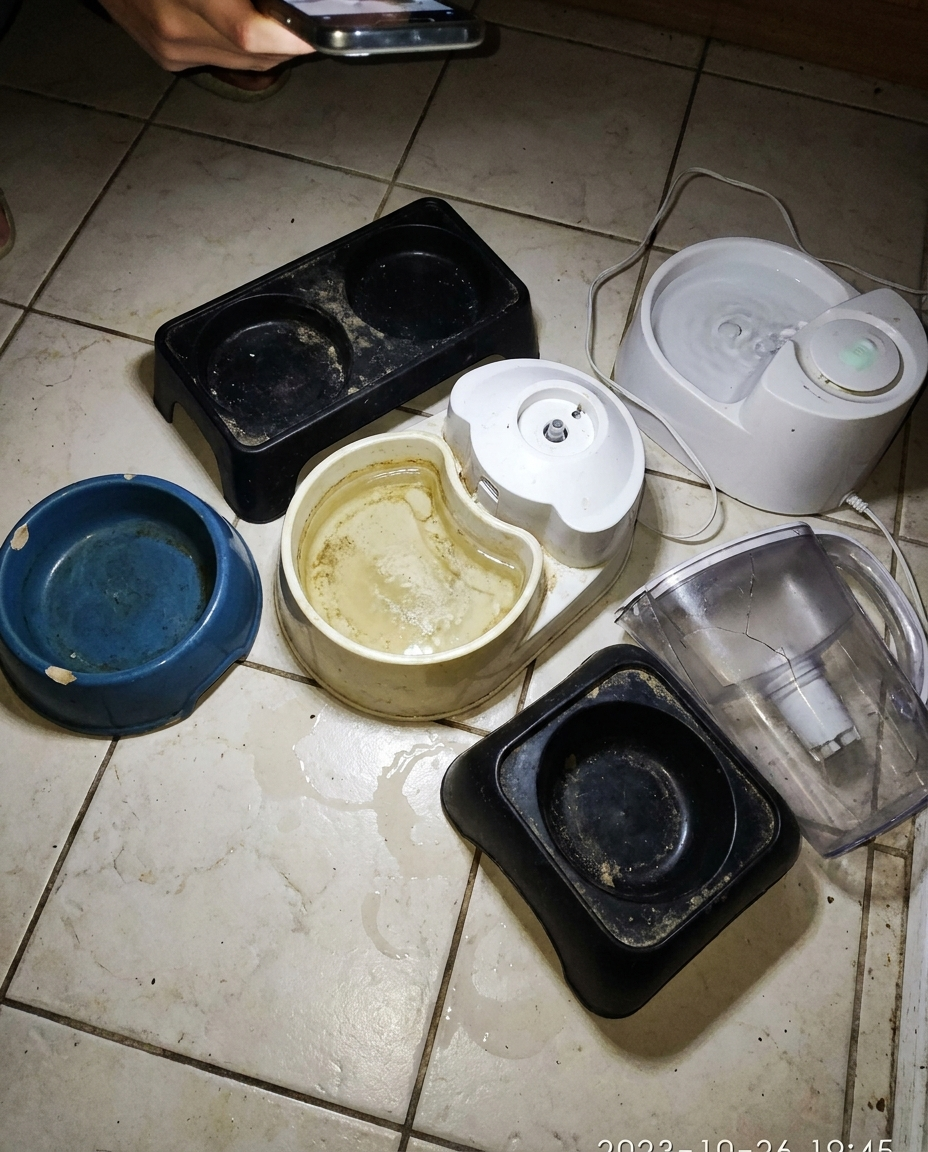
I've treated over 11,000 cats. The cases that haunt me are not the ones where the owner did nothing. They are the ones where the owner did everything right. The premium food. The clean bowl, scrubbed and refilled twice a day. The filtered water. Every single thing I and every other vet had told them to do, followed exactly. And their cat died anyway. Not because they failed their cat. Because nobody ever told them that the one thing they trusted most, the water bowl sitting on their kitchen floor, was built for an animal their cat is not. I have spent 14 years as a feline medicine specialist. Over 11,000 cats through my exam room. And I am going to tell you about the hidden biological failure that makes nearly every water bowl, filter pitcher, and fountain on the market quietly dangerous for the cat sleeping in your home right now. He belonged to a client named Sarah. A big orange tabby, four years old, perfect weight, indoor his whole life. Premium diet. A stainless bowl she washed by hand. Filtered water she refilled every morning without fail. At his last checkup, Sarah mentioned something almost as an afterthought. He kept leaving his water bowl to go drink from the bathroom faucet. Every day. He'd ignore the full bowl six feet away and cry at the sink until she turned it on. I told her it was probably just a preference. Some cats like running water. It is one of the most common things I hear from cat owners, and for eleven years I said the same thing to all of them. So she kept turning on the faucet, and kept refilling the bowl he wouldn't touch, and never worried about it once. Why would she. I had told her it was nothing. Three months later she carried him into my clinic wrapped in a towel, screaming. He had stopped being able to urinate. A blockage. Crystals had formed in urine so concentrated it had turned to sludge, and they had sealed his urethra completely shut. Nothing had left his body in over a day. His bladder was the size of a peach, his kidney values were catastrophic, and his blood potassium was climbing toward the level that stops a heart. We did everything. Catheterization, IV fluids, emergency stabilization. He died that evening anyway. He was four. I sat alone in my office afterward staring at his file. Premium food. Clean bowl. Filtered water. Everything right. And I kept landing on the one sentence Sarah had told me and I had waved away. He keeps leaving his bowl to drink from the faucet. Just a preference. Those were my words. My dismissal. And I had signed them. After him, I pulled every feline urinary and kidney emergency from my files going back three years, and I cross referenced each one against one simple question that I had never thought to ask before. Did this cat drink from its bowl, or did it go looking for water somewhere else. The answer rearranged my entire understanding of my own field. 91 percent of the cats that came into my clinic in urinary or kidney crisis had owners who described the exact same behavior. The faucet. The shower floor. The toilet. The watering can. A cat ignoring a full, clean bowl and seeking moving water somewhere else in the house. These were not neglected cats. These were cats on premium food, drinking filtered water from bowls their owners scrubbed by hand, seeing their vet every year. And they were dying anyway. I had been telling owners for eleven years that a clean bowl of fresh water was all their cat needed. I was wrong, and I needed to understand why. I spent three months reading everything I could find on feline hydration physiology. Evolutionary biology. Comparative studies on how cats regulate water versus how we assume they do. And what I found contradicts the assumption that the entire pet water industry is built on. Here it is, and once you see it you cannot unsee it. Your cat is a desert animal. The domestic cat descends from a desert wildcat that evolved getting almost all of its water from the bodies of the prey it ate. It almost never drank standing water, because it almost never needed to. And so, over millions of years, the cat's sense of thirst became suppressed by design. Deeply, structurally suppressed. A cat does not feel thirst the way you do, or the way a dog does. Its body does not generate the urgent signal that drives an animal to a water source. You can place a measurably dehydrated cat six inches from a full bowl and it will walk past it, not out of stubbornness, but because the alarm that should be screaming at it to drink barely whispers. I call what this creates the Dehydration Loop, and it is the thing that killed Sarah's cat. It works like this. The cat does not feel thirst, so it drinks far less than its body actually needs. To compensate, the kidneys concentrate the urine, wringing every drop of water back out of it. But concentrated urine is exactly the chemistry that breeds crystals, infections, and blockages, and over months and years the constant strain of squeezing water from too little intake wears the kidneys down. The more worn down they get, the less able they are to hold water. The less water the body holds, the more dehydrated the cat becomes. And it is all happening on a full bowl the cat still will not drink from. Around the loop goes, silently, for years. By the time a single visible symptom appears, the damage is usually severe, because cats hide illness until they physically cannot, and a cat in the Dehydration Loop looks completely fine right up until the afternoon it isn't. But here is the part that made me put my notes down and sit in the dark for a while. It is not just that cats do not feel thirst. It is that they actively reject the bowl. A cat's nose carries roughly two hundred million scent receptors, against our six million. Within a couple of hours of you filling that bowl, the still water loses its oxygen and grows a film of bacteria in the microscopic pores of the bowl itself, a biofilm you cannot see, scrub out, or wash away. To you the water looks perfectly clean. To your cat's nose, it smells like a stagnant, contaminated puddle. Their whiskers, which are exquisitely sensitive, hate the walls of a deep bowl pressing against them. And underneath all of it runs the same ancient instinct every cat is born with, the one that says still water near the den is dangerous and moving water is safe. So your desert animal, which barely feels thirst to begin with, is then handed the one kind of water its nose, its whiskers, and its instincts all tell it to refuse. And this is the betrayal, the thing that made me angry enough to write all of this down. Every water bowl, every filter pitcher, every ceramic crock, and very nearly every fountain on the market is built on one catastrophically wrong assumption. That your cat will drink when it is thirsty. Your cat will not. Your cat is not that animal. It does not reliably feel thirst, and it rejects the still water you offer. The product is just sitting there, full and clean and useless, waiting for a thirst signal that evolution switched off a million years ago. After I understood this, I tested it. I tried every solution owners bring me. The bigger bowl. The elevated bowl. The ceramic bowl marketed as more hygienic. The filter pitcher. And then the fountains, because surely moving water was the answer. I tested twelve of them on my own patients. And eleven of the twelve failed for the same hidden reason. They are marketed as stainless steel, because a stainless bowl sits on top where the photo is taken. But the reservoir underneath, the tank where the water actually sits for hours, is plastic. The water grows the exact same biofilm in that plastic tank that it grows in any bowl, then circulates up to the pretty steel dish on top. The cat's nose still catches it. The cat still walks away. The owner concludes their cat just does not like fountains, and goes back to the bowl, and the loop keeps turning. Now think about what your cat is doing when it leaves that bowl and goes to drink from the faucet, the shower floor, the toilet. That is not a preference. That is not your cat being quirky or spoiled. That is your cat solving the exact problem the bowl stopped solving, in the only language it has, with the only tool it has left. It is hunting for moving water because moving water is the one kind its instincts will let it trust. It is telling you, as clearly as an animal can, that the bowl has failed it. Sarah's cat went to the faucet every day for months. He was not being fussy. He was trying to stay alive, and I told his owner it was nothing. After two months of dead ends I went looking for the one thing that was actually built on the correct assumption. Not a product that waits for a thirst that never comes. A product that gets a desert animal to drink anyway, by triggering the one instinct that still works. I found the Rhykin FreshFlow. I was skeptical. I had eleven failed fountains behind me. So I did what I do. I called the company and asked for their third party testing, and they sent it within the hour, from an accredited independent lab. The basin and the tank are both 304 food grade stainless steel, the whole way through. I took one apart on my own counter to confirm it. There is no plastic anywhere for the water to sit in and spoil, which means there is nowhere for the biofilm to grow that a cat's nose rejects. It runs a continuous, genuinely moving flow, quiet enough not to spook a nervous cat, constant enough to read to that ancient instinct as a fresh, safe stream. This is the part that matters most. It does not wait for your cat to feel thirsty. It triggers the moving water instinct that fires whether your cat feels thirst or not. It works around the broken signal instead of leaning on it. The drinking surface is wide and shallow, so it never touches the whiskers. The water runs through triple stage filtration. And the company backs it with a lifetime warranty, which after watching twelve fountains fail told me they actually knew what they had built. More than eighty one thousand cats are already drinking from it. It was the only product I found that was built knowing your cat will not drink just because it is thirsty. I started recommending it to every cat owner who came through my practice. Over the following fourteen months I tracked 156 of them. 87 percent reported their cat drinking noticeably more within the first two weeks, often dramatically more, after years of barely touching a bowl. The faucet visits, the shower licking, the toilet drinking, stopped almost entirely, because the cat finally had moving water of its own. And among the cats whose owners used it consistently, I have not seen a single repeat blockage. Before this, I was seeing six to eight feline urinary blockages a year from cats I had treated before. Last year I saw one. Jennifer, whose cat had strained in the litter box for months: "He used to sit at the bathroom sink and cry until I turned it on. Two weeks after the fountain came, he stopped going to the sink completely. He drinks from it constantly. His last urinalysis was the best it's ever been." Marcus, whose cat had already had one blockage: "My vet said he was just prone to it and to watch his diet. He still nearly blocked again. Since the fountain, his vet says his urine is finally dilute. I didn't know the water was the whole problem." Renee, who had tried two other fountains: "Both of the old ones she used for a week and quit. I assumed she hated fountains. Turns out she hated the plastic. With this one she drinks every time she walks past it. She has never gone back to the toilet once." These are not miracles. This is simply what happens when you stop offering a desert animal a bowl it is built to refuse, and start giving it water in the one form its instincts will actually let it drink. So the next time you watch your cat walk away from a full, clean bowl and go press its face to the bathroom faucet, I need you to understand exactly what you are seeing. That is not a preference. That is not your cat being weird. That is your cat in the Dehydration Loop, hunting for the moving water its body trusts, telling you the bowl has already failed. You do not need to wait for a blockage at 2 AM to find out the bowl was never enough. You do not need to post about the faucet drinking in your cat group and accept "totally normal" as the answer. You do not need to keep buying different versions of the same still bowl, or the same plastic tank fountain, built on the same wrong assumption about an animal yours is not. I became a vet to help animals, not to keep telling owners that the faucet was a quirk and waiting for the next cat to come through my door in crisis. If you are reading this, your instinct that something was off was right. The bowl was never enough. And now you know exactly why. The only water fountain I recommend to every cat owner who comes through my clinic, after testing everything on the market, is the Rhykin FreshFlow. I've linked it below. P.S. If your cat leaves its bowl to drink from the faucet, the shower, or the toilet, the bowl has already failed and the Dehydration Loop is already turning. That is not a preference. It is a warning. Nearly every cat that came into my clinic in urinary or kidney crisis had an owner who had been told that exact behavior was nothing. It was never nothing. Linked below. P.P.S. People ask if I am angry that the whole industry sells still bowls and plastic tank fountains to owners of an animal that refuses both. I am not angry anymore. I am just done staying quiet about it. After 14 years and over 11,000 cats, the FreshFlow is the only thing I have found that was built around the cat that actually exists, the desert one, instead of the one the bowl was designed for. Your cat deserves water it will actually drink. Linked below.
Why Your Cat Barely Feels Thirst
Home to award-winning pet products. Shop premium, vet-approved items that both you and your pets will love. Quality you can trust, for pets that deserve the best.
LEARN MORELike this ad? Make it yours.
Crush rebuilds this exact creative around your product — your brand, your colors, your offer — in about a minute.