
Active· since Jul 4, 2026
- 77
- days running
- 2
- relaunches
- 129
- EU reach
Ad copy
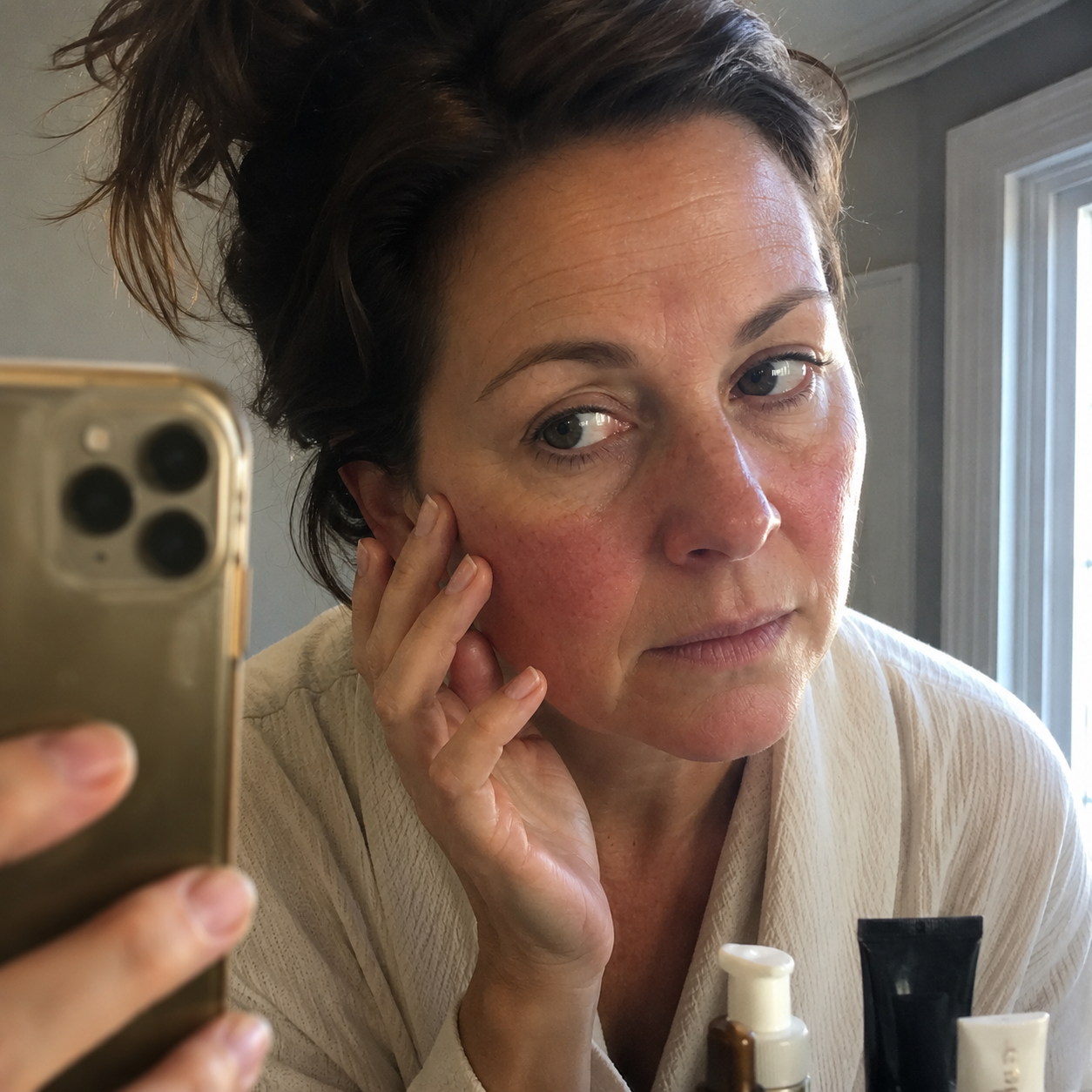
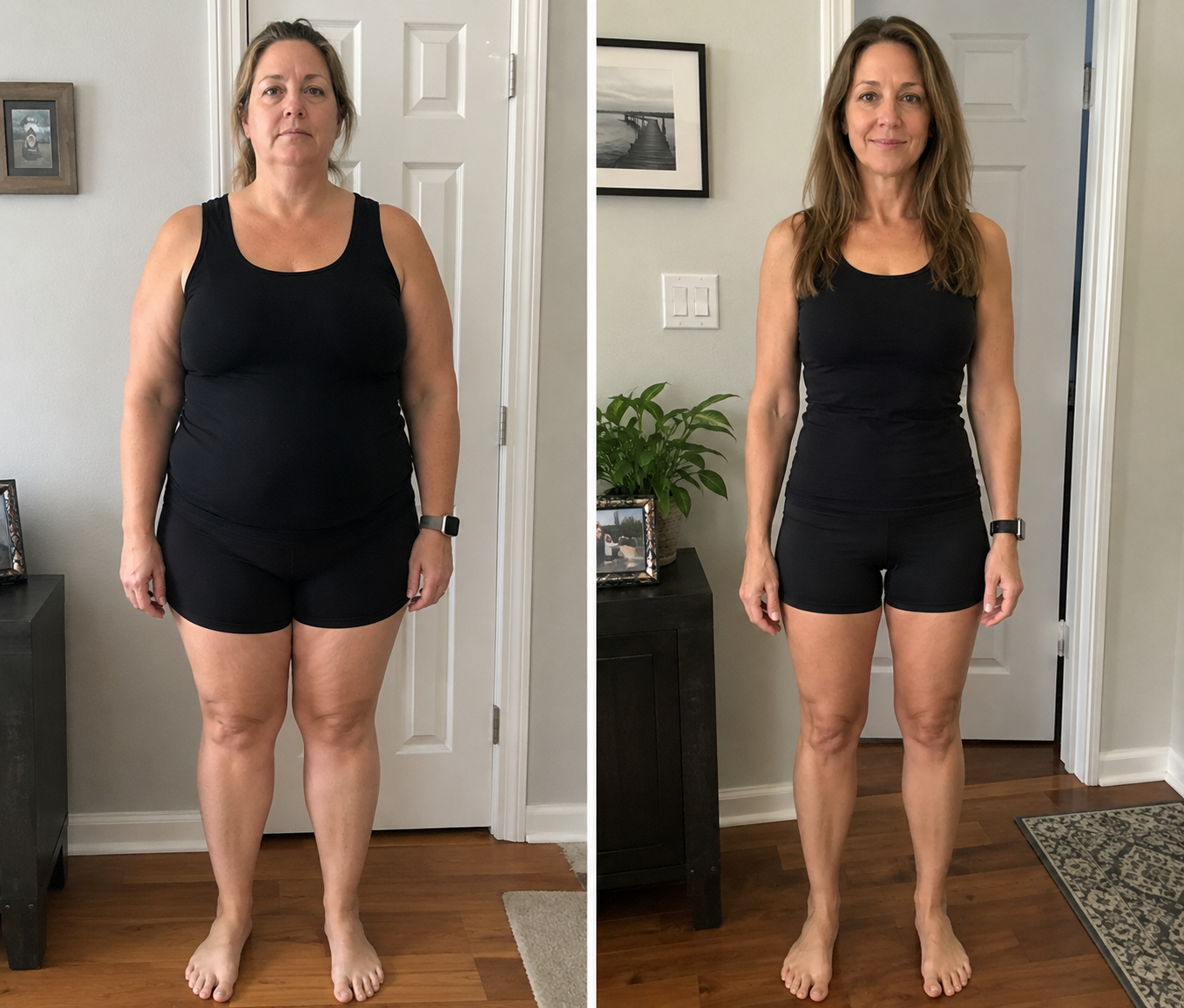
Everyone told me losing 47 pounds would make me look younger but nobody warned me I’d be scared to look at my own face three months later. The strange part is that at first, everything seemed perfect. The weight was gone. The compliments were everywhere. I finally felt proud of what I saw in the mirror. Then my daughter sent me a photo. I still remember staring at my phone and thinking, “Who is that woman?” To be fair, the weight loss itself felt like a miracle. I was 54 years old. Just under 200 pounds. And honestly? I had spent most of my adult life fighting the same battle. Diets. Walking programs. Low-carb. Low-fat. Calorie counting. Meal plans I followed for two weeks before giving up. Every January, I would tell myself, “This is the year.” And every December, I would find myself right back where I started. Maybe a little heavier. Definitely a little more frustrated. So when my doctor suggested Ozempic, I wasn’t expecting much. I’d already learned not to get my hopes up. But within weeks, the scale started moving. Then it kept moving. Ten pounds. Twenty. Thirty. Forty. Before I knew it, I had lost 47 pounds. Friends commented on it. Coworkers asked what I was doing. Family members I hadn’t seen in months barely recognized me. One woman in the grocery store actually stopped me and asked if I had hired a personal trainer. I remember driving home smiling the entire way. Because for the first time in years, I felt proud of what I saw in the mirror. I bought clothes because I liked them, not because they were the only ones that fit. I stopped standing in the back row of photos. I stopped pulling at my shirt every time someone pointed a camera at me. It felt like I had finally become the version of myself I had been trying to find for years. And for a while… I honestly thought the hard part was over. Then I started noticing little things. Small things. Easy to ignore things. The skin around my eyes looked different. My cheeks seemed flatter. My jawline didn’t look as defined. I would catch my reflection in certain lighting and pause for a second. Then tell myself I was imagining it. Because everyone kept telling me how amazing I looked. So I assumed it was all in my head. Until the photo. My daughter sent it to me on a Thursday afternoon. We had gone out for lunch together earlier that day. Nothing special. Just one of those ordinary afternoons you don’t think you’ll remember. A sandwich. A coffee. A few hours talking about work, life, and whatever show she was watching at the time. A couple of hours later, my phone buzzed. It was a text from her. Three photos. “Love these!” I smiled and opened them. The first one was fine. The second one too. Then I got to the third. And something inside me dropped. I remember zooming in. Then zooming in again. Not because the photo was bad. Because it was honest. It wasn’t filtered. It wasn’t posed. It wasn’t taken from an angle I carefully chose myself. It was just me. Sitting across the table. Laughing. Completely unaware a picture was being taken. And for the first time… I saw what everyone else saw. My cheeks looked hollow. The skin under my eyes looked tired. The lines around my mouth seemed deeper. My neck looked different. Older. Softer. Almost like the weight had disappeared, but somehow taken part of my face with it. I must have stared at that photo for ten minutes. Maybe longer. And the thought that kept repeating in my head was “I worked so hard to look younger, why do I suddenly look older?” At first, I tried to forget about it. I told myself it was a bad angle. Bad lighting. A weird expression. Everyone takes bad photos sometimes, right? But over the next few weeks, I kept noticing things. Not just in photos. In mirrors. Store windows. Zoom calls. The reflection in my car visor. Little moments where I would catch my face unexpectedly. And every time, I felt the same uncomfortable feeling. Something looked different. I just couldn’t stop seeing it. The weight was gone. But so was something else. My cheeks didn’t look the same. The skin under my eyes looked thinner. The lines around my mouth seemed deeper than I remembered. Some mornings I would stand in front of the bathroom mirror and tilt my head slightly. Then slightly again. Looking for the angle where I looked like myself. Sometimes I found it. Most of the time I didn’t. The strange part was that everyone kept congratulating me. “You look amazing.” “What’s your secret?” “You look so healthy.” And I would smile. Thank them. Tell them I felt great. But privately? I was becoming more and more uncomfortable every week, because the woman everyone else seemed to see wasn’t the woman I saw in those photos. So I started doing what most women do. I went looking for answers. New creams. New serums. New moisturizers. Collagen powders. Beauty blogs. YouTube videos. Articles about aging. Articles about menopause. Articles about hormones. Articles about weight loss. Every night I convinced myself I had found the answer. Every morning I woke up looking exactly the same. Then one night, I found myself sitting on the edge of my bed staring at that photo again. The one my daughter had sent me weeks earlier. I must have zoomed in on it a hundred times. Maybe more. And for the first time, I asked myself a question I had been trying not to ask. “What if I wasn’t imagining it?” ”What if I really did look older?” My husband was sitting next to me reading. And before I could stop myself, I heard the words come out. “Can I ask you something?” He looked up. “Of course, what is it, my love.” I handed him my phone. And I asked the question I had been avoiding for weeks. “Be honest. Do I look older?” My husband looked at the photo. Then he looked at me. Then back at the photo. And for a few seconds… He didn’t say anything. I remember wishing he would just answer. Quickly. Even if the answer was no. Just say something. But he didn’t. He just kept looking at the screen. And in that moment, I already knew. Because after more than thirty years of marriage, I knew exactly what that silence meant. He wasn’t trying to figure out what to say. He was trying to figure out how to say it. Finally he handed the phone back. And very quietly said “I think you’ve lost a lot more than weight.” I felt my stomach drop. Neither of us said anything for a few seconds. Then he reached for my hand, “You still look beautiful.” But, that’s not what I mean. His face told me everything. He had noticed it too. Not just in that photo. For weeks. Maybe months. And somehow that hurt more than the photo itself. Because now I knew it wasn’t in my head. It wasn’t bad lighting. It wasn’t a weird angle. It wasn’t my imagination. Other people could see it too. I barely slept that night. Every time I closed my eyes, I saw that photo. Every time I opened them, I found myself reaching for my phone and looking at it again. Around 2.30 in the morning, I got out of bed. Walked into the bathroom. Turned on the light. And stood in front of the mirror. Just staring. Looking at my face the way I hadn’t allowed myself to before. The cheeks. The skin around my mouth. My jawline. My neck. The area under my eyes for nearly twenty minutes. And eventually I started crying, not because I looked terrible. Not because I thought I was unattractive, but because I felt cheated. I had spent years trying to lose the weight. Years. I had imagined how happy I would feel when I finally got there. And somehow… I felt worse than before. Instead, I found myself avoiding mirrors more than I ever had at 200 pounds. Because for the first time in my life, I was scared that I looked older than I actually was. Much older. The next few weeks became a cycle I don’t think I’ve ever admitted to anyone. Every morning, I checked the mirror. Every night, I checked it again. I compared photos. Zoomed in. Zoomed out. Tilted my phone. Changed the brightness. Looking for proof that I was imagining things. I never found it. If anything, I became more convinced. The weight was gone. But my face looked deflated. Like the weight hadn’t just disappeared from my body. It had disappeared from my face too. And the worst part? Nobody had warned me. Everyone talked about losing weight. Nobody talked about looking in the mirror one day and feeling like you’d aged ten years in six months. I had spent years trying to lose those pounds. Years. Yet standing in front of the mirror, I found myself wondering something I never expected “Had I actually looked younger before?” And the more answers I searched for, the more confused I became. Some people blamed age. Others blamed hormones. Others said it was collagen loss. Others said it was simply the price you pay for losing weight. Everyone seemed to have a different explanation. And none of them made me feel any better. Then something happened completely by accident. I was having coffee with a friend I’d known for years. We were talking about work. Family. Life. The usual things, and at one point I mentioned the photo, the one my daughter had taken, the one I couldn’t stop thinking about. I showed it to her. She looked at it for a few seconds. Then asked “Have you talked to Sarah?” I remember laughing. “Who’s Sarah?” “One of my closest friends, She works with facial recovery patients after surgeries, laser treatments, skin procedures. She’s been doing it for almost twenty years.” Then she paused. “Honestly? I think she’d have a very different explanation than most people.” - - - A week later, I was sitting across from Sarah. And within the first five minutes, she said something no one else had said. Something that completely changed the way I looked at my skin. She looked at the photo. Then looked at me. And said : “I don’t think the problem is what you think it is.” Sarah looked at the photo for a few more seconds. Then handed my phone back. “Can I ask you a question?” I nodded. “When you look at that picture, what exactly do you think you’re seeing?” I remember laughing. Mostly because the answer felt obvious. “Aging.. weight loss.. Uhm, maybe both.” Sarah smiled. Then slowly shook her head. “That’s what most people think.” She leaned back in her chair. “And sometimes they’re partly right, but that’s not the first thing I see.” I stared at her. “Then what do you see?” She pointed at the photo. “I see skin that looks like it’s struggling to hold onto what it needs.” I remember feeling confused immediately. “What does that mean?” Sarah paused. Like she was deciding how to explain something she had explained a thousand times before. Then she pointed at the photo again. “Imagine a mattress.” I remember laughing. “A mattress?” She smiled. “Just stay with me for a second. When a mattress is properly filled, it looks smooth and supportive. Everything sits the way it’s supposed to, but over time, if it slowly loses what’s supporting it from the inside. It starts to look flatter, thinner, more worn.” She paused. Then tapped the photo again. “The fabric didn’t suddenly change, what was underneath did.” I looked down at the picture. Then back at her. And for the first time, I felt like someone was describing exactly what I had been seeing. Not wrinkles. Not aging. Not even weight loss. Something else. Something I couldn’t quite explain. I looked back at the photo, then back at Sarah. “So you’re saying it wasn’t the weight loss?” Sarah shook her head. “No.” Then she smiled. “I’m saying the weight loss may have revealed something that was already happening.” That got my attention, because nobody had said anything like that before. Every article. Every video. Every conversation. They all blamed the weight loss. Sarah didn’t. She pointed toward the photo again. “Think about it this way. When you lose a significant amount of weight, especially quickly, your face changes. That’s normal, less fat in the face means less volume. Everyone knows that.” She paused. “But here’s what most people miss, volume doesn’t create healthy looking skin. It hides unhealthy looking skin.” I remember sitting there quietly. Trying to process what she meant. Sarah leaned forward. “For years, your face had more fullness. Then that fullness disappeared and suddenly, things that were easy to miss became impossible to ignore. The skin under your eyes. The texture around your mouth. Your cheeks. Your neck. The weight loss didn’t necessarily create those changes. It simply stopped hiding them.” I felt my stomach tighten. Because deep down, I knew exactly what she meant. Sarah wasn’t describing the photo. She was describing what I had been seeing every morning in the mirror. For weeks. Maybe months. She could tell something was clicking, because she nodded and said, “Emily, can I tell you the biggest mistake women make when this happens?” I nodded. “They assume the problem is wrinkles.” ”So they go shopping for wrinkle products or collagen products. Or anti-aging products. Or firming products.” She smiled. “Without ever asking why the skin suddenly started looking older in the first place.” Sarah could tell I was still thinking about the mattress analogy, because she smiled and said “Let me tell you something I learned after spending nearly twenty years around people recovering from facial procedures.” I nodded. “Most people obsess over wrinkles but wrinkles usually aren’t the first thing I notice, the first thing I notice is skin that no longer looks supported.” I frowned. “Supported? What do you mean?” Sarah leaned back. “Healthy skin has a certain look to it. Not because it’s perfect. Not because it’s wrinkle free, because it looks resilient. Comfortable, like it’s holding onto what it needs.” Then she pointed toward the photo again. “When skin starts losing that support, people describe it the same way over and over. Tired, deflated, crepey, older.” My stomach tightened. Because those were the exact words I had been using in my head. Sarah nodded. “Most women think those changes happen overnight. They don’t. They happen gradually for years. The problem is that most of us don’t notice them right away, especially when there’s still enough fullness in the face to disguise them.” Then she paused. “Until something changes.” I immediately thought about the weight loss. She could see it on my face. “Exactly.” “The weight comes off. The fullness changes. And suddenly you’re seeing things that may have been developing for much longer than you realize.” I sat quietly. Because the more she spoke… The more everything started making sense. Then she said something that completely caught me off guard. “Emily… Do you know when your skin loses a surprising amount of moisture?” I blinked. “No.” “While you’re sleeping.” I remember staring at her. Waiting for her to explain. Because at that point, I had no idea what sleeping had to do with the photo that had been haunting me for weeks. Sarah smiled. She had probably seen that look a hundred times before. “Think about it this way Every night, your skin is trying to recover from everything it dealt with during the day. sun, dry air, stress, makeup, cleansers, aging, life. Nighttime is when a lot of that recovery happens.” I nodded. That part made sense. Then she continued. “Here’s the problem. As we get older, our skin becomes less efficient at holding onto moisture. Not all at once but slowly, year after year. Most women never notice it happening until one day they look in the mirror and start using words like…” She smiled. “Tired. Deflated. Crepey. Older.” My stomach tightened again. Because there were those words. Again. The exact words I had been using. Sarah leaned forward. “The reason I asked about sleeping is because that’s where I see so many women get confused. They assume if they put on a moisturizer before bed, they’ve solved the problem. But healthy looking skin isn’t just about putting moisture into it. It’s about helping it keep that moisture where it belongs.” I remember sitting there quietly. Because nobody had ever explained it that way before. Every skincare conversation I’d ever heard was about adding something. More collagen. More hydration. More ingredients. More products meanwhile Sarah was talking about something completely different. Keeping what was already there. She picked up a notepad from her desk. Drew a small bucket. Then drew several holes in the bottom. “Imagine filling this bucket with water. You can keep pouring water in all day long, but if the bucket keeps leaking… You’ll never keep it full. That’s the mistake most people make. They’re obsessed with what they’re adding, very few are paying attention to what they’re losing.” I sat there for a few seconds thinking about the bucket, about everything I had bought over the previous few months. Then I asked the question that had probably cost me hundreds of dollars. “What about collagen?” Sarah smiled immediately. Like she’d been expecting that one. “What about it? Everyone talks about collagen. Every product. Every article. Isn’t collagen the problem?” Sarah nodded. “Absolutely. Collagen matters. I’m not going to tell you it doesn’t.” Then she paused. “But let me ask you something.” She pointed toward the photo again. “Do you think that picture happened because your skin suddenly lost collagen in the last three months?” I thought about it. Then slowly shook my head. “Probably not.” “Exactly.” She nodded. “Collagen changes happen over years. Not a few weeks, not a few months. The photo wasn’t showing you something brand new. It was showing you something that had become visible.” I thought about all the products sitting on my bathroom counter. Then I asked, “What about all the creams I’ve been using?” Sarah laughed. Not in a rude way. More like she’d heard that question a thousand times. “Some of them are probably very good.” That surprised me. Because I expected her to tell me they were useless. She didn’t. “The problem isn’t necessarily the products. The problem is the expectation.” I frowned, “What do you mean?” “Most women are looking for one dramatic change. One miracle ingredient. One magic answer.” Then she pointed to the bucket drawing again. “Meanwhile, they’re ignoring the leak.” I remember taking a deep breath, then asking the question I had been afraid to ask since the beginning. “So what if it really is age?” Sarah smiled. “Emily, you’re 54, not 94.” I laughed. For the first time all afternoon. Then she continued. “Of course age plays a role. Nobody gets a free pass, but that’s exactly why protecting what your skin still has becomes more important. Not less.” She paused. Then said something that stayed with me for weeks. “Most women spend years trying to replace what they’ve lost. Very few spend time protecting what they still have.” I remember looking down at the notepad. The bucket. The holes. All the notes I had scribbled during the conversation. And finally asking, “So what do I do?” Sarah smiled, because I think she knew that question had been coming for the last hour. Then she said something that surprised me. “Honestly? I’d stop trying to fight your skin.” I frowned even more, “What does that mean?” “It means most women are constantly trying to force their skin to become something else. Brighter, tighter, younger, faster. Instead of helping it do what it’s already trying to do.” I sat quietly. Waiting. Then she opened a drawer beside her desk. Reached inside. And pulled out a small box. She placed it on the table between us. “What’s that?” Sarah turned it toward me. “It’s one of the things I recommend most often to women who come to me feeling exactly the way you’re feeling.” I picked it up. Looked at it. Then looked back at her. “A face mask?” She nodded. “Not because it’s a miracle, and not because it’s going to make you look twenty-five again.” I laughed. “Good, I’d be suspicious if you said it would.” Sarah laughed too. Then her expression softened. “Emily… Sometimes the biggest improvements happen when you stop chasing dramatic changes and start consistently supporting the things your skin is struggling to maintain on its own.” I looked back at the box. Then at Sarah. And I’ll be honest. By that point, I was skeptical. Not because I didn’t trust her but, because I had already spent months trying products that promised the world. Creams, serums, masks, expensive treatments, cheap treatments. ”If someone claimed it could make skin look younger, there was a good chance I had already tried it.” Sarah laughed when I told her that. “Most women who sit in that chair have.” I picked up the box again, turned it over then asked the obvious question, “So what makes this one different?” Sarah didn’t answer immediately. Instead, she asked. “Do you remember the bucket?” I smiled. “How could I forget?” She nodded. “Good. Because that’s exactly where most products get it wrong.” She leaned back in her chair. “Most skincare is obsessed with adding things. More hydration. More collagen. More ingredients. More promises.” She shrugged. “But very few products are designed around helping skin hold onto those benefits during the hours it needs them most.” I immediately thought about what she had said earlier, ”While you’re sleeping.” Sarah smiled. “Exactly. Your skin does a tremendous amount of recovery work overnight. The problem is that many products are gone long before that process really gets underway.” “What do you mean?” “Contact time.” She said it so casually. Like it should have been obvious. “Most masks stay on the skin for ten or twenty minutes then they’re removed. Most creams are rubbed in and gradually disappear but if you want to support the skin while it’s actively recovering, the amount of time something remains in contact with the skin matters.” I had never thought about it that way. Not once. Sarah could tell. Because she smiled. “Most people don’t.” Then she picked up the box. “The reason I became interested in masks like this wasn’t beauty, it was recovery. I spent years helping patients recover after facial procedures. Laser treatments, skin resurfacing, various forms of skin trauma.” She paused. “And one thing you learn very quickly is that skin behaves differently when it’s given the right environment to recover.” I found myself leaning forward. Listening more carefully than ever. Sarah tapped the packaging gently. “This is why this mask stood out to me because most masks are designed around a short moment. You put it on, wait a few minutes, take it off. Feel nice for a little while.” She shrugged. “Nothing wrong with that, but this was built around a different question. What if your skin was supported during the hours it naturally does most of its recovery?” I looked down at the box again. That's why I like SkinKlean," Sarah said, pointing to the mask inside the box. "It's a hydrogel mask. Not the thin paper sheet you usually see, so it stays in contact with your skin much longer." I waited. "A regular sheet mask dries out in ten, fifteen minutes, after that it's not doing anything. It's just sitting on your face but this one stays put for hours, you can even leave it on while you sleep. And that matters, because what gets you results isn't only what's inside it. It's how long what's inside actually has the time to work." She turned the box over and pointed at the ingredients. "Now, here's the part most people don't get. Most masks that call themselves “Collagen” but, they use collagen that comes from fish or cow. The cheapest, most common kind you can find." I frowned. "What's wrong with fish or cow?" "To your skin, it's a foreign protein." She looked at me. "It's not the kind of collagen that's actually in your skin. So when it sits on your skin, your skin never really lets it in. Like sending the wrong shaped key to a lock, it sits on the surface but it never really gets let in." I looked at the box again. Suddenly reading it very differently than before. "SkinKlean doesn't use that," Sarah went on. "It's built with “Baby Collagen” human like Type III. It's the same kind of collagen we had so much of when we were young, the kind that slowly disappears as we age." "That's the whole difference because its shape is close to what's already in your skin, your skin recognizes it as its own. Not a stranger, not something it has to push back out. It gets let in, and it absorbs deeper." She tapped the number on the box. "12% Baby Collagen. That's more than I could find in any other mask. And it's not from animals, it's made through fermentation, so it's vegan, cruelty free. But that's not what sold me. What sold me was the simple part you can put as much collagen on your face as you want but if it's the wrong type, your skin will never recognize it. The right type is plus enough contact time for it to actually work. Those are the two things almost every product skips." She set the box back down on the table. "And one more thing I like, it isn't trying to be twenty products at once. It doesn't claim to brighten, lift, peel, and resurface all in one go. When your skin is already tired and thin, sometimes the smartest thing is the simplest one. Deep hydration, long contact, overnight support. Helping your skin finally hold onto what it's been losing all this time." I thought again about the bucket. The holes. The mirror. The photo. For the first time in months, the problem felt less mysterious. Not fixed. Not solved. But understandable. And that alone made me feel calmer. Sarah smiled. “Look… I’m not telling you this is magic. I’m not telling you it’s going to make you twenty-five again. What I’m telling you is that after years of watching skin recover. This is one of the few products I’ve seen that actually aligns with how skin behaves in the real world.” Then she handed the box back to me and said something I’ll never forget. “Most women spend years trying to force their skin to change. The best results usually come from finally giving it the support it’s been missing.” I ordered SkinKlean that same week. Not because I was completely convinced. If I’m being honest, I was still skeptical, but after everything Sarah had explained, it was the first thing that actually made sense. - - - A few days later, a package arrived at my front door. I knew exactly what it was, which surprised me because normally, by that point, I’d already moved on to the next thing. The next article, the next product, the next promise but this felt different. Maybe because it was the first recommendation that actually made sense. The box sat on my kitchen counter for most of the day. Every time I walked past it, I glanced at it. Not because I expected a miracle but because I wanted to try it and after months of disappointment, that feeling alone was unusual. Hope, not loud hope. Not the kind that makes you tell everyone you’ve found the answer. Quiet hope, the kind you almost don’t want to admit you have. That night, I carried the box into the bathroom and opened it slowly. Inside was the blue and gold SkinKlean box. simple and clean. Beautiful in a way that didn’t feel like it was shouting at me, nothing about it screamed miracle. And honestly? I was grateful for that. I’d already had enough of miracle products. After washing my face, I opened the first mask. I remember holding it in my hands and thinking how different it felt compared to most of the masks I’d tried before. Cool and soft, almost weightless. It didn’t feel like a paper sheet soaked in serum. It felt more cushiony, more substantial like it was made to stay with the skin. Not just sit on top of it for a few minutes. I smoothed it onto my face, it felt cool right away. Not freezing, not harsh. Just soothing, like my skin had been bracing itself for months and finally exhaled. Then I climbed into bed with a book, and for the first time in months, I wasn’t wondering whether this would erase ten years from my face. I wasn’t expecting magic, I was just hoping to stop feeling like I was losing ground. The best way I can describe that first night is my skin felt comfortable, not tighter, not tingling, not like something dramatic was happening. Just comfortable. The way a thirsty plant probably feels after finally being watered. Not transformed. Just relieved. And after spending months staring at my reflection looking for what I’d lost, relief felt pretty wonderful. The next morning, I didn’t wake up looking like a different person. That would be ridiculous, but my skin felt calmer, less tight, less tired like it had finally gotten through the night without fighting so hard. And then I did something I hadn’t done in months. I stopped checking the mirror every five minute, I stopped comparing photos, I stopped searching Google, I stopped trying to solve everything overnight, I simply followed Sarah’s advice and gave it time. The first week? Nothing dramatic. Which was probably the most reassuring thing possible Because dramatic is usually what disappoints you. My skin felt a little more comfortable, a little less dry. A little less like it was begging for something. That was about it, and honestly? That was enough. Sometime during the second week, I noticed something strange. I wasn’t thinking about my face as much, which sounds ridiculous but after spending months obsessing over mirrors and photos, it felt significant. One morning I walked past the bathroom mirror then stopped, walked backwards and looked again. Not because I looked dramatically different but because I looked a little less tired, just a little. The kind of change nobody else would notice but yourself would. The third week was when something unexpected happened. I received another photo, this time from a family dinner. Normally I would have opened it with a knot in my stomach, preparing myself for disappointment, preparing myself for that feeling. Instead, I just looked at it then kept scrolling. A few minutes later, I realized why it hadn’t upset me. For the first time in months, I wasn’t studying every line. Every shadow. Every angle. I was just looking at a picture of myself and moving on with my day. Around week four, my husband noticed something. Not because I asked him but this time, he brought it up first. We were getting ready to go out for dinner and completely out of nowhere he said, “You look more like yourself lately.” I remember freezing. Because those words hit harder than any compliment. Not younger. Not prettier. Not flawless. More like yourself. Exactly what I had been hoping for from the beginning. By week six, even the photo that started everything felt different. I found it one evening while scrolling through old messages, the same photo, the same lunch, the same moment and for the first time, I wasn’t looking at it with panic. I wasn’t zooming in, wasn’t criticizing every detail, wasn’t searching for evidence that I had aged overnight. I was simply looking at a woman who had spent months being far harder on herself than she deserved. About two months after that conversation with Sarah, something happened that I didn’t think much about at the time, at least not right away. My daughter and I were having lunch together again. Same place, actually. Which still makes me laugh. Same table, same coffee order, same terrible parking lot. The only difference was that this time, I wasn’t thinking about my face, not once. We spent two hours talking. About work, family, travel, life. The kinds of conversations that somehow feel both ordinary and important at the same time then we went home and I forgot about it. Until later that evening. My phone buzzed. A text message from my daughter. Three photos, just like before. My stomach tightened for a second, pure habit. Then I opened them, the first one made me smile, second one too then I got to the third and I just sat there looking at it. Not because I was upset, not because I was zooming in, not because I was searching for flaws but because I suddenly realized something, I wasn’t afraid of the photo. For months, every candid picture had felt like a test. A verdict, proof that something was wrong.Proof that I was aging faster than I should.Proof that I’d somehow ruined my face by finally losing the weight. But this time? I wasn’t looking for evidence. I was just looking at myself and for the first time in a very long time… I liked what I saw. Not because I looked twenty-five. Not because every line had disappeared. Not because I had somehow stopped aging. But because I looked like me again. A few minutes later, my daughter called. We talked about something completely unrelated for a while then before hanging up, she said, “By the way…” “You looked really happy today.” I remember smiling. Because out of everything she could have said, that was the one thing I hadn’t realized I’d been missing. Happy. Not younger. Not thinner. Not prettier. Happy. Looking back now, I think the hardest part wasn’t the photo. It wasn’t the weight loss. It wasn’t even the months I spent staring at my reflection trying to figure out what had changed. The hardest part was believing I had to accept it. Believing that feeling older and older every time I looked in the mirror was simply the price I had to pay. The price of getting older, The price of losing weight, The price of being a woman in her fifties. And maybe that’s the reason I wanted to share this story because if you’re reading this, there’s a good chance you’ve had your own version of that moment. Maybe it wasn’t a photo. Maybe it was a mirror. Maybe it was a video call. Maybe it was seeing yourself in bright sunlight. Maybe it was nothing more than a quiet thought you haven’t said out loud yet, but you know something feels different and you can’t stop thinking about it. The biggest thing I learned from Sarah wasn’t about aging or collagen or skincare. But, it was about most women spend years trying to replace what they’ve lost. Very few spend time protecting what they still have. For some reason, that hit me harder than everything else. Maybe because it wasn’t just true about skin, maybe it was true about life too. Sometimes, I wonder what would have happened if I had kept doing what I was doing. Buying random products, reading random articles, convincing myself I was imagining things. Waiting another year then another. Hoping things would somehow improve on their own. I honestly don’t know. But I do know this, I’m grateful I stopped waiting. If you’ve been feeling the way I felt, If you’ve been looking at photos and wondering where that tired, deflated look came from.. If you’ve been trying product after product without really understanding what’s changed then maybe start where I finally did. Learn what’s actually happening beneath the surface. Understand what your skin is trying to hold onto and give it the support it needs while it’s working hardest to recover. Don’t wait six more months hoping it fixes itself. Click below and see why SkinKlean became the one thing I never stopped using. → https://skinklean.com/products/baby-collagen-face-mask Because the woman in that photo isn’t gone, She may just need the right support to come back.
Like this ad? Make it yours.
Crush rebuilds this exact creative around your product — your brand, your colors, your offer — in about a minute.